
A CONSTITUTION ROOTED IN THE VOICES OF THE PEOPLE
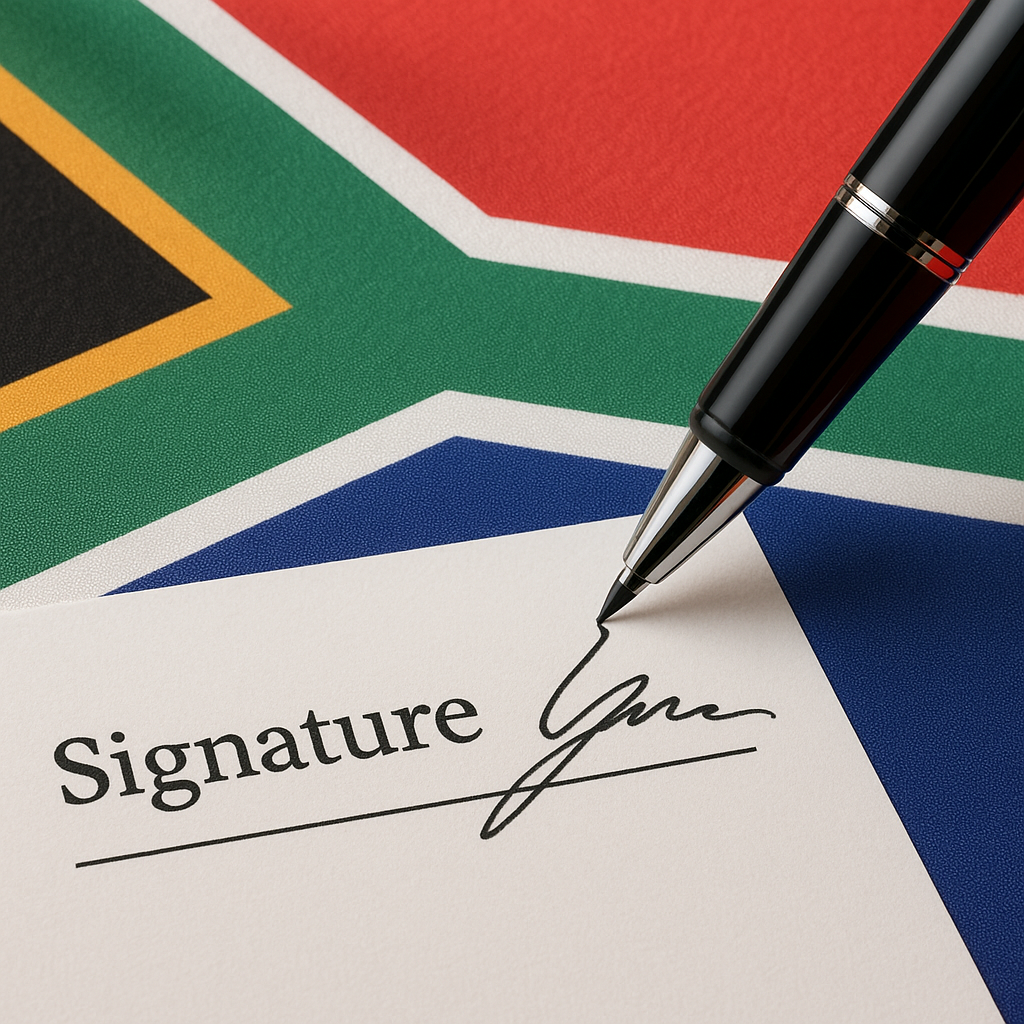
Explore South Africa's Constitution at 30: from its 1996 signing to a living mandate shaped by millions, impacting daily life & global law.
South Africa's Constitution, Act 108, came into effect on February 4, 1997, after Nelson Mandela signed it in Sharpeville on December 10, 1996. This Constitution was a huge deal, turning years of struggle into a rulebook for a democratic country. It was created with lots of public input from millions of people, making it a true reflection of the nation's hopes. This special document doesn't just list rights; it also has many ways to make sure the government is fair and honest. Even though it's been tested in court and used by citizens to demand change, the journey to a fully fair South Africa is still ongoing.
When did South Africa's Constitution come into effect?
South Africa's Constitution, also known as Act 108, officially came into effect at midnight on February 4, 1997. It was signed into supremacy by Nelson Mandela on December 10, 1996, in Sharpeville, marking a pivotal moment in the nation's democratic transition.
Get Cape Town news in your inbox
Stay updated with the latest stories from the Mother City.
I. From Massacre Site to Milestone: The Hour Ink Met History
Every constitution has a birthplace; ours was consecrated on a blood-stained parade ground. On 10 December 1996, Nelson Mandela lifted a ceremonial pen inside Sharpeville’s former police yard - ground zero of the 1960 killings - and signed Act 108 into supremacy. Around him stood yesterday’s foes: Cyril Ramaphosa, Roelf Meyer, labour stalwart Jay Naidoo, and General Constand Viljoen, the man who had readied for civil war months earlier. Their presence turned decades of clandestine pamphlets, banned poems and exile lectures into the single binding text of a democratic republic.
Four months later, minutes after midnight on 4 February 1997, the document roared into life. Radio stations queued Nkosi Sikelel’ iAfrika and the freshly woven anthem, signalling a legal order in place of liberation slogans. Most citizens slept through the hand-over, yet the machinery of state stayed wide-eyed: clerks stapled the Bill of Rights above filing cabinets, traffic wardens swapped apartheid crests for new insignia, and post-office staff cancelled envelopes with a commemorative frank that read “Constitution Day – 4/2/1997”.
That scene fused sorrow and celebration. Sharpeville’s ghosts were not spectators; they were silent co-signatories. Every clause carried the echo of 69 bullets fired on 21 March 1960, guaranteeingnsuring the law would never again be deaf to gunshots or grief.
II. A Nation Writes Itself: Two Million Voices, One Text
Between 1994 and 1996, the Constitutional Assembly staged the largest public drafting exercise the world had seen since Iceland’s 2011 experiment. Campaigners, miners, grannies and teenagers filed 2.2 million written comments and crowded into 571 hearings across 56 towns. In Thohoyandou villagers argued for multilingual schooling; Carletonville miners demanded that the right to strike be “spelled out in neon”; rural women from KwaZulu-Natal unrolled beaded cloths detailing how customary law had to evolve; pensioners in former coloured townships pleaded for sport facilities.
Before each drafting session, Hugh Masekela’s Thuma Mina crackled over loudspeakers, a lyrical reminder that the electorate - not the elite - had sent the delegates. Ramaphosa carried their sharpest questions on dog-eared index cards. One card, asking “Can ink on a page become bread and a roof?” matured into section 26’s right to adequate housing.
The resulting text was never an ivory-tower product. Every comma had been pressure-tested in shebeens, church halls and taxi ranks. What emerged was a charter no single group could claim credit for - a mosaic of grievance, hope and compromise.
III. Beyond Rights: 40 Levers That Keep Power Answerable
Most citizens can recite the Bill of Rights’ 27 bullets; few notice the 40 hidden levers that keep the state in check. Anyone can, in terms of section 56, demand that the National Assembly haul the president to the podium. Schedule 3 forces provincial premiers to table yearly “integrity audits” on every tender awarded. Chapter 9 bodies - the likes of the Public Protector and Auditor-General - owe their allegiance to the populace, not the cabinet.
These tiny sub-clauses have turned neighbours into legal mechanics. In 2000, residents of Grootboom squatter camp leaned on the housing right to force government to upgrade their camp. In 2015, students weaponised the education clause to squeeze university budgets into the open. In 2022, shack-dwellers in eKurhuleni stopped bulldozers by invoking section 195’s demand for fair administrative action. Each victory showed a constitution sentence graduating into concrete change.
IV. Thirty Years in Court: Three Acts of Judicial Drama
Act I – The Certification Saga
Before the Constitution could take breath, the newborn Constitutional Court had to stamp it valid. Justice Ismail Mahomed’s majority judgment anchored “objective, democratic values” rather than imported liberal dogma, blessing group rights, customary law and socio-economic guarantees. The ruling told the world South Africa would measure justice on its own terms.
Act II – The Second Wave
Between 2003 and 2013, civil society pushed the text off the page. The Treatment Action Campaign won antiretrovirals for HIV-positive mothers; the court ruled that state promises have a “minimum core” that cannot be deferred. In Doctors for Life v Speaker, judges held that legislatures must earn public participation, not merely endure it.
Act III – Structural Interdicts
Since 2016, courts have refused to walk away after handing down orders. The SASSA grants debacle, Life Esidimeni tragedy and electricity crisis all saw judges appoint special masters, demand quarterly scorecards and threaten ministers with imprisonment. The power of the robe now comes with a stopwatch.
V. The Civic Circuit: How Citizens Hack Democracy Today
The 1990s relied on paper slips and megaphones; twenty-first-century activism is Wi-Fi and WhatsApp. Parliament’s “People’s Assembly” portal uploads draft bills in every official language and braille within 48 hours. The Government Gazette pings 4.3 million handsets via GovChat. Paralegals set up pop-up clinics at taxi ranks, tapping out affidavits on recycled cardboard with solar printers. On SABC’s “Weekend Constituency”, MPs field live calls from commuters stuck in traffic.
None of these gadgets were envisioned in 1996, yet section 59(1)(a) still fuels them: “The National Assembly must facilitate public involvement in its legislative and other processes.” A 1990s promise powers 2020s tools.
VI. Gazing Ahead: The 2026 Dialogue and the Youth Who Refuse to Inherit Silence
From June to August 2026, the state will host 195 “constitutional sprints”. Rural wards will stage kitchen-table circles capped at 20 voices; campuses will run 48-hour hackathons; ex-mining towns will convene dialogues inside disused shafts once barred to black workers; TikTokers will upload 60-second clips in every tongue. Each meeting opens with a communal reading of section 1: the anthemic clause that links dialogue itself to equality and human dignity.
More than ceremony, the exercise is diagnostic. It asks whether the two-thirds-plus-six-provinces amendment bar still suits an age of coalition chaos, 59 % youth joblessness and daily femicide. The Constitution will not be rewritten; it will be stress-tested.
VII. Micro-Mirrors: Water, Power and Land - Three Frontline Verdicts
Water – Madibeng Municipality
Residents weaponised the rights to water and fair administration, compelling the council to fix the Jericho plant. A court-appointed engineer now beams monthly turbidity reports to residents’ phones. When taps dry, so does the council’s excuse cupboard.
Electricity – Pretoria High
In 2025, judges told Eskom to end rolling blackouts under threat of daily fines topping R500 000. The utility files fortnightly affidavits detailing unplanned outages; every kilowatt misspent costs hard cash.
Land – KwaZulu-Natal Hills
Villagers invoked the property clause to fight the Ingonyama Trust’s leasehold grab. The court has summoned trust chiefs to explain why their sovereignty trumps constitutional restitution. In the docket, history meets title deed.
VIII. Rituals and Remixes: How the Next Generation Will Reboot the Pact
On 4 February 2027, sunrise ceremonies will ripple from Limpopo to Soweto to Robben Island. Traditional leaders will a hermetically sealed capsule bearing the original parchment past village drums. Artists will laser the preamble across Orlando cooling towers using biodegradable beams. Teens who won the “Edit 2050” essay contest will read prisoners’ handwritten drafts aloud. No fireworks, no tanks - just voices, bells and sirens at 08:00 sharp.
Blockchain coders already anchor judgments against erasure; an app called “ConstiApp” geotags service-delivery complaints to the precise clause they breach. Click section 24 beside the Vaal River and algae photos splash across your screen. The law now slips into pockets faster than sports scores.
Municipalities are quietly rewriting apartheid-era zoning bylaws under section 151’s original mandate. More than 112 councils now force private developers to set aside 30 % affordable housing; AI drafts the ordinances, but human residents decide their fate.
IX. A Law That Travels and a Promise Still Pending
South Africa’s clauses now migrate: Kenya’s access-to-information right, Nepal’s horizontal-application clause and Ecuador’s structural-interdict tool all bear local DNA. Foreign clerks stream south each year, turning the Constitutional Court into a soft-power hub rivalling 1970s Washington.
Yet unfinished chapters glare. A housing backlog of 2.3 million homes, 59 % youth unemployment and femicide every three hours are not constitutional flaws but political lapses. As Pius Langa warned, “a Constitution does not implement itself.” The next release - crowdsourced in mine shafts, on TikTok and inside ward halls - will decide whether the promise of 4 February 1997 remains alive or lapses into elegy.
[{"question": "
When did South Africa's Constitution officially come into effect?
\nSouth Africa's Constitution, also known as Act 108, officially came into effect at midnight on February 4, 1997. It was signed into supremacy by Nelson Mandela on December 10, 1996, in Sharpeville, marking a pivotal moment in the nation's democratic transition.
"}, {"question": "Who signed the Constitution and where?
\nNelson Mandela signed Act 108 into supremacy on December 10, 1996, in Sharpeville. This location is historically significant as it was the site of the 1960 killings, transforming a place of sorrow into a symbol of a democratic beginning.
"}, {"question": "How much public input was involved in drafting the Constitution?
\nBetween 1994 and 1996, the Constitutional Assembly undertook an unprecedented public drafting exercise. Millions of people, including campaigners, miners, and ordinary citizens, submitted 2.2 million written comments and participated in 571 hearings across 56 towns. This extensive public involvement ensured the Constitution truly reflected the nation's hopes and concerns.
"}, {"question": "What are some ways the Constitution ensures government accountability beyond the Bill of Rights?
\nBeyond the well-known Bill of Rights, the Constitution includes 40 'hidden levers' to ensure government accountability. Examples include section 56, which allows citizens to demand the National Assembly summon the president, and Schedule 3, requiring provincial premiers to table yearly 'integrity audits' on tenders. Chapter 9 bodies, such as the Public Protector and Auditor-General, also serve to hold the government in check and are accountable to the populace, not the cabinet.
"}, {"question": "How has the Constitution been used by citizens to demand change?
\nCitizens have actively used the Constitution to demand change. For instance, in 2000, residents of Grootboom squatter camp used the housing right (section 26) to compel the government to upgrade their camp. In 2015, students utilized the education clause to push for more transparency in university budgets. More recently, in 2022, shack-dwellers invoked section 195, which demands fair administrative action, to stop bulldozers. These examples demonstrate the Constitution's role as a tool for concrete change.
"}, {"question": "What is planned for the future to engage with the Constitution?
\nFrom June to August 2026, the state will host 195 'constitutional sprints' as part of a dialogue process. These events, ranging from kitchen-table circles in rural areas to hackathons on campuses and TikTok challenges, aim to engage citizens in assessing the Constitution's relevance and effectiveness in the current social and political landscape. This process, which opens with a communal reading of section 1, serves to stress-test the document rather than rewrite it.
"}]
Liam Fortuin is a Cape Town journalist whose reporting on the city’s evolving food culture—from township kitchens to wine-land farms—captures the flavours and stories of South Africa’s many kitchens. Raised in Bo-Kaap, he still starts Saturday mornings hunting koesisters at family stalls on Wale Street, a ritual that feeds both his palate and his notebook.
View all articles →