
Abdullah Ibrahim dies at 91: South Africa mourns Cape jazz legend
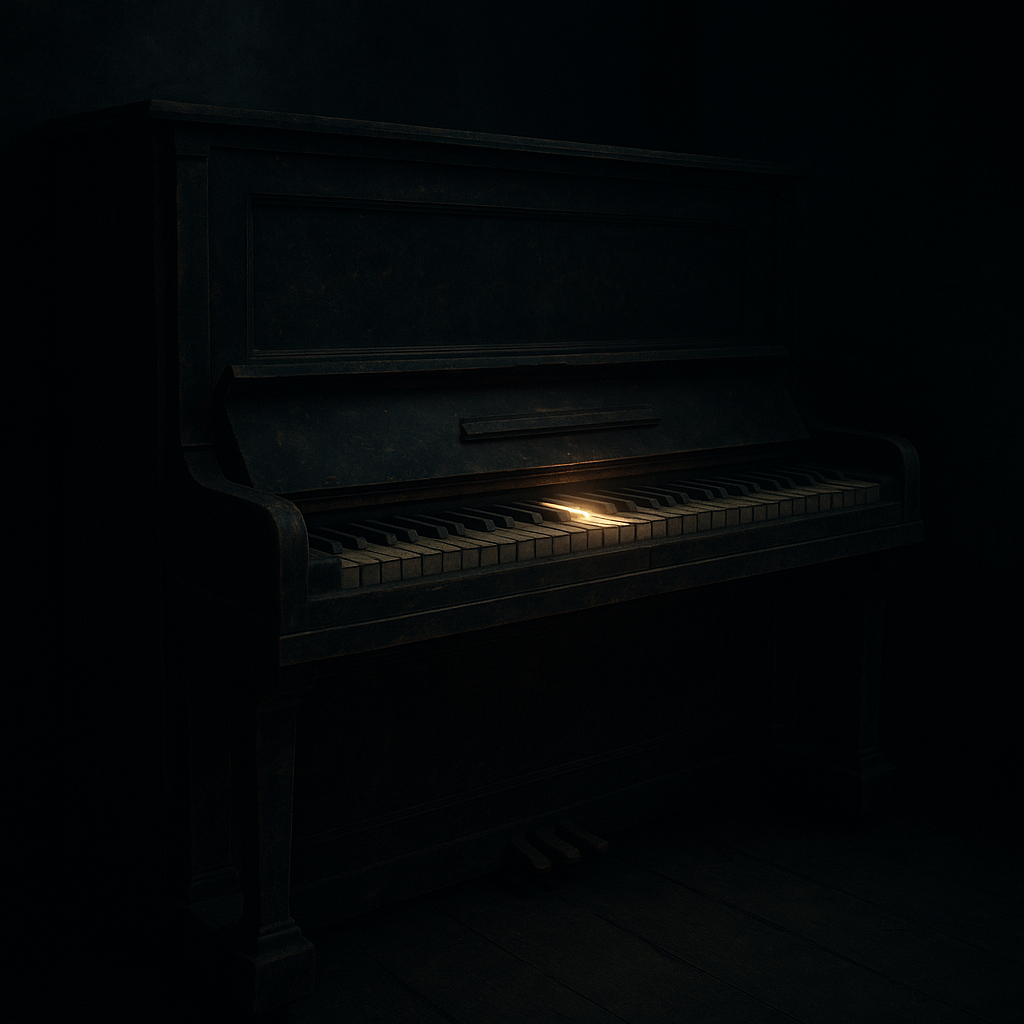
Explore Abdullah Ibrahim's journey: from Cape Town's District Six to global jazz icon, bridging continents with his unique sound.
Abdullah Ibrahim, originally Dollar Brand, is a legendary South African jazz pianist and composer. He pioneered Cape Jazz, blending local traditions with jazz, and his song "Mannenberg" became an anti-apartheid anthem. He's known for his unique piano style, commitment to music education, and transforming silence into powerful dialogue. Ibrahim's music, born from a mix of cultures in Cape Town, became a voice for his people.
What is Abdullah Ibrahim known for?
Abdullah Ibrahim, originally known as Dollar Brand, is a renowned South African jazz pianist and composer. He is celebrated for pioneering Cape Jazz, integrating South African musical traditions like ghoema and kwela with jazz. His composition "Mannenberg" became an anti-apartheid anthem, and he is recognized for his unique piano style and commitment to music education.
Get Cape Town news in your inbox
Stay updated with the latest stories from the Mother City.
Birthplace of a Sonic Homeland
Where Mountain and Ocean Met Piano Keys
Kensington, 1934: a compact grid of lanes squeezed between Devil’s Peak and the endless Cape Flats. Locals joked that you could smell the Atlantic and hear the muezzin in one breath. In the front room of a modest house, four-year-old Adolph Johannes Brand stretched stubby fingers toward an old harmonium his grandmother coaxed into life during Malay-choir rehearsals. By six he was sneaking into Trafalgar High’s cramped music room, taking lessons two streets away from the Grand Parade - once a slave market, later the stage for Nelson Mandela’s first free address. Centuries of sorrow and celebration seeped into the boy’s ears before he could spell either word.
Soon the boy’s notebooks overflowed with hybrid chords: snatches of New-Year ghoema drum patterns, langarm dance-band hooks, Afrikaans hymn cadences, and the taut pentatonic lines that Xhosa bow-players floated across the night. Adolph never thought of these as decorations to “real” jazz; they were the musical alphabet he was born into. Years later, when journalists invented the tag “Cape Jazz,” the pianist corrected them: “It isn’t a style, it’s a physical address.”
At sixteen, the teenager renamed himself Dollar Brand - American slang felt modern and the South African rand still equaled five U.S. dollars. The moniker sold beer-hall tickets, yet the music refused to stay put. Every gig ended with a chord that smelled of salt wind and echoed like a church bell across Table Bay.
The Long Road Out, The Short Road Home
Striding into Exile with One Suitcase and Three Scores
By 1960, apartheid laws had erased mixed-race stages. The Jazz Epistles - trumpeter Hugh Masekela and trombonist Jonas Gwangwa beside Ibrahim - had cut the first LP by a Black South African band, yet Sharpeville’s gunfire froze the scene overnight. Passports were revoked, clubs shuttered. In February 1962, Dollar and vocalist Sathima Bea Benjamin boarded a midnight flight to Zurich clutching a single suitcase and a folder of half-finished tunes.
Europe was busy inventing new futures: Coleman bent time, Coltrane sprayed sheets of sound, Cecil Taylor hammered the piano into a drum forest. Ibrahim answered with a spacious calm that swayed like kelp in an icy Atlantic current instead of driving American swing. One evening Duke Ellington strolled into Club Africana, listened, and left the pianist with six words: “Just keep playing exactly yourself.” A Vienna studio date in 1963 produced Reflections , its cover capturing Ibrahim eyes-closed, hands hovering - a pilgrim rather than a refugee.
Northward the caravan rolled - New York’s Village Gate opposite Herbie Hancock in 1965, Tokyo in 1976 where koto and shakuhachi timbres stained his voicings, Montréal in 1981 where he unveiled Tintiyane for an eleven-piece chamber ensemble. Yet every passport stamp intensified the contrast with home. During a 1968 concert at Cape Town’s Green Point Track, 12 000 listeners stood in drizzle for the first legal multiracial gathering since the 1950s. Between tunes a banner unfurled: “Dollar Brand Speaks Our Silence.” The pianist leaned to the mic and whispered, “I am not your spokesman; I am your echo.” Newspapers quoted the line for weeks.
Mannenberg: A Tune That Danced Through Tear-Gas
How Three Notes Became an Anthem
June 1974 found South Africa cracking - Durban strikes, gold prices plummeting, the Portuguese empire imploding across the border. Ibrahim and a new septet booked three hours at Gallo Studios in Johannesburg, intending a simple township single. Instead they sculpted a sixteen-minute vamp in C-minor, Basil Coetzee’s tenor sighing a lullaby above a shuffle that felt like dusk on the Flats. The engineer scrawled Mannenberg , after the windswept relocation camp that had swallowed evicted District Six families.
Pressed onto 45-rpm vinyl, Mannenberg (Is Where It’s Happening) sold 50 000 copies in ninety days. Taxi drivers looped the cassette until tape hissed. By 1985, with states of emergency blanketing the townships, UDF organizers blasted the tune from loudspeaker trucks to pacify soldiers. Graffiti bloomed: “This Is Mannenberg, Not Your Shooting Range.” From exile, Ibrahim watched cops seize boomboxes and felt a shiver: childhood piano drills had become ammunition.
Classroom in the Round: Teaching the World to Breathe Cape Air
Dawn Rehearsals in Berlin Subway Tunnels
Unlike many exiles who bolted home in 1990, Ibrahim split his life. At 67 he enrolled at the University of the Western Cape, lecturing on marabi chord cycles while retaining an autumn residency at Tokyo’s Pit Inn. For Tokyo students, he handed out photocopies of San rock-painting tracings, instructing them to invent rhythms from 7,000-year-old dots. “A diaspora in four notes,” he called one diminished voicing that clicked with both Cape Malay choir cadences and Stravinsky.
In 1999 he launched the M7 Academy in Berlin-Kreuzberg, doors opening at 5 a.m. so Turkish-German factory workers could study before shifts. Free tuition went to Syrian, Afghan, and Eritrean refugees. Graduation recitals erupted inside U-Bahn stations; tunnel reverb became a cathedral paid for by passing commuters.
Hammering Memory with Fingertips
Architecture, Silence, and Resonant Wood
Critics said his touch deployed “armored feathers.” Triads crowded above middle C, bass octaves ghosted by the left hand alone. During solos he sometimes hummed guttural drones, turning the grand into a surrogate kora. Uhadi-inspired micro-bends - middle finger sliding off a black key - tilted equal temperament toward ancestral lament.
Form followed Xhosa homestead spirals: enter east, circle hearth, exit west. Themes resurfaced at intervals, shadows shifting through a kraal door. Silence itself became a weapon. At Montreux 1979 he held Ishmael ninety seconds, hands poised, pedal up, until the audience’s breathing wrote the downbeat. In 1996, at the United Nations, he opened Anthem for the New Nation with two full minutes of nothing, diplomats fidgeting in headsets until a Cape Town Opera chorus rose from the aisles singing Nkosi Sikelel’ iAfrika in isiXhosa, isiZulu, and English. The pause, he later said, was “where passports dissolve.”
Duets Across Fault-Lines
When Griot Strings Met Cape Winds
The 1970s Dollar Brand Trio - bassist Johnny Dyani and drummer Makaya Ntshoko - spliced marabi with Bill Evans impressionism. 1980’s Ekaya septet added two flutes, trumpet, and tenor, layering calls like gulls above choppy water. Water from an Ancient Well cut in 1986 includes a track titled “Soweto,” taped in New York hours after police gunned down protestors. Ibrahim told horns to “run barefoot over broken glass.” DownBeat filed it under “post-bop kwela.”
In 1989 he shared a Berlin cathedral stage with Max Roach and kora master Foday Musa Suso, birthing a blues that morphed into Mandinka griot cycles. The cassette-only release, No End, No Beginning, bore sleeves stamped with Kofi Awoonor’s line: “Because we forgot how to dance, we built cathedrals.”
Homecoming Concerts and Cathedral Silos
Midnight Marathons and Grain Elevators Turned Halls
April 1994: Nelson Mandela’s inauguration, security carved twelve minutes; Ibrahim took twenty-seven, morphing Nkosi Sikelel’ iAfrika into a 5/4 waltz that had Desmond Tutu swaying in the rain. Later he dragged a baby grand onto the City Hall sidewalk, plastic-wrapped legs and all, while commuters filmed on VHS pleading, “Just play something that’s home.”
In 2000 the Cape Cape Town International Jazz Festival erected the Abdullah Ibrahim Hall inside a repurposed grain silo. Acoustic panels were tuned to the City Hall organ’s resonant frequency - physical dialogue between empire and invention. Ibrahim marked the debut with a six-hour solo beginning midnight, one hour for each December 1834 emancipation day, gliding from hymn sobriety to klopse carnival stomp.
Echoes Beyond the Vinyl Groove
Celluloid, Animation, and Memory Cards
BBC filmmaker Mark Kidel shadowed Ibrahim through dawn Manhattan in 1986, catching the pianist pause under a Harlem brownstone while a congregation sang “Precious Lord.” Freeze-frame the pianist’s eyes: recognition dawns - the flattened seventh his grandmother coaxed from a dusty harmonium. In 2020, director Ingo J. Biermann sifted 500 hours of Ibrahim’s private 8 mm reels, revealing 1970s Conakry jams with Miriam Makeba and a shy teenage Youssou N’Dour learning the four-finger F7# 11 voicing backstage.
Hollywood phoned. Clint Eastwood licensed Mannenberg for 2009’s Invictus on the condition the rugby scene be shot in Manenberg with local schoolchildren. The fee renovated the Manenberg Music Conservatory, now sheltering 120 students and rescued township 78s.
Animevision rang too. Japanese animator Masaaki Yuasa threaded the 1978 ballad The Wedding through Ping Pong the Animation as a character’s inner monologue - Cape Town dorm windows framing Table Mountain for anyone who knew where to look.
The Last Note, Unresolved
A 90-Second Lesson Sent at Dawn
Even Spotify’s algorithms could not cage him. In 2018 he collaborated with Berlin’s MaerzMusik to release The Song Is My Story on SD cards slipped inside hand-carved rosewood thumb pianos. Each card hid eleven unreleased solos tracked on a 1923 Steinway once caressed by Fats Waller. Owners could pluck the thumb-piano tines while the file played - human and ghost duetting in real time.
On 23 February 2024, hours before his death, Ibrahim emailed 74 friends, family, and former students a 90-second WAV labeled Dawn at 91. Ninety seconds of B-minor ostinato, two notes circling without resolution. The metadata simply reads: “Continue.”
[
{
"question": "What is Abdullah Ibrahim known for?",
"answer": "Abdullah Ibrahim, originally known as Dollar Brand, is a legendary South African jazz pianist and composer. He is celebrated for pioneering Cape Jazz, integrating South African musical traditions like ghoema and kwela with jazz. His composition \"Mannenberg\" became a powerful anti-apartheid anthem, and he is recognized for his unique piano style, characterized by a spacious calm, and his deep commitment to music education through initiatives like the M7 Academy."
},
{
"question": "Where was Abdullah Ibrahim born and how did his early environment influence his music?",
"answer": "Abdullah Ibrahim was born in Kensington, Cape Town, in 1934. His early environment, nestled between Devil's Peak and the Cape Flats, was a melting pot of cultures, sounds, and traditions. He absorbed influences from Malay-choir rehearsals, New-Year ghoema drum patterns, langarm dance-band hooks, Afrikaans hymns, and Xhosa bow-player melodies. He viewed these not as external decorations but as the fundamental \"musical alphabet\" of his upbringing, leading him to describe Cape Jazz as a \"physical address\" rather than just a style."
},
{
"question": "How did apartheid impact Abdullah Ibrahim's career?",
"answer": "Apartheid laws severely impacted Ibrahim's career, leading to the erasure of mixed-race stages and the shuttering of clubs after events like the Sharpeville massacre. In 1962, he and vocalist Sathima Bea Benjamin were forced into exile, moving to Europe. Despite being away from South Africa, his music, particularly \"Mannenberg,\" became a symbol of resistance and a voice for his people during the struggle against apartheid."
},
{
"question": "What is the significance of the song 'Mannenberg'?",
"answer": "'Mannenberg,' a sixteen-minute vamp in C-minor recorded in 1974, quickly became an iconic anti-apartheid anthem. Named after a windswept relocation camp for evicted District Six families, the song resonated deeply with South Africans, selling 50,000 copies in ninety days. It was played from loudspeaker trucks by UDF organizers to pacify soldiers during states of emergency, with graffiti proclaiming, 'This Is Mannenberg, Not Your Shooting Range.' It transformed from a musical piece into a powerful symbol of resistance and hope."
},
{
"question": "What is Abdullah Ibrahim's approach to music education?",
"answer": "Abdullah Ibrahim is deeply committed to music education. He has lectured on marabi chord cycles at the University of the Western Cape and, in 1999, launched the M7 Academy in Berlin-Kreuzberg. The academy offered free tuition, particularly to refugees, with doors opening at 5 a.m. to accommodate students before their work shifts. He emphasized connecting students to ancient roots, even providing photocopies of San rock-painting tracings to inspire rhythmic invention, aiming to teach the world to 'breathe Cape Air' through music."
},
{
"question": "How does silence play a role in Abdullah Ibrahim's music?",
"answer": "Silence is a profound and integral element in Abdullah Ibrahim's musical philosophy and performance. He views silence not as an absence of sound but as a powerful medium for dialogue and expression. He famously held ninety-second silences during performances, such as \"Ishmael\" at Montreux 1979, allowing the audience's breathing to establish the rhythm. At the United Nations in 1996, he began \"Anthem for the New Nation\" with two minutes of silence, stating that the pause was \"where passports dissolve,\" using it to create a space for profound connection and reflection before the music began."
}
]

Lerato Mokena is a Cape Town-based journalist who covers the city’s vibrant arts and culture scene with a focus on emerging voices from Khayelitsha to the Bo-Kaap. Born and raised at the foot of Table Mountain, she brings an insider’s eye to how creativity shapes—and is shaped by—South Africa’s complex social landscape. When she’s not chasing stories, Lerato can be found surfing Muizenberg’s gentle waves or debating politics over rooibos in her grandmother’s Gugulethu kitchen.
View all articles →