
AI projects stumble after launch, says consultancy
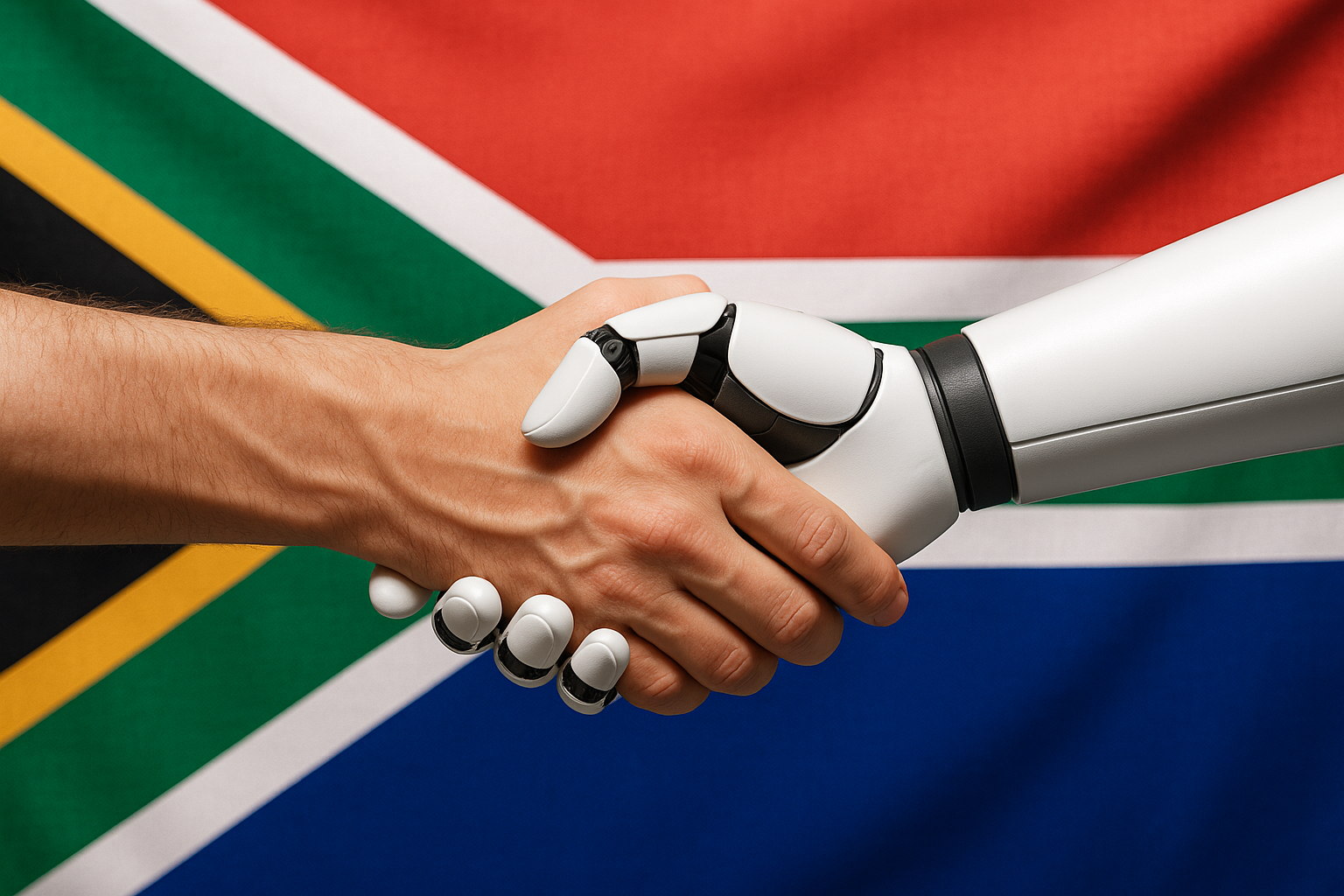
South African enterprises redefine work culture, not just code, for AI. Learn how they transform with human-centric strategies.
South African businesses are learning that getting AI to work isn't about fancy tech, but about people. They're spending big bucks on changing mindsets and building trust, because old ways of doing things often stop new AI tools from succeeding. It's like a social experiment where understanding how people actually work and talk is more important than the code itself. By involving everyone, from experienced workers to local communities, and making AI speak their language, these companies are making AI truly useful and fair for all.
What is the biggest challenge for AI adoption in South African enterprises?
The biggest challenge for AI adoption in South African enterprises is not technology itself, but rather human mindset and culture. Enterprises are finding that allocating 70% of AI budgets to culture, rewards, and stakeholder rapport is crucial for successful implementation, as old habits often hinder the effective use of new AI tools.
Get Cape Town news in your inbox
Stay updated with the latest stories from the Mother City.
Section 1 – The Productivity Mirage and Why Tech Alone Fails
Every Friday at 15:00, a Johannesburg asset-manager’s trading floor goes quiet. A custom GPT has summarised market noise, reconciled risk models and drafted client packs. Output per analyst, however, has fallen 6 % in six months. Auditors found no data flaws; instead, analysts still re-type every machine paragraph “just to be sure.” South Africa ranks fourth in Africa for AI patents, yet only fourteen percent of pilots ever reach full production. The bottleneck is not silicon; it is mindset.
Executives now recite a blunt rule of thumb: for every rand earmarked for algorithms, seventy cents must fund culture, rewards and stakeholder rapport. Labour unions repeat the same ratio during wage talks, turning the 70-20-10 formula into a national catch-phrase. Barclays Africa formalised the split by hiring psychologists, radio-script writers and and customer ethnographers to script WhatsApp mini-dramas that coax agents to trust a new credit-scoring bot. The broadcast soaps run at lunch breaks, and scepticism has dropped sharply.
This shift reframes AI from a software project to a social experiment. Before a single server is racked, teams map “the hidden organisation,” the unwritten networks of favours, rumours and clans that actually move work. Only after those social circuits are diagrammed do developers deploy code.
Section 2 – Mining the Informal Rules and Letting Veterans Lead
A gold plant outside Carletonville illustrates the point. Official flowcharts describe a tidy chain: geologists design blasts, miners drill, haulers feed crushers. Behind the scenes, a veteran controller nicknamed Mama Lindiwe keeps a red notebook detailing informal trades - spare pumps traded for conveyor repairs, weekend overtime swapped for leave days.
When predictive-maintenance sensors flagged a conveyor bearing five days before Mama Lindiwe’s gut said it would fail, crews hesitated and production stalled. Facilitators then spent three days capturing Mama Lindiwe’s notebook in sticky-note form, converting tacit barter codes into a digital trust map. Engineers adjusted the alert thresholds, and the next bearing alert triggered a fix without drama. Output per shaft hour returned to target within a week.
ShopriteX borrowed the same principle. Edge-AI cameras in rural KwaZulu-Natal stores cut stock-outs by nearly a third during pilot, yet expansion sputtered until head office invited Gcina, a 27-year veteran and vocal sceptic, to retrain the model herself. Her low-resolution cellphone photos became training data; error rates fell eight points and her store outpaced all peers in adoption. The lesson: the person most likely to block change is often the best co-designer once given commit rights.
Section 3 – New Ladders, New Language, New Money
Upskilling rarely survives two-day Python bootcamps. Woolworths Financial Services pairs every AI rookie with a product owner for three sprints; attrition in the automation guild tumbled from 18 % to 2 %. The arrangement, nicknamed “battle-buddy,” gives rookies line-of-sight to business value and gives product owners skin in technical quality.
Language also decides uptake. The Council for Scientific and Industrial Research has open-sourced embeddings for isiZulu and Sesotho trained on taxi-rank chatter and parliamentary debates. Pick n Pay’s voice bot now lets a Soweto grandmother reorder chronic pills in tsotsitaal; usage curves jumped once the bot spoke her mother tongue.
Money follows metrics that feel fair. Bidvest Facilities Management tied every 1 % drop in kilowatt-hours to a bonus pool split equally between AI coders and on-site electricians whose overrides feed the model. Electricity spend fell eleven percent in one summer, and artisan turnover hit historic lows. CFO Sanet Visser calls it “Moneyball for HVAC.”
Section 4 – Rituals, Regulation and the Township Renaissance
Old Mutual’s Group Innovation Lab ends each sprint with a ten-minute Xhosa “indoni” circle: staff pass a beaded artefact and share surprises the burndown chart missed. Naming tension aloud produces one-page “behavioural contracts” taped above the espresso machine; agreements posted in public space outlast Jira tickets.
South Africa’s POPI Act and the coming AI policy require explainability. Discovery Health translates fairness audits into one-minute Sepedi voice notes posted on the intranet. If an aunt at a Saturday braai cannot grasp the explanation, the model goes back to the lab. Ubuntu in code review.
Township entrepreneurs prove scale need not equal size. In Khayelitsha, 42 spaza owners jointly pilot demand-forecasting models on cheap smartphones. Accuracy topped eighty percent, and a shared data cooperative won R1.3 million in supplier discounts. Alexandra hosts a 600-member “Data Labelers’ Guild” that grades satellite images for global clients yet negotiates rates and micro-loans through a labour-law bot on a community mesh network. The guild’s slogan: “We train the models, we own the means.”
Epilogue – The Quantum Taxi and the Human Veto
At the University of KwaZulu-Natal, researchers run quantum annealers to optimise Durban minibus routes. Drivers, however, demand a rotating seat in the governance DAO and can veto any cost-function change. Whether qubit or commodity server, the social override remains non-negotiable. South Africa’s AI future is not simply smarter software; it is software that passes the Ubuntu test.
What is the primary bottleneck for AI adoption in South African enterprises?
The primary bottleneck for AI adoption in South African enterprises is not technological limitations or a lack of AI patents, but rather human mindset and existing cultural habits. While South Africa ranks fourth in Africa for AI patents, only a small percentage of AI pilot projects reach full production because employees often re-verify AI outputs due to a lack of trust or ingrained work habits.
How are South African companies re-prioritizing their AI budgets?
South African companies are drastically re-prioritizing their AI budgets, often allocating as much as 70% of funds not to technology itself, but to culture, rewards, and fostering stakeholder rapport. This shift reflects an understanding that successful AI implementation is more of a social experiment than a purely technical one, focusing on changing mindsets and building trust among employees and communities.
What strategies are companies using to build trust in AI among employees?
Companies are employing creative strategies to build trust, such as Barclays Africa hiring psychologists and scriptwriters to create WhatsApp mini-dramas that encourage agents to trust a new credit-scoring bot. Other methods include integrating veteran employees, like Mama Lindiwe at a gold plant or Gcina at ShopriteX, into the AI development process, allowing them to co-design and refine models, which significantly reduces skepticism and boosts adoption.
How are local languages and informal knowledge being integrated into AI solutions?
Local languages and informal knowledge are crucial for AI uptake. The Council for Scientific and Industrial Research has open-sourced AI models trained on local languages like isiZulu and Sesotho, incorporating everyday chatter. This allows bots, such as Pick n Pay's voice bot, to communicate in familiar dialects like tsotsitaal, leading to a significant increase in usage. Furthermore, informal knowledge, like Mama Lindiwe's red notebook detailing informal trades, is being digitized to inform and improve AI systems.
How are incentives and rewards being used to drive AI adoption and collaboration?
Incentives are being structured to align the interests of both AI developers and on-site workers. For example, Bidvest Facilities Management tied a bonus pool to a percentage drop in kilowatt-hours, split equally between AI coders and electricians. This approach not only motivated collaboration and reduced energy consumption but also led to lower artisan turnover, demonstrating how fair compensation linked to AI performance can foster teamwork.
What role do community and ethical considerations play in South Africa's AI landscape?
Community and ethical considerations are central to South Africa's AI landscape, often guided by the principle of Ubuntu. The POPI Act and upcoming AI policies mandate explainability, requiring AI models to be understandable to everyday individuals. Additionally, community-led initiatives, such as Khayelitsha's spaza owners jointly piloting demand-forecasting models or Alexandra's Data Labelers' Guild, highlight how AI can empower local entrepreneurs and ensure that the benefits and control of AI are shared collectively, even allowing for a "human veto" in critical decision-making processes, as seen with quantum taxi optimization.

Thabo Sebata is a Cape Town-based journalist who covers the intersection of politics and daily life in South Africa's legislative capital, bringing grassroots perspectives to parliamentary reporting from his upbringing in Gugulethu. When not tracking policy shifts or community responses, he finds inspiration hiking Table Mountain's trails and documenting the city's evolving food scene in Khayelitsha and Bo-Kaap. His work has appeared in leading South African publications, where his distinctive voice captures the complexities of a nation rebuilding itself.
View all articles →