
Akademia to establish new Afrikaans university campus in Paarl
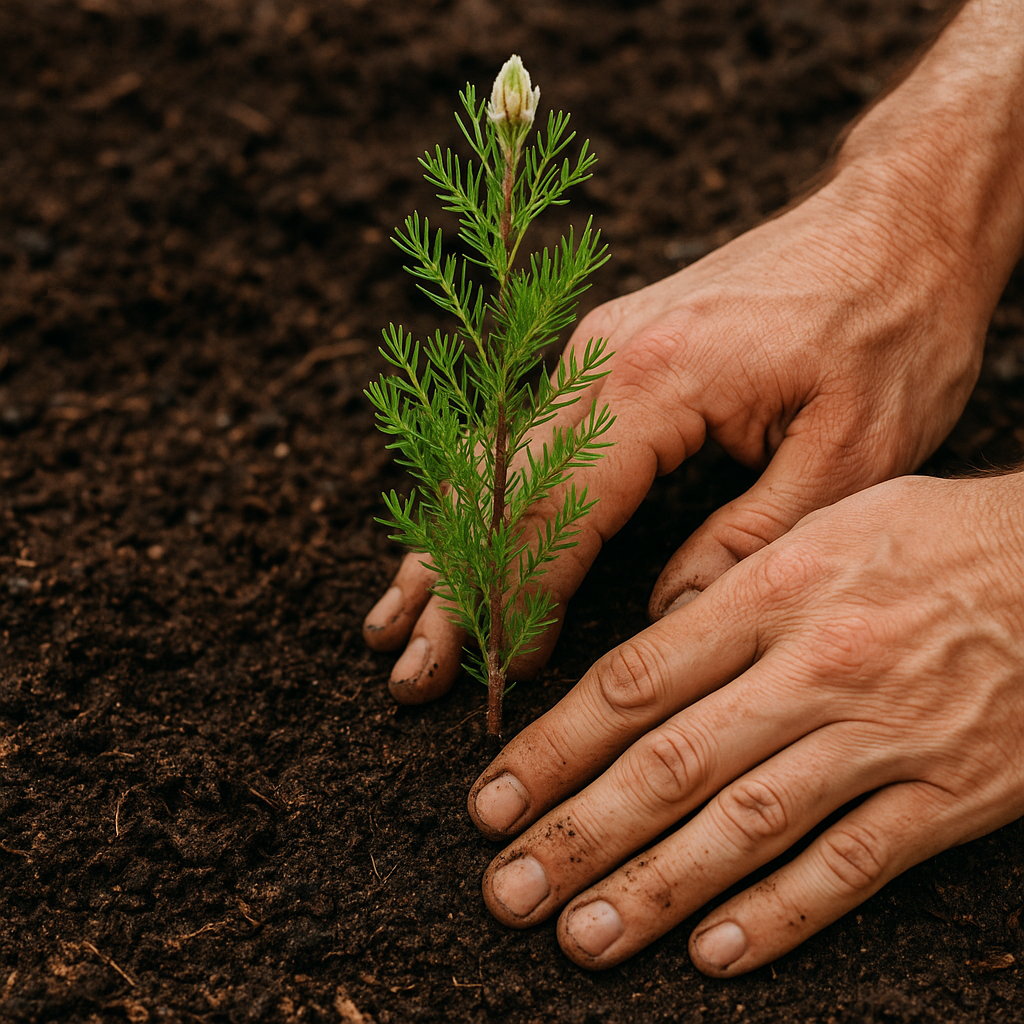
Akademia's 105-hectare vision takes root in Paarl. A new horizon for Afrikaans higher education, focusing on sustainability & inclusivity.
Akademia is building an amazing new campus in Paarl, turning old fields into a learning paradise. It's a huge project focusing on Afrikaans, nature, and being open to everyone. They're using smart, green designs and working with the community to make a special place for students to learn and grow, blending old traditions with new ideas.
What is Akademia's new campus?
Akademia's new 105-hectare campus, located in Paarl's Boschenmeer Valley, is a decade-long building program transforming grazing fields into a living laboratory for Afrikaans scholarship. Opening its first lecture hall in 2028, it aims to foster mother-tongue instruction, ecological design, and inclusivity.
Get Cape Town news in your inbox
Stay updated with the latest stories from the Mother City.
On 29 May 2026, the leadership of Akademia invited alumni, municipal councillors and local media to the Vêrgesig farm, a sloping bowl of land cupped against the granite flanks of the Wemmershoek Mountains. In the shade of old oak trees, Managing Director Marthinus Visser confirmed what rumours had hinted at for months: the university now holds title to 105 hectares of prime Paarl real estate. The moment closed a ten-year hunt for a permanent Western Cape base while simultaneously launching a decade-long building programme that will turn grazing fields and winter wetlands into a living laboratory for Afrikaans scholarship.
The transaction was neither flashy nor sudden; it had matured inside board-room spreadsheets and community-hall conversations since 2015, when student numbers first breached a thousand. Projections now point to 3,000 enrolled learners by the time the first lecture hall opens its doors in 2028. Yet the numbers alone do not capture the emotional freight carried by the project. Afrikaans speakers have watched public campuses retreat from mother-tongue instruction; here, they see terrain reclaimed not by protest but by patient capital, ecological design, and an insistence that the language can still serve as a bridge rather than a wall.
Vêrgesig: Between Granite and Water
Ground that once nourished pears and grazing cattle is now being read like a topographical manuscript. Two low granite ridges form a natural amphitheatre, shielding the future campus from the summer south-easter yet funnelling constant airflow through lecture halls and courtyards. Daytime highs above 35 °C are routine in this corner of the Berg River basin; the ridges promise to halve mechanical cooling loads before a single air-conditioner is ordered. Beneath the fields lies a shallow aquifer fed by mountain seepage. Engineers conservatively estimate that passive infiltration plus grey-water recycling can cover 30 % of domestic demand once Phase One toilets and showers begin to flow.
A diagonal ribbon of water cuts across the property, more modest stream than grand river. During winter it balloons into braided channels that invite kingfishers, weavers and an occasional fish-eagle. Akademia has zoned these wetlands as no-build corridors. Instead, landscape architect Rudolf Jansen van Vuuren will string elevated timber walkways above the reeds; first-year biology students will dip nets for aquatic invertebrates within earshot of their dormitories. Over 40,000 endemic plants - many propagated in the university’s own nursery - will spread across green roofs, bioswales and pollinator belts so that built form dissolves daily into flowering fynbos.
Building in Slices: A Five-Act Plan
2026–2028: The Foundational Core
Twelve thousand square metres of teaching space will rise first. A three-storey Humanities Hub, quarried stone visible in every façade, anchors the eastern ridge. Behind it, twin courtyards house 780 beds in a residence layout meant to foster “vertical neighbourhoods.” Sunk into the slope beneath the Hub, a 500-seat auditorium wears a green roof that doubles as an outdoor theatre for sunset concerts and graduation ceremonies.
2028–2030: STEM & Innovation Precinct
The next layer adds 6,400 m² of laboratories for biotechnology, agricultural engineering and data science. A Tech Transfer Garage will occupy a saw-tooth factory shed refurbished from an old packing store. Final-year teams can lease prototyping benches for eighteen months at subsidised rates, bridging the gap between coursework and commercial spin-off.
2030–2032: Health Sciences Annex
Anatomy lessons will unfold in a lab fitted with virtual dissection tables; nursing, dietetics and sports-science students will rehearse clinical hand-offs in inter-professional simulation suites. Stellenbosch University’s Faculty of Medicine has signed a partnership agreement, guaranteeing guest clinicians and joint curricula.
2032–2034: Arts, Culture & Language Commons
Recording studios for Afrikaans musicology and radio journalism will overlook the river. A three-storey “living archive” will host digitised manuscripts in partnership with the South African Centre for Digital Language Resources. Researchers and the public alike will be able to trace loan-word evolution from seventeenth-century Dutch to present-day Kaaps.
2034–2036: Legacy & Intensification
Final construction adds 4,000 m² of postgraduate research space through rooftop extensions. A staff village of forty cross-laminated-timber townhouses will generate more electricity than it consumes, feeding surplus into a private micro-grid anchored by 1.2 MW of rooftop photovoltaics.
How to Pay for a 21st-Century Campus
Akademia did not raid the public purse; instead, it stitched together a quilt of capital sources. Seed money of R620 million - accumulated tuition surpluses and donations routed through the Akademia Trust - will cover land transfer and Phase One building costs. Old Mutual’s Alternative Investments arm has underwritten a R1.1 billion green-bond programme whose coupon rate drops each year the campus beats pre-agreed carbon-emission targets.
Beyond high finance lies a tapestry of smaller moral investments. Over 120 local enterprises - vineyards, fintech start-ups, accounting firms - have pre-purchased naming rights to lecture theatres and residences in exchange for micro-equity in a private endowment. A retired fruit farmer has ceded an additional six hectares for a heritage pear orchard whose annual profit will bankroll ten full scholarships earmarked for learners from previously disadvantaged backgrounds. The university argues that mother-tongue education can be both excellent and inclusive.
Degrees, Languages and Shared Ground
Afrikaans remains the primary medium of instruction across every programme, yet monolingualism is treated as academic malpractice. A compulsory first-year module titled Cross-Linguistic Competencies pairs each learner with an isiXhosa conversational partner from nearby Kayamandi. Together they compile discipline-specific glossaries and co-author bilingual blog posts on ethics, robotics and water scarcity. Portfolios, not exams, determine credit.
Engineering students take the experiment further in the Xhosa-Innovation Sprint, a year-long challenge to design affordable soil-moisture sensors for small-scale farmers. All design iterations are documented in Afrikaans and isiXhosa before being pitched at the Stellenbosch Innovation Summit. The Western Cape Department of Agriculture has fronted R3 million to scale the most promising prototypes.
Signature research niches have been carved to make the new campus globally relevant without surrendering linguistic identity. Scholars will track how Afrikaans borrows from isiXhosa, Khoekhoegowab and Portuguese as immigration patterns shift. Viticulturists will fly drone-mounted multispectral cameras across drought-stressed Chenin Blanc vineyards interplanted with fynbos. AI-assisted therapy chatbots will deliver cognitive-behavioural therapy in isiZulu-Afrikaans code-switching to farmworkers in the Witzenberg Valley. Lawyers and engineers will co-draft peer-to-peer electricity trading rules once the campus micro-grid is fully operational.
Life beyond Lecture Hours
The traditional koshuis koor - central residence quadrangle - has been deliberately broken into six residential clusters sprinkled along the north-facing slope. No bedroom sits more than four minutes from a patch of renosterveld, and ground-floor cafés spill onto stepped pathways that double as flood-attenuation channels. Wi-Fi is everywhere, yet bandwidth is throttled between 11 p.m. and 4 a.m. to protect what Student Affairs calls “sleeptech hygiene.”
If you search for a rugby stadium, you will not find one. Trail runners follow a three-kilometre loop through renosterveld and past a bouldering wall carved into a disused quarry. A boathouse at the Berg River’s edge stores kayaks for dawn paddles, and a 25-metre lap pool is heated by waste warmth from the adjacent data centre.
Transport planning treats car ownership as a last resort. A dedicated Bus Rapid Transit lane runs from campus gate to Paarl station in eleven minutes; electric shuttles funded by the university glide along every twelve minutes during term. A 19-kilometre green cycle corridor will connect Akademia to Stellenbosch, with wireless charging pads embedded beneath rest-stop benches shaded by photovoltaic canopies.
Ecological Ledger and Public Covenant
Anchor Environmental’s impact report did not stop at “do no harm.” Instead, it demanded that Vêrgesig become net-positive across five ecosystem services by 2035: renewable energy surplus, atmospheric carbon sequestration, cleaner return-flow to the Berg River, pollinator biodiversity gain, and compost production exceeding fertiliser import. An independent scientific panel will audit progress annually and release an open-access State of Vêrgesig report.
Public engagement runs deeper than metrics. An annual “Vêrgesig Gesprek” series will bring comedians, poets and linguists to debate the future of Afrikaans in a multilingual society. Comedian and sociolinguist Tats Nkonzo headlines the inaugural forum. An outdoor sculpture garden, curated by alumna Nandipha Mntambo, will host rotating exhibitions on hybrid identity; a permeable boundary fence doubles as public art, allowing valley residents to wander lower trails without credentials.
Drakenstein’s economic forecasters project a R930 million annual injection into the local economy once the campus is fully operational. Direct employment will reach 650 permanent posts; construction between 2026 and 2036 will create 2,100 temporary positions, half earmarked for artisans trained through an on-site skills academy run with the Building Industry Federation of the Western Cape.
Where Heritage Breathes and Moves
Monumental statues will not dominate the grounds. Instead, memory is folded into materiality: neo-Cape Dutch gables re-interpreted in rammed earth; indigenous koffieklip stacked as retaining walls; archival sound pods triggered by motion sensors at dusk. Walk past the wetlands on a cool winter evening and you might catch an elderly voice singing an Afrikaans lullaby, layered beneath a Khoe praise-poem and a Xhosa initiation song - each looped over a chorus of clicking stream frogs.
In late 2027, students, staff, donors and neighbouring farmers will meet in a clearing still dense with fynbos to lay the ceremonial foundation stone. They will not consecrate a finished utopia; they will inaugurate an experiment that asks whether a university privileging Afrikaans can still model intercultural fluency, ecological repair and economic inclusivity.
[{"question": "What is Akademia's new campus and where is it located?", "answer": "Akademia's new campus is a 105-hectare development in Paarl's Boschenmeer Valley, Western Cape. It's designed to be a living laboratory for Afrikaans scholarship, integrating ecological design and aiming to open its first lecture hall in 2028."}, {"question": "What are the key phases of the campus construction?", "answer": "The construction is planned in five acts: 2026-2028 for the Foundational Core (Humanities Hub, residences, auditorium); 2028-2030 for the STEM & Innovation Precinct (labs, Tech Transfer Garage); 2030-2032 for the Health Sciences Annex (virtual dissection, simulation suites); 2032-2034 for the Arts, Culture & Language Commons (studios, living archive); and 2034-2036 for Legacy & Intensification (postgraduate research, staff village)."}, {"question": "How is Akademia funding this ambitious project?", "answer": "Akademia is funding the campus through a diverse approach, including R620 million from tuition surpluses and donations, a R1.1 billion green-bond programme underwritten by Old Mutual, and smaller 'moral investments' like naming rights pre-purchased by over 120 local enterprises. A retired farmer also donated six hectares for a heritage pear orchard to fund scholarships."}, {"question": "How does Akademia promote multilingualism and inclusivity despite prioritizing Afrikaans?", "answer": "While Afrikaans is the primary medium of instruction, Akademia strongly promotes multilingualism. A compulsory first-year module, 'Cross-Linguistic Competencies,' pairs students with isiXhosa conversational partners. Engineering students participate in a 'Xhosa-Innovation Sprint,' and signature research tracks explore how Afrikaans borrows from other languages like isiXhosa, Khoekhoegowab, and Portuguese."}, {"question": "What sustainability and ecological features are integrated into the campus design?", "answer": "The campus incorporates numerous green designs. Its location utilizes natural ridges for airflow to reduce cooling loads, and a shallow aquifer combined with grey-water recycling will cover 30% of domestic water demand. Wetlands are protected no-build zones with elevated walkways, and over 40,000 endemic plants will be integrated. The campus aims to be net-positive across five ecosystem services by 2035, including renewable energy surplus and pollinator biodiversity gain."}, {"question": "What facilities are available for student life and activities outside of academics?", "answer": "The campus offers a unique student experience. Residences are broken into clusters along a slope, encouraging connection with nature. Instead of a rugby stadium, there's a 3km trail running loop, a bouldering wall, a boathouse for kayaks on the Berg River, and a 25-meter lap pool heated by waste energy. Transport focuses on sustainability with a dedicated Bus Rapid Transit lane, electric shuttles, and a 19km green cycle corridor to Stellenbosch."}]

Aiden Abrahams is a Cape Town-based journalist who chronicles the city’s shifting political landscape for the Weekend Argus and Daily Maverick. Whether tracking parliamentary debates or tracing the legacy of District Six through his family’s own displacement, he roots every story in the voices that braid the Peninsula’s many cultures. Off deadline you’ll find him pacing the Sea Point promenade, debating Kaapse klopse rhythms with anyone who’ll listen.
View all articles →