
Amber Fillary’s near-death ice swim and world-record comeback captured in new documentary
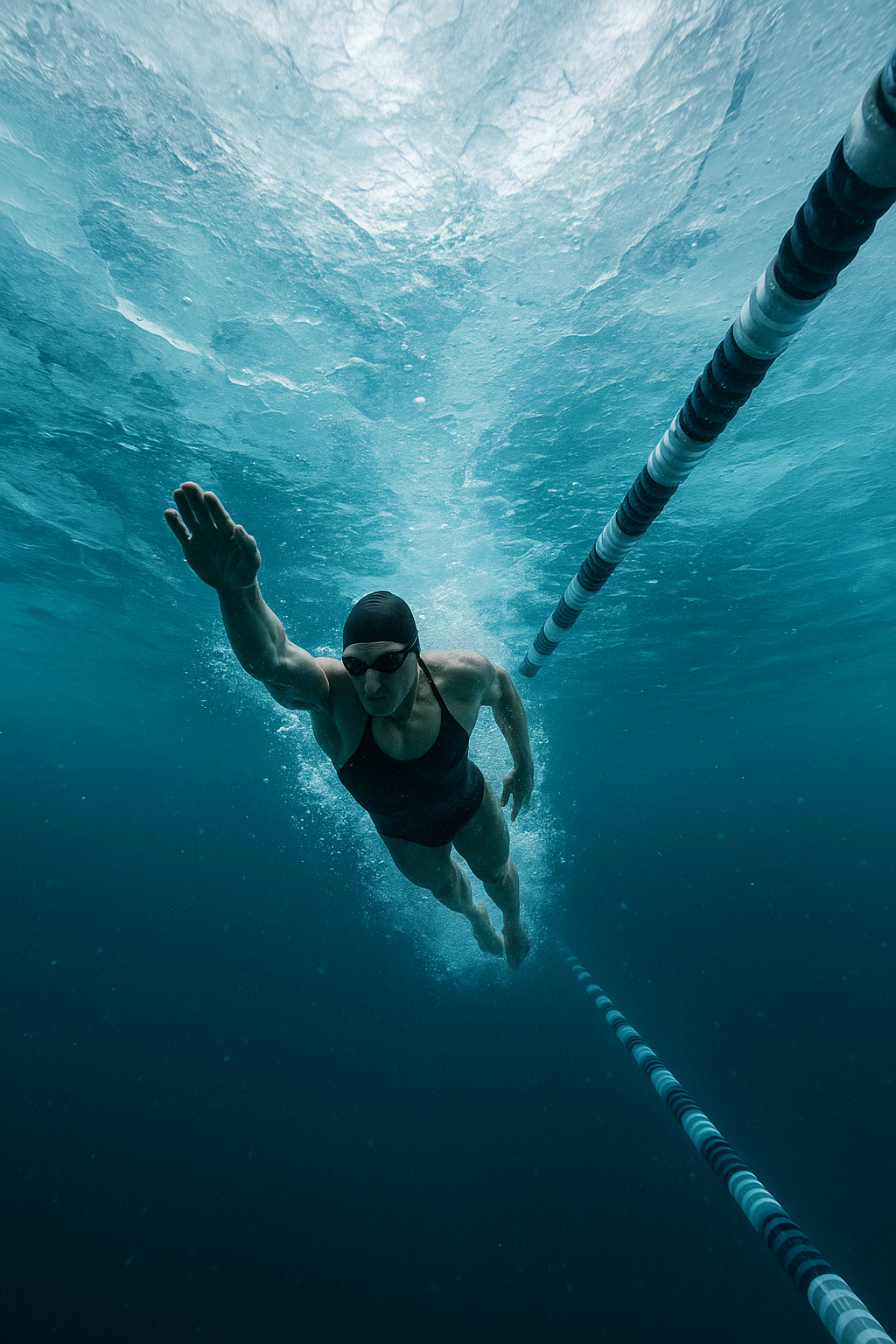
Dive into Amber Fillary's submerged odyssey in "Under the Ice." A gripping tale of obsession, near-death, and profound recovery.
Amber Fillary, a brave freediver from South Africa, faced a huge challenge: swimming 100 meters under thick ice in Norway. She almost died when she blacked out during the swim. The movie shows how she got better, both in her mind and body, by using cold water therapy. In the end, she went back to the ice and won against her past troubles, showing amazing strength.
What is Amber Fillary's sub-zero saga about?
Amber Fillary's sub-zero saga details her journey as a South African freediver who attempted a 100-meter traverse under ice in Norway. The film documents her near-fatal blackout during the attempt, her subsequent psychological and physical recovery, and her eventual triumph over past traumas through cold-water therapy and a return to the ice.
Get Cape Town news in your inbox
Stay updated with the latest stories from the Mother City.
1. When a South-African Child Met Winter Water
Twelve-year-old Amber Fillary stood on a wooden jetty at dawn, the Breede River slapping against pylons beneath her bare feet. One leap sent her into water sharp enough to rattle every tooth. She came up gasping, skin on fire from the chill - and laughing.
Twenty-five winters later she planted her boots on a frozen lake outside Tromsø. The thermometer read –4 °C; the water beneath the 30 cm lid of ice rested just above zero. Between the two moments stretches a life in which the athlete transformed exile from her own climate into compulsion, then into a test that almost killed her.
South Africa’s sporting annals are rich with rugby trophies, Comrades medals and Midmar mile records, yet never before had one of its athletes carried the flag into the frigid lungs of a Nordic lake.
2. Anatomy of a 100-Meter Minefield
A single-breath 100 m traverse is already one of freediving’s nastiest exams. Horizontal metres count against the same physiological clock that governs vertical depth: when CO₂ crosses the blackout threshold, consciousness slips regardless of direction. Add a locked ice roof and the margin for error narrows to knife-edge.
• Ice thickness: 30–40 cm – solid enough for snowmobiles, zero escape hatch.
• Course: a rectangle cut by chainsaws, two metres across, three deep.
• Sightlines: the glacial haze offers five metres at best, light filtered into ghost-blue.
• Threat list: carbonic fog inside the skull, lactic fire in the thighs, tremor from the dive reflex, a leg infection pulsing under thin neoprene.
Fillary stripped the kit down to the absolute: basic swimsuit, no fins, no hood, no pony bottle. A single parachute cord tied to her waist served as breadcrumb trail for safety divers if she blacked out beneath the roof. Everything else was ballast she refused to carry.
3. Rolling Cameras in a Deep Freeze
John Martin had already cooked under the Karoo sun for his debut “Blisters on the Karoo”. The polar opposite called to him. He landed in Tromsø hauling two RED rigs in splash bags, a drone quickly grounded by whiteout, and a sound recordist quilted in down who resembled a walking mattress.
Cold is a vampire for batteries; lithium packs shed half their juice in thirty minutes. Crews rotated camera bodies the way hockey coaches swap lines, one unit warming inside a parka while the other rolled. GoPros froze into frosted paperweights, so Martin drilled the lake bed, anchoring tripods deep in sediment until the lenses peered upward like periscopes.
The finished images feel medical and hallucinogenic at once: a lone figure sliding through milk-green murk, silver bubbles crawling like liquid mercury along the ice ceiling, the soundtrack nothing but a muffled heartbeat and the clink of metal rings on the safety tether.
4. Sixty-Six Seconds from Glory to Gray
00:00 – Fillary folds into the slot, eyes wide, arms folded into perfect glide.
00:22 – First dolphin kick; calcium chaos sparks a tremor in the left quad.
00:38 – She passes the first rescue diver at twenty-five metres, flicking an okay signal.
00:46 – Spleen squeezes, dumping extra red cells.
01:02 – The infected shin lights up like a branding iron.
01:04 – Pain forces CO₂ to spike; her stroke degrades into inefficient sculling.
01:10 – Eighty-five metres in, her shoulder clips the roof; a flurry of snow crystals drifts like dust in a sunbeam.
01:14 – Hypoxia wins; limbs slacken, diaphragm flutters.
01:16 – Safety diver Robert Andersen closes four metres in two strokes and yanks the quick-release.
01:25 – She breaches the exit hole with a thready pulse of thirty-eight and a core temp of 30.2 °C.
5. From Oxygen Mask to Existential Fog
Tromsø University Hospital threaded a central line and reheated her blood outside the body. Forty-eight hours later she was med-flighted to Cape Town, veins full of antibiotics and memory that refused anesthesia.
Martin asked the camera to stay. Viewers spend months inside her Woodstock flat:
• Tequila bottles multiplying on the counter like soldiers awaiting inspection.
• A silent ritual along Sea Point promenade where she watches waves as if they owe her an apology.
• Audio-only therapy in which she whispers the ice still “sits on my sternum like a nailed lid”.
• Late-night marker fumes as she converts her kitchen wall into a cardiac-variability dashboard.
6. Old Footage as Ballast, Not Balm
Martin splices in dusty DV tapes: teenage Amber disqualified in Pietermaritzburg for an illegal turn; teeth clenched in 2015 as hypothermia ends her Robben Island swim mid-crossing. Each freeze-frame lingers on the eyes, magnifying shame long before Norway.
The film argues the Tromsø blackout was no freak accident; it was the inevitable detonation of a personality that refines failure into rocket fuel - until the mixture grows unstable.
7. Rewiring the Freeze Response
Elite cold-water rehab marries physiology with trauma psychology.
• Graduated exposure: sixty-second 15 °C showers progressing to ten-minute 7 °C surf sessions, synchronised with 4-7-8 breathing to block hyperventilation.
• VR re-scripting: headsets replay the exact Tromsø geometry, but every ten metres a neon exit hatch glows, retraining spatial memory.
• Supplements: ketone esters for steady cerebral glucose, pre-sleep magnesium glycinate to smother cortisol spikes.
Fillary live-streams every HRV blip. Resting pulse drops from sixty-two to forty-six; static CO₂ tolerance climbs past two minutes. The audience watches a silhouetted tow-float inch farther from Clifton 4th every week.
8. A Stillness Called Victory
March 2022. Same lake, looser mind. Objective: vertical descent, sixty seconds of absolute hover, ascent. Any forward motion disqualifies the attempt. Martin overlays split-screen footage - 2020 chaos versus 2022 stillness. The moment she breaks the surface is presented raw, no slo-mo, no score - just neoprene squeak and Arctic wind.
9. Southern Cross Meets Northern Lights
The Sports Science Institute of South Africa hosts “Cold Shock, Hot Minds”. Fillary shares the stage with A.B. de Villiers and Ryan Sandes. Schoolkids see their first ice sheet outside a textbook and ask whether fear ever resigns. Fillary answers that terror now rides shotgun, no longer hijacks the wheel.
10. Ghosts the Lens Couldn’t Ignore
• Diver Andersen’s logbook: “Three recoveries from this lake; I do an extra push-up for each before I kit up.”
• A retired lumberjack who cuts lanes with a chainsaw in one hand and carves pocket-size whales with the other, one for every swimmer.
• A barkeep who keeps a candle burning all polar night for “the ones who didn’t surface breathing”.
11. Ice as Mirror, Not Mountain
Critics read the film as post-colonial reversal: a warm-ocean native confronting the frozen north, rewriting centuries of European explorers “discovering” African terrain. A Sami drummer closes the Norwegian segment with a joik translating to “the lake remembers every footprint”, framing Fillary’s swim as dialogue, not domination.
12. From Festival Buzz to Living Archive
Durban International Film Festival premiered the cut; Outside+ and PBS America queued next. Subtitles exist in French, German, isiXhosa and Sami. Rotten Tomatoes posts 97 % approval; Netflix courts a three-part interactive spin-off with telemetry overlays.
Nelson Mandela University is digitising every raw terabyte - therapy audio, ECG strips, even 400 hours of unused B-roll. From 2026 scholars can VR-crawl the 100-m lane, haptics nudging their virtual shoulder each time it grazes the ice.
13. Soundtrack That Breathes
Composer Nakhane re-tracked “In the Dark Room” inside a Caledon grain silo, then dunked mics in an ice bath. Warped tones mirror divers’ low-frequency distortion. The song plays twice only - once beneath blackout, once during the zero-point victory. The mix times melting icicles to 60 bpm, turning the final reel into a stethoscope pressed to the audience’s pulse.
14. Next Laps in Colder Water
Training notes flash for three seconds: Antarctic fast-ice relay 2025, four athletes, 125 m each on one continuous line. Solar-heated tents, wind-powered coils, an Aussie hyperbaric doctor. Martin has already titled the sequel: “Under Even Colder Ice”. Question posed: after surviving ruin, why walk back into its kitchen?
15. Policy Aftershock
In response to the film, the South African Sports Confederation green-lights six free therapy sessions for any athlete who survives a catastrophic performance incident. The measure is small-budget yet seismic: psychological wounds now qualify as legitimate sports injuries. Doctors credit the unfiltered scene of Fillary retching into a basin, whispering, “I’m still in the lake.”
What is Amber Fillary's sub-zero saga about?
Amber Fillary's sub-zero saga details her journey as a South African freediver who attempted a 100-meter traverse under ice in Norway. The film documents her near-fatal blackout during the attempt, her subsequent psychological and physical recovery, and her eventual triumph over past traumas through cold-water therapy and a return to the ice.
Where did Amber Fillary's initial passion for cold water originate?
Amber Fillary's connection to cold water began at the age of twelve when she would jump into the frigid Breede River in South Africa. This early experience, where she found joy in the shocking chill, foreshadowed her later compulsion to challenge herself in extreme cold environments.
What were the specific challenges of the 100-meter ice traverse?
The 100-meter ice traverse presented extreme difficulties due to the 30-40 cm thick ice overhead, allowing no escape. The course was a chainsaw-cut rectangle with limited visibility (about five meters). Risks included CO₂ buildup leading to blackout, lactic acid, tremors from the dive reflex, and even a leg infection Fillary was battling. She went with minimal gear: basic swimsuit, no fins, no hood, and only a parachute cord for safety.
What happened during Amber Fillary's near-fatal attempt?
During her 100-meter attempt, Fillary blacked out at 1 minute and 14 seconds, 85 meters into the swim. She experienced a tremor, pain from an infection, and her stroke degraded due to rising CO₂. A safety diver, Robert Andersen, had to quickly intervene, pulling her to the exit hole. She surfaced with a very low pulse and core body temperature, requiring immediate medical attention.
How did Amber Fillary recover from her trauma?
Amber Fillary's recovery involved both physical and psychological rehabilitation. After being medically airlifted back to Cape Town, she underwent intensive cold-water therapy, gradually increasing exposure to cold water while practicing 4-7-8 breathing techniques. She also utilized VR re-scripting to retrain her spatial memory of the ice environment and engaged in audio-only therapy to process her trauma, eventually transforming her kitchen wall into a cardiac-variability dashboard to track her progress.
What impact has Amber Fillary's story and the film had?
The film has garnered critical acclaim, with 97% approval on Rotten Tomatoes and interest from platforms like Netflix. Beyond entertainment, it has had a significant policy impact: the South African Sports Confederation now offers free therapy sessions for athletes experiencing catastrophic performance incidents, recognizing psychological wounds as legitimate sports injuries. Her story has become an archive for scholars and continues to inspire, with plans for a sequel and more extreme challenges.

Sarah Kendricks is a Cape Town journalist who covers the city’s vibrant food scene, from township kitchens reinventing heritage dishes to sustainable fine-dining at the foot of Table Mountain. Raised between Bo-Kaap spice stalls and her grandmother’s kitchen in Khayelitsha, she brings a lived intimacy to every story, tracing how a plate of food carries the politics, migrations and memories of the Cape.
View all articles →