
‘American Pie’ star Shannon Elizabeth reveals why South Africa changed her life forever
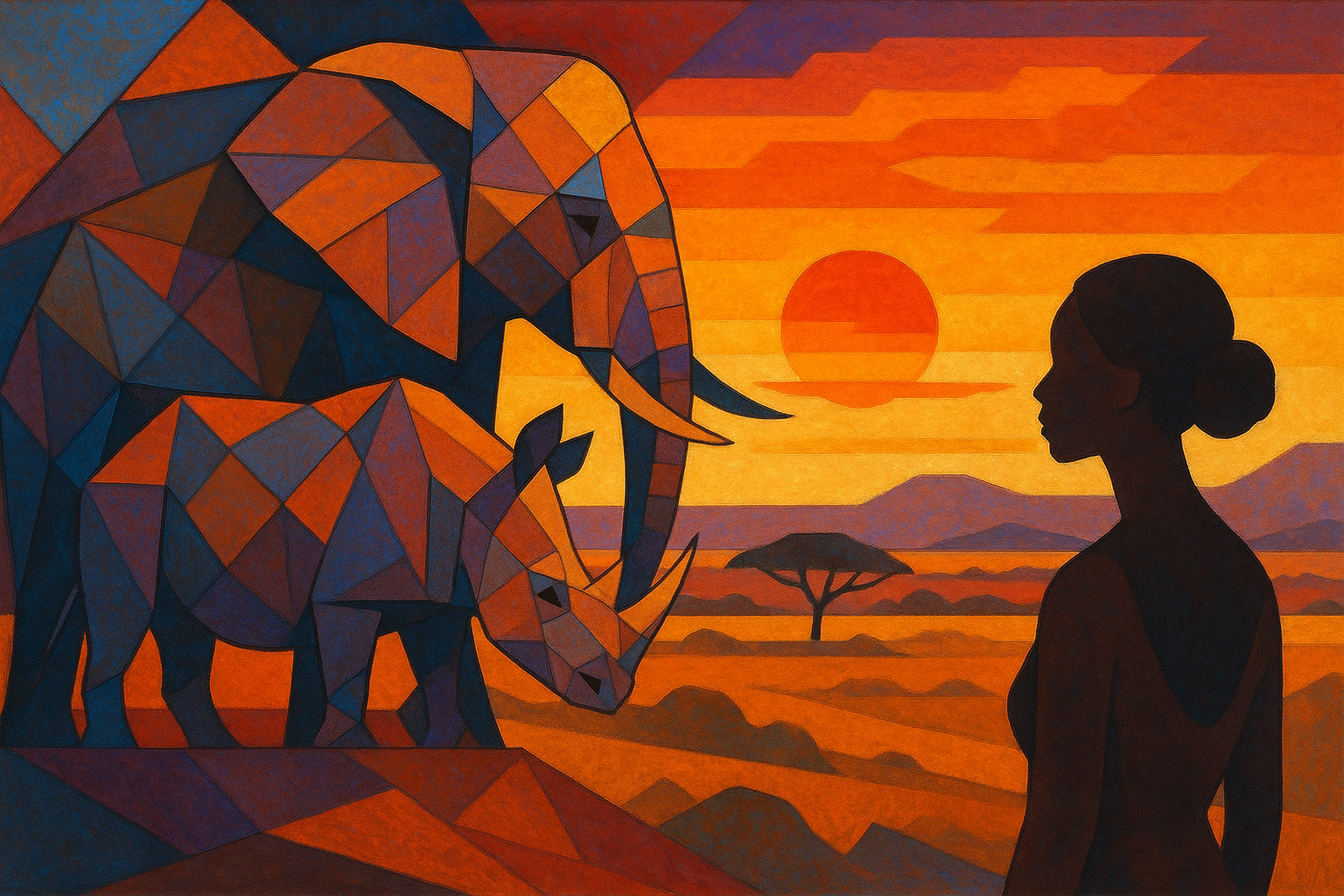
From Hollywood starlet to dedicated conservationist, Shannon Elizabeth found her true calling in South Africa, transforming her life.
Shannon Elizabeth, once a Hollywood star, found her true calling in South Africa. She moved there and started the Shannon Elizabeth Foundation to save endangered animals and fix environmental problems. This huge change, from acting to being a dedicated conservationist, shows her deep love and connection with the African continent. She's not just visiting; she's living and working there, making a real difference.
What is Shannon Elizabeth's connection to South Africa?
Shannon Elizabeth has transformed from a Hollywood actress to a dedicated conservationist in South Africa. She established the Shannon Elizabeth Foundation in Cape Town to protect threatened species and address environmental challenges. Her deep engagement, including physical relocation and organizational development, reflects a profound bond with the continent.
Get Cape Town news in your inbox
Stay updated with the latest stories from the Mother City.
From Silver Screen to Savannah
When Shannon Elizabeth recently shared a sunlit image from Cape Town on social media, her accompanying words struck a familiar chord with those who have followed her journey. She wrote about how simply being there slows her pulse, deepens her breathing, and opens her eyes to genuine beauty. For an actress who became a household name playing Nadia in the 1999 blockbuster American Pie, this was no ordinary travel post. It marked another entry in a profound love story with the African continent - one that has gradually rebuilt her public identity from entertainment figure to committed environmental defender and honorary citizen of the Mother City.
Elizabeth's message captured something ineffable that many travelers struggle to express. Yet her bond with this land extends well beyond what most visitors experience. She has spoken of South Africa as a presence that has tested her limits, sparked her creativity, wounded her spirit on occasion, and ultimately expanded her heart beyond previous boundaries. Such language reveals metamorphosis rather than mere admiration. Her statement that she cannot envision existence without this connection demonstrates how thoroughly the actress has redirected her personal and career priorities toward Africa's southern extremity.
The emotional vocabulary she employs - transformation, challenge, unexpected fulfillment - suggests a relationship that has fundamentally restructured her sense of self. Where once her identity centered on Hollywood glamour and comedic performance, it now orbits around endangered species and habitat preservation. This repositioning did not happen overnight, nor did it emerge from casual interest. Instead, it crystallized through years of direct engagement with conservation crises and the communities working to solve them.
The Path to Purpose-Driven Presence
Elizabeth's initial footsteps on South African soil carried specific intention rather than holiday spontaneity. Her 2015 arrival came through partnership with the Save African Rhino Foundation, an entry point that would prove decisive. While famous names frequently attach themselves to charitable causes as temporary reputational investments, Elizabeth's involvement with wildlife protection deepened into lasting dedication. Within three years, she had planted permanent roots by establishing the Shannon Elizabeth Foundation in Cape Town, constructing organizational architecture to sustain work protecting threatened species and tackling wider environmental challenges.
This evolution from short-term guest to anchored activist follows recognizable patterns among prominent individuals who have developed meaningful African ties, though Elizabeth's dedication appears especially grounded. The foundation's operational base in Cape Town situates her within an urban center that has grown increasingly attractive to international conservation groups. These organizations converge on South Africa because of its singular status as both extraordinary biodiversity repository and battleground against illegal hunting that devastates rhino, elephant, and countless other populations.
The city itself has become something of a headquarters for environmental action, drawing expertise and funding from across the globe. Elizabeth's decision to build her institutional presence there reflects strategic thinking about where her efforts could achieve maximum leverage. Rather than scattering attention across multiple continents, she concentrated resources where ecological stakes prove highest and where existing networks could amplify her foundation's impact.
Cape Town's Magnetic Appeal
Elizabeth's documented affection for South Africa joins her with notable company. During 2024, fellow performer Gabrielle Union attracted considerable notice by revealing private family rituals conducted in Cape Town. Union and spouse Dwyane Wade had traveled there to commemorate her deceased father, returning to a Western Cape vineyard where they had previously planted grapevines. There, beneath cultivated rows with mountains rising behind, they interred Sylvester Union Jr.'s remains. Such ceremonies of deep personal meaning, enacted amid agricultural beauty and dramatic topography, illuminate why Cape Town occupies unique territory in worldwide consciousness.
This distinction matters because tourism itself has limits as a mechanism for genuine engagement. Many destinations offer spectacular views without necessarily fostering lasting commitment. Cape Town appears to generate something more durable, perhaps because its social and historical complexities resist superficial treatment. Visitors who remain long enough encounter narratives of struggle and reconciliation that demand authentic response rather than passive consumption.
Frontline Environmental Action
The conservation challenges Elizabeth's foundation confronts carry genuine existential weight. South Africa shelters roughly four-fifths of Africa's surviving rhinoceros population, placing it at the epicenter of illegal hunting conflicts that destroy thousands of animals yearly. The Shannon Elizabeth Foundation contributes to extensive networks encompassing anti-poaching patrols, public education initiatives, and policy campaigns targeting both immediate violence and underlying conditions enabling environmental crime.
Her participation illustrates shifting approaches to famous-person environmental advocacy. Previous eras saw celebrities simply lending recognition to remote struggles. Elizabeth has pursued immersed commitment - physical relocation, organizational construction, and persistent focus. This method involves hazards; conservation work in disputed territories navigates intricate political economies, security dangers, and periodic discouragement. Elizabeth's admission that South Africa has "broken my heart" presumably acknowledges these difficulties alongside the sorrow of observing habitat destruction firsthand.
The foundation's programming extends beyond charismatic megafauna to encompass community development and sustainable livelihood creation - recognition that conservation succeeds only when neighboring populations see tangible benefits from preservation rather than extraction. This integrated philosophy distinguishes serious environmental work from superficial wildlife tourism, embedding Elizabeth's efforts within broader movements toward justice-centered ecological practice.
Authentic Engagement Beyond Performance
Relationships between public figures and African destinations unfold within intricate contemporary circumstances. Digital documentation of travel across the continent has faced criticism for reinforcing troublesome visual conventions - poverty voyeurism, colonial rescue fantasies, or surface-level aesthetic appropriation that masks structural conditions. Elizabeth's arc provides partial response through verified institutional dedication and engagement stretching across approaching ten years.
Her foundation's Cape Town location additionally places her within developing stories about African-led conservation. While global attention typically concentrates on photogenic animals and externally financed protection schemes, South African environmentalism increasingly showcases sophisticated indigenous expertise, community-managed resource systems, and traditional ecological knowledge. Elizabeth's extended stay generates potential for substantive collaboration rather than exploitative involvement, though such arrangements demand continual critical assessment.
The question of who benefits from conservation tourism and celebrity advocacy remains pertinent. Elizabeth's model - establishing local organizational capacity rather than simply visiting and photographing - suggests awareness of these power dynamics. Whether this translates into genuinely equitable partnerships depends on ongoing accountability and willingness to cede control to African leadership.
Why South Africa Captivates and Converts
What accounts for this particular nation's ability to inspire such personal revolutions? Geographic elements supply partial explanation - the theatrical meeting of Atlantic and Indian Oceans, concentrations of endemic species, climatic moderation producing exceptional living standards. Historical and cultural factors carry equivalent weight: South Africa's layered post-apartheid story invites visitors into engagement with reconciliation, disparity, and societal change that exceeds tourism's ordinary scope.
For Elizabeth specifically, South Africa seemingly delivered elements unavailable within Hollywood's competitive ecosystem - genuine mission, quantifiable contribution, and identity reconstruction beyond entertainment industry limitations. Her passage from American Pie's objectified humor to environmental spokesperson represents individual reinvention that South Africa has simultaneously made possible and come to symbolize.
The contrast could hardly be sharper: from performing scripted comedy about adolescent desire to negotiating with government officials about anti-poaching strategy. This trajectory suggests that South Africa offered not merely escape from previous constraints but active participation in something larger than individual career advancement.
Present Circumstances and Future Possibilities
Elizabeth's most recent reflections surface as South Africa confronts substantial difficulties including electrical grid failures, economic contraction, and governmental transitions that have strained international optimism. Celebrity validation carries restricted practical influence against such structural pressures, yet shapes narrative environments affecting investment flows, migration decisions, and policy frameworks. Her continuing physical presence and vocal support - especially through organizational infrastructure exceeding sporadic appearances - provides weightier contribution than conventional destination marketing.
The wider pattern of prominent individuals developing African attachments merits sustained attention. As planetary heating accelerates, preservation necessities intensify, and distributed employment enables geographic flexibility, trajectories resembling Elizabeth's may multiply. South Africa's specific combination of established infrastructure, natural endowments, and substantive engagement opportunities positions it to gain from such tendencies, contingent on addressing obstacles currently constraining its developmental potential.
Shannon Elizabeth's South African narrative thus functions across several dimensions simultaneously: account of personal metamorphosis, examination of conservation methodology, illustration of celebrity geographic mobility, and meditation on transforming relations between affluent-world travelers and African locations. Her social media observation about fuller breathing in Cape Town encapsulates nearly ten years of accumulated practice, institutional growth, and authentic dedication that separates her involvement from transactional vacationing. The enchantment she describes derives from this accumulated substance rather than landscape alone - evidence of South Africa's power to transform observers into stakeholders in its continuing national evolution.
{'question': 'What brought Shannon Elizabeth to South Africa?', 'answer': 'Shannon Elizabeth initially came to South Africa in 2015 through a partnership with the Save African Rhino Foundation. This experience deepened her involvement with wildlife protection, leading her to establish the Shannon Elizabeth Foundation in Cape Town within three years.'}

Isabella Schmidt is a Cape Town journalist who chronicles the city’s evolving food culture, from Bo-Kaap spice merchants to Khayelitsha microbreweries. Raised hiking the trails that link Table Mountain to the Cape Flats, she brings the flavours and voices of her hometown to global readers with equal parts rigour and heart.
View all articles →