
Bafana Bafana’s World Cup 2026 squad unveiled by Hugo Broos
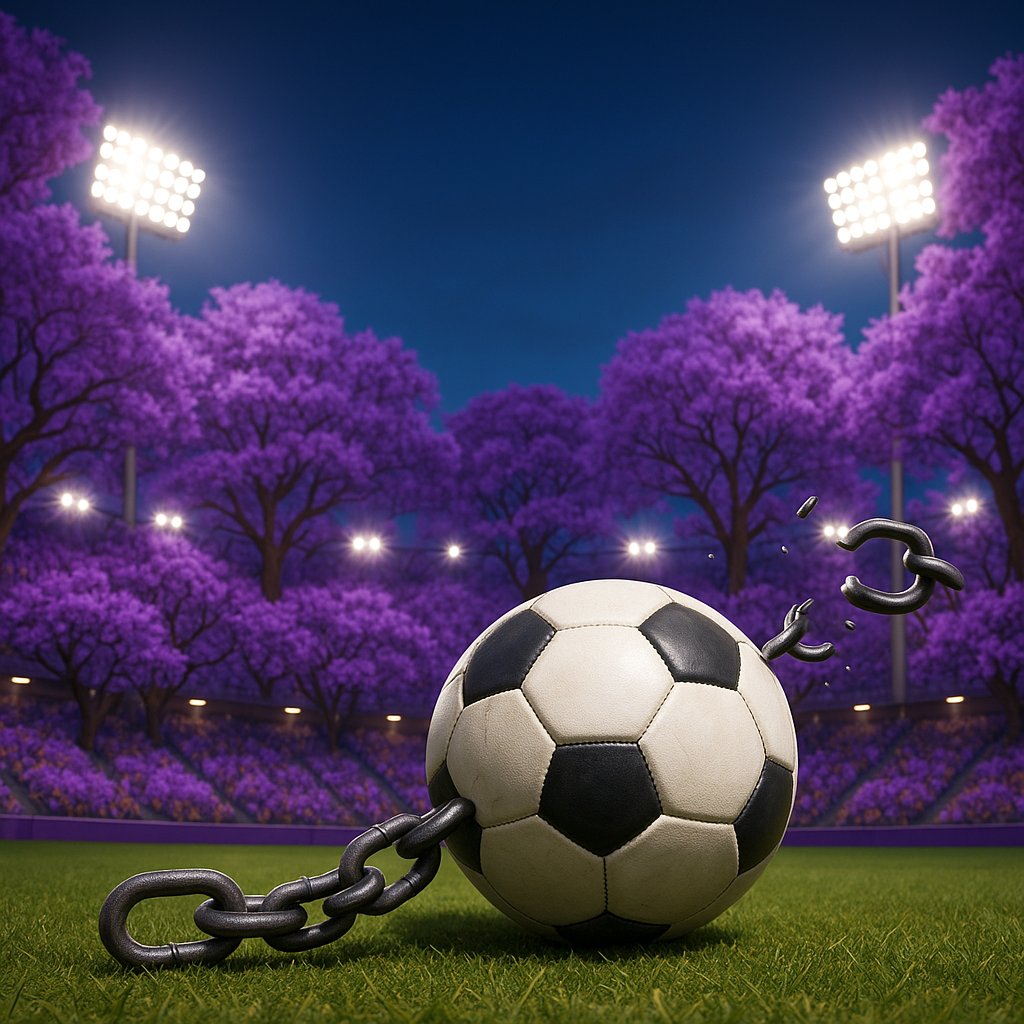
Inside the Union Buildings gala that unveiled Bafana's 26-man squad. Discover the science, strategy, and stories behind the team.
The South African football team's squad selection was a thrilling blend of hard data and unique cultural insights. They used stats like playing time, ball movement, and aerial wins. But they also checked if players could handle travel, media, and social media. This meant even talented players could be cut if they couldn't handle the pressure. It was a bold approach to build a team for more than just the game.
How did the South African national football team select its squad?
The South African national football team selected its squad using quantitative data like senior minutes, ball-progression, aerial-duel success, and repeat-sprint ability. A "cultural index" also assessed players' tolerance for jet-lag, press scrutiny, and social media pressure, ensuring a well-rounded team beyond just on-field performance.
Get Cape Town news in your inbox
Stay updated with the latest stories from the Mother City.
A purple dusk turns gold
Pretoria’s famous jacarandas kept their colour long after sunset on the night the team was revealed. Columns of the Union Buildings glowed under crimson spotlights while the amphitheatre - site of Nelson Mandela’s 1994 oath - became a pop-up cathedral of football. Two-thousand-four-hundred invited guests, four-hundred journalists and three suspended LED walls created a scene part state function, part music festival. A stage curved like a giant vuvuzela stretched toward the terraces and fan-zone trucks pumped out the savoury smoke of boerewors. Cape Town gin sponsored ice-blue cocktail tables that smelled of lime zest and juniper. Each invitee opened a black-and-gold envelope containing nothing but a QR square; when scanned it launched a voice-note from coach Hugo Broos: “Your belief keeps us alive - now we need you louder than ever.”
At 19:47 a brass band slipped into a minor-key “Shosholoza” that sounded almost haunting rather than hopeful. Rockets streaked skywards to sketch the digits 2026 over the east wing. The squad appeared in tailored blazers lined with bead-work reminiscent of Ndebele neck rings, every player raising a small lantern until the lights spelled the national flag. President Cyril Ramaphosa stepped forward, green-and-yellow pocket square flicking in the breeze, and announced: “Tonight the nation signs a living contract with tomorrow.” Dessert had not yet been served.
The Belgian’s cut: from fifty-one to twenty-six
Filters, fall-outs and final calls
Broos started with fifty-one hopefuls carved from an earlier one-hundred-three-name dossier compiled by data scouts and SAFA regionals. Four hard numbers ruled the process:
- senior minutes after 1 April 2026 (injury waivers possible);
- final-third ball-progression above 0.35 per ninety (StatBomb);
- aerial-duel success of at least fifty-eight per cent for centre-backs, forty-eight per cent for full-backs;
- repeat-sprint ability: thirty-five high-intensity bursts across three straight fixtures.
Those gates alone ended Lebo Mothiba’s campaign; a knee relapse at Las Palmas had capped him at 312 minutes since February. Next came a “cultural index” gauging tolerance for jet-lag, press heat and social-media storms. Technically sublime Kamohelo Mahlatsi, ranked ninety-first percentile for online controversy, received the bad news at 07:00 over Zoom. Broos signed off with a Flemish saying: “A fish stinks from the head.” Mahlatsi posted a black square; within an hour broken-heart emojis piled up and one sponsor yanked a R1.2 million ambassador deal.
Last victim was teen left-back Rowan Human, dominant at the U-20 Cup but with only one senior cap. Broos preferred thirty-one-year-old Thapelo Morena, whose ability to slide from right-back into centre-back, defensive midfield or even left wing grants the squad a five-man back line without a substitution. Human touched down at OR Tambo at 22:30, fell into his mother’s arms and wept - footage that topped Twitter while the gala crowd lingered over malva pudding.
Between the posts, between the ears
Ronwen Williams boards the charter as the only keeper ever to stop three penalties in a single Concacaf Champions Cup run. His post-shot-xG-minus-goals-allowed of plus 6.2 since January leads every keeper heading to North America. Ricardo Goss - absent in 2022 - spent winter inside Chelsea’s analytics lab mapping neural paths that forecast dive direction; he now reads hip rotation 0.18 seconds faster than last year. Sipho Chaine’s rise from Chippa United feels like a fairy-tale: preseason sessions with sports shrink Dr Ntethelelo Mthembu strapped him into VR headsets roaring 104-decibel stadium noise until ice veins replaced butterflies.
Speed, swagger and aerial insurance
Broos lines up a malleable back line: 4-3-3 in possession that flips to 3-1-3-3 when Williams has the ball. Khuliso Mudau tops out at 33.2 km/h, quicker than any full-back in Qatar 2022. Partner Nkosinathi Sibisi binge-watched Luka Modrić clips to learn referee management; his tactical fouls per ninety have fallen from 2.1 to 0.9 since March. 1.95-metre Ime Okon, polished at Stellenbosch after leaving Nigeria, wins 74 % of attacking headers - second only to Sébastien Haller in African qualifying.
Athenkosi Mcaba, 22, logged a loan at KVC Westerlo where he marked Kylian Mbappé for 67 minutes; heat-maps actually place him higher upfield than Westerlo’s midfielders, evidence of Guardiola-style inversion. Veteran Siyanda Xulu’s defensive shouting averages 93 decibels - rugby-captain territory according to Catapult GPS.
Metronomes and knuckleballs
Teboho Mokoena is the lone African midfielder inside Europe’s top-twenty-five progressive-pass receivers. Beside him Thalente Mbatha functions as the metronome (92 % pass completion under pressure), while Mokoena launches 9.3 long balls at 71 % accuracy. Off the ball they spring the “pinch trap”: Mbatha jumps the pivot, Mokoena covers, forcing a vertical ball straight into Okon’s orbit. The move produced eight qualifying interceptions that led to shots within seconds.
Jayden Adams - nicknamed “South Africa’s Bernardo Silva” - averages 4.7 progressive carries per ninety, elite for players 1.80 m or shorter. Miguel Timm, 32, calls himself “Chief Reminder,” filling a notebook with teammates’ PlayStation IDs, Spotify playlists and favourite kota fillings to keep the bubble human. He labels it “people service, not sports science.”
Velocity, versatility, vibes
Oswin Appolis owns a left foot the Sundowns squad calls “USB-C: universal serial banger.” His 0.23 xG per outside-the-box strike doubles the tournament mean. Nedbank Cup top scorer Iqraam Rayners clocked 3.83 seconds over thirty metres pre-season, beating Marcus Rashford’s 2022 benchmark. Thirty-five-year-old Themba Zwane captains the group and wears NFC-chip insoles; tap them with a phone and Soweto academy kids hear a 45-second personal pep talk.
Evidence “Evi” Makgopa, 1.88 m and sculpted like an NBA forward, provides a post-up outlet; his back-to-goal receptions drag 2.3 defenders, springing Appolis for diagonal dashes. Lyle Foster’s 14-goal Burnley haul earned him the roaming “false 9.5” role: pressing like a nine, dropping like a ten. Wildcard Asheer Vally, 19, netted eleven goals in thirteen reserve games; Broos likens his first touch to a young Sergio Agüero.
Dawn raids and dream tracking
Three mornings a week the squad assembles at 05:17 - mirroring the 06:00 earliest kick-off slot in split-time-zone fixtures. Blue-light glasses suppress melatonin, GPS data show core temps rising only 0.4 °C, cutting dehydration risk by eleven per cent. Breakfast runs in reverse: rehydrate, carbs, protein - an order borrowed from Japanese ultramarathon monks. SleepSpace polices slumber; dip below 17 % deep-sleep and team doctor Phathokuhle Zondi forwards a Madiba quote via WhatsApp. Snorers get vibrating nose clips that punish back-sleeping. By May, deep-sleep averages climbed from 18.7 % to 22.4 %.
Group A decoded
12 June, AT&T Stadium, roof closed: Mexico’s probable 3-4-3 with inverted wingers. Broos plans to tempt the left centre-half forward then overload the far side when the Mexican winger forgets to track home overlap.
17 June, BMO Field, hybrid surface: Czech Republic’s destroyer David Zima will be lured out by Foster’s roaming, opening lanes for Mokoena’s diagonals.
22 June, Levi’s Stadium: thermometer slides from 35 °C at anthem to 26 °C by minute 80 - perfect for South Africa’s high press. Korean right-back Seok Jae-min overlaps on 72 % of possessions; Morena starts wide left to exploit the pocket behind him.
Cloth of gold and stories in the seams
Adidas wove the new kit with jacquard that, when viewed under polarised light, reveals a topographical map of the Witwatersrand gold reef. Inside the collar hides an outline of the USS Drake, troop carrier of the Second World War. Socks carry eleven coloured specks - one for each language. Training tops print surnames in phonetic isiXhosa (“Williams” reads “Willyams”), bridging stadium and township.
Township to Texas
A pop-up fan village branded “Kasi-to-Concacaf” landed in Alexandra before shipping to Dallas: shipping-container lounge, shisa nyama grill, kwaito decks and VR shoot-outs against a polygonal Ronwen Williams. Soweto Gold brewed a limited “Group A IPA” with blood-orange nod to Tshwane sunsets. Uber offers free five-kilometre hops for anyone in a replica jersey who sings Nkosi Sikelel’ iAfrika into the app; an AI score above eighty per cent unlocks the ride.
Billions riding on every touch
Standard Bank forecasts a Round-of-16 appearance triggers R1.8 billion consumer splurge, R650 million in ad revenue and 4 600 short-term jobs. Transfermarkt lists the squad’s combined value at €198 million, up 42 % since January after Appolis’ €18 million Borussia Dortmund switch. Rexona vowed to match every performance bonus with equal funding for SAFA’s girls’ grassroots - potentially R12 million for the next generation.
Whispers and wonder beyond the lens
Coaching staff hint at a sealed envelope labelled “Plan Z” - five shadow players train at a secret Centurion facility, including 17-year-old Neo Mphahlele courted by Manchester City. French analysts Impect rank this squad second in global “packing” rate - passes bypassing opponents - trailing only Spain. The squad’s unofficial mascot is a rescue meerkat named Teko, chauffeured in a custom crate and fed Limpopo-farmed mealworms.
As charter flight SA-26 lifts off from Waterkloof Air Force Base, the whole country exhales - not for certainties, but for the shimmer of chance now crossing oceans.
[{"question": "
How did the South African national football team select its squad for the tournament?
", "answer": "The South African national football team employed a dual-pronged approach for squad selection. They heavily relied on quantitative data such as senior minutes played, ball progression, aerial duel success rates, and repeat-sprint ability. In addition to these statistics, a unique 'cultural index' was utilized to assess players' tolerance for factors like jet-lag, media scrutiny, and social media pressure, ensuring the team was not only technically skilled but also resilient off the field."}, {"question": "What specific data points were crucial in the squad selection process?
", "answer": "Four main numerical criteria were essential: senior minutes played after April 1, 2026 (with injury waivers considered), final-third ball progression above 0.35 per ninety minutes (measured by StatBomb), aerial-duel success rates of at least 58% for center-backs and 48% for full-backs, and repeat-sprint ability demonstrating 35 high-intensity bursts across three consecutive fixtures. These metrics helped filter the initial pool of players."}, {"question": "How did players react to being cut from the squad, especially those with high potential?
", "answer": "The selection process was rigorous, leading to some tough decisions. For instance, talented players like Kamohelo Mahlatsi, despite being technically sublime, were cut due to a low 'cultural index' score related to online controversy. His dismissal, announced via Zoom, led to a public outcry and even the loss of a sponsorship deal. Similarly, young left-back Rowan Human, dominant at the U-20 Cup, was replaced by a more versatile veteran, leading to an emotional public reaction captured on social media."}, {"question": "What innovative training methods are the goalkeepers using?
", "answer": "The goalkeepers are employing advanced training techniques. Ronwen Williams is noted for his exceptional penalty-saving record. Ricardo Goss has trained at Chelsea's analytics lab, mapping neural paths to forecast dive direction, which has improved his hip rotation reading speed. Sipho Chaine underwent preseason sessions with a sports psychologist using VR headsets that simulated 104-decibel stadium noise to build mental resilience."}, {"question": "What does the new national kit signify?
股权激励
Aiden Abrahams is a Cape Town-based journalist who chronicles the city’s shifting political landscape for the Weekend Argus and Daily Maverick. Whether tracking parliamentary debates or tracing the legacy of District Six through his family’s own displacement, he roots every story in the voices that braid the Peninsula’s many cultures. Off deadline you’ll find him pacing the Sea Point promenade, debating Kaapse klopse rhythms with anyone who’ll listen.
View all articles →