
Beloved Root44 closes until further notice
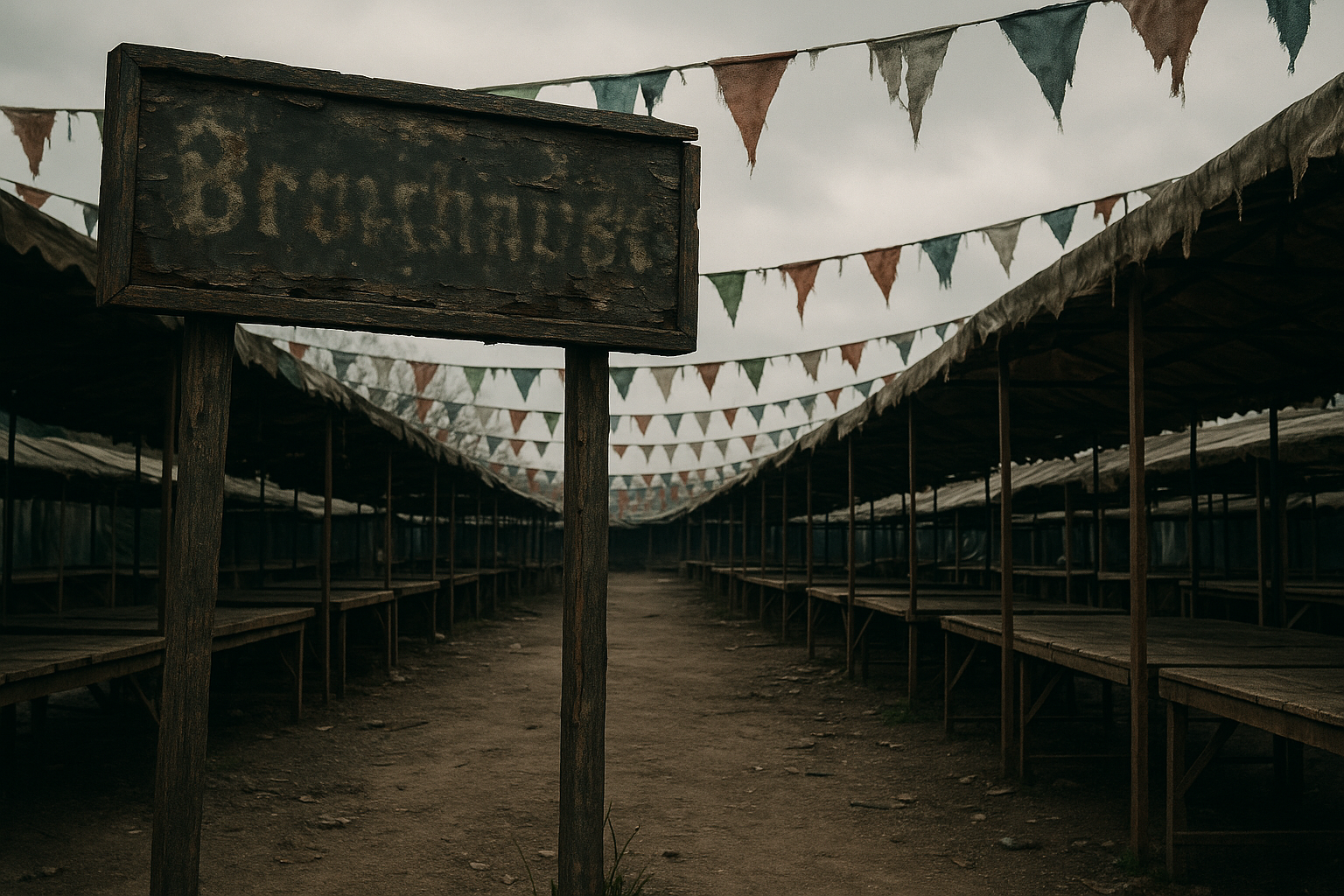
Explore Root44 market's rise, fall, and uncertain future. Discover its impact on local economy, jobs, and the Stellenbosch community.
Root44, a beloved weekend market, started as a small gathering of food and wine artisans, growing into a vibrant hub that attracted thousands. It created a buzzing atmosphere with delicious food, lively music, and unique local crafts. However, ambitious expansion plans, soaring construction costs during the pandemic, and complex legal issues with local authorities eventually led to its sad closure, leaving many vendors and workers without a livelihood.
Why did Root44 Market close?
Root44 Market closed due to a combination of factors, including ballooning construction costs during a major redesign, strict COVID-19 lockdown impacts that halved visitor numbers, and persistent zoning complications. Additionally, municipal authorities ceased issuing crucial temporary use permits, leaving vendors in regulatory limbo and contributing to the market's eventual collapse.
Get Cape Town news in your inbox
Stay updated with the latest stories from the Mother City.
The Rise of a Rural Landmark
For over ten years, three unmistakable markers greeted anyone approaching Root44 from the Stellenbosch direction. Bright pennants danced overhead like permanent festival decorations. A low-frequency thrum reached your chest before your ears could place it. And everywhere, the rich aroma of open-fire cooking drifted from handcrafted grill stations. These sensory signatures pulled more than fifteen thousand visitors through the gates every weekend - a sprawling crowd of wine-route travellers gripping printed itineraries, extended Afrikaans families commandeering shaded picnic tables with cooler boxes in tow, and Cape Town residents treating the venue as a convenient brunch waypoint between city and Overberg.
The market's origins trace back to 2011, when local entrepreneur Dirk de Vos launched a modest Saturday gathering inside a corrugated-iron shed on Audacia Wines property. His formula paired small-scale food artisans with boutique wineries and craft brewers, all sharing the same roof. The setting carried deeper resonance: this gentle rise where the Helderberg and Stellenbosch mountain ranges meet had seen continuous cultivation since 1693, shifting from wheat to vines over centuries. De Vos believed a modern marketplace could generate new revenue from underutilised farmland while offering emerging culinary entrepreneurs an affordable proving ground.
Expansion came rapidly. By 2015, permanent timber walkways had replaced gravel tracks. A corner of vineyard transformed into a children's play area. An intimate amphitheatre began hosting rotating performances from acoustic duos to township brass ensembles. Local bloggers frequently repeat an origin detail: the "44" honours both the adjacent highway and the forty-four regional suppliers who formed the original vendor roster.
An Ambitious Gamble and Its Unravelling
Late 2018 brought new ownership. A Cape Town property consortium, led by former banker Amanda Hartzenberg, acquired the site with sweeping plans. They committed eighty million rand to reimagine Root44 as a year-round lifestyle destination - pitched-roof pavilions, enclosed courtyards, round-the-clock security, and a three-hundred-seat restaurant capable of hosting refined wine-pairing dinners. Construction began in March 2019. Over eighteen months, the beloved open-air sheds came down, replaced by semi-permanent steel-and-glass structures designed by architect Clara Mouton, whose portfolio included the Zeitz MOCAA food hall at the V&A Waterfront. Hidden beneath the new courtyard, rainwater harvesting tanks fed the upgraded infrastructure. Photovoltaic canopies angled above tasting kiosks, promising sixty percent renewable energy coverage.
Then March 2020 arrived, bringing South Africa's strict lockdown. The half-finished site sat dormant for twelve weeks. When trading resumed under level-three restrictions, social distancing halved allowable visitor numbers. Daytime alcohol prohibitions gutted the winery-adjacent revenue model. Construction costs ballooned an estimated twenty-two percent beyond budget. Hartzenberg's backers injected an additional fifteen million rand as bridge financing, collateralised against projected future earnings.
Zoning complications compounded these pressures. Municipal records classified the eleven-hectare parcel as "agricultural holding" rather than "commercial tourism node," forcing every new structure to seek exemption from the Spatial Development Framework. The initial 2015 rezoning application encountered minimal resistance - just two objections from neighbouring estates concerned about noise and traffic. The second application, filed in May 2019 to legitimise the expanded restaurant and market pavilions, triggered fierce opposition. Stellenbosch Heritage Watch, a civic advocacy group, argued the development compromised the pastoral character of the Blaauwklippen Valley. Environmental challengers raised alarms about wetland damage along the Blouklip River seep line. What should have been months stretched into years.
The market continued operating through this limbo, surviving on ninety-day "temporary use rights" renewals. Each cycle demanded fresh fire department approvals and updated traffic management schemes. Vendors report that by mid-2023, municipal authorities ceased issuing even these temporary certificates without explanation, leaving traders suspended in regulatory uncertainty.
The Human Cost of Closure
Understanding Root44's collapse requires examining its economic tentacles. Consider one typical stall: Nomvula's Kitchen, a compact three-by-two-metre station specialising in amagwinya - vetkoek - stuffed with slow-braised lamb neck. Owner Nomvula Nkosi employs her two daughters as prep cooks and four local high school students as weekend runners. Her produce arrives from a Philippi vegetable merchant. Her lamb travels from a Karoo supplier who sources from small-stock farmers across the Swartland. Conservative estimates suggest each tray of vetkoek sold underwrites at least ten livelihoods upstream and downstream. Multiply this dynamic across one hundred twenty stalls, and a single Saturday at Root44 quietly sustained an entire township economy.
The displacement extends further. Coffee & Clay, a husband-and-wife ceramic operation, used their stall as dual-purpose retail space and kiln showroom. Cape Kombucha Collective, South Africa's first B-Corp certified kombucha producer, built their reputation here. Khula Kidz, a nonprofit channeling craft-market proceeds into after-school art programs in Kayamandi, lost a crucial funding avenue.
Economists typically categorise weekend markets as "leisure retail," yet this framing misses three interconnected value circuits. The parking economy alone supported freelance car attendants, informal recyclers harvesting glass and cardboard, and the neighbouring Engen garage, whose coffee sales quadrupled on market mornings. Accommodation providers in Somerset West recorded twenty percent higher Saturday-night occupancy when Root44 hosted major music events. Perhaps most significantly, the venue functioned as a culinary incubator: young chefs tested recipes on live audiences, then graduated to permanent restaurant spaces throughout the Winelands. Anél de Klerk, whose Jardine earned 2023 Eat Out top-ten recognition, traces her first pulled-pork bao experiments to feedback loops with Root44's Saturday crowds.
Tourism data underscores this centrality. Between October 2022 and September 2023, Stellenbosch Tourism's anonymised mobile tracking - conducted with MTN - showed thirty-four percent of all Saturday visitors to the district spending at least one hour within Root44's geofenced perimeter. Average dwell time reached two hours forty-seven minutes, exceeding typical duration at any individual wine estate. International travellers from Britain, Germany and the Netherlands consistently ranked the market among their top three non-wine activities, trailing only Jonkershoek hiking and Eerste River cycling.
What Remains and What Comes Next
Management never published precise employment figures, but industry estimates suggest two hundred forty direct positions - security, cleaning, ticketing, technical crew, vendor coordination - plus six hundred additional full-time-equivalent roles across the supplier network. Many workers operated under Sectoral Determination 9 (Hospitality), meaning zero-hour contracts and earnings entirely dependent on visitor volume. Aunty Magda, sixty-three, swept the courtyard from 2014 onward. She previously counted on roughly eighteen hundred rand in tips each festive season alone. She now faces an uncertain financial future.
The restaurant operation tells its own cautionary tale. Celebrity chef Bertus Basson steered Root44 Restaurant until 2021, attracting Johannesburg food media with braai-inspired fine dining tasting menus. His exit coincided with the ownership transition. The consortium brought in a private-equity-backed operator who compressed the menu, hiked entrée prices thirty percent, and chased Instagram-friendly cocktail aesthetics. Google review scores plummeted from 4.4 to 3.6 within twelve months. Visitor numbers never rebounded to pre-pandemic levels, and the restaurant closed without fanfare in February 2024.
Municipal responses offer little clarity. Stellenbosch Municipality, a Category B authority under DA council leadership, has prioritised Kayamandi infrastructure and historic core upgrades. Their sole official statement on Root44 reads: "The Root44 matter relates to ongoing land-use non-compliance and is sub judice." No information has emerged regarding support packages, rate relief or small business assistance.
Comparative precedent exists. Cape Town's Old Biscuit Mill faced comparable existential threats in 2018, when escalating rents and neighbour complaints endangered its Saturday Neighbourgoods Market. A 2019 public-private partnership produced three stabilising measures: dedicated Uber-only drop zones, quarterly noise monitoring, and a community investment fund comprising one percent of stall revenue. The market endured, albeit reduced. Whether Root44's leadership pursued similar negotiations remains unclear; sources near Hartzenberg indicate municipal authorities declined formal mediation after March 2023.
The closure's ripple effects extend across the wine route. Root44 occupied a strategic position bridging two estate clusters: the Helderberg (Vergelegen, Morgenster) and lower Stellenbosch slopes (Alto, Neethlingshof). Tasting room managers noted that Saturday visitors frequently paused for lunch before continuing to afternoon cellar tours. Wine Flies tour company reports twelve percent fewer Saturday Helderberg itineraries since the closure announcement - modest numerically, yet sufficient to trigger logistical restructuring.
Within hours of Tuesday's closure announcement, a private WhatsApp group titled "Root44 Family" surpassed three hundred members. By Thursday, vendors convened at Paul Roos Gymnasium hall, drafting three survival strategies: a rotating pop-up collective at Jan Marais Nature Reserve, Somerset Mall negotiations for an unused anchor tenant space, and a provincial Treasury petition seeking Tourism Incentive Programme emergency relief.
Among lesser-known casualties sits Copper & Grain, chemical engineer Lindiwe Grootboom's micro-distillery. Operating without national distribution licensing, her stall sold two-hundred-millilitre flasks of single-barrel gin infused with fynbos honey. Limited batches - never exceeding two hundred bottles - consistently sold out within two weekends. Grootboom has relocated her copper still to her Strand garage, but without guaranteed foot traffic, she calculates that covering raw botanical costs would require pricing each bottle at six hundred fifty rand - well beyond South Africa's craft gin ceiling.
Management frames the closure as "until further notice," yet property attorneys note the outstanding zoning dispute reaches Western Cape High Court in October 2024. An adverse ruling could force complete reversion to agricultural use. Conversely, negotiated settlement might permit phased reopening under tighter noise, traffic and environmental constraints - perhaps a diminished weekend fair without amplified performances or a strict five-thousand-visitor cap.
Competitors already circle. Anonymous drone footage posted to YouTube last weekend captured surveying activity on a neighbouring estate's northern boundary, apparently scouting a four-hectare "Root34" concept. Stellenbosch Tourism, concerned about brand dilution, has issued trademark warning notices.
The final operating Saturday - 4 May 2024 - passed without ceremony. Regular patrons arrived unaware. A local swing band performed on the amphitheatre stage while children pursued bubbles across the lawn. A Stellenbosch University visual arts faculty photographer quietly documented stallholders hand-painting gratitude signs. Sunset brought only one visible indication: a single A4 sheet taped to the exit gate, promising closure "next weekend for maintenance."
[{"question": "
Why did Root44 Market close?
", "answer": "Root44 Market closed due to a combination of factors, including ballooning construction costs during a major redesign, strict COVID-19 lockdown impacts that halved visitor numbers, and persistent zoning complications. Additionally, municipal authorities ceased issuing crucial temporary use permits, leaving vendors in regulatory limbo and contributing to the market's eventual collapse."}, {"question": "What was Root44 Market before its closure?
", "answer": "Root44 Market began in 2011 as a modest Saturday gathering of food artisans, boutique wineries, and craft brewers on Audacia Wines property. Over time, it expanded into a vibrant weekend market, known for its delicious food, lively music, unique local crafts, and a bustling atmosphere that attracted thousands of visitors every weekend. It became a significant cultural and economic hub in the Stellenbosch region."}, {"question": "What were the ambitious expansion plans for Root44?
", "answer": "Late in 2018, new ownership acquired the site with plans to invest eighty million rand to transform Root44 into a year-round lifestyle destination. These plans included pitched-roof pavilions, enclosed courtyards, round-the-clock security, and a three-hundred-seat restaurant. Construction began in March 2019, replacing the open-air sheds with semi-permanent steel-and-glass structures and incorporating upgraded infrastructure like rainwater harvesting tanks and photovoltaic canopies."}, {"question": "How did the COVID-19 pandemic affect Root44's operations?
", "answer": "The COVID-19 pandemic and South Africa's strict lockdown significantly impacted Root44. The half-finished site sat dormant for twelve weeks, and when trading resumed under level-three restrictions, social distancing halved allowable visitor numbers. Daytime alcohol prohibitions gutted the winery-adjacent revenue model, and construction costs ballooned an estimated twenty-two percent beyond budget."}, {"question": "What legal and zoning issues contributed to the market's downfall?
", "answer": "The eleven-hectare parcel of land was classified as 'agricultural holding' rather than 'commercial tourism node,' requiring numerous exemptions for new structures. While an initial rezoning application in 2015 faced minimal resistance, a second application in May 2019 to legitimise the expanded restaurant and market pavilions triggered fierce opposition from civic advocacy groups and environmental challengers. This led to prolonged legal battles and the market operating on ninety-day 'temporary use rights' renewals, which eventually ceased being issued by municipal authorities."}, {"question": "What was the economic impact of Root44 Market's closure on local livelihoods?
", "answer": "The closure of Root44 had a significant human and economic cost. It supported an estimated 240 direct positions and 600 additional full-time-equivalent roles across its supplier network. Many vendors, like Nomvula's Kitchen, sustained multiple livelihoods upstream and downstream. The market served as a culinary incubator, a crucial funding avenue for non-profits like Khula Kidz, and a significant draw for tourism, with 34% of all Saturday visitors to the Stellenbosch district spending time there. Its closure has left many without income and impacted the wider regional economy."}]
Kagiso Petersen is a Cape Town journalist who reports on the city’s evolving food culture—tracking everything from township braai innovators to Sea Point bistros signed up to the Ocean Wise pledge. Raised in Bo-Kaap and now cycling daily along the Atlantic Seaboard, he brings a palpable love for the city’s layered flavours and even more layered stories to every assignment.
View all articles →