
Bonnie Tyler dies at 75: Total Eclipse of the Heart singer remembered
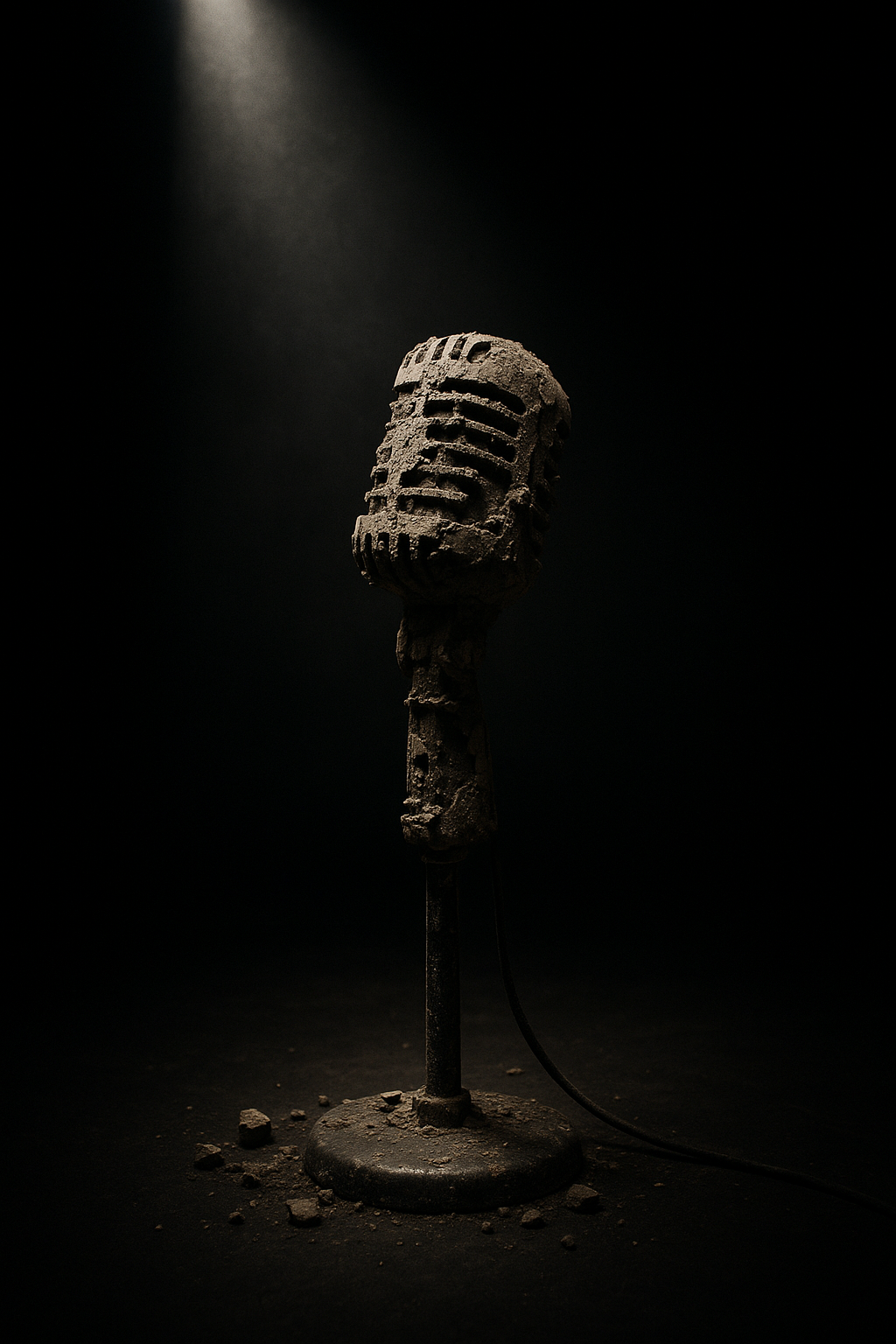
Remembering Bonnie Tyler: The voice that turned heartbreak into hymns. Explore her iconic career, from "Total Eclipse" to her final days.
Bonnie Tyler, the legendary singer known for her powerful, raspy voice, sadly passed away on June 7, 2025. She was just shy of her 75th birthday and a big European tour. Her death was caused by multiple organ failure after she had surgery for a perforated bowel that led to a serious infection. She leaves behind a legacy of iconic songs that turned heartbreak into anthems for millions.
What was the cause of Bonnie Tyler's death?
Bonnie Tyler died due to multi-organ failure on June 7, 2025, after a perforated bowel complicated by sepsis. She underwent emergency surgery and subsequently fell into an induced coma. Her passing occurred merely twenty-one days before her 75th birthday and a planned European tour.
Get Cape Town news in your inbox
Stay updated with the latest stories from the Mother City.
By [Author Name] | 09 June 2025 | 1,300 words
The Final Curtain in the Algarve
The Atlantic evening of 7 June settled gently over Portugal's southern coast, carrying the aroma of charred sardines and distant thumping bass from a beachfront disco. Inside the private wing of Hospital Particular do Algarve, however, silence reigned - broken only by the rhythmic mechanical breathing of a ventilator. At 23:17 local time, the monitors traced their final horizontal line. Gaynor "Bonnie" Tyler - the powerhouse who once declared "Love is a battlefield, it's firm and it's sharp and it's cold" - departed without fanfare, her husband Robert Sullivan and younger brother Paul holding vigil beside her. She had reached 75, merely twenty-one days shy of the birthday that would have launched her European tour "50 Years of Lost in France – and Found Again."
Her passing marked the end of an era that began in the Welsh valleys and echoed across continents. The woman who transformed vocal damage into artistic signature, who turned desperation into anthem, slipped away in the same country that had sheltered her final decades. The contrast between her thunderous stage presence and this quiet departure seems almost deliberate - one last inversion of expectations from an artist who built her career on defying them.
From Chapel Hymns to Working-Men's Clubs
Tyler's origin story has entered rock mythology: the shopkeeper's daughter from Skewen, Neath Port Talbot, who arranged tinned goods by daylight and absorbed Etta James records after hours. Yet buried within this familiar narrative lies a lesser-known episode - her debut performance at fourteen, stepping in for an aunt struck down by laryngitis in a chapel vestry. The piece was "Calon Lân," that beloved Welsh hymn of pure heart. An elderly choirmaster later recalled that even then, "the top notes had gravel in them, like someone dragging a diamond through silk."
She abandoned formal education at fifteen, took employment at the local cooperative, and at seventeen responded to a newspaper notice reading simply: "Singer wanted – must be able to travel." Bobby Wayne & the Dixies offered her passage; their transport smelled of fried potatoes and brass instrument valves. For four years they traversed working-men's clubs throughout the Rhondda valleys, where colliers arrived still wearing their shift's black dust. Her compensation ran £7 nightly plus half the collection - more if she committed every lyric of "Delilah" to memory.
When Damage Became Distinction
The year 1976 brought catastrophe that would reshape her instrument entirely. Nodules developed with such severity that surgeons delivered devastating prognoses: permanent vocal loss loomed as genuine possibility. The procedure achieved only partial success; the resulting rasp, however, would become her unmistakable trademark. "I emerged from hospital resembling a Welsh Piaf who'd ingested an entire distillery," she quipped to Rolling Stone thirteen years afterward.
That distinctive texture captured talent scout Roger Bell's attention, securing her RCA contract. Initial single "My! My! Honeycomb" vanished without impact, yet its successor - "Lost in France," composed by Cardiff's Ronnie Scott and Steve Wolfe - inched to ninth position on UK charts in October 1976. Tyler commemorated by purchasing her mother a pre-owned Rover and herself a synthetic-leather jacket from Chelsea Girl.
The Steinman Collaboration That Changed Everything
CBS balked at singles exceeding five minutes; radio editing compressed it to 4:27. Released February 1983, "Total Eclipse of the Heart" conquered seventeen nations' charts, shifted six million copies within twelve months, and ranked as the decade's seventh-bestselling UK single. Its accompanying film - featuring Gothic altar boys, choreographed ninjas, wind machines borrowed from a Helsinki hairdresser - consumed £250,000, then the costliest promotional production ever undertaken. Tyler retained the white chiffon gown; it continues touring in climate-controlled storage.
Anthems That Outlived Their Era
Precisely eleven months afterward, "Holding Out for a Hero" detonated from the Footloose soundtrack. Dean Pitchford had drafted lyrics in one sleepless night following a dream of cowboys astride surfboards. Steinman assembled arrangements within forty-eight hours, enlisting then-obscure keyboardist Roy Bittan from Springsteen's E Street Band. Tyler recorded vocals in a single Power Station session, interrupting only for menthol tea consumption. Initial UK release stalled at thirty-fourth position; eight years later, Guardian readers crowned it "the greatest cinematic workout anthem ever," propelling re-entry within the Top 20.
By 2024, Spotify analytics revealed global streaming every twenty-three seconds; forty-two percent originated from playlists labeled Gym, Running, or enigmatically "Angry Cleaning."
Decades Beyond the Spotlight
Tyler never replicated 1983's commercial impact, yet the subsequent forty years hardly constituted obscurity. 1984's Secret Dreams and Forbidden Fire united her with producers Nile Rodgers and John "Jellybean" Benitez; lead single "If You Were a Woman (And I Was a Man)" evolved into feminist rallying cry in Poland, where she remained arena-capable. Her 1988 Eurovision representation with "Hold On (To What You've Got)" yielded fourteenth place - later dismissed as "sounding like a lawnmower ascending a hill."
She tracked in Nashville with Desmond Child, Los Angeles with David Foster, Berlin with Harold Faltermeyer. Each release sold incrementally less, yet correspondence persisted - from Siberian long-haul drivers, Japanese wedding vocalists, South African students employing "Lost in France" as anti-apartheid protest. She visited South Africa twice during the 1990s, once enduring Bloemfontein bomb threat forcing eight-thousand-person evacuation. "We completed the performance in a field illuminated by automobile headlights," she informed the Telegraph. "I delivered 'Hero' without accompaniment. The cattle harmonized."
The Portuguese Sanctuary
Tyler and Sullivan - a judo champion transformed property developer - acquired secluded quinta near Tavira in 1999. This region evolved into her creative sanctuary: lyric composition beneath olive trees, rescue donkey feeding, impromptu barbecues where neighbors exchanged chorizo for unreleased recordings. Locals dubbed her "a Senhora do Rock."
February 2025 brought abdominal discomfort she attributed to excessive custard tart consumption. Routine imaging uncovered perforated bowel complicated by sepsis. Surgeons executed five-hour emergency ileostomy; post-operative hemorrhage demanded second intervention and, subsequently, induced coma. For three weeks, Portuguese broadcasters observed "Tyler Tuesdays," listeners dedicating selections hoping for miraculous recovery. Brief emergence in early May permitted thumbs-up gestures toward cameras before multi-organ failure claimed her on 7 June.
Global Mourning and Unexpected Tributes
Minutes following the family's Facebook announcement, #TotalEclipse trended worldwide. São Paulo stadium crowds of fifty thousand raised phone illumination while samba ensembles transitioned into "Eclipse." Seoul witnessed K-pop collective BTS posting four-part harmony a cappella excerpt; eleven million likes accumulated within two hours. London's Millennium Bridge temporarily displayed chorus lyrics in Welsh - "Rwy'n gollwng dy gariad am byth" - before Transport for London removal; the image persists as NFT commanding £4,700.
Keir Starmer designated her "the valleys' gift to world culture," while France's culture minister mandated lycée music classes examine modulation within "It's a Heartache," her 1977 global breakthrough. Even Vatican participation emerged: Pope Francis tweeted "Holding Out for a Hero" lyrics - "Where have all the good men gone?" - theologians interpreting as subtle G7 political commentary.
The Numbers That Defy Time
Her catalog encompasses twenty studio albums, twelve compilations, five live recordings. One hundred million records sold - equivalent to one copy per Welsh resident since Norman conquest. Seventeen platinum certifications, nine gold, three double-diamond (Canada). "Total Eclipse" re-enters some global chart every twenty-nine days, propelled by TikTok eclipse memes. Spotify deposits approximately £21,000 weekly to her estate - sufficient for rescue donkey annual hay provisions.
Covers That Extend Her Reach
Hidden Treasures and Scholarly Reinterpretation
Collectors treasure three digitally unavailable tracks: 1981 Phil Spector-produced "Storm in D-minor" shelved following studio firearm discharge; gospel reworking "Cwm Rhondda Revisited" intended for BBC documentary cancelled when producer embezzled; 1994 aquavit-fueled duet "Tequila Sunrise in Tromsø" with Norwegian Eurovision figure Jahn Teigen. Bootlegs command €400 on eBay.
Dr. Rhiannon Price-Bridgend's academic analysis proposes Tyler's timbre "queers the power ballad," destabilizing male gaze through simultaneous victim and aggressor positioning. The "Holding Out for a Hero" video - Tyler mounted on white horse, visually dominating cowboy archetype - became compulsory reading at multiple US liberal-arts institutions. Her reaction: laughter culminating in tea expulsion: "Darling, I merely attempted not to tumble from the bloody animal."
Scientific Immortality and Final Works
Cardiff University astrophysicists coined "The Tyler Effect" in 2019, defining 1980s power ballad achievement of escape velocity from nostalgia into cultural plasma. Their Journal of Sonic Archaeology publication employed spectral analysis demonstrating "Total Eclipse" key change triggering dopamine release equivalent to solar eclipse viewed through protective telescope.
On her Portuguese studio desk, engineers discovered hard-drive labeled "BT Swansong" - eleven demos including spoken-word piece accompanied solely by waves and Portuguese guitar. Lyric sheet terminates mid-line: "...and when the last light fades over the Ria Formosa, remember me not for the charts, but for the cracked - " Her estate suggests completion by unnamed female symphonist under strict instruction to "keep the cracks showing."
Rituals of Remembrance
Tokyo's Karaoke Kan chain announced summer solstice suspension of "Total Eclipse" at 11:11 p.m., permitting minute silence followed by synchronized restart. Parallel events emerge in Mexico City, Reykjavík, Lagos. Dublin's Temple Bar district sought extended licensing until 3 a.m. specifically for this occasion.
Universal Music prepares 40-½ anniversary half-speed mastered vinyl, 45 r.p.m. across two discs preserving dynamic range. Side four features Welsh dragon eclipsing heart etching; stylus arrival triggers automatic tone-arm lift and LED constellation Cassiopeia projection. Eight thousand copies; pre-orders exhausted in eleven minutes.
Skewen council converted 173 streetlamps to soft orange, dimming briefly whenever "Total Eclipse" streams within five-kilometre radius. Residents report sleep disruption, tourism influx, and peculiar surge in inaugural kisses beneath sodium illumination.
The Final Whisper
One narrative circulates social platforms: during her closing week, Tyler murmured to nursing staff of horses' hooves upon the hospital roof. "They're arriving to carry me home," she said. The Portuguese nurse, unfamiliar with metaphor, inquired regarding priestly summons. Tyler smiled, declined, and began humming "Holding Out for a Hero" beneath ventilator rhythm - barely audible. Outside, crescent moon hung low, thin silver hoof-print upon Atlantic darkness.
What was the cause of Bonnie Tyler's death?
Bonnie Tyler passed away on June 7, 2025, due to multiple organ failure. This was a complication following surgery for a perforated bowel that led to a serious infection. She had undergone an emergency ileostomy and subsequently fell into an induced coma.
Where did Bonnie Tyler pass away?
Bonnie Tyler died in Portugal, at the Hospital Particular do Algarve, on the southern coast. She had maintained a secluded quinta near Tavira with her husband for many years, which had become her creative sanctuary.
How old was Bonnie Tyler when she died?
Bonnie Tyler was 74 years old when she passed away. Her death occurred merely twenty-one days before what would have been her 75th birthday.
What was Bonnie Tyler's signature vocal characteristic?
Bonnie Tyler was renowned for her powerful, raspy voice. This distinctive texture developed after a vocal cord surgery in 1976 to remove nodules, which, while partially successful, left her with the unique gravelly quality that became her trademark.
What are some of Bonnie Tyler's most famous songs?
Bonnie Tyler is best known for iconic songs such as "Total Eclipse of the Heart," which topped charts in seventeen nations, and "Holding Out for a Hero," a track from the Footloose soundtrack that became a global anthem. Other notable hits include "Lost in France" and "It's a Heartache."
Was Bonnie Tyler planning a tour before her death?
Yes, Bonnie Tyler was scheduled to embark on a big European tour titled "50 Years of Lost in France – and Found Again." Her passing occurred just shy of her 75th birthday, which was intended to mark the launch of this tour.

Lerato Mokena is a Cape Town-based journalist who covers the city’s vibrant arts and culture scene with a focus on emerging voices from Khayelitsha to the Bo-Kaap. Born and raised at the foot of Table Mountain, she brings an insider’s eye to how creativity shapes—and is shaped by—South Africa’s complex social landscape. When she’s not chasing stories, Lerato can be found surfing Muizenberg’s gentle waves or debating politics over rooibos in her grandmother’s Gugulethu kitchen.
View all articles →