
Brave motorists fight off smash-and-grab suspects in Cape Town
A routine traffic jam turns into a crime scene in Citrusdal, sparking community action and a viral cautionary tale.
On the R102, a normal lunchtime traffic jam turned scary when two men tried to rob a woman in her car. Her friend's loud scream made other people nearby jump in to help. This quick action scared the robbers away and showed everyone the power of sticking together. The incident quickly spread through the community, making everyone more aware and encouraging them to work together to stay safe.
What happened on the R102 between Citrusdal and Clanwilliam?
On the R102, a routine lunchtime traffic jam turned into an attempted robbery when two men targeted a white hatchback. A woman's scream alerted bystanders, who intervened, causing the assailants to flee. This incident sparked a community-wide safety initiative, highlighting the power of collective action against crime.
Get Cape Town news in your inbox
Stay updated with the latest stories from the Mother City.
The Everyday Road That Wasn’t Ordinary
The R102 between Citrusdal and Clanwilliam is many things: the only two-lane artery through the valley, the district’s unofficial high street and, every weekday at noon, a slow-moving parking lot. Drivers shuffle past the clinic gate, the post office, the fuel pumps and the handful of smoke-blackened braai carts that open under the acacias opposite Leipoldt Hospital. Hawkers thread between hot bonnets offering naartjies, hairbands and pirated DVDs while engines idle and radios leak competing beats.
On the last Thursday in May this familiar dance broke mid-step. A single, razor-thin incident sliced through the routine, turning the noon queue into a living crime scene and, within ninety minutes, into a breathless 2-minute-41-second voice note that sprinted across every WhatsApp forum from taxi associations to parent-teacher chats and the 27-town rural safety grid that blankets Cederberg and Bergrivier municipalities.
The audio file arrived in Cape Town councillor Emre Uygun’s inbox at 14:07, forwarded by a constituent who had received it from his sister, who had got it from one of the two women inside the white hatchback at the very centre of the drama. By sunset the clip had been re-shared thousands of times, bouncing through farm-security channels and neighbourhood-watch groups faster than any police bulletin could hope to match.
Two Minutes That Rewrote the Day
The narrator is a 34-year-old logistics manager for a Graafwater NGO. She and her friend Chantél were inching forward, windows half-down because the air-conditioner had given up weeks earlier, debating whether her niece would remember her dance moves during the upcoming school concert. A commuter kombi ahead stopped, dislodged its passengers and moved on. Two men who had stepped out stayed behind, one pretending to tie a shoe that looked suspiciously pristine for a dusty roadside, the other sweeping his eyes across the column of cars.
She actually nudged Chantél, laughing, about the unmarked Nike tread. Seconds later the man she’d just ridiculed was half-inside the car, left arm already snaking through the open window, right palm clamped to the side mirror for leverage. The phone on the driver’s thigh, tethered to the aux cable, was the obvious prize. She reacted on instinct: clamp the handset to her chest, spin away, elbow whacking the gear lever. The engine coughed, stalled and froze the entire lane behind her.
Chantél’s fingers hovered over the electric-window switch, motionless. The driver screamed three times for the hooter. What escaped Chantél instead was a raw, glass-quivering yell that shattered the noon hum of engines and ignited a ripple of motion no rehearsed drill could have bettered.
When the Street Decided to Fight Back
That primal scream did double duty. It startled the intruder enough to loosen his grip and transformed a passive audience of commuters into an instant intervention squad. A white Ford Ranger, bull-bar already nosing through the hospital gate’s flowerbed, announced the arrival of Dawid September, a 56-year-old stone-fruit supervisor who had spent the morning lecturing pickers on exactly this scenario. “Noise, movement, make the crook the star of the show,” he later told community radio. Coke bottle in hand - weapon of opportunity - he jogged forward, engine still running, driver’s door ajar.
Others followed. A pharmacist still wearing her name tag clambered out of her Citi Golf; a father with toddlers strapped into booster seats; a scooter courier who simply dropped his bike sideways and ran. The R102 erupted in a rolling wave of synchronized hooters that sounded like a stadium of vuvuzelas jammed into a single octave.
Inside the hatchback the battle shifted. The accomplice moved passenger-side, hammering the roof, perhaps hoping the door would pop open in panic. Instead, the noise snapped Chantél into action - window glass slid up, sealing the cabin. The first attacker darted a second grab, this time hooking the canvas tote wedged between the driver’s knees. Inside were two NGO laptops, salary spreadsheets and R17 000 in cash destined for farm-worker food vouchers.
She yanked the steering wheel hard left. The open door slammed the attacker mid-torso, forcing him back. The phone, still in his hand, arced through the air and skittered beneath the kombi in the next lane. September arrived at that exact beat, 500 ml plastic bottle glancing off the man’s shoulder - no wound, just a perfect distraction that let the foreman seize hoodie fabric and haul backward. Both assailants fled; one vanished between orange rows bordering the Olifants River.
Aftermath, Evidence and the Lesson Nobody Asked For
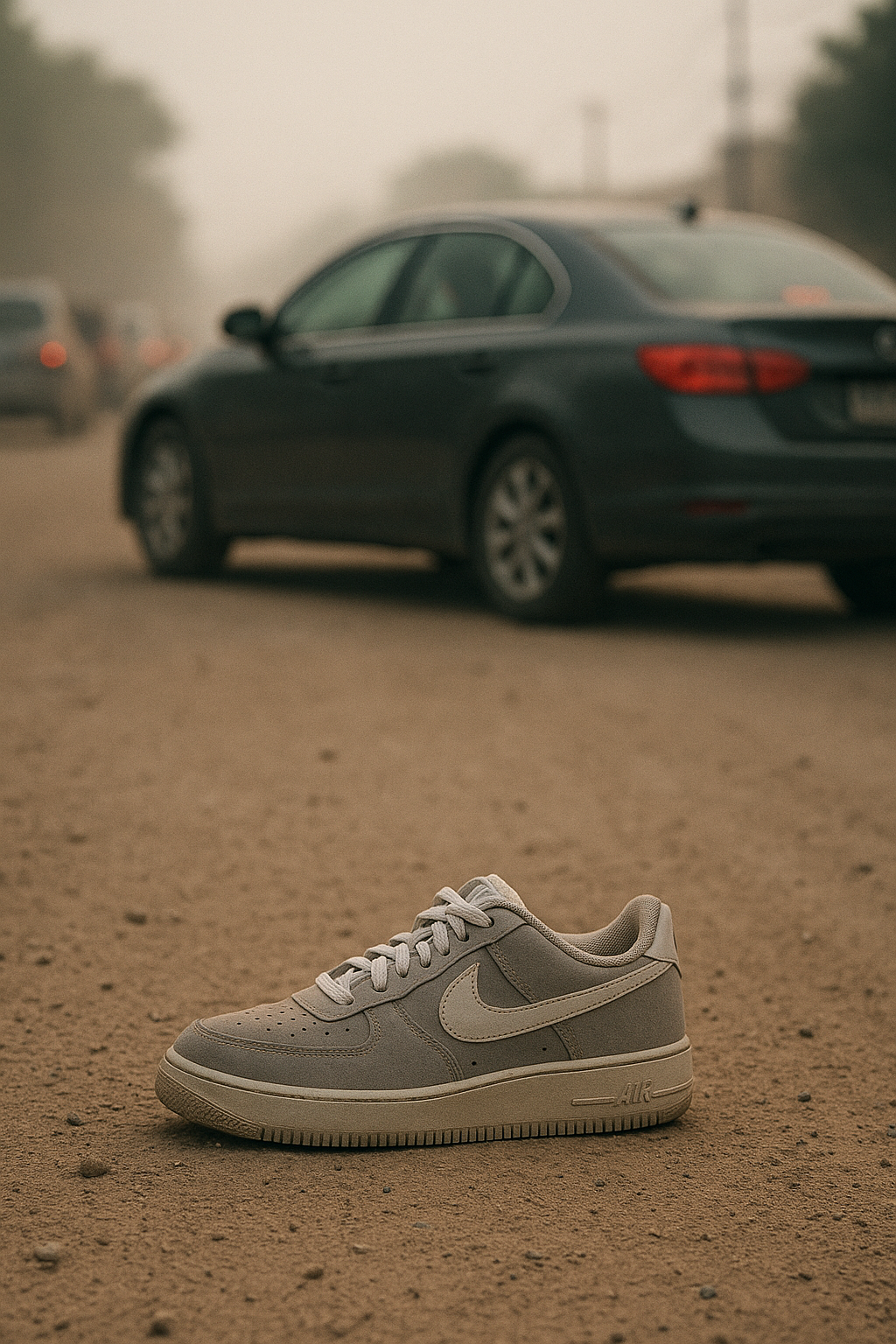
A Grade-10 learner on the way back from a dentist appointment captured the final seconds: the thief twisting free, scaling the same chain fence and disappearing among citrus trunks. The tote stayed in the car; the only casualty of fashion was a lone Nike sneaker, tugged off in the scuffle. Someone balanced it atop the hospital wall like an ironic trophy. Minutes later it had been photographed, geo-tagged and uploaded with the caption: “Lost-and-found: size 9, lightly sprinted, last seen evading justice.”
SAPS Clanwilliam registered attempted common robbery under CAS 213/05/2024. Visible patrols multiplied through along the R102 for the long weekend, yet officers concede the orchard grid hands crooks an easy exit: seven minutes of dirt road to the N7 and gone. Hospital CCTV faces only the ambulance bay; dash-cams pointed the wrong way. Still, the voice note and the 38-second clip accomplished what budget-constrained rural policing rarely does - they weaponised community attention.
By Friday morning a user-edited map was circulating, pinning the exact GPS co-ordinates of the incident, three prior grab-and-dash events since February and two “suspicious loitering” reports from farm-stall parking bays. Membership of the Clanwilliam & Cederberg Safety Initiative spiked from 1 200 to 3 800 in 36 hours. A local print shop churned laminated signs - KEEP WINDOWS CLOSED, PHONES OUT OF SIGHT - in Afrikaans, isiXhosa and English, cable-tied to every lamppost within two kilometres.
The women became reluctant celebrities. Radio stations chased interviews; breakfast TV wanted them on the couch. They declined most requests, but the driver agreed to speak at a lunchtime safety briefing for 240 fruit pickers. Her advice was lean and cost-free: zip bags under seats, unplugged aux cables, windows up even when the mercury kisses 38 °C, hazard lights double-flashed to signal distress to the car behind. “I can’t tell you to buy pepper spray or tint your glass,” she said, “but your lungs are free. Scream like Chantél screamed - make them hear you on the mountain.”
No one has claimed the orphaned Nike, yet on Saturday a pair of dust-red size-nine Pumas appeared beneath a poplar two kilometres from the fence line. Whether they belong to the runner or some clueless teenager is anyone’s guess; they now sit in an evidence bag, waiting for a courtroom that may never call. Traffic has resumed its former crawl, hawkers still hawk naartjies, school kids still dawdle. But every driver glides past the spot windows sealed, doors locked, phones tucked out of sight, newly aware that a single moment of distraction can turn an ordinary midday queue into the next viral warning shot.
What happened on the R102 between Citrusdal and Clanwilliam?
On the last Thursday of May, a routine lunchtime traffic jam on the R102 between Citrusdal and Clanwilliam turned into an attempted robbery. Two men attempted to rob two women in a white hatchback. The incident quickly escalated, leading to community intervention and ultimately, the robbers fleeing the scene.
How did the community react to the attempted robbery?
The community reacted swiftly and decisively. Triggered by a loud scream from one of the women, bystanders, including a stone-fruit supervisor, a pharmacist, and a scooter courier, immediately intervened. Their collective action, including hooting and approaching the assailants, scared the robbers away. The incident also led to a significant increase in membership for the Clanwilliam & Cederberg Safety Initiative and the widespread sharing of safety information.
What was the immediate impact of Chantél's scream?
Chantél's "raw, glass-quivering yell" served a dual purpose: it startled the initial intruder, causing him to loosen his grip, and it instantly galvanized the passive commuters into an active intervention force. This primal scream was a pivotal moment, transforming the scene and initiating the community's response.
What items were the robbers attempting to steal?
The primary target was a phone tethered to an aux cable on the driver's thigh. Additionally, the second attacker attempted to grab a canvas tote bag containing two NGO laptops, salary spreadsheets, and R17,000 in cash intended for farm-worker food vouchers.
What safety advice did the driver offer after the incident?
The driver, who became a reluctant celebrity, advised fruit pickers at a safety briefing to zip bags under seats, unplug aux cables, keep windows up even in hot weather, and use hazard lights to signal distress to cars behind them. She emphasized the importance of screaming loudly, like Chantél, to draw attention and deter attackers.
What measures were taken by the community after the incident to enhance safety?
Following the incident, visible police patrols increased along the R102. A user-edited map was circulated, marking the incident's GPS coordinates, previous grab-and-dash events, and suspicious loitering reports. The Clanwilliam & Cederberg Safety Initiative saw a massive spike in membership, and local print shops produced laminated signs in multiple languages advising drivers to keep windows closed and phones out of sight, which were then posted throughout the area.

Tumi Makgale is a Cape Town-based journalist whose crisp reportage on the city’s booming green-tech scene is regularly featured in the Mail & Guardian and Daily Maverick. Born and raised in Gugulethu, she still spends Saturdays bargaining for snoek at the harbour with her gogo, a ritual that keeps her rooted in the rhythms of the Cape while she tracks the continent’s next clean-energy breakthroughs.
View all articles →