
Calls intensify to declare gangsterism a provincial disaster in WC
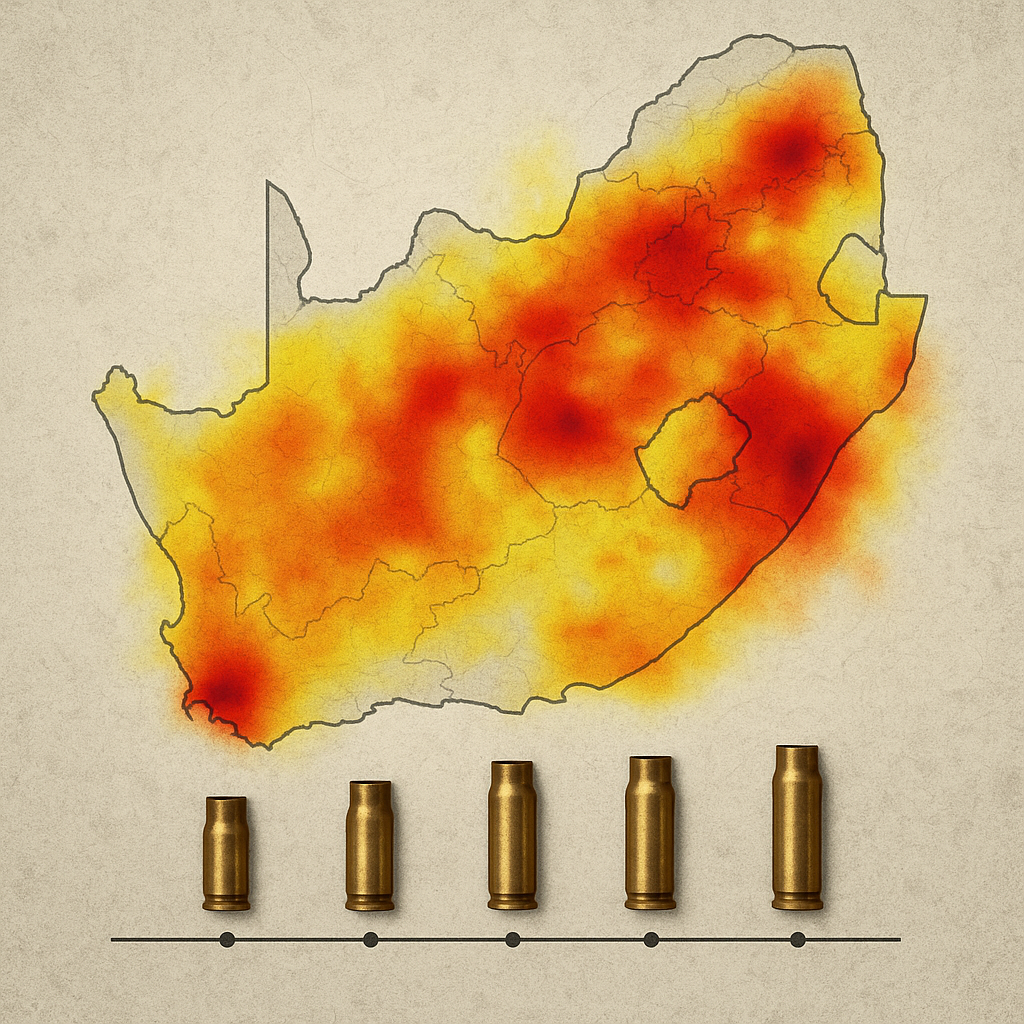
Unpacking the slow-burning emergency of gangsterism in the Western Cape, from its origins and economics to its devastating impact on communities.
The Cape Flats are caught in a brutal war of gangs, where violence is a tool for drug lords. Kids as young as 15 become killers, renting guns by the hour. This horror is a result of a long, sad history, with poverty and global drug trade fueling the fire. Even schools aren't safe, and government money often ends up helping the gangs. It's a dark picture, but some brave people are trying new ways to bring peace, hoping to turn off the "dark sky" for the children.
What are the main causes and characteristics of gang violence in the Cape Flats?
Gang violence in the Cape Flats is driven by a complex interplay of historical displacement, the influx of global narcotics post-apartheid, and socio-economic factors. It's characterized by corporate-like gang structures, violence as a market management tool, and the exploitation of youth, with guns rented by the hour and children as young as 15 acting as triggermen.
Get Cape Town news in your inbox
Stay updated with the latest stories from the Mother City.
A Map Painted in Gunpowder
Open the national crime dashboard and the Cape Flats jump off the screen like a fresh bruise. A ten-kilometre crescent that folds together Mitchell’s Plain, Philippi, Nyanga, Khayelitsha, Delft and Elsies River posts murder rates that compete with those of countries at war. The blood is not scattered at random; it pools along the main roads that separate coloured townships from black informal settlements, along the invisible margins of tik markets, and along the borders claimed by franchises with corporate-sounding names – Americans, Hard Livings, 28s, Mongrels, Junky Funky Kids. Each outfit behaves like a retail chain: junior recruiters patrol primary-school playgrounds, senior accountants sit in prison wings, logistics managers operate backyard laboratories, and suburban graduates ferry parcels as unsuspecting mules.
The killings are only the visible foam on a much deeper wave. Beneath every bullet lies a ledger: grams sold, corners controlled, fear taxed. A single murder can raise the retail price of tik for a week, while a quiet month can flood the market and slash profits. In this economy, violence is not chaos; it is management.
Travel the area after dark and you will see the system in neon. Street lights are shot out so that lookouts can film the approach of police vans on phones bought with the same proceeds that pay for the bullet that killed the lights. WhatsApp groups carry price lists that disappear after 30 seconds: R50 for a single 9 mm round in Mitchell’s Plain, R80 if you buy in Bellville South. Even ammunition is subject to market forces.
Four Waves That Brought Us Here
The present catastrophe was not an accident; it is the fourth wave of a 50-year storm. During the 1970s and 1980s the apartheid regime bulldozed District Six and other mixed areas, dumping coloured families on the sand of the Cape Flats to serve as a buffer against the black townships. Gangs sprouted overnight, promising protection from both the police and the unknown. Prisons and neighbourhoods wrote their first constitutions in sugar water and smuggled ink, and the state looked away as long as the violence stayed intra-racial.
Democracy in 1994 opened the port to global narcotics routes. Nigerian, Chinese and Balkan syndicates landed on the docks, found eager partners in the Cape gangs, and upgraded the toolkit from knives to AK-47s. Between 1994 and 2004 drive-by shootings became brazen marketing displays; neighbourhoods learned the difference between the crackle of an R4 rifle and the slower thump of a 9 mm Uzi.
From 2005 to 2015 government answered with military-style crackdowns: Operation Comb, Operation Slasher, Operation Thunder. Every surge filled the awaiting-trial wings with juveniles who used the time to earn diplomas in violence. Released at 21, they returned to the blocks as younger, more reckless CEOs. Tik arrived in bulk, prices collapsed to R15 a hit – cheaper than a loaf of bread – and social-media clips glamorised the lifestyle. Today primary-school boys speak of “making flag,” the moment you die with your gang’s colours tattooed across your face, as if it were a varsity degree.
The fourth wave, 2016 to now, is defined by miniaturisation and speed. Guns are rented by the hour, drones scope roadblocks, and witness statements vanish in auto-deleting voice notes. The average age of a triggerman has fallen to 15–19, because a minor faces a maximum of 25 years, and because a child can be paid R5 000 – the cost of a mid-range television – to end a life.
Schools, Grants and the Price of a Bullet
A classroom in gang territory is no longer a refuge; it is a sales floor. One Elsies River secondary school confiscated 37 cell-phone pouches of tik during random spot checks last year. Learners tunnelled a hole through the perimeter wall so that dealers could slide orders through during break. A Grade-6 girl was trafficked for three months before her mother realised she had stopped menstruating; the pregnancy was the first clue. Provincial records show at least 15 schools temporarily shut in the past five years because gun battles erupted outside the gates. Children lose up to 30 school days annually to undeclared lockdowns, while teachers learn to distinguish between the crack of 9 mm and the boom of a shotgun the way farmers read weather.
Grandmothers barricade living rooms at sunset. In Tafelsig, Aunty Gale pushes her couch against the front door every evening; her six-year-old grandson drops flat at the first burst and yells “lights off, army time!” When asked what would help, the boy replied, “A big switch that turns the sky on so the dark can’t come.” The fantasy is poetic, but the sociology is stark: entire neighbourhoods equate nightfall with death.
Meanwhile, the state’s own money oils the machine. Grant payday is called “G-Day.” Lookouts stalk ATM queues, memorise PIN codes, and return that night to raid the same grandmothers at gunpoint. Pensioners are forced to “lend” their cards to gang accountants who withdraw the cash, deduct 30 % interest, and hand back the card two days later. SASSA has no protocol for a card that a terrified senior is too scared to report stolen. Social welfare, intended to soften poverty, becomes working capital for drug stock.
Escape Routes: What Might Actually Work
CeaseFire Cape Town hires former shot-callers as “violence interrupters.” Each mediator patrols a single block, armed only with street credibility and a R5 000 monthly stipend. Independent evaluation recorded a 28 % drop in retaliatory shootings inside test zones, but funding evaporates every March because the programme sits outside any departmental budget.
The Chrysalis Academy runs a three-month boot camp in Tokai Forest; 6 000 youngsters have graduated, yet no longitudinal data tracks whether they stay alive and employed. In Kalkfontein a flood-lit futsal court stays open until 22:00, turning the space into a football pitch instead of a drug market. Residents report 40 % less gunfire between 19:00 and midnight, but the project reaches only 300 of the estimated 18 000 at-risk youths in the greater area.
Disaster-management legislation offers a sharper lever. The provincial premier can declare gang violence a disaster if it “substantially exceeds the ability of affected persons to cope.” Once declared, Treasury rules relax, funds can be rerouted within 48 hours, and military assets may be deployed. A declaration could unlock 24/7 safe-injection tents, mobile ballistic labs that process 50 firearms a day, and a WhatsApp witness stipend of R2 000 a month for 1 000 high-risk residents. It could also authorise 72-hour “cool-down” evacuations of cordoned hotspots, breaking the retaliatory cycle.
The obstacle is constitutional: policing is a national competence. Any declaration needs the national police minister’s signature within 24 hours and an extra R3 billion to saturate the ten worst corridors for a year. Treasury would have to raid the public-sector wage bill, a political grenade.
Yet the cost of doing nothing is already itemised on mortuary spreadsheets. Colombia’s Medellín cut homicide from 381 per 100 000 in 1991 to 20 in 2015 by combining militarised surge operations with cable-car transport that yanked hillside slums into the formal economy. The package cost 3 % of the municipal budget for a decade. Cape Town could match the scale with a 1 % surcharge on wine exports and a 50-cent levy per kilogram of citrus that leaves the harbour – if national Treasury agrees.
Stable employment remains the single predictor that trumps all others. A guaranteed 200-day public-works programme at R350 a day could absorb 120 000 unemployed youngsters – roughly the number estimated to be gang-affiliated – for R8.4 billion a year, equal to 1 % of the national police budget. Until such a shock arrives, the couch will stay against the door, the grandson will keep shouting “army time,” and the sky will remain dark for too many Cape Flats children who have already learned that the switch they dream of must be built not in the clouds, but in budgets, declarations and ballots.
What are the main causes and characteristics of gang violence in the Cape Flats?
Gang violence in the Cape Flats is driven by a complex interplay of historical displacement, the influx of global narcotics post-apartheid, and socio-economic factors. It's characterized by corporate-like gang structures, violence as a market management tool, and the exploitation of youth, with guns rented by the hour and children as young as 15 acting as triggermen.
How has the historical context contributed to the current gang crisis in the Cape Flats?
The current crisis is the result of a 50-year storm, starting with apartheid-era forced removals in the 1970s and 1980s, which displaced coloured families to the Cape Flats. This created an environment where gangs emerged, offering protection. Post-1994 democracy opened up global drug routes, leading to an escalation in violence and the adoption of more sophisticated weaponry. Subsequent government crackdowns inadvertently turned prisons into 'universities of violence' for youth. The fourth wave, from 2016 to now, is marked by miniaturization and speed, with a significant drop in the average age of triggermen.
What role does the drug trade play in sustaining gang violence, and how is violence used in this economy?
The drug trade is a central pillar of gang activity in the Cape Flats. Violence is not random; it's a strategic tool for market management. Killings can influence the price of drugs like 'tik' (crystal methamphetamine), with a single murder potentially raising retail prices. Conversely, quiet periods can lead to market saturation and reduced profits. Gangs operate like retail chains, with junior recruiters in primary schools, logistics managers running backyard labs, and even ammunition prices fluctuating based on market forces. This demonstrates how violence serves an economic purpose within the drug economy.
How does gang violence impact schools and social welfare systems in the Cape Flats?
Schools in gang territories are no longer safe havens; they have become sales floors for drugs. Instances include confiscation of large amounts of drugs, students creating holes in perimeter walls for drug deals, and even the trafficking of young girls. Schools are frequently shut down due to gun battles outside their gates, causing children to lose significant school days. Additionally, government social grants, intended to alleviate poverty, are exploited by gangs. Lookouts target ATM queues on 'G-Day' (grant payday), and pensioners are often coerced into

Amanda Wilson is a Cape Town-born journalist who covers the city’s evolving food scene for national and international outlets, tracing stories from Bo-Kaap spice shops to Khayelitsha micro-breweries. Raised on her grandmother’s Karoo lamb potjie and weekend hikes up Lion’s Head, she brings equal parts palate and pride to every assignment. Colleagues know her for the quiet warmth that turns interviews into friendships and fact-checks into shared laughter.
View all articles →