
Cape Town City Ballet to present David Nixon’s Dracula at Artscape
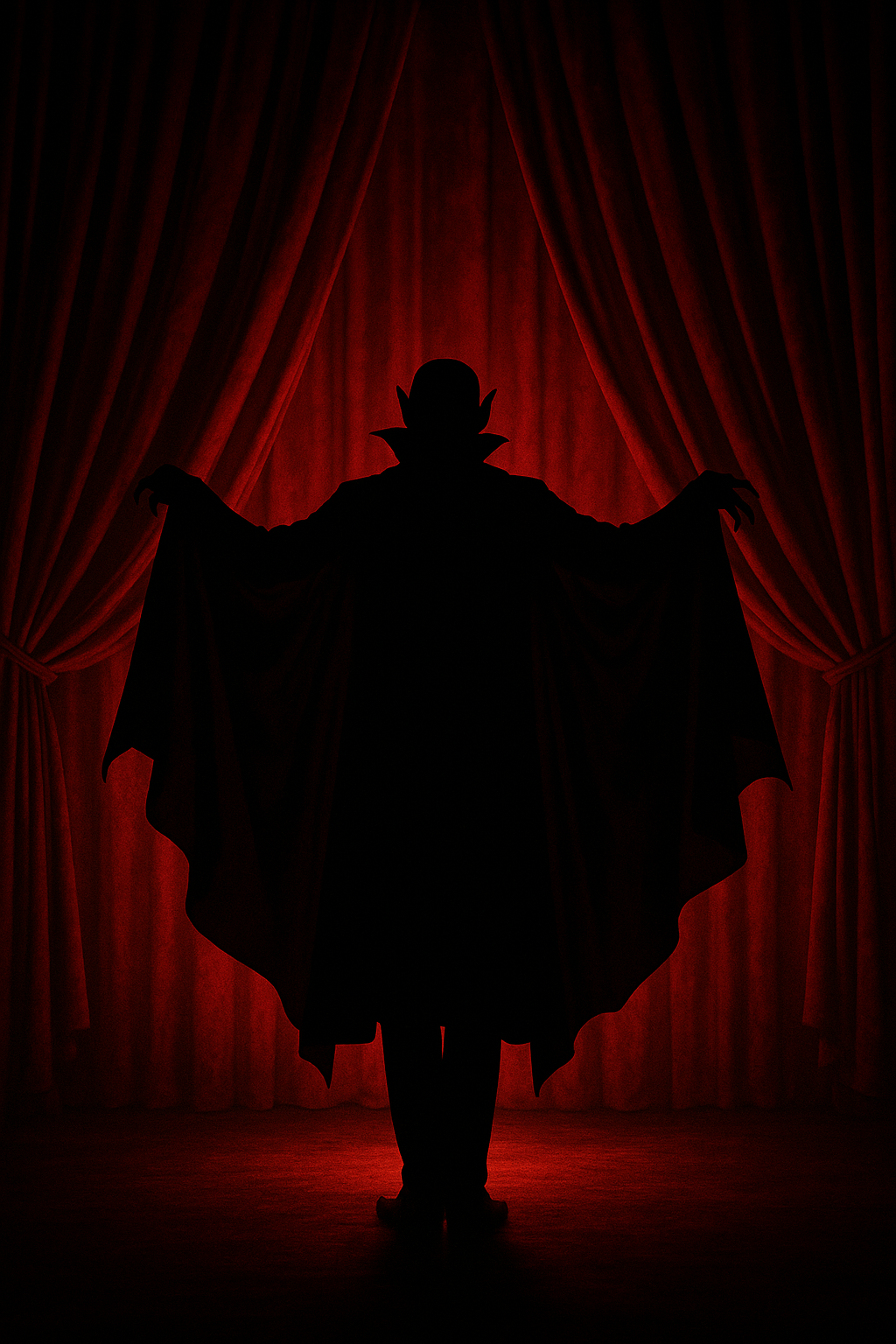
Experience David Nixon's Dracula, re-composed for Cape Town City Ballet. A Gothic ballet with original music, design & choreography.
Get ready for "Dracula Reborn," a super cool ballet coming to Cape Town in March 2026! It's a new, spooky version of the classic Dracula story, made special for Cape Town. You'll see amazing dancing, hear creepy music, and feel like you're right there in the show. It's going to be a wild ride that will give you chills!
What is "Dracula Reborn"?
"Dracula Reborn" is a re-imagined ballet by David Nixon for the Cape Town City Ballet, premiering in March 2026. This three-act production offers a unique, gothic interpretation of the classic tale, infused with Cape Town's distinct atmosphere and a complex score, promising a captivating and haunting theatrical experience.
Get Cape Town news in your inbox
Stay updated with the latest stories from the Mother City.
A City Orders a New Myth
Every handful of years the Mother City quietly commissions a new legend, a ballet that drinks the salt breath of Table Bay and the bruised-magenta dusk that slides down the mountain. In 2026 that legend answers to the name Dracula, re-imagined by David Nixon for Cape Town City Ballet. He has not recycled his 1999 American hit; he has disassembled and re-woven every musical phrase, gesture and fibre so the work beats with Cape Town’s own arrhythmia. Expect a three-act weather front that slips into the Opera House, drops the mercury, and departs with your pulse in its teeth.
Nixon spent eighteen months walking the harbour at 3 a.m., recording sodium lamp glare and fog-horn echoes. Those field notes became mood-boards for set, score and even the angle of a wrist in fifth position. The ballet now carries the chill of the Atlantic in its lungs; ushers joke that ticket-holders should pack scarves even if the outside temperature nudges thirty.
The premiere run is short - sixteen performances only - yet the company has thrown every available rand at the project, convinced that a new narrative work can re-animate an art form many wrote off as colonial costume jewellery. If the gamble pays off, Dracula will join the short list of Cape Town cultural events locals brag about having witnessed “before the rest of the world caught on.”
The Score: Four Hearts, One Circulatory System
Alfred Schnittke’s Concerto Grosso No. 1 opens the veins. Solo violin strings sit a quarter-tone low, so each melodic sigh sounds anaemic. Arvo Pärt’s Fratres returns three times, each statement slower, as though the ink itself is being bled dry. Sergei Rachmaninoff’s Isle of the Dead rocks the vampire’s sea voyage in 5/8, a cradle rhythm that refuses to resolve. The final conflagration belongs to Michael Daugherty’s 2016 Viola Zombie Concerto: electric viola versus brass, the instrument begging to recall what humanity felt like.
Vitali Alekseenok, the 31-year-old Ukrainian now wielding the Cape Town Philharmonic baton, treats silence as plasma. He has re-orchestrated transitions so Schnittke’s icy harmonics pour straight into Pärt’s bell-tones without the usual stage blackout. During winter workshops string players practised col legno tratto until rosin ghosts of bats materialised on the parquet. Alekseenok’s mantra: “The hush between staves is still blood - don’t let it clot.”
Audience members with keen ears will notice a 28 Hz undertow whenever Dracula’s coffin shuts. A Raspberry Pi hidden in the lid drives a sub-woofer the size of a postcard; you feel the vibration in your sternum rather than hear it. Sound designer Byron van Reenen calls the effect “a memory you can’t audition,” a sonic counterpart to the metallic taste of adrenaline.
Choreographic Physics: Restraint, Rupture, Rapture
Act I obeys Victorian etiquette - weight coyly parked on the back third of the foot, pelvis neutral, wrists speaking in polite angles. The instant the Count’s silhouette unhooks from the up-stage wall, the ballet’s axis tilts fifteen degrees. Hips unlock, torsos liquefy, and the brides whip off multiple pirouettes on demi-pointe, their shoes squealing like wet fingertips on crystal.
The signature “reverse lift” suspends Lucy in arabesque penchée while Dracula hoists her by the nape. Nixon stretches the moment over three full counts of silence, a kiss that oversleeps. Corps dancers count in prime numbers - 7, 11, 13 - to dodge predictable pulse; studio speakers throb with sub-bass loops until the floorboards become another partner.
Brazilian-born Ruan Galdino opens the title role with a jump that travels parallel to the floor, a stone skimming reality. Alternate nights hand the cape to Joshlin de Wet, a local whose ancestry threads back to the 1940s segregated troupes; his stillness is so absolute spectators swear they can hear eyelashes meet.
Visual Alchemy: A Theatre That Breathes
Nixon dismissed South Africa’s warehouse of painted flats and built an exoskeleton from matte-black aluminium truss. The structure can contract like an artery in systole. Titanium-dioxide scrims drink Faheem Bardien’s 2200-Kelvin LED floods until the colour matches dried blood under Victorian gaslight.
When Dracula snarls “Listen to them - the children of the night!” the fly-tower exhales refrigerated fog pre-chilled to four degrees Celsius. It slithers over the footlights and beads on the orchestra rail, forming real dew. Front-row patrons receive black pashminas embossed with the company logo, a souvenir borrowed from the 1924 Broadway programme.
Costumes remember touch. Lucy’s nightgown is boned with horsehair that stiffens when refrigerated; under stage lights it wilts, mirroring her social undoing. Dracula’s coat is cut from 1890s Yorkshire looms; the twill runs counter-clockwise, resisting the eye’s hunger for order. Twelve brides wear silk organza dipped in beetroot then over-painted with phosphorescent acrylic - under UV their limbs appear to float away from their torsos.
Community & Afterlife: From Strandfontein to Instagram
In July 2025 Nixon ran a winter school at the Chrysalis Academy on the Cape Flats. Forty-seven teenagers learned the vampire’s 7-count prowl, then remixed it against gqom basslines. Eight will appear as Whitby townspeople, their township swagger corseted inside Shweshwe Victorian silhouettes - expect the production’s most-shared clip.
Only one hundred “Red Cross” tickets exist. Buyers stay after curtain-down for a torch-lit set tour, receive a corked vial of condensed stage fog labelled “Dracula Breath,” and take home the sickle-shaped stake used in Act III. Price: R1 897 - cheaper than a weekend in Transylvania and, as marketing deadpans, “considerably less bitey.”
Cape Town’s last full-length story ballet debuted four years ago on a shoestring. Dracula restores eight weeks of wages for carpenters, stitchers, crew, supers, musicians and marketers. More importantly, it grafts South African ballet onto the global Gothic revival already fed by Bourne, Punchdrunk and the Royal’s Frankenstein. In a city where oceanic haar coils nightly around Dutch gables, the production merely unearths what has always been buried in the stone.
[{"question": "
What is 'Dracula Reborn'?
", "answer": "\"Dracula Reborn\" is a new, gothic ballet commissioned by the Cape Town City Ballet and re-imagined by David Nixon. Premiering in March 2026, this three-act production offers a unique interpretation of the classic Dracula story, specifically tailored to incorporate Cape Town's distinct atmosphere and features a complex, haunting musical score, promising a captivating theatrical experience.\""}, {"question": "When and where will 'Dracula Reborn' be performed?
", "answer": "'Dracula Reborn' will premiere in Cape Town in March 2026 at the Opera House. The premiere run is short, with only sixteen performances scheduled, making it a highly anticipated and exclusive event.\""}, {"question": "Who is behind the re-imagining of Dracula for this ballet?
", "answer": "The ballet is re-imagined by David Nixon, who has completely deconstructed and re-woven his previous 1999 American hit version of Dracula to resonate with Cape Town's unique rhythm and environment. The Cape Town City Ballet is commissioning this new work.\""}, {"question": "What can audiences expect from the music and sound design?
", "answer": "The score is a powerful blend of Alfred Schnittke's Concerto Grosso No. 1, Arvo Pärt's Fratres, Sergei Rachmaninoff's Isle of the Dead, and Michael Daugherty's Viola Zombie Concerto. Vitali Alekseenok, the 31-year-old Ukrainian conductor, leads the Cape Town Philharmonic and has re-orchestrated transitions to create a seamless, chilling atmosphere. Audiences can also expect unique sound design elements, such as a subtle 28 Hz undertow felt rather than heard when Dracula's coffin shuts, created by a hidden subwoofer.\""}, {"question": "How does the ballet incorporate Cape Town's local identity?
", "answer": "David Nixon spent eighteen months immersing himself in Cape Town's environment, using observations of the harbor, sodium lamp glare, and fog-horn echoes to inspire the set, score, and choreography. The ballet is designed to carry 'the chill of the Atlantic in its lungs,' and even costume elements, like the use of Shweshwe prints for some townspeople, connect it to local culture. The production also involves community engagement, with teenagers from the Cape Flats performing as Whitby townspeople.\""}, {"question": "Are there any special experiences or tickets available for the show?
", "answer": "Yes, there are a limited number of 'Red Cross' tickets available for R1 897. These special tickets include a torch-lit set tour after the performance, a corked vial of condensed stage fog labeled 'Dracula Breath,' and the sickle-shaped stake used in Act III as a souvenir.\""}]
Michael Jameson is a Cape Town-born journalist whose reporting on food culture traces the city’s flavours from Bo-Kaap kitchens to township braai spots. When he isn’t tracing spice routes for his weekly column, you’ll find him surfing the chilly Atlantic off Muizenberg with the same ease he navigates parliamentary press briefings.
View all articles →