
Cape Town Cycle Tour: Eveything you need to know for this weekend
Experience the Cape Town Cycle Tour: 29,000+ riders, 109km of iconic scenery, and the unique spirit of South Africa's biggest race.
Cape Town's famous Cycle Tour is a 109km adventure, a pulsing heartbeat across stunning landscapes. Imagine thousands of cyclists, from serious racers to happy-go-lucky riders, sharing laughs, struggles, and pure joy. They weave past ancient landmarks and breathtaking views, powered by the spirit of the city. More than just a race, it's a vibrant festival where the whole community comes alive, celebrating grit, beauty, and the simple thrill of the ride.
What is the Cape Town Cycle Tour?
The Cape Town Cycle Tour is a 109 km cycling event in Cape Town, South Africa, known as the "World's Most Human Race." It takes participants from the V&A Waterfront, past historic landmarks and scenic routes like Chapman's Peak and Suikerbossie, concluding back in the urban area. The event combines a challenging race with a unique cultural experience.
Get Cape Town news in your inbox
Stay updated with the latest stories from the Mother City.
1. 05:00 – Waterfront to Foreshore: The City Wakes Up Laughing
Cape Town stirs before sunrise on 8 March 2026, humming like a hive that’s been tipped on its side. Tankers at the V&A bellow bass-note foghorns while 29 427 cyclists shuffle through colour-coded pens, tyres hissing, coffee cups crackling, silver survival blankets snapping in the southeaster. Every tenth rider is wrapped in that foil – it flashes like a mirror-ball each time the wind punches through. Overhead, choppers comb the bruised-guava sky with searchlights while street poles carry the same hand-stamped joke: “Jou Ma is op die pad vorentoe” – half-warning, half-hug, pure Cape Town humour.
The course is a living ECG: 109 km that start at sea level, spike 200 m up Suikerbossie, then flatten again in Green Point. Along the way it doubles as an open-air museum. Pedals spin past the Castle where Dutch sailors off-loaded the first horses in 1652, past District Six’s silent brass ensemble, past Langa’s commuter rank where 1970s steel roadsters still carry lawyers and grandmothers beneath bottle-dynamo beams. A brand-new 5G pylon on Constantia Nek pretends to be a pine; Edinburgh Drive’s fresh green lane already bears black S-curves from pre-dawn recon rides.
Inside DHL Stadium the continent’s biggest pop-up bike bazaar has been zoned like a theme park. Hall A is drivetrain Disneyland: 42 booths where wrenches can index Di2 in the breath it takes to say the word. Hall B is food theatre – punters neck 30 ml beetroot “shot-shells” while a scientist in Vans turns a banana into printer-fed gel. Hall C is time-travel alley: a 1987 Raleigh Banana hangs beside Froome’s yellow-jersey Pinarello; slip into the VR pod and you climb Mont Ventoux while a tech mists rosemary sweat across your cheeks.
Outside, a 600 m neon-pink track keeps kids wheeling while parents shuffle for race packs. The surface matches the flamingos still wading near Strandfontein. Every half-hour a marshal in a puff-adder onesie halts the flow of toddlers to teach a left-hand signal that doesn’t wobble – the snake is shy, but the lesson sticks.
2. 06:15 – Seaside to Suikerbossie: Speed, Satire and Rooibos Rituals
Road closures start at 04:00 with the soft click of plastic bollards. By 06:00 the M3 is a yellow river of marshals in retro onesies; one screws an anchor into tar, the other strings tape that shouts “LYN VERBY” in 1970s album-cover font. Outside Camps Bay a lone busker has parked an upright piano; he pounds Mango Groove’s “Special Star” on repeat, brass echoing off shutters that still smell of last night’s peri-peri prawns.
At 06:25 the sub-three-hour sharks roll out. Among them is 19-year-old Aphiwe Mdashe from Khayelitsha who learned to balance on a grocery runner with no front brake and a chip-fryer cog. Today he sits on a borrowed Scott Foil, tyres rock-hard at 105 psi, strategy burned into his brain: hug the second caravan till Suikerbossie, then “die glorious.” When the pack lifts onto the bridge above Mouille Point he sees sunrise spilled across Table Bay like broken yolk and, for one heartbeat, forgets to push the pedals.
By 07:10 the 4:30–5:30 wave threads along the coast in a living satire. A Canadian wears maple Lycra but stitched a protea over his heart; a Pretoria dentist films backwards because “the faces you drop tell the truth.” Three Stellenbosch students lash pool-noodles between bikes and title the artwork “White Sharks Can’t Jump,” riffing on their varsity’s mascot drama. Each kilometre they scream the tongue-twister “Ag nee man, dis nie ’n fiets nie, dis ’n fynbos-fietspad!” and collapse laughing.
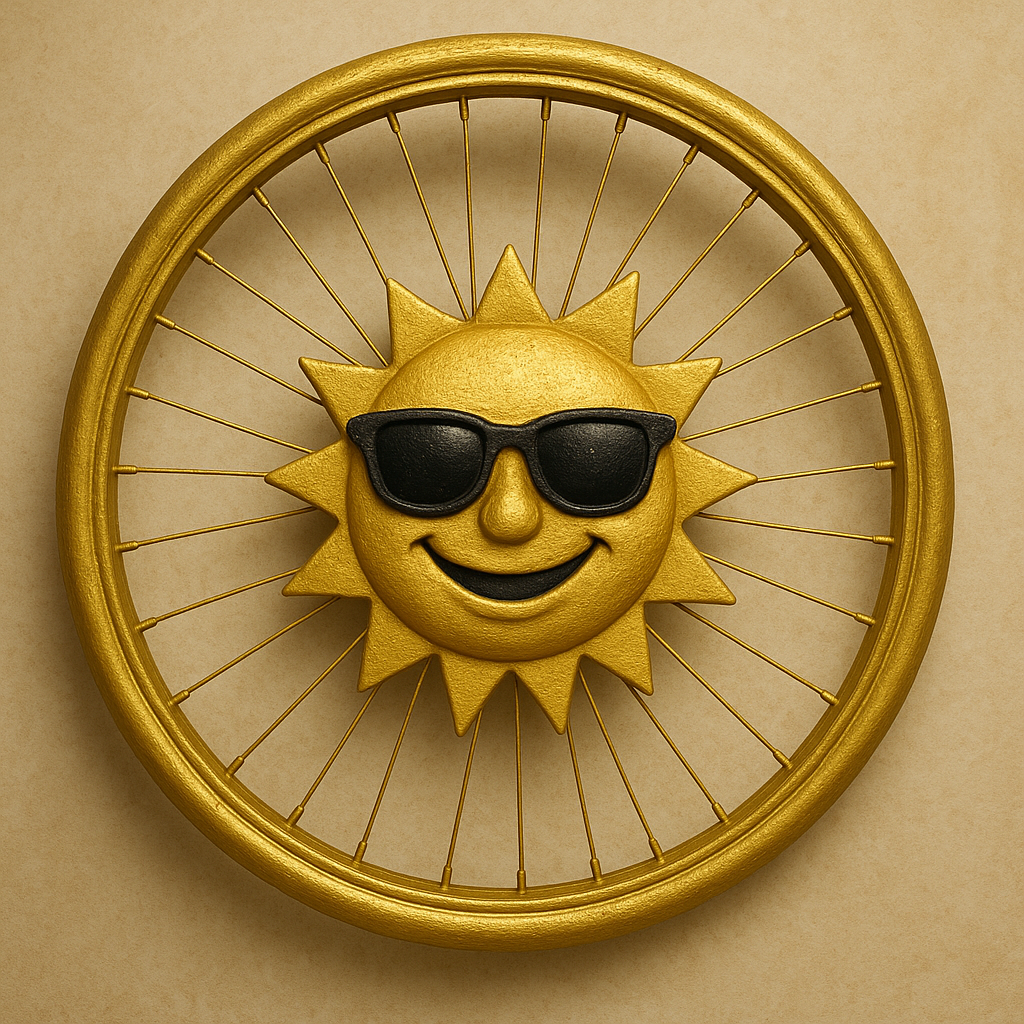
Spectators turn boulders into lounges. At Maiden’s Cove an inflatable couch branded by a craft brewery hands out zero-proof watermelon ale to riders who slap quad muscles like thirsty horses. Gugulethu gumboot dancers trade stomps for calf-slaps, turning the hiss of cleats into high-hat percussion. A golden arch of recycled wheels awards sun-with-shades tattoos to anyone brave enough to duck through.
3. 07:45 – Chapman’s Peak to Noordhoek: Wind, Silence and Ghost Politicians
Chapman’s Peak narrows to two lanes pinned 600 m above the Atlantic. Organisers decree a “silent zone”: no music, no cheering – only freehubs ticking like Geiger counters. Wind cannonballs off the ocean; in 2023 a 72 km/h blast slammed a rider into rock. Today choppers dangle winches while election boards from 2019 form improvised wind-breaks. “Your Ward, Your Future” promises a faded candidate; riders tuck behind this broken vow and draft their way toward safety.
Hout Bay launches the Suikerbossie wall: 1.7 km averaging 7.2 %, the final 400 m punching 11 %. A minibus DJ named Oom Boerie drops kwaito at 128 bpm – “perfect cadence for 34-28,” he insists. Kids jog alongside spritzing fynbos water from plastic tomatoes that once held ketchup. Rooibos, buchu, pelargonium – the mix smells medicinal and riders swear it hacks lungs open better than Ventolin.
Over the top the road plummets toward Noordhoek’s wetland. A temporary pontoon bridge saves 3 km; flamingos stand one-legged, unfazed, flashing Airbus-logo black feathers beneath pink wings. The surface turns to sand for 400 m, but organisers laid a corn-starch mat that feels like riding on a tortilla. By April rain will dissolve the strip into the reeds that filter Cape Town’s runoff – race feeding ecosystem.
Micro-climates vote as riders roll south. Masiphumelele bakes at 32 °C; four kilometres on, Silvermine dam wall drops ten degrees in the shade of eucalyptus shadows. Trail-club volunteers hand out iced rooibos soaked in spekboom – the carbon-munching succulent. Someone jokes the plant offsets the whole event; the City can’t confirm, yet pledges one spekboom per finisher for a 30-hectare “Cycle Forest” on Signal Hill.
4. 12:30 – Muizenberg to Finish: Smiles, Snoek and the Song that Never Ends
Back in the urban quilt the race shatters into 29 427 private galaxies. A Berliner weeps because False Bay matches her grandad’s 1983 wallpaper. A Bellville dad towed a six-year-old on a tag-along; the child now pedals ghost circles in his sleep, streamers soaked in drool. Vegan riders in avocado jerseys queue for snoek at Kalk Bay – oily, line-caught, wrapped in yesterday’s headline that proclaims “Load-Shedding Ends Forever,” a sweet lie nobody questions.
The final straight glows oxblood, the identical shade used for the 1928 Olympic marathon in Amsterdam. Four-deep barriers hold kids wearing cardboard disc wheels. A 60 m screen live-streams wattage, weather and a brand-new “Joy Index” that scores every finisher’s grin from 1 (grimace) to 10 (beatific). The AI learnt the crinkle that betrays real triumph; when Aphiwe Mdashe stops the clock at 02:59:47 the board flashes 9.8. He kisses the tarmac, stands, and accepts a medal carved from reclaimed yellowwood – the same species that once built Royal Navy ships. Coordinates of the Suikerbossie summit are laser-etched on the reverse; by midnight 4 327 people will paste them into Google Maps and light a constellation of personal victories.
By 16:00 the sweep Landie – cow-catcher shaped like a bike chain – crawls across the line. Crews lift cones, taxis reclaim asphalt, a municipal truck sprays fresh white stripes. In the Waterfront a busker swaps Mango Groove for Queen’s “Bicycle Race,” keys clicking like freewheels. Yet the bicycles keep moving: volunteers shuttle leftover water to homeless camps; honeymooners from Mumbai ride the route backwards harvesting gel wrappers for confetti; mechanics true wheels outside the station beneath solar bulbs. The race ends when the final number is logged, but the city still pulses. If you place your ear to the tarmac at 3 a.m. you’ll hear it – a faint metallic choir: 30 000 chains singing the day back to the sea.
What is the Cape Town Cycle Tour?
The Cape Town Cycle Tour is a 109 km cycling event in Cape Town, South Africa, renowned as the "World's Most Human Race." It offers a unique blend of challenging competition and cultural immersion, taking participants through stunning landscapes, past historic landmarks like the V&A Waterfront, Chapman's Peak, and the formidable Suikerbossie climb, before concluding back in the urban center.
When is the next Cape Town Cycle Tour?
The next Cape Town Cycle Tour is scheduled for March 8, 2026. Participants typically start before sunrise, with various waves of cyclists departing throughout the morning.
What makes the Cape Town Cycle Tour unique?
The Cycle Tour is distinguished by its vibrant atmosphere, stunning 109 km route that doubles as an "open-air museum" past historical sites and breathtaking natural beauty (like Chapman's Peak), and its strong community involvement. It's not just a race but a festival, featuring creative spectator engagement, unique entertainment, and a strong sense of local humor and camaraderie. The event also incorporates environmentally conscious elements, such as corn-starch mats on temporary bridges and pledges for a "Cycle Forest."
What are some of the key landmarks and challenges on the route?
The 109 km route includes significant landmarks and challenges. Riders pass by the V&A Waterfront, the historic Castle, and the vibrant District Six and Langa areas. Key scenic points include Chapman's Peak, known for its silent zone and ocean views, and the challenging Suikerbossie climb (1.7 km averaging 7.2%, with sections at 11%). The route also features a temporary pontoon bridge over Noordhoek's wetland and diverse micro-climates.
What kind of atmosphere can participants and spectators expect?
The atmosphere is electric and diverse. Participants experience a mix of serious racing and joyful camaraderie, with creative support from spectators. Road closures transform the city into a cycling haven, filled with music, themed costumes, unique refreshment stations (like zero-proof watermelon ale), and local performers. The event culminates in a celebratory finish line with live-streamed statistics and a "Joy Index" measuring finishers' smiles.
Are there activities for non-cyclists or families?
Yes, the Cape Town Cycle Tour is designed as a community-wide festival. At DHL Stadium, there's a large "pop-up bike bazaar" with various zones, including a "drivetrain Disneyland" for mechanics, a "food theatre" with unique nutritional offerings, and a "time-travel alley" showcasing historic bikes and VR experiences. Additionally, a 600m neon-pink track is set up for kids, complete with marshals teaching cycling signals. Spectators line the route, turning boulders into lounges and engaging with riders through cheers, music, and unique cultural displays.

Sarah Kendricks is a Cape Town journalist who covers the city’s vibrant food scene, from township kitchens reinventing heritage dishes to sustainable fine-dining at the foot of Table Mountain. Raised between Bo-Kaap spice stalls and her grandmother’s kitchen in Khayelitsha, she brings a lived intimacy to every story, tracing how a plate of food carries the politics, migrations and memories of the Cape.
View all articles →