
Cape Town events generate over R5 billion for local economy
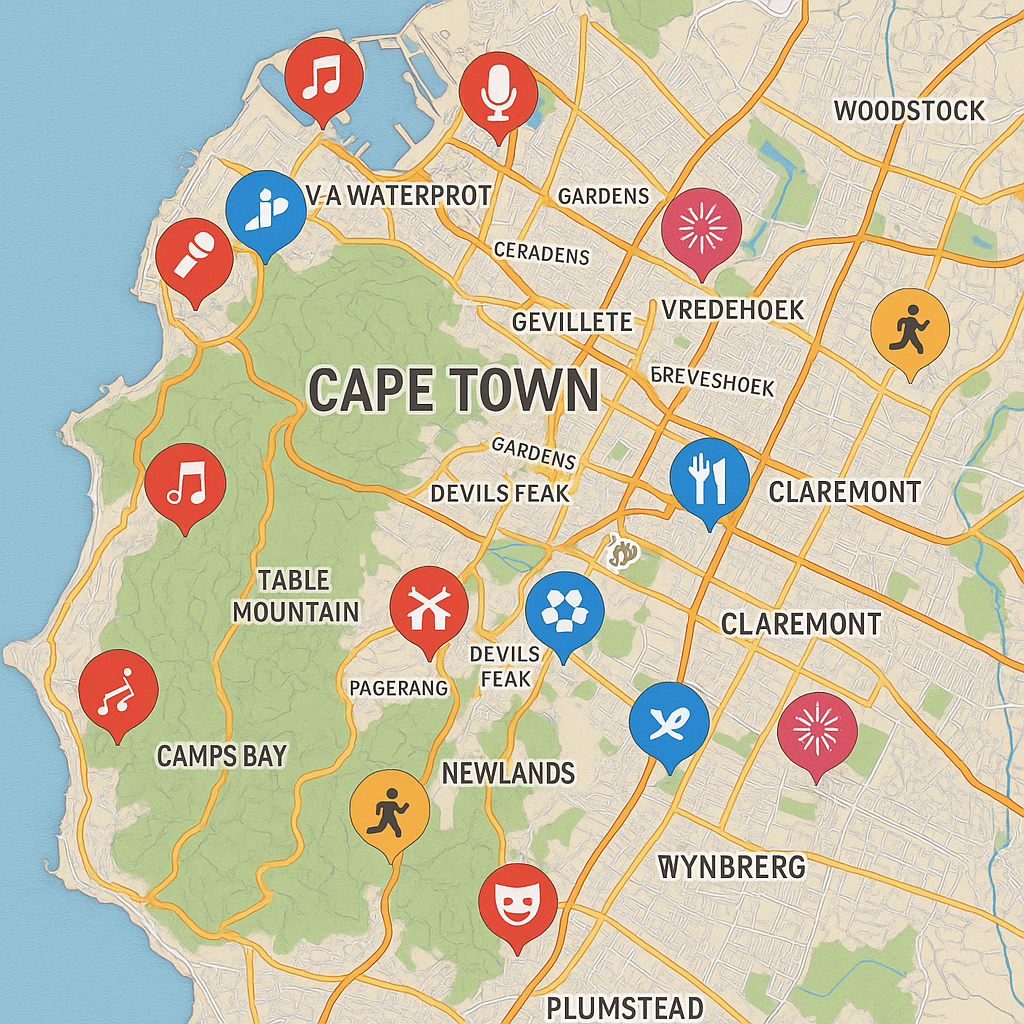
Cape Town weaponizes fun, turning 983 events into R5bn+ economic boost via smart permits, tourism, green initiatives & community growth.
Cape Town has turned fun events like music festivals and sports into a powerful economic tool.
How is Cape Town transforming events into economic prosperity?
Cape Town converts events like music festivals and sporting fixtures into economic prosperity through an intricate system. This includes an "Events Permit Office" that triggers supply-chain interventions, data-driven workforce management, and community-centered policies. By engaging local vendors, tracking visitor data, and professionalizing casual work, the city ensures that events generate significant economic returns and opportunities across all communities, contributing over R5 billion in fresh spending annually.
Get Cape Town news in your inbox
Stay updated with the latest stories from the Mother City.
Cape Town has transformed its 2025/26 events season into something far more sophisticated than entertainment. This mid-sized coastal city has developed a blueprint for converting every music festival, sporting fixture, and costume parade into tangible economic prosperity for its residents. Behind the headline figures - 983 approved events, 4.1 million attendees, and over R5 billion in fresh spending - lies an intricate web of supply-chain interventions, data-driven workforce management, and community-centered policies that other cities are scrambling to replicate.
The Permit Office: Where Economic Sparks Ignite
Tucked away in an unremarkable brick building on Barrack Street, adjacent to the traffic department, Cape Town's Events Permit Office operates with the precision of a high-stakes investment desk. The moment a permit application enters the system, it triggers what staff call the "green flash" - an automated alert that simultaneously reaches fourteen distinct city departments simultaneously.
Waste management, water services, transport authorities, South African Police Service, emergency medical services, informal trading divisions, heritage officials, tourism representatives, public relations teams, stadium operators, and a critical newcomer all receive instant notification. That newcomer, established in 2024, is the City Event Supply-Chain Desk - a unit born from revealing research showing that a single weekend cycling race could mobilize 1,200 micro-vendors for seventy-two consecutive hours.
This green flash initiates a forty-eight-hour countdown during which every department must identify potential risks or uncover hidden opportunities. When Waste Management spots insufficient recycling infrastructure on an applicant's site plan, they possess veto power or can attach conditions to the permit. The organizer must then engage a local cooperative employing forty-five former waste-pickers. The outcome satisfies everyone: organizers receive compliance, workers earn R450 daily for three days, and the city redirects twelve tons of plastic from landfills. Scale this across nearly a thousand annual events, and the R5 billion estimate begins to look modest.
The genius of this system lies in its refusal to treat permits as mere bureaucratic hurdles. Instead, each approval becomes a negotiated contract with explicit social and environmental returns, embedding economic opportunity into the DNA of public gathering.
Beyond Hotel Beds: The Hidden Multiplier Effect
Traditional tourism metrics capture only surface-level activity. Cape Town's Tourism Intelligence Unit has pioneered something more revealing: "event-specific bed creation" tracking that follows visitor journeys through multiple data streams.
The Sanlam Cape Town Marathon's elevation to Abbott World Marathon Major status in 2025 illustrates this approach perfectly. Conventional projections anticipated 15,000 out-of-town runners. The TIU cross-referenced flight manifests, Strava heat-maps, and Uber drop-off patterns to uncover a different reality: 23,400 distinct visitors averaging 4.7 nights each, frequently switching neighborhoods between stays.
This mobility generated remarkable downstream effects. Langa and Khayelitsha saw 1,800 new Uber driver registrations sparked by demand. Township residents offering Airbnb Experiences - cooking classes, photography walks, dance workshops - experienced 300% growth. One Bo-Kaap guesthouse operator reported that marathon weekend revenue covered eleven months of municipal rates, enabling solar geyser installation and three permanent hires.
The pattern exposes how elite athletic events can democratize economic access when data guides infrastructure decisions. Rather than concentrating benefits in established tourist corridors, Cape Town's approach disperses opportunity across previously marginalized communities, turning visitor foot traffic into neighborhood investment.
Stadiums as Employment Engines: The Workforce Revolution
Major sporting fixtures create visible crowds but invisible economic networks. The Springboks versus Wallabies Test at DHL Stadium exemplifies this hidden infrastructure. The stands showed roughly equal numbers of locals and tourists. Behind the scenes, an entirely different distribution operated.
Among 5,200 match-day personnel, 4,300 came from a city-built database ranking casual workers by previous event performance scores. Forklift operators, turnstile attendants, beverage servers, and multilingual "smile ambassadors" guiding fan navigation appear on digital heat-maps color-coded by residence. Shift allocation ensures nobody commutes beyond fifteen kilometers, with algorithms prioritizing single mothers and household breadwinners.
The system caps individuals at ninety event days annually, preventing exhaustion while spreading opportunity broadly. Workers take home R680 per shift plus meal vouchers redeemable at 120 formalized spaza shops integrated into the network. These small retailers reported 38% monthly turnover increases during the implementation period.
This represents workforce development disguised as event logistics. By treating stadium employment as skilled labor requiring ratings, training, and career pathways rather than disposable temporary staffing, Cape Town has created a professionalized casual economy with genuine advancement prospects.
Festivals as Launchpads: Cultural Events Driving Global Careers
Comic Con Africa's April 2026 Cape Town edition attracted 42,000 enthusiasts, yet the city's convention bureau treated the floor space as something more ambitious than fan gathering. Parallel programming transformed the event into a creative industry accelerator.
A compressed forty-eight-hour "game-jam" brought together 120 local developers who produced prototypes selling 1.2 million Steam copies within six months. A cosplay fashion incubator connected three designers with international costume houses currently staffing Marvel productions at Cape Town Studios' expanded facilities. A Kraaifontein collectibles manufacturer departed with R14 million in preorders from American retailer Hot Topic.
Post-event surveying revealed striking attitudinal shifts: 68% of international exhibitors had never previously considered Cape Town a creative hub, while 41% have already committed to 2027 returns. The convention thus functioned as export marketing, talent development, and foreign investment attraction simultaneously.
The women's sports calendar received similar strategic treatment. Deliberate front-loading of Proteas Women T20 internationals, the FIH Hockey Nations Cup, a Banyana Banyana friendly against Brazil, and the inaugural UCI Women's Cape Town Cycle Tour Grand Final generated measurable behavioral differences. Families extended stays 1.8 days longer than comparable men's events while increasing "experiential" spending - kayak rentals, wine-tram journeys, gin-making classes - by 34%.
Sponsors responded by doubling prize money, which attracted broadcasters, which justified R78 million in track upgrades at Green Point Athletics Stadium. This hybrid surface will become Africa's first capable of hosting rugby training and IAAF Gold-label athletics within the same weekend. The construction contract mandated 60% female-owned subcontractors, establishing precedent now embedded in every CIDB tender.
Mandela, Data, and Tomorrow: The Next Frontier
The Nelson Mandela Marathon, launching July 18, 2026, demonstrates how events can carry geopolitical weight. Course designers GPS-mapped every meter to begin at Robben Island's limestone quarry - where Mandela witnessed his first sunrise after twenty-seven years of imprisonment - and conclude at Parliament's new "Arch of Reflection."
World Heritage Site restrictions limit ferry capacity to four hundred runners simultaneously. The solution: a fourteen-hour rolling start converting the race into a twenty-four-hour citywide festival. Live-tracking beacons trigger automatic discounts at museums, jazz venues, and overnight koesisters vendors. International entrants pay $420 - honoring the marathon distance - with each foreign registration subsidizing ten local youth participants receiving six months of complimentary coaching through the "Catch-Your-Breath" program combining running with mathematics tutoring. Early projections suggest 70,000 visitors and R1.3 billion expenditure, plus a tourism narrative distinguishing Cape Town from Johannesburg's established December 5th commemorations.
Infrastructure innovation extends to transportation. With rail recovery ongoing, the Events Department partnered with three minibus-taxi associations creating "Event-Lite" - a WhatsApp dispatch system pre-selling seats across 2,200 branded Toyota Quantums. The R30 flat fare covers forty-kilometer journeys; the city covers operator revenue gaps. Operators commit to fifteen-minute intervals, Bluetooth passenger counting, and random inspections by joint City-SANTACO teams.
During the Betway SA20 Final, this network transported 92,000 spectators in four hours with seven-minute average waits. Operators earned R11 million in subsidies that weekend. Spectators redirected parking savings into stadium spending, generating R3.2 million in additional event levies from exceeded footfall projections.
Environmental accountability takes equally creative form. Since 2024, major permits require 110% carbon neutrality through the "GreenEvents Exchange," sourcing exclusively from Atlantis dune forest restoration, Winelands piggery biodigesters, and Overberg women's cooperative biochar production. The Springboks-Wallabies match retired 4,700 tCO2e, directing R2.3 million to 160 villagers planting 62,000 seedlings at R8 per surviving plant - 91% verified by drone LIDAR after twelve months. Stadium food waste became biochar feedstock, with 38 tons of concessions transformed into 18 tons of carbon-negative fertilizer sold to regional farmers at 30% discount.
All activity feeds "EventEye," a platform built by UCT's 2025 computer science honors cohort alongside Amazon Web Services and the City's Open Data Project. Every scanner tap, rideshare trip, beverage purchase, and Wi-Fi connection anonymizes into real-time public dashboards. Academics have produced fourteen peer-reviewed papers from this feed. Two fintech startups licensed the API for event cancellation insurance priced through live sentiment analysis. Emirates cited EventEye data when announcing a third daily Dubai-Cape Town flight from October 2026, explicitly referencing year-round demand evidence rather than seasonal patterns.
Permit applications for 2026/27 opened March 1, 2026. By 9:00 AM, portal overload from 1,027 submissions caused system collapse. Proposals include drone-racing inside V&A Grain Silo, bone-conduction silent discos atop Table Mountain, and three-day "Afrofuturist Fashion Summit" accommodation in refurbished Robben Island prison cells.
Should half these initiatives materialize, Cape Town's events economy will surpass R10 billion before decade's end - achieved without new stadium construction or national treasury appeals.
[
{
"question": "How does Cape Town leverage events for economic growth?",
"answer": "Cape Town transforms events like music festivals and sports into a powerful economic tool through an intricate system. This includes an 'Events Permit Office' that triggers supply-chain interventions, data-driven workforce management, and community-centered policies. By engaging local vendors, tracking visitor data, and professionalizing casual work, the city ensures that events generate significant economic returns and opportunities across all communities, contributing over R5 billion in fresh spending annually."
},
{
"question": "What is the 'Green Flash' system and how does it work?",
"answer": "The 'Green Flash' is an automated alert system triggered when an event permit application is submitted in Cape Town. It simultaneously notifies fourteen distinct city departments, including waste management, water services, transport authorities, and the South African Police Service. This initiates a 48-hour countdown for departments to identify risks or opportunities. For example, if Waste Management spots insufficient recycling infrastructure, they can require the organizer to engage a local cooperative of waste-pickers, ensuring compliance while creating employment."
},
{
"question": "How does Cape Town track the true economic impact of events beyond traditional tourism metrics?",
"answer": "Cape Town's Tourism Intelligence Unit (TIU) uses 'event-specific bed creation' tracking, which follows visitor journeys through multiple data streams like flight manifests, Strava heat-maps, and Uber drop-off patterns. This reveals the actual number of visitors, their length of stay, and their mobility, leading to a more accurate understanding of downstream economic effects, such as increased Uber registrations in townships or growth in Airbnb Experiences."
},
{
"question": "How does Cape Town's approach to event staffing create employment opportunities?",
"answer": "Cape Town has professionalized casual event employment. For major events, a city-built database ranks casual workers by performance scores, with algorithms prioritizing single mothers and household breadwinners. Shift allocation ensures workers don't commute beyond 15 kilometers, and individuals are capped at 90 event days annually to spread opportunities. Workers receive R680 per shift plus meal vouchers redeemable at local spaza shops, integrating small businesses into the economic network."
},
{
"question": "How do cultural events in Cape Town foster global careers and investment?",
"answer": "Cultural events like Comic Con Africa are treated as creative industry accelerators. Parallel programming, such as 48-hour 'game-jams' for local developers and cosplay fashion incubators, connects local talent with international opportunities. This approach not only generates immediate economic activity but also functions as export marketing, talent development, and foreign investment attraction, changing perceptions of Cape Town as a creative hub."
},
{
"question": "What innovative initiatives are being implemented for the Nelson Mandela Marathon and future events?",
"answer": "The Nelson Mandela Marathon will feature a 14-hour rolling start from Robben Island, transforming it into a citywide festival with live-tracking beacons triggering discounts at local businesses. A 'Catch-Your-Breath' program will subsidize local youth participants' coaching. For transport, 'Event-Lite' is a WhatsApp dispatch system for minibus-taxis, ensuring efficient public transport with R30 flat fares and operator subsidies. Environmentally, major permits require 110% carbon neutrality through the 'GreenEvents Exchange,' funding local restoration and biochar production projects, all tracked by the 'EventEye' platform for real-time data analysis."
}
]
Thabo Sebata is a Cape Town-based journalist who covers the intersection of politics and daily life in South Africa's legislative capital, bringing grassroots perspectives to parliamentary reporting from his upbringing in Gugulethu. When not tracking policy shifts or community responses, he finds inspiration hiking Table Mountain's trails and documenting the city's evolving food scene in Khayelitsha and Bo-Kaap. His work has appeared in leading South African publications, where his distinctive voice captures the complexities of a nation rebuilding itself.
View all articles →