
Cape Town Marathon elite field faces late withdrawals
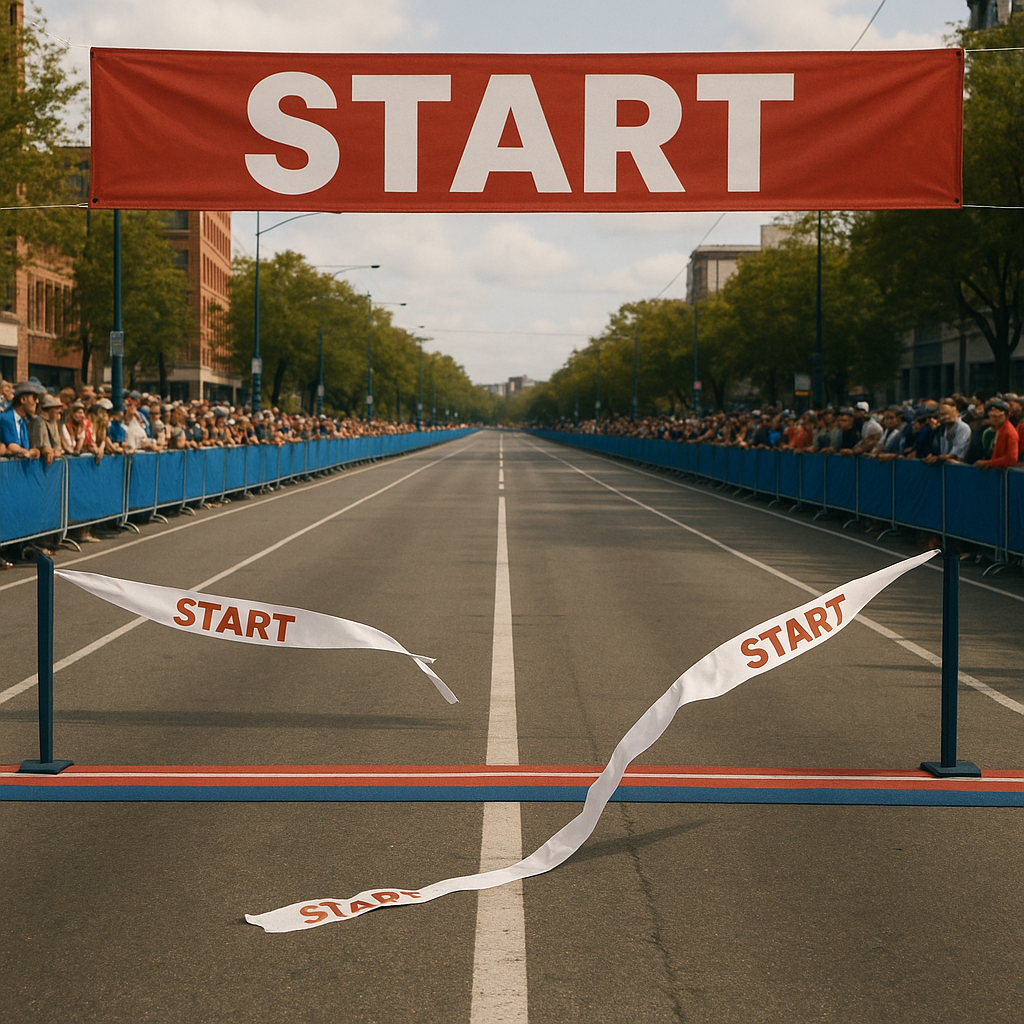
Late pull-outs, record purses, & Eliud Kipchoge rewrite the script for the 2026 Cape Town Marathon. Expect drama & world-class times.
The 2026 Sanlam Cape Town Marathon is facing drama as 8 top runners, including Elroy Gelant and Emma Pallant-Browne, pulled out due to injuries like muscle tears. Despite these setbacks, the race is still a huge event with big money prizes and features the legendary Eliud Kipchoge. The course is tough, with hills and unpredictable winds, making it a true test of endurance. Everyone is excited to see if new records will be set, with advanced tech and strict anti-doping rules ensuring a fair and thrilling race.
Why are eight elite runners withdrawing from the 2026 Sanlam Cape Town Marathon?
Eight elite runners, including Elroy Gelant and Emma Pallant-Browne, are withdrawing from the 2026 Sanlam Cape Town Marathon due to injuries like microscopic muscle tears and inflamed tendons. Despite extensive recovery efforts, continuing to compete would risk further damage and potentially ruin their athletic season.
Get Cape Town news in your inbox
Stay updated with the latest stories from the Mother City.
The Friday Shockwave: Why Eight Stars Won’t Make the Tape
The start-line inflatable on Adderley Street still smells of fresh vinyl, yet the 2026 Sanlam Cape Town Marathon has already survived its own warm-up lap - through gossip, panic and late-night voice notes. Less than forty-eight hours before the Sunday flag-drop, organisers revealed that eight headline acts are scratched. Gone from the line-up are South Africa’s record-holder Elroy Gelant, Britain’s serial podium finisher Emma Pallant-Browne, Kenyan prodigy Stephen Kiprop and versatile Ethiopian Shuko Genemo.
The terse press release landed at 16:07 on Friday, a timestamp that runners now call “the ninety-second kilometre of bad news.” Word spread faster than 5G: WhatsApp groups spun tales of dodgy shellfish in Stellenbosch, a grounded charter from Doha and a midnight row over appearance fees. Reality was more mundane and more brutal - microscopic muscle tears, tendons on fire and the invisible cliff between peak form and a ruined season.
Gelant filmed a two-minute clip from a Bellville physio room, resistance band biting into his ankle, sweat dripping in air-conditioned silence. “Same hamstring that barked after the national 10 000 m in April,” he winced. “Pool sessions, Alter-G, needles - nothing stuck. Couldn’t hold three-ten pace on the treadmill without cheating my stride. If I start on Sunday, I kiss the rest of the year goodbye.” The clip underlines a modern paradox: science pushes athletes to historic speeds while also magnifying the tiniest fibre flaws.
Yet the race has shrugged off worse. In 2017, cloud-bursts rewrote the route at 02:00 a.m.; in 2022, a bus strike turned thousands into impromptu hitch-hikers. Chaos is simply the race’s second language, and 2026 is already fluent.
Record Money, Record Hype: Why the Field Is Still Lethal
Even minus the departed eight, the surviving elites own a combined personal-best average of 2:06:32 for men and 2:23:17 for women - depth that places Cape Town inside Africa’s all-time top-five start lists. Pacers have orders to reach halfway in 62:45, a tempo that would have delivered overall victory as recently as 2015. The reason is the purse: R6.6 million - about US $350 000 - once record bonuses are added, nudging Cape Town into the same tax bracket as as Tokyo and Boston.
The magnet beyond money is 41-year-old Eliud Kipchoge, making his African-marathon debut. When the GOAT announced in February, Kenyan, South African and German newscasts led with the story. VIP grandstand seats at Green Point tripled overnight; the City’s forecast adds 18 000 overseas visitors and a R450 million shot in the arm to tourism. One CBD backpacker hostel lists its last 28 m² studio at R3 800 per night, breakfast not included.
Kipchoge has spent race week in a Franschhoek villa, hitting 18 km vineyard shake-outs at 05:12 a.m. daily. His single televised interview repeated the mantra: “I’m here not to prove, but to inspire kids who’ve never seen me run at home.” Sales of the most affordable Nike Next% model at Athlete’s Foot Canal Walk are up 42 % since his landing - parent after parent holding an Instagram screenshot and asking for “the shoe that makes my child believe,” according to store manager Nazeem September.
Logistics have ballooned to match the star power. One hundred and twenty anti-doping chaperones - mostly final-year sports-science students from the University of the Western Cape - will tail elites from expo entry. Blood passports will be updated within six hours of the finish, a protocol stricter than World Athletics demands. Fourteen motorcycle ambulances, each carrying a defibrillator and chilled saline pouches able to drop core temperature one degree every three minutes, will knife through the field in under ninety seconds if needed.
The Silent Hill and the Tail-Wind Lottery: Anatomy of the Route
World Athletics certifier Archie McDonald signed off the course last November, and it is craftier than it looks. The opening 8 km tick through the CBD grid at barely a ripple, luring sprinters into suicidal early splits. Then, at Mowbray, a 4 km drag climbs 78 m toward Devil’s Peak - shallow enough to tempt, brutal enough to chew through phosphate tanks. Kenyan guru Patrick Sang, guiding two last-minute entrants, calls it “a silent hill - it doesn’t roar, it lulls you into oxygen debt.”
After the hair-pin at the University of Cape Town, the route dives toward the Atlantic. From there, a south-easter can deliver a 12-second-per-kilometre push or a sand-blasting head-wind, depending on Mother Nature’s mood. Modelling by the South African Weather Service gives a 63 % chance of a 9 km/h tail-wind - perfect for negative-split heroics. If the gods cooperate, the leaders might hit 40 km in 1:59:48, teasing the continent’s first sub-2:04 outside Berlin or Valencia.
The prize structure begs for fireworks: R1 million for anyone cracking the 2:04:36 course best, plus an extra R500 000 if that time also rewrites the world record. The women’s race is equally primed. With Genemo scratched, favourite status lands on Kenya’s Joyciline Jepkosgei - owner of a 1:04:51 half-marathon and, theoretically, the 2:17:01 women-only world record. She turned down bigger European appearance) appearance fees for this shot. Her agent, Jurrie van der Velden, says, “She wants to be the name engraved if Cape Town becomes a Major in 2027.”
For the first time, the Abbott Age-Group World Championship decamps from the traditional six-leg circuit. More than 2 400 masters runners aged 40 to 74 qualified across 23 countries. Each age band wears a colour-coded singlet, turning the course into a human heat-map. Results are parsed in real time by Swedish firm Race Wolf; the top three in every five-year bracket earn automatic 2027 Berlin Marathon entry plus a R25 000 travel voucher. Kids on couches can track a parent’s avatar mile-for-mile through an app that mirrors the road’s actual curvature.
The Final Countdown: Tech, Shoes and a City Holding Its Breath
Late scratching shuffled more than mood boards. Without Kiprop’s front-running pyrotechnics, pacers Tsegaye Mekonnen and Bayelign Teshager redrew their script: instead of hammering the first 5 km, they will squeeze the second, setting up a 30 km time-trial and a 12 km dog-fight. Car-to-ear radio chatter claims the 15-to-25 km segment will now be targeted at 29:55 - a stretch that ends at the sharpest sea-level descent.
Security tightened after unrelated CBD protests last weekend. All backpacks larger than 5 litres are barred from the start and finish zones, irking drone-toting influencers. A no-fly radius of 2 km runs from 05:00 to 14:00, forcing broadcasters to string cable-cams between lamp-posts. The upside is visceral TV: low-slung sweeps that reveal every grimace and salt crust.
Drink tables are now pop-up laboratories. Runners choose at registration: standard 200 ml water, 150 ml high-molecular-carb gel or a 50 ml “shot” loaded with 180 mg caffeine and 400 mg beta-alanine. RFID chips in bottle bibs feed live intake data to the Sports Science Institute; athletes picking the gel option at 30 km ran 2.3 % faster over the final 12 km in trials - 47 seconds at world-record speed.
Hashtag #LionOfCapeTown leapt across three continents within six hours of Kipchoge’s touchdown. A 60 m waterfront silo mural, painted in thermochromic pigment that shifts colour as temperatures rise, immortalises the Kenyan. South African rapper YoungstaCPT dropped a 64-bar freestyle “42 195”, listing every remaining star and folding in is isiXhosa proverbs on endurance - now queued to blast at every kilometre marker.
The shoe arms race reached DEFCON 1. Adidas lodged a last-gasp prototype, the “Delta 2.0”, rumoured to hide three carbon plates and a 48 mm stack - 2 mm beyond legal. Any athlete who laces it must sign a waiver admitting the result could later be voided. Two Kenyan pacers reportedly took the dare, pocketing a guaranteed R250 000 if they reach 30 km inside 90 minutes. Whispered consensus says the next frontier of regulation will be foam, not pharmaceuticals.
On Saturday evening, the technical briefing moves to City Hall, where Mandela delivered his first post-release speech. Organisers will TikTok the session live with sign-language interpretation. Start-line positions will be drawn lottery-style from a glass bowl, adding theatre and forty metres of potential extra jogging for the unlucky.
Green Point Park is already Tent City: physio bays glowing in LED brand colours, a barefoot proprioception path of imported river stones, beetroot-shot biltong stands and espresso laced with indigenous buchu. The aroma is equal parts rooibos, frying oil and nerves.
At 04:30 a.m. on race morning, the first shuttle buses push through pre-dawn Atlantic mist. Runners cradle final breakfasts sealed at 6 °C: banana, 250 ml Game, peanut-butter sandwich - starch retrograded for easy digestion. Clicking timing chips on handrails become quiet metronomes.
By 05:59 a.m. the city inhales. The electronic starter pistol will ripple across 42.2 km of tar, cobblestone, seafront and mountain switchback. Whether the day ends under flashing world-record digits or with the quiet victory of strangers shouting each other home, Cape Town will write its next chapter one footstrike at a time.
Why are eight elite runners withdrawing from the 2026 Sanlam Cape Town Marathon?
Eight elite runners, including Elroy Gelant and Emma Pallant-Browne, are withdrawing from the 2026 Sanlam Cape Town Marathon due to injuries like microscopic muscle tears and inflamed tendons. Despite extensive recovery efforts, continuing to compete would risk further damage and potentially ruin their athletic season.
Who are some of the key elite athletes still competing in the marathon?
Even with the withdrawals, the field remains strong, boasting an average personal-best of 2:06:32 for men and 2:23:17 for women. The legendary Eliud Kipchoge, making his African marathon debut, is a major draw. Joyciline Jepkosgei, with her impressive half-marathon record, is a strong favorite in the women's race.
What makes the 2026 Sanlam Cape Town Marathon particularly challenging?
The course is known for its difficulty, featuring a significant 4 km climb of 78 m towards Devil's Peak around the 8 km mark, which runners have dubbed a "silent hill." Additionally, unpredictable winds, particularly a potential south-easterly, can either provide a helpful tailwind or a challenging headwind along the Atlantic section of the route.
What are the prize incentives for the marathon?
The marathon offers substantial prize money, totaling R6.6 million (approximately US $350,000) once record bonuses are included, placing it among top marathons globally. There's a R1 million bonus for breaking the 2:04:36 course record and an additional R500,000 if that time also sets a new world record.
What advanced technologies and anti-doping measures are in place?
The race incorporates advanced technology for fairness and athlete well-being. This includes 120 anti-doping chaperones and strict blood passport updates within six hours of the finish. Drink tables are equipped with RFID chips to track real-time intake data, and there are even experimental high-molecular-carb gels and caffeine shots available. There's also speculation about new, potentially rule-bending shoe prototypes like Adidas's "Delta 2.0" with three carbon plates and a 48 mm stack.
How is the marathon impacting the local economy and tourism in Cape Town?
The event is a significant economic boost for Cape Town. Eliud Kipchoge's participation alone is expected to attract 18,000 overseas visitors and inject R450 million into tourism. VIP grandstand seats have tripled in price, and local businesses like backpacker hostels and sports stores are seeing a surge in demand, with sales of specific running shoes increasing by 42% since Kipchoge's arrival.

Tumi Makgale is a Cape Town-based journalist whose crisp reportage on the city’s booming green-tech scene is regularly featured in the Mail & Guardian and Daily Maverick. Born and raised in Gugulethu, she still spends Saturdays bargaining for snoek at the harbour with her gogo, a ritual that keeps her rooted in the rhythms of the Cape while she tracks the continent’s next clean-energy breakthroughs.
View all articles →