
Cape Town marathon enters World Marathon Majors series in historic first for Africa
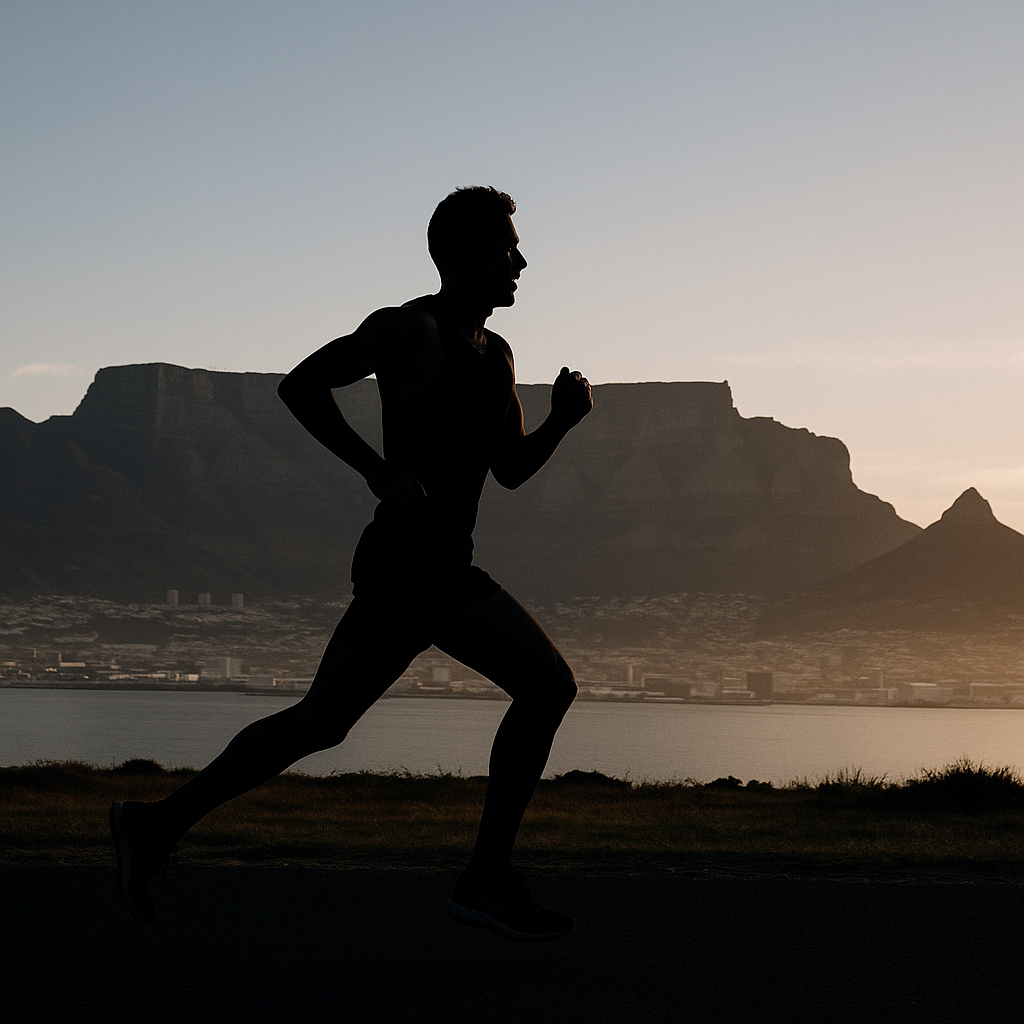
Cape Town Marathon joins Abbott World Marathon Majors! Discover its journey, economic impact, unique course, and African legacy.
The Cape Town Marathon is now one of the world's biggest races! It took 12 years of hard work, focusing on fast runners, showing the race on TV everywhere, making fans excited, being good for the Earth, and helping the community. They even used hidden cameras and special tools to check everything. Finally, a special group voted yes, making it the eighth World Marathon Major. This big news means lots of money, jobs, and people coming to Cape Town, changing the city for runners and everyone else!
How did the Cape Town Marathon become a World Marathon Major?
The Cape Town Marathon became a World Marathon Major by meeting strict criteria over 12 years. Organizers focused on runner speed, global broadcast reach, spectator engagement, sustainability, and community legacy, culminating in a unanimous vote from Abbott's panel in 2026 after a rigorous audit.
Get Cape Town news in your inbox
Stay updated with the latest stories from the Mother City.
The Quiet Confirmation That Changed a Continent
May 2026 began with a soft, grey Monday sky and 25 836 feet stepping across Green Point’s blue start carpet. The air sat at a crisp 11 °C and the notorious southeaster had been blunted by a passing cold front.
Most runners noticed only the perfect weather; almost nobody clocked the hidden auditing tools - timing mats every five kilometres, infrared-equipped drones circling overhead, or the plain white vans whose occupants measured spectator decibel levels and the distance between water tables to the centimetre.
Ten days later, a 762-page compliance report was hand-delivered to Abbott’s Chicago tower. The panel’s vote was unanimous. On 3 September, former Boston champion Dawna Stone signed the communiqué: beginning in 2027, the Sanlam Cape Town Marathon joins the World Marathon Majors.
The Blueprint: 2014–2026
Starting Small with Table Mountain on a Lanyard
The race debuted in 2014 with a modest 6 400 entrants and a medal shaped like the flat-topped mountain that watches the city. Clark Gardner helmed a committee that mixed physiotherapists, traffic nerds and township club captains. Their brief was simple: tick every box Abbott calls “non-negotiable.” They did it by creativity, not cash.
Five Hurdles and Clever Hops
- *Speed: * Sub-2:10 for men and sub-2:24 for women had to be hit three editions running - check.
- Broadcast reach: 120-plus territories with commentary in the local tongue - covered after SuperSport traded airtime for future ad slots.
- Sidewalk energy: 25 000 spectators every 10 km - achieved by recruiting school choirs and brass bands that turned suburbs into street parties.
- *Sustainability: * Zero-waste and 40 % renewable energy - pulled off by training township grandmothers to stitch discarded banners into backpacks and importing edible seaweed pods that dissolve into race-day gardens.
- *Legacy: * Measurable uplift - check, measured in 300 newly formed club chapters and R50-million raised for youth sports bursaries.
The Route: A 42-Kilometre Love Letter to Geography
Sea Spray, Switchbacks and Stories
Gun goes off at sea level. Twelve kilometres later, the field crests Kloof Nek 160 metres higher, legs already buzzing. A swift drop lands them in Camps Bay before the route sneaks through Bo-Kaap’s sherbet houses and the Company’s Garden - where Europe’s first Southern Hemisphere veggie patch sprouted in 1652.
Halfway splits the city’s historic heart and then heads for Langa, the township that produced 1956 Boston winner Fransie Gerber. The final 8 km hug the Atlantic in a ruler-flat sprint past the V&A Waterfront’s cheering balconies.
Why the Hills Matter
Stanford researchers matched Cape Town’s 313-metre total climb against the six established Majors. The surprise: the biggest rises arrive after 30 km, exactly where glycogen tanks run dry. The finding made pacing strategies for Cape Town a fresh science all its own.
Dollars, Jobs and Runways
The Overnight R1.4-Billion Boost
UCT economists ran the numbers within hours of the Major announcement. Direct spend is forecast at R1.4-billion, with 4 100 temporary jobs and R560-million in fresh foreign currency. The rand spiked, hotels filled, and Airbnb owners in Observatory started renting recovery corners fitted with foam rollers and Normatec boots.
Planes, Trains and Automobiles
Ethiopian Airlines doubled its Addis–Cape Town route to daily flights; RwandAir launched a Thursday-morning hop from Kigali timed for bib collection. Johannesburg hash clubs logged a 22 % mileage jump as runners wrote “Cape Town 2027” on every Strava title like a mantra.
Engineering a City for 50 000 Runners
Traffic Will Take the Day Off
The 2026 race kept entries at 25 836 to protect its audition. In 2027 the field doubles to 50 000 - 60 % locals, 40 % foreigners. A mayoral decree turns CBD MyCiTi lanes into runner-only arteries from 04:00 to 12:00. Freight trucks that normally choke those roads pay a temporary congestion levy and are rerouted via the R300.
Sidewalks That Rise from the Ground
Three hundred and sixty urinals pop up hydraulically along Long Street at 03:00 and vanish again behind metal grates once the sweep vehicle waves the all-clear. The design was borrowed from Zurich’s after-midnight nightlife solution.
Science, Shoes and the Sub-2 Dream
Next-Gen Footwear Meets Coastal Air
Cape Town debuts the same week Nike releases the Alphafly 4. Sports scientists whisper that the city’s 5–7 % humidity gradient could shave 30 seconds compared with Berlin’s denser atmosphere. Adidas counters with a Stellenbosch heat-chamber camp replicating 26 °C and 85 % humidity - its worst-case scenario rehearsal.
Sensors in the Sole
Start-up SwiftShoe prints a recyclable carbon plate laced with graphene sensors that zap impact-force data every 200 milliseconds via lamppost-mounted LoRaWAN towers. Every volunteer opting into the pilot gets a live foot-strike heatmap on their Garmin.
Spectators, Songs and Sea Breeze
A Sonic Marathon
Grandmothers in Langa bash empty beer tins in rhythm, their metallic chorus ricocheting off zinc roofs. Sea Point’s Jewish brass section adds clarinet to tech-house at 172 BPM - exactly the cadence most elite men prefer. TikTok swells with the surf-lifesaver chant “Ha-ka! Ha-ka!” as paddle boards become human tunnels in the last 5 km.
Booze-Free Banter
Rather than hire security to police alcohol, organisers hand the job to beach lifesavers armed only with enthusiasm. Their cheer tunnels keep the final stretch dry and deafening.
Entries, Expo and Ubuntu
How to Get In
Fifty thousand slots are carved into five slices: 15 000 lottery, 20 000 time-qualifiers, 8 000 charity bibs (US$1 500 minimum), 5 000 tour packages, 2 000 elites. South Africans get a 20 % lottery weighting. Recruit three first-time runners from previously disadvantaged areas and you earn an extra “Ubuntu Wave” ticket.
The Expo as Living Lab
The CTICC hosts Adidas’ 3-D-printed midsoles built by a 30-second foot scan, a Sanlam VR booth that predicts your finish time from an on-site VO2 test, and a Township Track food court pairing isiXhosa sour-milk smoothies with vetkoek stuffed with Impala biltong.
Legacy, Legacy, Legacy
Tracks, Teachers and Townships
January 2027 sees the opening of the Khayelitsha Athletics Development Hub - 200 m indoor track, lactate lab, solar-powered Zwift rigs - funded by the R12-million surplus from the 2026 charity bib sales.
Kenyan coach Yeshimebet Aeleke mentored Mdantsane runners for 11 weeks in 2025; average marathon drops were nine minutes apiece. The Rural Coach Exchange will scale that experiment continent-wide.
Bed-Sheet Screens Under Baobabs
SuperSport, BBC and NHK beam 4K pictures while a free-to-air SES satellite signal blankets 47 sub-Saharan countries. Rural villages are expected to host 14 million viewers projected on makeshift screens - an audience dwarfing Central Park’s headcount.
El Niño, Wristbands and the Last 365
When It Rains, It Pours Dollars
Models show a 17 % chance of May downpours greater than 25 mm in six hours. Lloyd’s of London brokered a weather-derivatives contract: if the deluge hits, US$2.5 million covers athlete rerouting and spectator refunds.
Lives Ticking Toward Start Day
On 1 May 2027 the city’s LED traffic signs switch from speed warnings to: “365 km to go. Train today, triumph tomorrow.” Shoe sales jump 48 %. Primary schools stage Friday “Mini-Majors” with tape recycled from 2026 banners.
Somewhere on the R44, Eliud Kipchoge glides along at 3:45 per kilometre, already rehearsing the day Africa’s roads become the planet’s most celebrated 42.195 kilometres.
[{"question": "
How did the Cape Town Marathon achieve World Marathon Major status?
\nThe Cape Town Marathon secured its recognition as the eighth World Marathon Major after 12 years of dedicated effort, following a rigorous audit process. Organizers focused on several key areas: attracting fast runners, ensuring global television broadcast reach, generating significant spectator engagement, implementing sustainable practices, and creating a lasting community legacy. These efforts culminated in a unanimous vote from Abbott's panel in 2026, officially granting it Major status starting in 2027.
\n\n
\n"},{"question": "
What were the key criteria the Cape Town Marathon had to meet to become a Major?
\nThe Cape Town Marathon successfully met five critical "non-negotiable" criteria set by Abbott. These included: achieving sub-2:10 for men and sub-2:24 for women for three consecutive editions (Speed); broadcasting the race in over 120 territories with local commentary (Broadcast reach); attracting 25,000 spectators every 10 km, often through community involvement like school choirs (Sidewalk energy); achieving zero-waste and 40% renewable energy, partly by repurposing banners and using edible seaweed pods (Sustainability); and demonstrating measurable community uplift, such as forming 300 new club chapters and raising R50-million for youth sports bursaries (Legacy).
\n\n
\n"},{"question": "
What makes the Cape Town Marathon's route unique and challenging?
\nThe 42.195-kilometre route of the Cape Town Marathon is celebrated for its diverse geography and strategic challenges. It starts at sea level, includes a significant climb to Kloof Nek (160 meters higher) around the 12 km mark, and passes through iconic locations like Camps Bay, the colorful Bo-Kaap, and the historic Company's Garden. Uniquely, the most significant ascents occur after the 30 km mark, when runners' glycogen stores are typically depleted, making pacing a critical scientific endeavor for this race. The route also embraces its history, passing through Langa, the township of 1956 Boston winner Fransie Gerber, and finishes with a flat sprint along the Atlantic past the V&A Waterfront.
\n\n
\n"},{"question": "
What economic impact is expected from the Cape Town Marathon becoming a World Major?
\nEconomists at UCT projected a substantial economic boost following the Major announcement. The direct spend is forecast at R1.4-billion, accompanied by the creation of 4,100 temporary jobs and an influx of R560-million in fresh foreign currency. This led to an immediate spike in the rand's value, full hotels, and increased demand for short-term rentals, with airlines like Ethiopian Airlines and RwandAir increasing flights to accommodate the anticipated surge in international visitors. The event is expected to significantly benefit the local economy and tourism sector.
\n\n
\n"},{"question": "
How will Cape Town manage the increased number of runners and spectators for the 2027 race?
\nFor the 2027 race, the participant field will double to 50,000 runners (60% local, 40% international). To manage this, the city will implement several innovative solutions. A mayoral decree will transform CBD MyCiTi lanes into runner-only arteries from 04:00 to 12:00, with freight trucks rerouted via the R300 and subject to a temporary congestion levy. The city will also deploy 360 hydraulically popping-up urinals along Long Street, inspired by Zurich's urban solutions, which will appear at 03:00 and vanish after the race sweep vehicle passes, ensuring efficient and discreet sanitation for the large crowd.
\n\n
\n"},{"question": "
What is the legacy and community impact of the Cape Town Marathon?
\nThe Cape Town Marathon is committed to a lasting legacy that extends beyond race day. The 2026 charity bib sales, generating a R12-million surplus, funded the Khayelitsha Athletics Development Hub, a state-of-the-art facility opening in January 2027. The Rural Coach Exchange program, which saw Kenyan coach Yeshimebet Aeleke mentor Mdantsane runners with significant time improvements, will be scaled continent-wide. Additionally, the race ensures widespread accessibility to its global broadcast, with a free-to-air satellite signal reaching 47 sub-Saharan countries, allowing rural villages to host millions of viewers on makeshift screens, fostering a deep connection with running across Africa.
\n\n
\n"}]

A Russian-Spanish journalist and Cape Town native, channels his lifelong passion for South Africa into captivating stories for his local blog. With a diverse background and 50 years of rich experiences, Serjio's unique voice resonates with readers seeking to explore Cape Town's vibrant culture. His love for the city shines through in every piece, making Serjio the go-to source for the latest in South African adventures.
View all articles →