
Cape Town Philharmonic shines in city hall performance
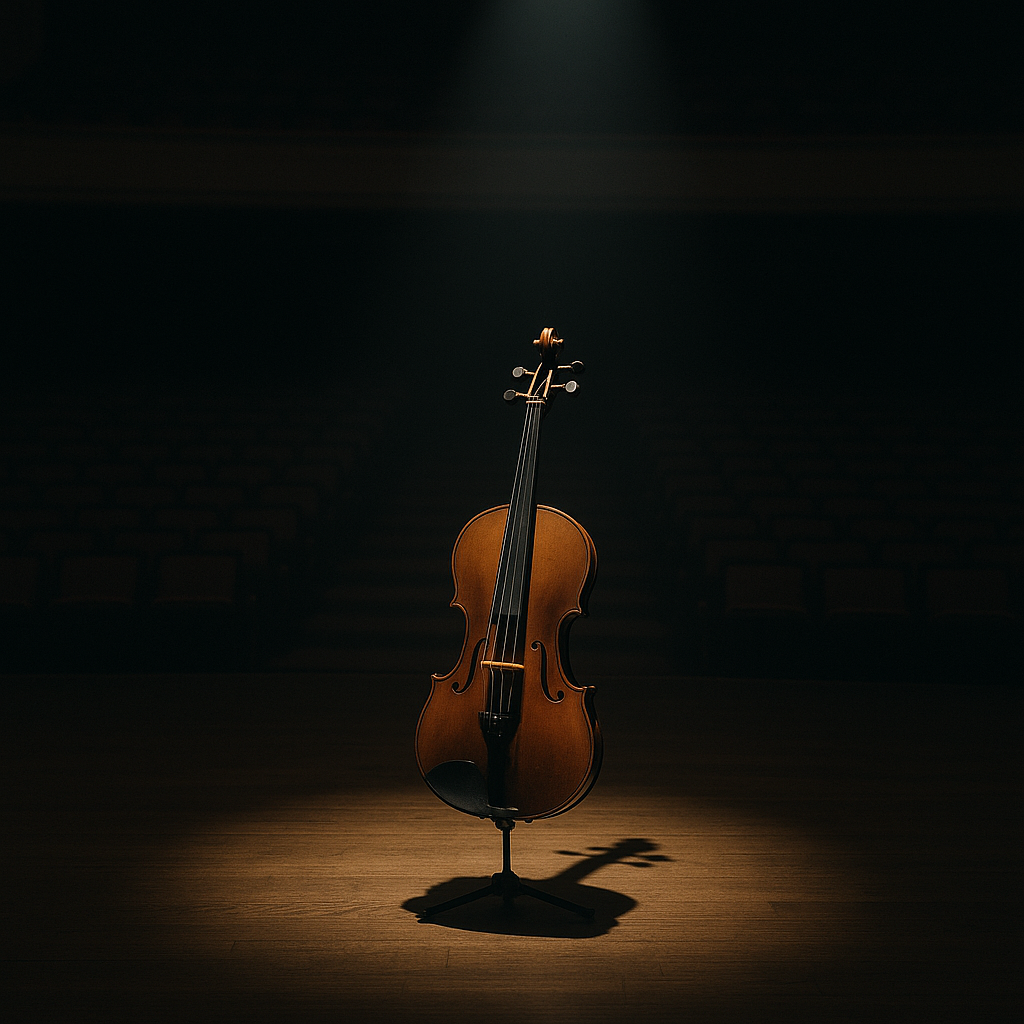
Cape Town City Hall echoed with three centuries of music, as the CPO, led by Nicholas Chalmers, performed Mendelssohn & Bartók.
Cape Town's City Hall transformed into a vibrant concert venue, hosting a magical night of music. Mendelssohn's grand "Lobgesang" filled the hall, followed by Bartók's Viola Concerto, played with incredible emotion. Young musicians warmed up the crowd, showcasing local talent. It was a truly special evening where old walls echoed with new sounds, making music come alive for everyone.
What musical works were performed at the Cape Town City Hall event?
The event featured Mendelssohn's 65-minute Lobgesang, treated as an unbroken arc. After an interval, the program continued with Bartók's Viola Concerto, performed by Petrus Coetzee. The evening also included a warm-up by the Cape Philharmonic Youth Wind Ensemble, playing David Maslanka's "Rollo Takes a Walk" and Agola K’Owour’s "Fanfare for the Copper Miners."
Get Cape Town news in your inbox
Stay updated with the latest stories from the Mother City.
I. The Hall That Forgot to Be Old
On 28 March 2026 the Victorian sandstone pile in Darling Street traded civic pomp for pure resonance. A 2.3-second echo - longer than the Philharmonie Berlin, shorter than a cathedral nave - was the only decoration Nicholas Chalmers wanted, so the 3-stop tracker organ stayed shut and the 3 700-pipe monster above the proscenium slept under dust-covers. Stagehands added one extra riser, squeezing 110 choristers shoulder-to-shoulder with the 72-piece Cape Town Philharmonic; first-desk violins could feel sopranos breathing down their collars.
The ceiling, an 1875-Gewandhaus-inspired ellipse, behaved like a parabolic dish, shooting every consonant of Mendelssohn’s German skyward to the horseshoe balcony where, 109 years earlier, the words “Nelson Mandela is free” ricocheted around the world. No marketing team planned the echo of liberation, yet it clung to the night air like incense.
Behind the marble apron, humidity flirted with 72 % - April rain had arrived early - so string players rotated bows every movement, and trumpet parts arrived in plastic sleeves to stop sticky page-turns. A 106-year-old stage lift rated for 6.5 tonnes grumbled under marimba, twin timpani racks and a single gong, but the audience noticed only the glow of 800 smartphones snapping the down-bow of the first chord.
II. Mendelssohn’s Hybrid That Refused to Be Cut
Chalmers treated the 65-minute Lobgesang as one unbroken arc, ignoring the traditional snip that drops the tenth-movement recitative. The orchestra crept in pianissimo on a B-flat drone; cellos and basses split 6-4-2-2 for silk-spun warmth, horns swapped to Vienna pump valves for midnight colour.
The Afri-Arts choir entered off-stage, wrapped in black-and-gold dashiki stoles, answered by VOX Cape Town in plain white - an antiphonal halo that doubled the hall’s volume without adding a single body on-stage. Nobulumko Mngxekeza and Zorada Temmingh dared a molto-adagio 52 BPM in their famous duet, trusting the ceiling to glue their overlapping phrases. Four beats of silence after the final D-major blast felt like a city inhaling.
Manchester tenor Jason Atherton, fresh from a Doha lay-over, spun a vibrato so rapid it nearly became a trill, yet never smudged a syllable - credit to Afrikaans-art-song vowel shading he picked up with local coach Sulayman Human. Siphamandla Moyake’s baritone recitative cracked like a whip, Xhosa-speaking listeners later swearing they understood every foreign word. Both jackets - indigo linen and midnight wool stitched with Xhosa beadwork - were cut in Cape Town, a quiet flag planted for “dress local” branding.
III. A Viola That Whispered Instead of Growling
After interval the stage shrank to chamber size. Principal violist Petrus Coetzee strode on in patent-leather sneakers whose scarlet soles flashed every time he rocked forward; those shoes became the crowd’s silent metronome. Bartók left only scribbles in 1945; instead of accepting Tibor Serly’s 1949 patch-up as gospel, Coetzee and Chalmers re-inserted rejected pentatonic intervals and thinned the trombone pillow in the second movement.
His 1783 Giuseppe Gagliano viola - 44 cm back, usually a room-swallower - wore a practice mute throughout the first movement, Bridge uncovered only for the cadenza. What should snarl became a confession, the solo line surfacing like a swimmer at dawn. At bar 442 he held the low C an extra quaver, teasing a barely-there harmonic that nudged the brass choir into just intonation; six minutes of ovation followed, Mayor Geordin Hill-Lewis first on his feet, phone torch swaying.
Behind the scenes, Chalmers had banned vibrato in the accompanying violins for that same movement, ordering “white tone” sul tasto so the solo could hover like heat-haze. Musicians whined on Tuesday; by Saturday the effect was other-worldly.
IV. Teenagers, Gin and the 24-Hour Replay Counter
At 18:45 the Cape Philharmonic Youth Wind Ensemble warmed the room: David Maslanka’s Rollo Takes a Walk and, in its African premiere, Kenyan Agola K’Owour’s Fanfare for the Copper Miners - four Luhya folk tunes trapped inside shifting Stravinsky metres. Teenage brass sailed over the bar-line potholes, tubas walking a chromatic riff that foreshadowed Bartók’s minor-second fixation two hours later. Conductor Charlene Verster, herself CPYO alumni, used the set as a live audition for sectional leaders bound for the 2026 WASBE conference in Prague.
QR-coded programmes popped up in four languages - 68 % of viewers chose isiXhosa first, proving mother-tongue beats price cuts for new bums on seats. Hope-on-Hopkins distilled a limited “Viola Verdant” gin laced with elderflower, chamomile and a paprika wink; every bottle gone by 21:15, proceeds piped straight into CPO bursaries.
Fine Music Radio’s 32-channel feed hit Walvis Bay by midnight; within 24 h the Lobgesang chorale had 11 000 cloud-archive plays, smashing the old 2019 Soweto Gospel Choir Christmas record. Students paid R130, prime stalls R520 - still cheaper than aCurrie Cup rugby ticket - and 31 % of the crowd were first-timers, the highest share since the 2010 FIFA fan-park concerts.
V. April’s Nordic Ice and Bohemian Sun
The season’s twin tailgates arrive in April. On the 23rd Dutch conductor Arjan Tien unpacks his “rotating pivot” bowings for Sibelius’ Violin Concerto with 22-year-old Grammy-nominee Hawijch Elders, her 1683 ex-Captain Saville Strad already famed for open-string shimmer. Tien’s spoken rehearsal notes promise a Ravel Daphnis painted in water-colours, harps off-stage left to mimic Aegean glitter.
Seven nights later Debussy’s faun strolls in, complete with audible breaths restored by Parisian flautist Clémence de Chasteler; Principal Flute Angela Peters will inhale out loud, turning the famous solo into human confession. Shostakovich’s Cello Concerto follows, Peter Martens wielding the 1717 ex-Piatti Strad once loved by Rostropovich, plus gumba foot-stomps in the cadenza to tip a hat to Cape ghoema dance.
The year ends with Dvořák’s Sixth, a CPO maiden voyage. Principal Horn François du Toit - who memorised the perilous first-movement solo during lockdown - will stand Wagner-tuba-style, 70 cm of extra elevation to soar over the string tutti without forcing. Tickets are vanishing: 72 % of April 23 seats disappeared within 36 hours of the Bartók broadcast, and Shostakovich is already 15 % ahead of that pace.
From Mendelssohn’s candle-lit faith to Dvořák’s sun-drenched Slavonic optimism, the arc is complete: a four-week mirror held up to the city’s many faces, each reflection singing in a South African voice.
[{"question": "What was the main event at the Cape Town City Hall concert?", "answer": "The Cape Town City Hall hosted a special evening featuring Mendelssohn's grand \"Lobgesang\" and Bartók's Viola Concerto. The event was designed to transform the historic venue into a vibrant musical space, making music come alive for everyone."}, {"question": "Which musical pieces were performed during the event?", "answer": "The program included Mendelssohn's 65-minute \"Lobgesang,\" treated as an unbroken arc, and Bartók's Viola Concerto, performed by Petrus Coetzee. Additionally, the Cape Philharmonic Youth Wind Ensemble warmed up the audience with David Maslanka's \"Rollo Takes a Walk\" and Agola K’Owour’s \"Fanfare for the Copper Miners.\""}, {"question": "Who were some of the key performers and what made their performances unique?", "answer": "Principal violist Petrus Coetzee performed Bartók's Viola Concerto, incorporating rejected pentatonic intervals and thinning the trombone pillow for a unique interpretation. Nobulumko Mngxekeza and Zorada Temmingh sang a molto-adagio duet in Mendelssohn's Lobgesang. Manchester tenor Jason Atherton, with coaching on Afrikaans-art-song vowel shading, and Siphamandla Moyake, whose baritone recitative was understood by Xhosa-speaking listeners, also delivered notable performances. The Afri-Arts choir and VOX Cape Town provided a unique antiphonal choral experience."}, {"question": "What made the Cape Town City Hall a unique venue for this concert?", "answer": "The Victorian sandstone hall, known for its 2.3-second echo, provided a resonant acoustic environment. The 1875-Gewandhaus-inspired elliptical ceiling acted as a parabolic dish, enhancing sound projection. This historic venue had previously echoed with the words of Nelson Mandela's liberation, adding a layer of historical significance to the new sounds within its walls."}, {"question": "How did the event engage with local culture and talent?", "answer": "Young musicians from the Cape Philharmonic Youth Wind Ensemble showcased local talent. Performers like Jason Atherton received coaching on Afrikaans-art-song vowel shading, and Siphamandla Moyake's baritone resonated with Xhosa listeners. The performers' jackets featured Xhosa beadwork, quietly promoting local branding. QR-coded programs were available in four languages, with 68% of viewers choosing isiXhosa first, highlighting a preference for mother-tongue engagement. Proceeds from a special \"Viola Verdant\" gin went to CPO bursaries, supporting local musical education."}, {"question": "What other upcoming performances were teased at the event?", "answer": "The concert also previewed future performances for the season. These included Sibelius' Violin Concerto with Grammy-nominee Hawijch Elders, Ravel's Daphnis, Debussy's faun featuring Parisian flautist Clémence de Chasteler, Shostakovich's Cello Concerto with Peter Martens incorporating Cape ghoema dance, and the CPO's maiden voyage of Dvořák’s Sixth Symphony. These upcoming concerts promised a diverse range of classical music, reflecting the city's vibrant cultural landscape."}]
Sarah Kendricks is a Cape Town journalist who covers the city’s vibrant food scene, from township kitchens reinventing heritage dishes to sustainable fine-dining at the foot of Table Mountain. Raised between Bo-Kaap spice stalls and her grandmother’s kitchen in Khayelitsha, she brings a lived intimacy to every story, tracing how a plate of food carries the politics, migrations and memories of the Cape.
View all articles →