
Cape Town port climbs to second
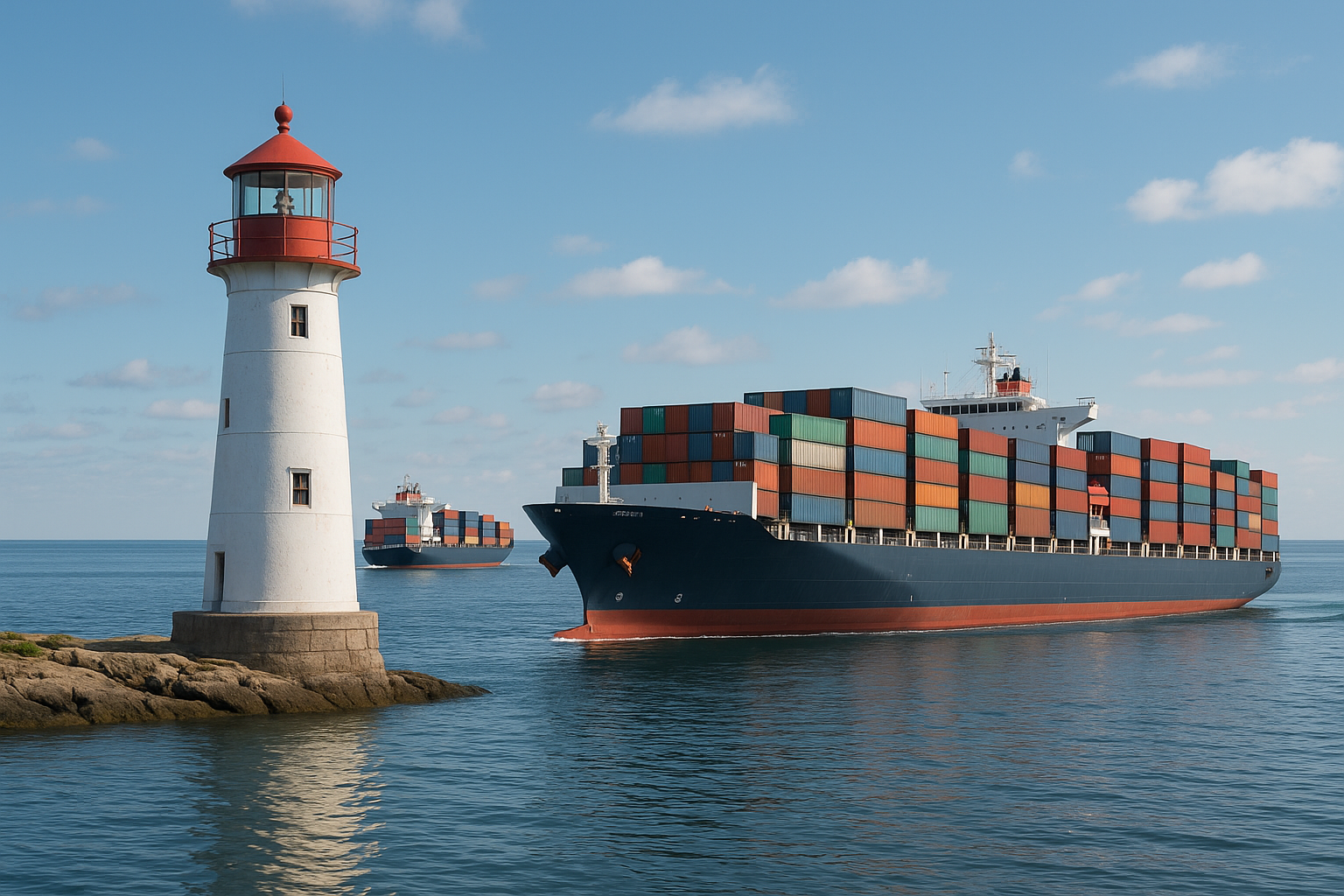
South Africa's ports hit a 6-year high in 2025 with 9,342 ship calls, signaling a significant maritime recovery and growth.
South Africa's harbors are booming! In 2025, they saw 9,342 ships, a six-year record, showing a great bounce back after the pandemic. This isn't just one port doing well; almost all of them are, thanks to better infrastructure and clever changes in how goods are moved. Durban and Cape Town are leading the way, handling lots of containers, cars, and fresh produce. Even Richards Bay is getting better with new plans, and smaller ports are finding their own special niches. Things like digital upgrades, private train lines, and smart climate defenses are all helping to keep this amazing comeback going strong.
What is the current state of South Africa's harbors?
South Africa's eight trading harbors recorded 9,342 ship calls in 2025, marking a six-year high since 2018 and a significant rebound from the pandemic-era low. This broad-based recovery indicates a systemic revival across most ports, driven by infrastructure improvements, commodity reshuffles, and route switches.
Get Cape Town news in your inbox
Stay updated with the latest stories from the Mother City.
1. National Snapshot – The Fleet Returns
South Africa’s eight trading harbours closed 2025 with a thunderous 9 342 recorded ship calls - the liveliest score card since the pre-pandemic benchmark of 9 882 logged in 2018 and a decisive leap from the Covid-era trough of 8 453 in 2021. Data compiled by investigative unit The Outlier and first published by BusinessTech show the rebound is real, measurable and, most importantly, broad-based. Seven of the eight ports attracted more hulls than they did four years ago, proving the upswing is not a single-berth miracle but a systemic revival.
Richards Bay, long battered by coal-line failures, still lags 2018 levels yet even it managed 200 extra calls compared with its 2022 low. Behind the headline number hides a mosaic of route switches, commodity reshuffles and billion-rand infrastructure bets that are quietly redrawing the continent’s maritime atlas. Durban keeps its lion’s share of box traffic, Cape Town lures reefer vessels away from overcrowded European hubs, and Ngqura snatches trans-shipment work from far bigger rivals. The upshot: after a decade of derailments, crane cannibalisation and berths padlocked for maintenance, Africa’s southern gateway appears to have touched bottom and is now climbing.
2. Durban & Cape Town – Containers, Cars & Cold Chain
Durban: cranes, cruises and cars
Durban handled 2 939 arrivals in 2025 - 122 fewer than in 2018 yet still commanding 31 % of the national vessel count and 60 % of South Africa’s container trade. Cargo across the 1 850 ha bay totalled 86.4 million tonnes, up 2 % on 2022, powered by a 9 % jump in box throughput. The game changer was the return of eleven 65-ton ship-to-shore cranes that had sat idle since 2019. Refurbished under a R1.8 billion partnership between Transnet National Ports Authority and Shanghai Zhenhua, the giants trimmed average anchorage wait from 48 hours to 26, according to TNPA’s December dashboard.
October brought an added drawcard: a R1.4 billion cruise terminal able to accommodate two 350 m post-Panamax liners at once. Forty-six cruise calls and 86 000 passengers passed through in its first operating quarter. When summer cruise itineraries thin out, the 14 000 m² structure doubles as a vehicle-export pad, adding 28 000 cars to the port’s annual tally without stealing precious container quay hours.
Cape Town: fruit, fog and deep water
Cape Town stole the comeback crown, swelling from 1 604 calls in 2018 to 2 235 in 2025 and overtaking Richards Bay as the country’s second-busiest harbour. Deciduous-fruit exporters rerouted 42 % of their citrus and table-grape volumes away from jammed Santos-Brazil and Tilbury-UK, loading directly onto mother ships in the Mother City and shaving fourteen days off the Europe round-trip. Duncan Dock now offers a dredged depth of –15.5 m Chart Datum, tempting CMA-CGM, Maersk and MSC to elevate Cape Town from feeder status to a full Africa-Express stop and injecting 220 000 extra TEU a year.
April saw the traffic-control tower fitted with LIDAR fog-penetration cameras, cutting pilotage delays on days when the mountain’s “table-cloth” cloud dips to sea level. The combination of deeper water, cold-chain savings and tech-assisted visibility has turned the Cape into the fastest-growing container entry on the sub-continent.
3. Richards Bay, Ngqura & The Niche Players – Coal, Cobalt & Cars
Richards Bay: fewer ships, better rail
Richards Bay logged 1 438 calls - still 484 below 2018 - but every extra hull is scrutinised because the port’s throughput is a proxy for the 580 km heavy-haul rail line from Mpumalanga’s coal fields. Between October 2024 and May 2025 the line ran at an annualised 45 million tonnes, 11 % above the FY2023 floor though still 17 million short of design capacity. Sixteen Chinese-built 20 000 ℓ GE diesel locos and drone track-patrols cut derailment hours from 38 a month to just 9, while stockpiles in the 92 ha buffer yard dropped from 4.1 million tonnes to 2.3 million, freeing space for manganese and chrome miners who now claim 18 % of berth windows.
Berth 208 - built for an aluminium smelter that never fired - will become a 2.5 million-tonne dry-bulk platform for junior miners starved of rail slots to Durban. The diversification drive means Richards Bay is no longer a single-commodity hostage.
Ngqura: sun-powered trans-shipment
Ngqura,Africa’s longest-breakwater (3 300 m) shelter, welcomed 712 ships, up 28 % since 2018. Maersk’s AE10 Asia-Europe loop began lifting 8 000–10 000 boxes per call for relay to West Africa and South America, pushing annual throughput to 1.04 million TEU - 66 % growth in five years. TNPA has ordered three hybrid gantry cranes and switched on a 25 MW solar array that now meets 42 % of the terminal’s power demand, allowing marketers to sell “green trans-shipment” to European retailers hunting Scope 3 savings.
The specialists: cars, rivers and LPG
- Gqeberha (ex-Port Elizabeth) spent the 2025 automotive lull completing a R650 million Ro-Ro jetty dredged to –14 m; VW and Ford will use the 220 m berth to ship more than 400 000 cars in 2026.
- East London, the nation’s only river port, dredged the Buffalo mouth to –10.5 m and installed a 600 t mobile crane, enabling BMW to export 80 % of its X3 production directly to the United States and lifting total calls to a record 289.
- Saldanha exported 59.4 million tonnes of iron ore under a new 24-hour load-port guarantee for capesize vessels and hosted 38 oil-service ships heading to Namibian ultra-deep blocks, injecting R420 million in marine revenue.
- Mossel Bay, smallest of the eight, reopened a 135 m LPG jetty in September, importing 45 000 t a month to feed the Transnet pipeline grid to Gauteng and receiving two gas carriers a week.
4. Digital, Labour, Rail & Climate – The Connective Tissue
Paperless cargo and AI pilots
Behind the steel and concrete, software keeps the rebound alive. A Port Community System relaunched on Amazon Web Services in February 2025 digitised 87 % of cargo documents, cutting container release times from 144 hours to 38. Blockchain-backed e-bills of lading have already blocked 1 200 fraudulent cargo attempts worth R1.1 billion. A machine-learning module predicts arrival within 30 minutes, letting Durban pre-assign yard slots and trim re-handling moves by 14 %. Real-time data sharing also enables “just-in-time” pilotage that eliminated 11 000 tonnes of CO₂-equivalent bunker emissions in 2025.
Strikes and safety
A thirteen-day July strike over proposed outsourcing of marine-launch services cost Cape Town and Durban an estimated R7 billion before a settlement saved 150 permanent jobs in exchange for a three-year wage freeze linked to crane-productivity metrics. Despite the stoppage, 2025 became the safest year on record: zero fatalities and only three minor oil spills totalling 270 ℓ, down from 18 incidents and 11 000 ℓ in 2021. AI-enabled CCTV now spots smoke, spillage or intrusions within 15 seconds and can auto-lock conveyors or shut fuel lines.
Private trains hit the mainline
Operation Vulindlela unlocked a R17 billion rail-concession bundle in October, letting three private groups run 20-year franchises on the corridors linking Durban to the Free State, Ngqura to the Northern Cape and Richards Bay to Mpumalanga. Grindrod-led trains began hauling coal from Ermelo in November, slashing transit from 72 hours to 42 and pushing rail’s share of Durban’s inland boxes from 18 % to 27 % by December. Truck queues at Bayhead Road dropped from 1 800 to 650 vehicles a day, proving the concession model can unclog both ports and highways.
Weathering tomorrow’s storms
An April east-coast low generated 8.2 m waves and shut Durban for 36 hours, diverting fourteen ships to Maputo and Ngqura. TNPA has since invested R250 million in a wave-rider buoy network and University-of-Cape-Town swell model that, from January 2026, will feed berth-specific forecasts to pilots and tug masters. On the west coast, Cape Town is preparing for a projected 25 cm sea-level rise by 2035; Dutch consultants reckon R1.2 billion is needed to armour the 1938 Victoria Basin walls before spring-tide storms breach them. Retro-fits are pencilled for winter 2027–2028, financed by TNPA tariffs and the Green Climate Fund.
Corridors beyond the breakwater
South Africa’s port renaissance is already spilling into the hinterland. A tripartite SAIDC corridor upgraded the Beitbridge post and Limpopo rail line, funnelling DRC copper and cobalt to Richards Bay. The first pilot train ran in September 2025, loading 3 400 t of cobalt concentrate straight into handysize holds bound for China. Cape Town, meanwhile, is courting Botswana to build a Gaborone “dry port” at Sir Seretse Khama International Airport; pre-cleared garments and automotive parts would fly to the Cape before sailing, adding an estimated 18 000 TEU a year and cementing the Western Cape as the go-to export ramp for time-sensitive southern African cargo.
The 9 342 hulls that crossed the South African breakwaters in 2025 are only the visible crest of a much larger logistical swell. Whether the curve keeps rising will depend less on new quays than on the rails, border gates, data streams and climate defences knitting those quays to the Copperbelt, the Highveld and the world.
What is the current state of South Africa's harbors?
South Africa's eight trading harbors recorded 9,342 ship calls in 2025, marking a six-year high since 2018 and a significant rebound from the pandemic-era low. This broad-based recovery indicates a systemic revival across most ports, driven by infrastructure improvements, commodity reshuffles, and route switches.
Which ports are leading the recovery and what are their specializations?
Durban and Cape Town are leading the recovery. Durban commands 31% of the national vessel count and 60% of South Africa's container trade, benefiting from refurbished cranes and a new cruise terminal. Cape Town has seen a significant increase in calls, specializing in deciduous fruit exports due to deeper waters and advanced fog-penetration cameras, attracting major shipping lines.
What improvements have been made to infrastructure and operations?
Improvements include the refurbishment of 65-ton ship-to-shore cranes in Durban, dredging in Cape Town for deeper berths, the installation of LIDAR fog-penetration cameras, and a new cruise terminal in Durban. Digital upgrades like a new Port Community System, AI-powered prediction modules, and blockchain-backed e-bills of lading have also streamlined operations and enhanced security.
How are other ports like Richards Bay and Ngqura contributing to this comeback?
Richards Bay, despite past challenges, is diversifying beyond coal with plans for Berth 208 to serve junior miners, and improved rail efficiency. Ngqura is thriving as a trans-shipment hub, powered by a 25 MW solar array and hybrid gantry cranes, offering

Tumi Makgale is a Cape Town-based journalist whose crisp reportage on the city’s booming green-tech scene is regularly featured in the Mail & Guardian and Daily Maverick. Born and raised in Gugulethu, she still spends Saturdays bargaining for snoek at the harbour with her gogo, a ritual that keeps her rooted in the rhythms of the Cape while she tracks the continent’s next clean-energy breakthroughs.
View all articles →