
Cape Town ramps up early mental health intervention for youth
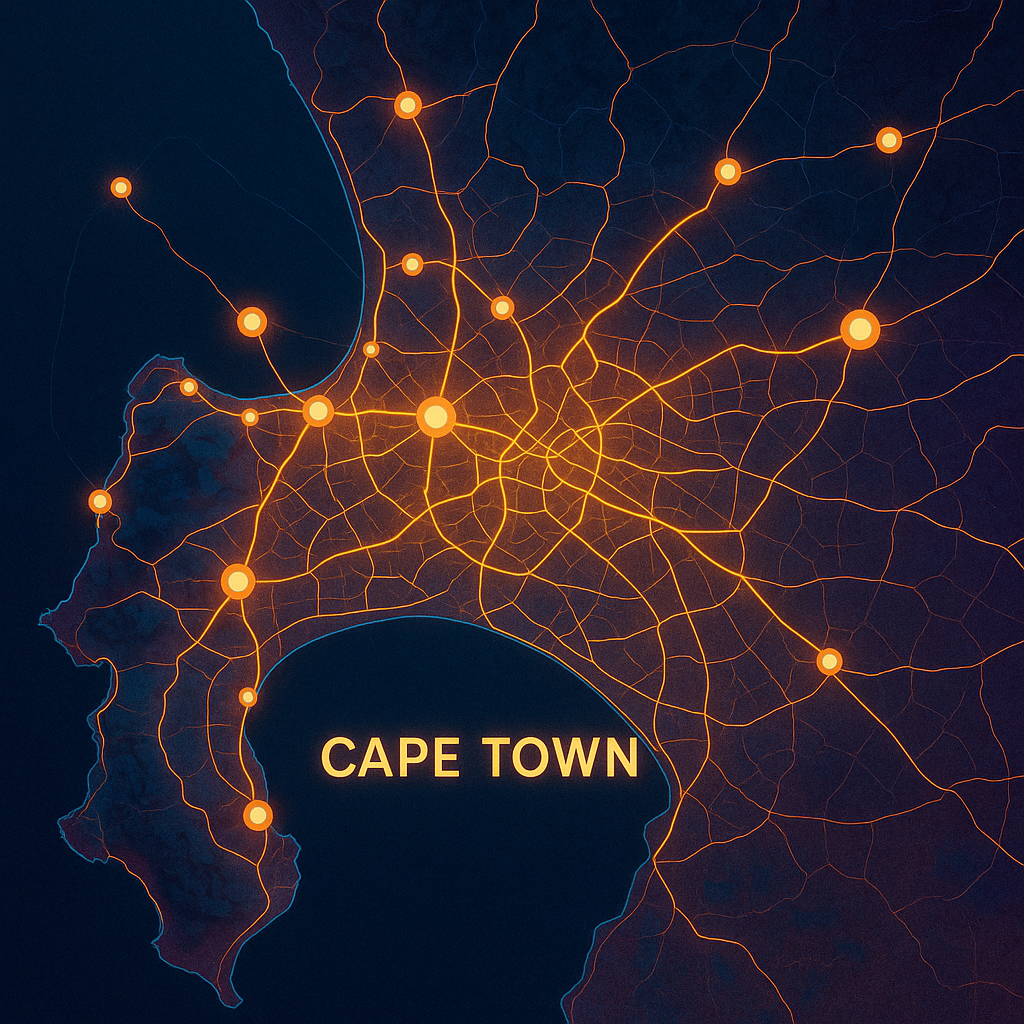
Cape Town revolutionizes youth mental health with innovative school-based screenings, re-purposed infrastructure, and community-led initiatives.
Cape Town is fighting a big mental health problem among its young people. They now check on students' moods every morning at school, using a special system to find kids who might need help. The city has also moved money around to pay for more mental health services, including special roaming psychologists. Teachers are learning simple ways to spot and help students in trouble, and pharmacies, libraries, and even TikTok are being used to offer support on weekends and make talking about mental health normal. It's all about catching problems early and making sure no one feels alone.
How is Cape Town addressing the rise in youth mental health crises?
Cape Town is tackling its youth mental health crisis through a multi-faceted approach. This includes implementing daily school mental-health sweeps, reallocating city funds to mental health services, training teachers and community members as first responders, and creating accessible weekend support through pharmacies, libraries, and social media campaigns like the #Ndiyavuma TikTok challenge. The city focuses on early intervention and destigmatizing mental health discussions.
Get Cape Town news in your inbox
Stay updated with the latest stories from the Mother City.
1. The 07:15 Bell That Starts a Life-Saving Sweep
Every weekday at 07:15 the wind off the False Bay coast slams against Steenberg High’s prefab classrooms and the first-period bell shrills. For 1 200 teenagers it is simply the signal to hustle to maths or history; for the staff it is the cue to begin a low-tech but deadly-serious mental-health patrol. Each teacher carries a laminated seating chart printed the previous night. Tiny amber dots sit beside several names - learners whose answers on last week’s five-emoji “mood check” crossed the danger threshold. Two University of Cape Town interns built the algorithm on an open-source platform, training it on 4 000 previous responses from a dozen Cape Flats schools. A risk score above 0.62 turns the dot on; by 07:20 the campus psychologist, Nadia Abrahams, has already received four encrypted SMS alerts. She now begins what she calls “corridor triage”: brisk 90-second chats beside lockers or in the tuck-shop queue to decide who needs a full session, who merits a same-day call home, and who can safely wait for the Friday group circle.
The routine sounds modest, yet it is the heartbeat of a city-wide reboot launched after Mayor Geordin Hill-Lewis read the 2023/24 surveillance report. Child suicide attempts had jumped 33 %, adolescent mental-health visits had risen by the same margin, and under-18 screenings had rocketed from 417 to 2 048 in only twelve months. Instead of interpreting the spike as social decay, epidemiologists framed it as the first honest photograph of a need that stigma and waiting lists had always hidden. Today all 435 public high schools in Cape Town run the same sweep; the bell, the dots and the corridor sprint are now as normal as handing in homework.
2. From Salt River Mortuary to Roving Psychologists
The city realised it already owned the bricks, bandwidth and bodies required for a rapid scale-up; it simply redeployed them. The pivot began in the refrigerated quiet of the Salt River Forensic Pathology Laboratory. For years staff logged every non-natural death, yet the ICD-10 category “intentional self-harm” offered policymakers almost nothing actionable. A late-2022 data-sharing agreement among Pathology, City Health, the Western Cape Education Department and the South African Depression and Anxiety Group turned each suicide into a 48-hour “warm line” cascade. A psychologist now phones the deceased’s last-known school, clinic and household for anonymised qualitative data that feed a living dashboard. The loop is grim but gold-standard; it tells officials where to aim help before grief hardens into secrecy.
Next, the treasury performed an almost unheard-of manoeuvre for a cash-strapped municipality: it shifted R 48 million from storm-water disaster preparedness to mental health, arguing that untreated psychological distress is itself a slow-motion emergency. The re-allocation funds 38 additional roving clinicians, each issued with a Toyota Avanza stocked with fold-out sand-tray kits, Wi-Fi dongles and colour-coded mindfulness jars that double as anxiety props. GPS tracking keeps them in the field; spend more than 45 % of any week in a district office and the regional manager receives an automated nudge. The message is unambiguous: stay with learners, not behind desks.
3. Making Every Teacher a Confident First Responder
Classic “mental-health first-aid” workshops often leave teachers more anxious than equipped, paralysed by fear of lawsuits or confidentiality breaches. Cape Town scrapped the dense manuals and replaced them with a credit-card-sized protocol: LOOK, LISTEN, LINK. LOOK means spotting shifts in attendance, hygiene, artwork themes or playground isolation. LISTEN encourages the use of minimal, 90-second encouragers - “that sounds heavy” - but forbids counselling. LINK is a single tap on the amber-dot app; a psychologist or counsellor fetches the child within 24 hours. To embed muscle memory the city runs fortnightly “simulation mornings” with trained child actors; staff practise until the steps feel automatic. Early data show the average gap between a learner voicing suicidal thoughts and receiving a risk assessment has plunged from 11 days to 36 hours in participating schools, while control sites still lag at 19 days.
Confidence is climbing outside the classroom too. All 435 schools now host monthly peer-support evenings where parents trade stories over coffee and vetkoek. Attendance started at a hesitant dozen; it now averages 120, forcing organisers to stream the session on YouTube Live. The city’s research unit credits the card-sized script for normalising conversations that once dissolved into awkward silence.
4. Pharmacies, Libraries and TikTok - Weekend Lifelines in Unexpected Places
Saturdays and Sundays are historically lethal for suicidal teens: clinics close, friends scatter, alcohol flows. To plug the gap the city negotiated with 42 private pharmacies - Clicks, Dis-Chem and independents - to open “quiet rooms”: sound-proofed stock-rooms fitted with beanbags, fidget toys and a direct hotline to SADAG. Librarians received the identical one-day training plus a modest stipend. No files are opened, no fees demanded; a youngster can walk in, whisper “I feel unsafe,” and meet a trained adult within minutes. Uptake was sluggish until a viral tweet praised “the library that hugs you”; weekend footfall has since tripled.
Meanwhile stigma is being hacked by micro-influencers rather than posters. In Cape Town’s multilingual sprawl the Afrikaans phrase “jy’s in jou kop nie lekker nie” and the isiXhosa term “ukudana” still shut down conversation. So the city hired ballet dancers, amapiano choreographers and church drummers to create 30-second suicide-prevention routines hashtagged #Ndiyavuma - “I admit/I agree.” The moves end with two open palms pushed toward the camera, the universal signal for “stop, talk, share.” Six weeks in, the challenge had 4.7 million views, 60 % from the 13-24 age bracket. A geo-locked pop-up directs viewers to the nearest public clinic; click-through sits at 11 %, triple the average for government health content.
Parents are reached through GogoMaye, a WhatsApp bot that works offline once loaded. Users type “hi” and receive bite-size menu options in English, Afrikaans or isiXhosa: signs of depression, conversation starters, free help sites, a 90-second breathing voice note recorded by beloved radio personality Auntie Pat. Messages stay under 60 characters to avoid costly double texts. Since launch the bot has swapped 1.2 million interactions; 38 % occur after 21:00, evidence that worry peaks when the house finally falls silent. Together the pharmacies, dance challenges and WhatsApp godmother have turned the city’s weekend and after-dark deserts into populated waypoints on the road to help.
Cape Town refuses to measure success by “counselling sessions delivered,” dismissing that metric as “counting Band-Aids.” Its live dashboard tracks six indicators: time between distress expression and human contact, same-week follow-up appointments kept, high-risk learners still in school after 90 days, parent attendance at support evenings, social-media stigma-reduction engagements, and the youth suicide rate per 100 000. Officials are even piloting a “well-being-adjusted life year” that monetises averted suicides and reinvests the sum back into the programme, shielding it from annual budget wrangles. The infrastructure is no longer a pilot; it is a living, self-correcting organism that treats every school corridor as a potential artery of connection - and every survivor as a sensor for what to do next.
[{"question": "What specific daily routine has Cape Town implemented in schools to identify students at risk of mental health issues?", "answer": "Every weekday at 07:15, Cape Town's 435 public high schools conduct a 'mental-health patrol.' Teachers use laminated seating charts with amber dots indicating students whose responses on a five-emoji 'mood check' crossed a danger threshold. This system, powered by an algorithm developed by University of Cape Town interns, triggers encrypted SMS alerts to the campus psychologist, who then performs 'corridor triage' for immediate assessment and intervention."}, {"question": "How did Cape Town reallocate its resources to fund expanded mental health services?", "answer": "The city reallocated R 48 million from its storm-water disaster preparedness budget to mental health services. This decision was based on the argument that untreated psychological distress constitutes a 'slow-motion emergency.' This funding supports 38 additional roving clinicians equipped with mobile clinics and technology to ensure they spend more time directly with learners in the field."}, {"question": "What training approach does Cape Town use to empower teachers as mental health first responders?", "answer": "Cape Town developed a simplified, credit-card-sized protocol for teachers: LOOK, LISTEN, LINK. 'LOOK' involves spotting changes in student behavior or appearance, 'LISTEN' encourages brief supportive statements without counseling, and 'LINK' is a tap on an app to refer a child to a psychologist or counselor within 24 hours. To build confidence and muscle memory, the city conducts fortnightly 'simulation mornings' with trained child actors."}, {"question": "How is Cape Town providing mental health support during weekends and after-hours?", "answer": "To address the vulnerability of teens during weekends, Cape Town partnered with 42 private pharmacies (Clicks, Dis-Chem, and independents) and libraries to establish 'quiet rooms.' These spaces offer a safe, confidential environment with direct hotlines to SADAG (South African Depression and Anxiety Group) where young people can receive immediate support from trained adults. Additionally, the city uses the GogoMaye WhatsApp bot for parents, providing information and support in multiple languages, with 38% of interactions occurring after 9 PM. The city also uses social media campaigns like the #Ndiyavuma TikTok challenge to normalize discussions about mental health among youth."}, {"question": "What is the #Ndiyavuma TikTok challenge and how does it aim to reduce mental health stigma?", "answer": "The #Ndiyavuma TikTok challenge, meaning 'I admit/I agree,' is a social media campaign designed to combat mental health stigma. It features ballet dancers, amapiano choreographers, and church drummers performing 30-second suicide-prevention routines. The moves conclude with open palms towards the camera, signaling 'stop, talk, share.' This challenge has garnered millions of views, with a significant portion from the 13-24 age bracket, and geo-locked pop-ups direct viewers to local clinics."}, {"question": "What key metrics does Cape Town use to measure the success of its mental health initiatives?", "answer": "Cape Town measures success not by the number of counseling sessions, but by six key indicators on a live dashboard. These include: time between distress expression and human contact, same-week follow-up appointment attendance, retention of high-risk learners in school after 90 days, parent attendance at support evenings, social-media stigma-reduction engagements, and the youth suicide rate per 100,000. They are also piloting a 'well-being-adjusted life year' metric to monetize averted suicides and reinvest funds into the program."}]

Thabo Sebata is a Cape Town-based journalist who covers the intersection of politics and daily life in South Africa's legislative capital, bringing grassroots perspectives to parliamentary reporting from his upbringing in Gugulethu. When not tracking policy shifts or community responses, he finds inspiration hiking Table Mountain's trails and documenting the city's evolving food scene in Khayelitsha and Bo-Kaap. His work has appeared in leading South African publications, where his distinctive voice captures the complexities of a nation rebuilding itself.
View all articles →