
Cape Town records 4 000 monthly STI clinic visits, health concerns raised
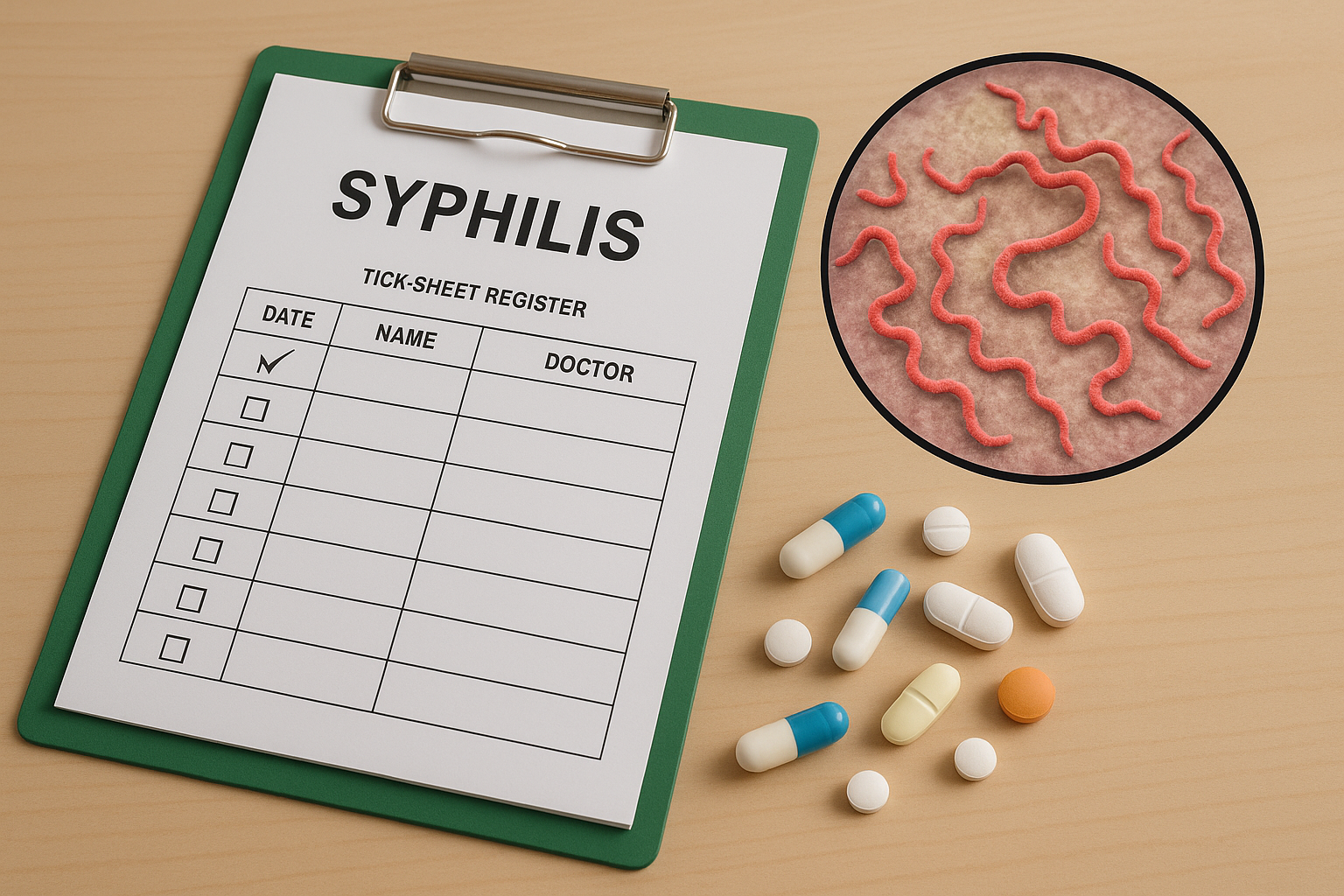
Cape Town faces a quiet STI surge with 4,000 appointments monthly. Discover the challenges and innovative efforts to promote safe sex.
Cape Town is fighting a silent war against STIs, with 4,000 clinic visits each month. Syphilis is exploding among young women, and gonorrhea is becoming super tough to treat. Even chlamydia is hiding in many teens. It's a huge challenge, and the city is trying new ways to find and treat everyone, even using text messages and special clinics.
What is the current state of sexually transmitted infections (STIs) in Cape Town?
Cape Town faces a persistent STI endemicity, with 4,000 appointments monthly across 48 municipal sites. Syphilis has quadrupled among young women since 2021, and drug-resistant gonorrhea is on the rise. Chlamydia affects one in twelve teenagers, highlighting a complex public health challenge.
Get Cape Town news in your inbox
Stay updated with the latest stories from the Mother City.
Dawn Head-Count: How the Daily Ledger Grows
Gugulethu Community Health Centre opens its doors while the Atlantic fog still clings to the soccer-field horizon. Nurses wheel out a grey filing cabinet that doubles as the city’s most awkward diary of modern love: green registers labeled “STI Tally.” Before the day ends, about 130 new rows will be inked in - friends from campus giggling in burkas, middle-aged husbands dragged by furious spouses, sex workers on a lunch break. Multiply that single clinic by 48 municipal sites and the monthly sum hits four thousand. Spread across a year, the metro chalks up 48 000 visits - flat-line figures that have refused to dip for three consecutive calendar cycles. February only hands officials a louder microphone; the queue itself never lies.
Each entry captures more than names. It logs last period dates, Grindr handles, farm-labour payroll numbers, nightclub stamp marks. Epidemiologists insist the pile of paper is the city’s most honest barometer of risk because people rarely exaggerate to a stranger who holds a needle. The totals are released to journalists each quarter, but the truest picture is visible at 6 a.m. when security guards unlock the gate and patients already stand three rows deep.
Subtract the drama and the arithmetic stays sobering. If every appointment reflected a unique citizen, Cape Town would still treat roughly one in 110 residents annually. Yet repeat infections are common, meaning the same bodies cycle back. The line therefore is not just a spreadsheet footnote; it is a conveyor belt driven by pleasure, poverty, trust, and sometimes brute force. Public-health language calls this “persistent endemicity”; front-row nurses call it Tuesday.
Triple Threat: Stronger Bugs, Wider Nets, Colder Sweat
Syphilis - once trotted out in history books next to plague and powdered wigs - has quadrupled among twenty-something women since 2021. The spiral-shaped bacterium slipped under the radar while headlines chased a virus that ends in V. Gonorrhoea, its cocky cousin, arrived at the lab sporting a 42 % shrug against cefixime, the go-to oral antibiotic. One more mutation loop and the seven-day pill strip becomes a placebo. Meanwhile chlamydia lounges inside roughly one in twelve teenagers, silent as carbon monoxide. Officials no longer discuss one epidemic; they juggle three overlapping fire rings.
Resistance costs more than panic. Multidrug-resistant gonorrhoea forces hospital admission for a five-day IV drip of ertapenem, priced at R5 800 a pop. Last year 228 probable cases ate the cash equivalent of a mobile clinic. A newly formed “Resistance Task Team” mines pharmacy data for repeat customers, knocks on doors, and in extreme cases signs legal orders compelling infusion attendance - South Africa’s first STI quarantine action since Robben Island hosted a syphilis ward in the 1930s. The moral: each skipped condom inches the city closer to a price tag measured in hospital wards, not coins.
Numbers feel abstract until vision blurs or cradles stay empty. Pelvic inflammatory disease, ectopic pregnancies, and irreversible fertility damage trail behind late chlamydia discovery. Syphilis can punch through the blood–brain barrier and hijack sanity. Gonorrhoea can scar fallopian tubes within weeks. Cape Town’s microbiome therefore is not a tourist postcard; it is a living script where antibiotics write the final chapter - until the pen runs out of ink.
Geography of Risk: Red Corridors on a Metro Map
University cartographers coloured the municipal map by postal code. Three corridors glow crimson: the N2 motorway stretch from Langa past Khayelitsha to Mitchells Plain; the rectangle framed by Green Point nightlife, De Waterkant clubs, and Salt River student digs; and the northern sprawl from Kraaifontein through Dunoon to Atlantis. Together these areas house 38 % of residents yet deliver 62 % of all positive swabs. Mobile vans now idle outside taxi ranks on “Blue Ticket Fridays,” the day miners and truckers ride home - statistically the moment index patients pass fresh infection to longer-term lovers.
Inside the red corridors, unemployment among under-25s tops 40 %, informal taverns outnumber official bottle stores, and a single nightclub may serve 2 000 patrons per weekend. A quick calculation implies a sexual network dense enough to keep any bacterium forever airborne. Add transactional relationships - cell-phone data bundles, rent, groceries - and the virus rides an economic current as much as a biological one. If the city ever needed a roadmap for intervention, the blinking lights are already printed.
Clinicians counter geography with creativity. Pop-up “moonlight drives” on Saturday soccer pitches merge free cholesterol checks with lucky-draw grocery vouchers. Crowds anonymise embarrassment; male first-time testing rates leap 31 % compared with weekday queues. Meanwhile farm-gateway outreach parks outside citrus estates on payday, because migrant men rarely carry local proof-of-address forms. Where stigma once pushed patients toward pricey after-hours GPs, visibility now pulls them toward folding tables under fairy-lights. The lesson: meet bodies where they already gather - music, sport, or wage packet in hand.
A Day in the Queue: From Swab to SMS
The process sheds its white coat online. Day 10, 30, and 90 SMSes check symptoms and invite retesting. Reply “YES” and a geofenced voucher refunds R50 airtime when you reappear at the same facility. Pilot data show voucher redeemers are half as likely to sport a fresh infection within twelve months, proving that a prepaid airtime card can be as powerful as any capsule. Behind the scenes, algorithms watch for repeat collectors; field teams visit homes and, if necessary, compel attendance at the centralised infusion centre. The city’s message is clear: walk in voluntarily, or the city will escort you later.
Yet gaps remain. Extra-genital chlamydia lodges in throats and rectums, unseen by standard genital kits. A Green Point pilot now offers self-collected anal and throat swabs; 42 % of gonorrhoea diagnoses would otherwise float free. National guidelines still ignore these sites, but Cape Town plans to lobby for expansion. Meanwhile climate data reveal that every one-degree spike above seasonal average drives a 0.7 % clinic surge within ten days. The adaptation plan: iced condom sachets sold from beach kiosks during heat waves, merging planetary health with pelvic health in one frosty package.
The final frontier is human, not microbial. Partner tracing fails in 45 % of syphilis cases because lovers cannot be found or because patients refuse to name them. The juxtaposition is stark: one dancer who shares three numbers prevents onward spread, while one trucker who lists none leaves a former girlfriend half-blind from ocular syphilis. Every appointment therefore ends with a plea - send the text, start the chat, break the chain. Four thousand consultations a month may sound like a bureaucratic scoreboard, yet each represents a hinge moment where Cape Town’s future pivots toward cure or chronicity.
[{"question": "
What is the current state of sexually transmitted infections (STIs) in Cape Town?
", "answer": "Cape Town is experiencing a significant challenge with STIs, with approximately 4,000 clinic visits each month across 48 municipal sites. Syphilis has seen a fourfold increase among young women since 2021, and drug-resistant gonorrhea is becoming a major concern. Chlamydia is also prevalent, affecting about one in twelve teenagers, often silently. This indicates a persistent problem that the city is actively trying to address."}, {"question": "Which STIs are of particular concern in Cape Town and why?
", "answer": "Three STIs are particularly concerning: syphilis, gonorrhea, and chlamydia. Syphilis is 'exploding' among young women, with a quadruple increase since 2021. Gonorrhea is becoming increasingly difficult to treat due to antibiotic resistance, with a 42% shrug against cefixime. Chlamydia is a 'silent' infection, often asymptomatic, and affects a significant number of teenagers, leading to serious long-term health issues if left untreated."}, {"question": "How is Cape Town responding to the rising STI rates and drug resistance?
", "answer": "Cape Town is implementing various strategies. They are trying new ways to find and treat individuals, including using text messages for follow-up and retesting. For drug-resistant gonorrhea, a 'Resistance Task Team' has been formed to track repeat customers, visit homes, and even compel infusion attendance in extreme cases. The city also utilizes mobile clinics and pop-up testing sites in high-risk areas, offering incentives like grocery vouchers to encourage testing."}, {"question": "What are the long-term health consequences of untreated STIs mentioned in Cape Town?
", "answer": "Untreated STIs can lead to severe long-term health consequences. Pelvic inflammatory disease (PID), ectopic pregnancies, and irreversible fertility damage can result from late chlamydia discovery. Syphilis can progress to affect the brain, leading to neurological and psychiatric issues. Gonorrhea can scar fallopian tubes within weeks, also impacting fertility. These consequences highlight the urgent need for early detection and treatment."}, {"question": "Are there specific geographical areas in Cape Town with higher STI risks?
", "answer": "Yes, university cartographers have identified three crimson 'red corridors' on the municipal map where STI risks are significantly higher. These include the N2 motorway stretch from Langa past Khayelitsha to Mitchells Plain; the rectangle framed by Green Point nightlife, De Waterkant clubs, and Salt River student digs; and the northern sprawl from Kraaifontein through Dunoon to Atlantis. These areas account for 62% of all positive swabs despite housing only 38% of residents, often due to factors like high unemployment, numerous informal taverns, and transactional relationships."}, {"question": "How is technology being used to combat STIs in Cape Town?
", "answer": "Cape Town is leveraging technology in several ways. SMS messages are sent on days 10, 30, and 90 to check symptoms and invite retesting. Patients who reply 'YES' and reappear at the facility receive a geofenced voucher for R50 airtime, which has shown to reduce repeat infections. Algorithms are used to monitor repeat collectors, and field teams follow up, even compelling attendance at infusion centers when necessary. Additionally, there's a pilot program offering self-collected anal and throat swabs for extra-genital chlamydia and gonorrhea diagnoses.", "is_markdown": true}]
Lerato Mokena is a Cape Town-based journalist who covers the city’s vibrant arts and culture scene with a focus on emerging voices from Khayelitsha to the Bo-Kaap. Born and raised at the foot of Table Mountain, she brings an insider’s eye to how creativity shapes—and is shaped by—South Africa’s complex social landscape. When she’s not chasing stories, Lerato can be found surfing Muizenberg’s gentle waves or debating politics over rooibos in her grandmother’s Gugulethu kitchen.
View all articles →