
Cape Town rolls out smart water meters
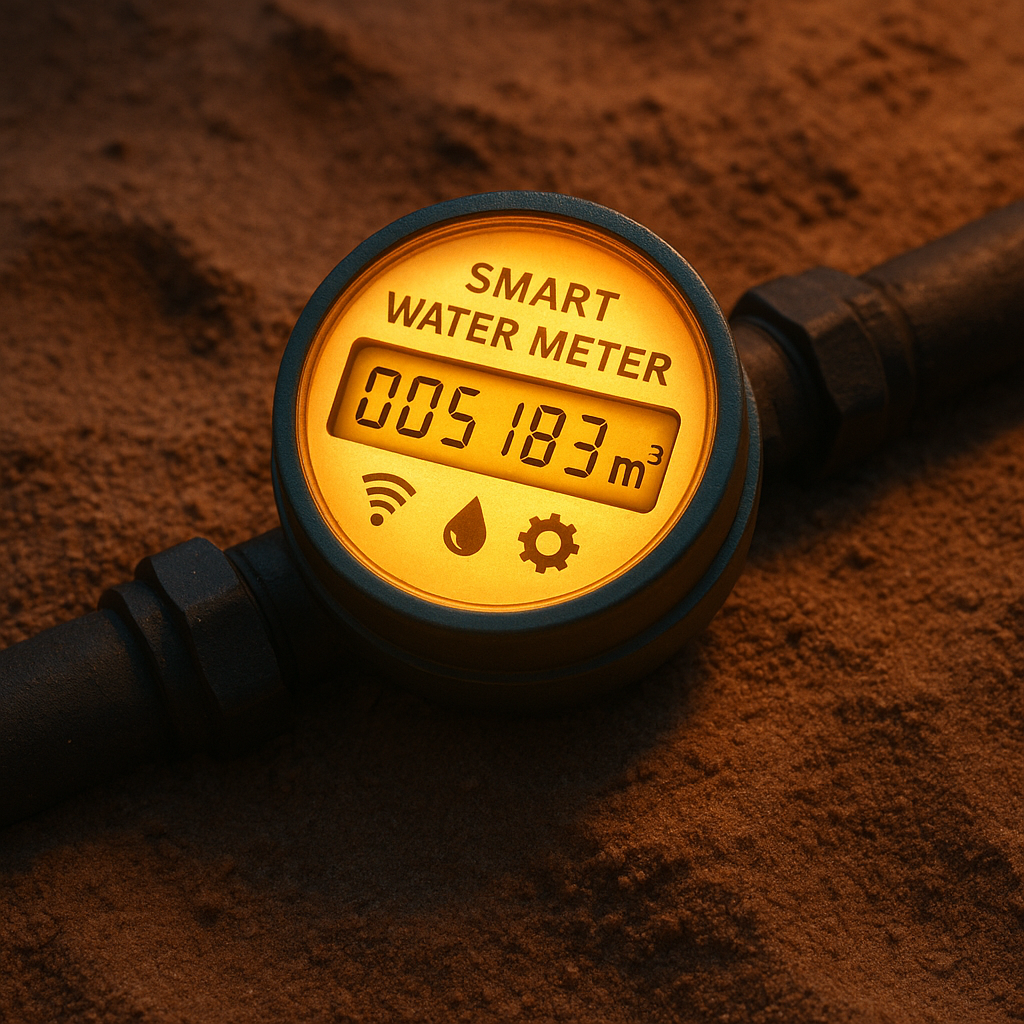
Cape Town's smart-meter revolution is transforming water management, enhancing efficiency, and building resilience against future droughts.
Cape Town is changing how it deals with water by putting in smart meters called "teeth." These meters flash tiny lights to send information about water use, replacing old meter readers. People can see their water use on a phone app, which helps them save water and stops big leaks. This project helps the city save money and makes sure there's enough water for everyone, especially with climate change.
How is Cape Town implementing its new smart water meter system?
Cape Town is implementing a new smart water meter system by installing 'teeth' units that communicate water usage data via an 868 MHz channel. These meters provide real-time feedback to residents through a mobile app, detect leaks, and help manage water consumption more efficiently. The project aims to reduce non-revenue water and prevent future water crises.
Get Cape Town news in your inbox
Stay updated with the latest stories from the Mother City.
01 – The Day the Meter Reader Became Obsolete
At seven minutes past nine on a crisp Bellville morning, a field tech lowered a palm-sized lime-green housing onto the brass tailpiece protruding from the sidewalk and tapped “activate” on his rugged tablet. A pinhead LED began winking every sixty-two seconds, each flash firing a 0.25-second packet across the City’s freshly minted 868 MHz channel. That silent twinkle severed a 160-year tradition of knocking doors and clipboard readings.
The packet was tiny - only twelve bytes - but it carried weight. It logged the running total in litres, flow direction, battery health, tamper status, ambient temperature and a cryptographic stamp. Eight seconds after leaving the sensor, the parcel had ricocheted through three street-level relays, slipped into the Bellville data bunker, cleared two API firewalls and bloomed on Mrs Faiza Abrahams’s phone as a cheery alert: “Morning! Your smart meter is alive. Yesterday you used 142 L - 18 % below last week. Tap for the hour-by-hour chart.”
Mrs Abrahams tapped. In that tap she joined more than eighty-thousand households whose daily relationship with water shifted from monthly bills to live feedback. The city’s entire billing cycle had just compressed to the length of a heartbeat - and no carbon-copy in sight.
02 – Inside the “Tooth”
Engineers nicknamed the unit a “tooth” because it clamps onto the brass spud like a molar and is designed to stay for fifteen years. A glass-filled nylon shell shelters twin ultrasonic transducers that resolve every fifty millilitres; an ARM Cortex-M4 brain; a megabyte of ferro-electric RAM; and a 3.6 V lithium-thionyl cell rated for explosive atmospheres. Tilt the meter more than seven degrees and an accelerometer logs possible theft - brass-body units fetch good scrap prices and thieves love them.
The radio stack speaks Wireless M-Bus in 100 mW bursts, dancing across sixty-four channels to dodge Wi-Fi routers and gate motors. Every grey repeater - about the size of a cigarette pack - is taped to street-light arms, solar-rectified and super-cap buffered for three days of Eskom blackout. Johannesburg chose Sigfox; Cape Town kept the network in-house so loadshedding can’t mute the data stream.
Frozen, flooded or shot at, the meter keeps counting. Bullets in the shell during gang crossfire merely added drill holes; ultrasound still works when submerged.
03 – Counting Coins, Drops and Days
Phase 1 carries a headline price of R1.1 billion, roughly R13 250 per installation. Opposition parties yelled “liquid gold!” - until the City unpacked its spreadsheet.
Column A tallies avoided meter-reader wages: R180 per site every year equals R450 million over fifteen years for 83 000 units. Column B measures non-revenue water now at forty-four percent; trimming that by one percent recovers 4.2 million cubic metres, worth R42 million in bulk purchases from the Western Cape system. Column C - the trickiest - credits avoided “Day Zero” damage. UCT’s environmental economists price another extreme drought at R35 billion GDP loss, and even a conservative three percent improvement pushes the project past break-even by year eight, still inside the hardware lifespan.
Every blinking light is therefore a hedge against dry taps and economic collapse.
04 – Leaks Talk - And the City Listens
Ultrasonic ears do more than count; they eavesdrop. At 2 a.m. - statistically the quietest quarter-hour - each meter runs a micro DMA test. If flow never dips below 0.5 L per minute, the firmware flags a private-side leak and queues an SMS for sunrise. In the 2022 Scottsdene pilot, 1 800 meters fingered 312 hidden leaks in ninety days; eight out of ten were toilet cisterns silently flushing R200 a month away. Cumulative savings: 62 megalitres - enough to keep Paarl’s taps open for a fortnight.
Different leaks have different fingerprints. A burst irrigation pipe is a flat 25 L/min plateau; a dripping tap produces 0.3 L saw-tooth spikes; an illegal hydrant pull spikes 900 L/min in reverse and triggers a geo-fenced alert to law enforcement. During Dry August 2023, the system caught a Delft syndicate draining hydrants to stock rogue water carts - a crime legacy meters would have caught weeks later, if ever.
05 – Your Phone Becomes a Game Controller
“Water Wise Connect,” built on the same Xamarin skeleton that pushes loadshedding notices, greets users with a blue blob that swells or shrinks in real time. Gamified streaks reward households for staying under fifty litres per person per day. Slide a prediction bar and the app spits: “Trim your shower by thirty seconds for a days, save 1 825 L and R192 - plus 4 kg CO₂-e because the city pumps less sewage to the marine outfall.”
Privacy advocates flinch at the intimacy - any account holder can see gran’s 3 a.m. glass-of-water spike. Data are classified Category B under POPIA, barred from sale and auto-deleted after twenty-four months. A 2021 breach of a test server revealed only hashed serials and encrypted vectors, calming nerves somewhat.
06 – Eighteen Minutes to Rewire a Home
Four-hundred-and-sixty plumbers - sixty percent women, freshly minted at Kraaifontein’s accelerated programme - move in choreographed waves. A two-person crew allots eighteen minutes: three to knock, two to shut the curb-stop, ten to snap on the meter, two for pressure test, one to photograph serial and GPS. A QR door hanger in Afrikaans, isiXhosa and English offers a shortcode to claim a 5 GB “sorry” bundle from MTN, cutting service complaints by more than a third.
Rain days are reserved for schools, clinics and factories where bypass hoses keep taps alive. Routing software - gifted by the UCT team that planned vaccine cold-chain runs - plots daily loops so no street is visited twice.
07 – Scrap-Proof Shells and Bullet Holes
Traditional bronze bodies fetch R450 at scrapyards and require only a concrete saw to liberate. The AMI shell is nylon-12 - worthless to thieves. A stainless shear-bolt snaps if anyone tries to twist the unit free, leaving a spool frozen until an authorised crew arrives with a special mandrel. One field sample arrived peppered with bullet holes after a gang skirmish; the electronics kept singing because ultrasound doesn’t care about cavities.
08 – Planning with 5-Minute Precision
Quarterly manual reads once fed 2 000 district models. Now, five-minute telemetry sluices into Azure-based hydraulic simulations sliced by income decile, temperature band or loadshedding stage. When a February heatwave drove Grabouw to 42 °C, planners saw demand leap eleven percent beyond evapotranspiration loss and released eight extra megalitres from Steenbras Upper three days ahead, averting pressure collapse.
During an April 2024 squall that dumped 80 mm on Khayelitsha in ninety minutes, reverse-flow sensors proved seventeen percent of stormwater had infiltrated potable lines through illicit cross-connections - data worth its weight in grant applications.
09 – Tariffs and the Indigent Firewall
Smart valves can shut water remotely, but council policy reserves that power for arrears exceeding R5 000 and after a magistrate signs off. Critics fear “algorithmic red-lining”; the answer is firmware-level rising-block tariffs. The first six kilolitres per registered resident per month are free for indigent accounts; the meter stops counting at 6 000 L and nothing leaves the device until usage ticks over to 6 001 L, shielding the poor from surveillance without benefit.
The top five percent - those gulping above fifty kilolitres a month - see a marginal R92 per kilolitre, a surcharge that jumps fifty percent during drought declarations. The app flashes the pain in real time; no grace period cushions the wealthy anymore.
10 – Learning from Elsewhere, Tailoring for the Cape
Israel’s Mei Avivim reported a twenty-five percent demand in demand, followed by a nine percent weekend rebound once citizens trusted leak alerts. Cape Town nudges with loss-aversion: yesterday’s bar turns crimson if usage tops the personal median even when still inside official limits, trimming an extra four percent.
In Malta, stolen SIMs mined crypto; Cape Town’s licence-free mesh sidesteps that, yet technicians still epoxy-pot batteries and conformally coat boards. New Delhi’s installers created micro-leaks for call-out fees - Cape Town pays per successful meter, not per repair, and photo-audits every install.
11 – Farms, Factories and the Berg River
Phase 2, slated for 2027, will clamp AMI onto 9 600 agricultural standpipes that claim thirty-five percent of the city’s allocation. DN100–DN300 mag-inductive meters, accurate to 0.2 percent, will clock night-time abstractions and trigger instant push notifications, followed by throttle valves on the farm boundary. Early adopters in Franschhoek saved 0.8 litres per bottle of wine - marketing gold for “water-positive” exports.
Downstream, the same telemetry feeds CapeNature’s environmental-reserve model for the Berg River estuary, ensuring winter pulses keep endemic fish alive even if the city’s thirst grows.
12 – Failure Modes and Firewalls
Ericsson’s 2019 study found eleven percent global node mortality after five years through battery fade, moisture or bricked firmware. Cape Town’s tender demands a decade full-replacement warranty, not a swap. A listen-before-talk mesh lets every unit relay for thirty-two neighbours; real tests maintain 98.6 percent packet success with twenty percent of nodes dark.
In March 2024 red-team hackers spoofed two repeater firmware images and injected phantom demand that, if scaled citywide, could have forced needless reservoir releases. City IT pivoted to elliptic-curve signing within a week - a reminder that the next Day Zero might arrive via keyboard rather than drought.
13 – 2029 and Beyond: Water Safety as a Service
Designers already talk of Version 3 meters embedding spectroscopic chips able to flag E. coli, nitrates or PFAS at part-per-billion levels. A graphene sensing layer - patent filed with Stellenbosch University - would harvest kinetic energy from flow, eliminating batteries altogether. If approved, Cape Town would crowd-source potable quality block by block, converting meters from cash registers into public-health sentinels.
14 – Rewired, One Household at a Time
Between now and 2029 more than 2.5 trillion litres will slip through Cape Town’s new digital jaws. Whether the city grows fairer, tougher and wiser depends less on silicon than on human choices: the patience of plumbers, transparency of code and the resolve of residents who treat every night-time blink as a gentle prod that the next drought is not an “if” but a “when.”
[{"question": "How is Cape Town implementing its new smart water meter system?", "answer": "Cape Town is implementing a new smart water meter system by installing 'teeth' units that communicate water usage data via an 868 MHz channel. These meters provide real-time feedback to residents through a mobile app, detect leaks, and help manage water consumption more efficiently. The project aims to reduce non-revenue water and prevent future water crises. The system uses small, 12-byte data packets that log running total in litres, flow direction, battery health, tamper status, ambient temperature, and a cryptographic stamp. This data is transmitted through street-level relays to data centers and then to residents' phones, providing almost instant updates on water usage."},
{"question": "What are the key features of the 'teeth' smart meters?", "answer": "The 'teeth' smart meters are designed to clamp onto brass spuds and are built to last fifteen years. They feature twin ultrasonic transducers that resolve every fifty milliliters, an ARM Cortex-M4 processor, a megabyte of ferro-electric RAM, and a 3.6V lithium-thionyl cell. The unit's glass-filled nylon shell is scrap-proof and contains an accelerometer that logs potential theft if tilted more than seven degrees. The radio stack communicates via Wireless M-Bus in 100 mW bursts across sixty-four channels, and it's designed to withstand freezing, flooding, and even bullet impacts."},
{"question": "What are the financial benefits of Cape Town's smart water meter project?", "answer": "The initial phase of the project has a headline price of R1.1 billion (approximately R13,250 per installation). However, the city projects significant savings. These include avoiding R450 million in meter-reader wages over fifteen years for 83,000 units. More importantly, trimming non-revenue water (currently at 44%) by just one percent recovers 4.2 million cubic meters, worth R42 million in bulk purchases annually. Furthermore, avoiding a 'Day Zero' event, estimated to cost R35 billion in GDP loss, makes the project break even by year eight with even a conservative three percent improvement in water management."},
{"question": "How does the smart meter system detect and address leaks?", "answer": "The ultrasonic meters not only count water but also 'eavesdrop' for leaks. Every meter runs a micro DMA test at 2 a.m. If flow never dips below 0.5 L per minute, it flags a private-side leak and queues an SMS alert for residents. In a 2022 pilot, 1,800 meters identified 312 hidden leaks in 90 days, primarily from toilet cisterns. The system can differentiate between different leak types, such as a burst irrigation pipe (flat 25 L/min plateau), a dripping tap (0.3 L saw-tooth spikes), or an illegal hydrant pull (900 L/min reverse spike), which triggers geo-fenced alerts to law enforcement."},
{"question": "How do residents interact with the new system, and what about privacy?", "answer": "Residents interact with the system through the 'Water Wise Connect' mobile app. The app provides real-time water usage feedback, gamified streaks to encourage conservation, and allows users to predict savings by adjusting habits. While some privacy advocates have raised concerns about the intimacy of the data (e.g., seeing a household member's 3 a.m. water use), the data is classified as Category B under POPIA, barred from sale, and auto-deleted after 24 months. A 2021 breach of a test server only revealed hashed serials and encrypted vectors, which helped calm nerves."},
{"question": "What future developments are planned for Cape Town's smart water system?", "answer": "Phase 2, planned for 2027, will extend AMI to 9,600 agricultural standpipes, which account for 35% of the city's water allocation. These meters will be highly accurate (0.2%) and will trigger instant push notifications and throttle valves for night-time abstractions. Long-term visions for Version 3 meters include embedding spectroscopic chips to detect E. coli, nitrates, or PFAS at part-per-billion levels. There's also a patent filed for a graphene sensing layer that could harvest kinetic energy from water flow, eliminating the need for batteries, effectively turning meters into public-health sentinels."}]

Tumi Makgale is a Cape Town-based journalist whose crisp reportage on the city’s booming green-tech scene is regularly featured in the Mail & Guardian and Daily Maverick. Born and raised in Gugulethu, she still spends Saturdays bargaining for snoek at the harbour with her gogo, a ritual that keeps her rooted in the rhythms of the Cape while she tracks the continent’s next clean-energy breakthroughs.
View all articles →