
Cape Town teacher dismissed for sexual misconduct against learner
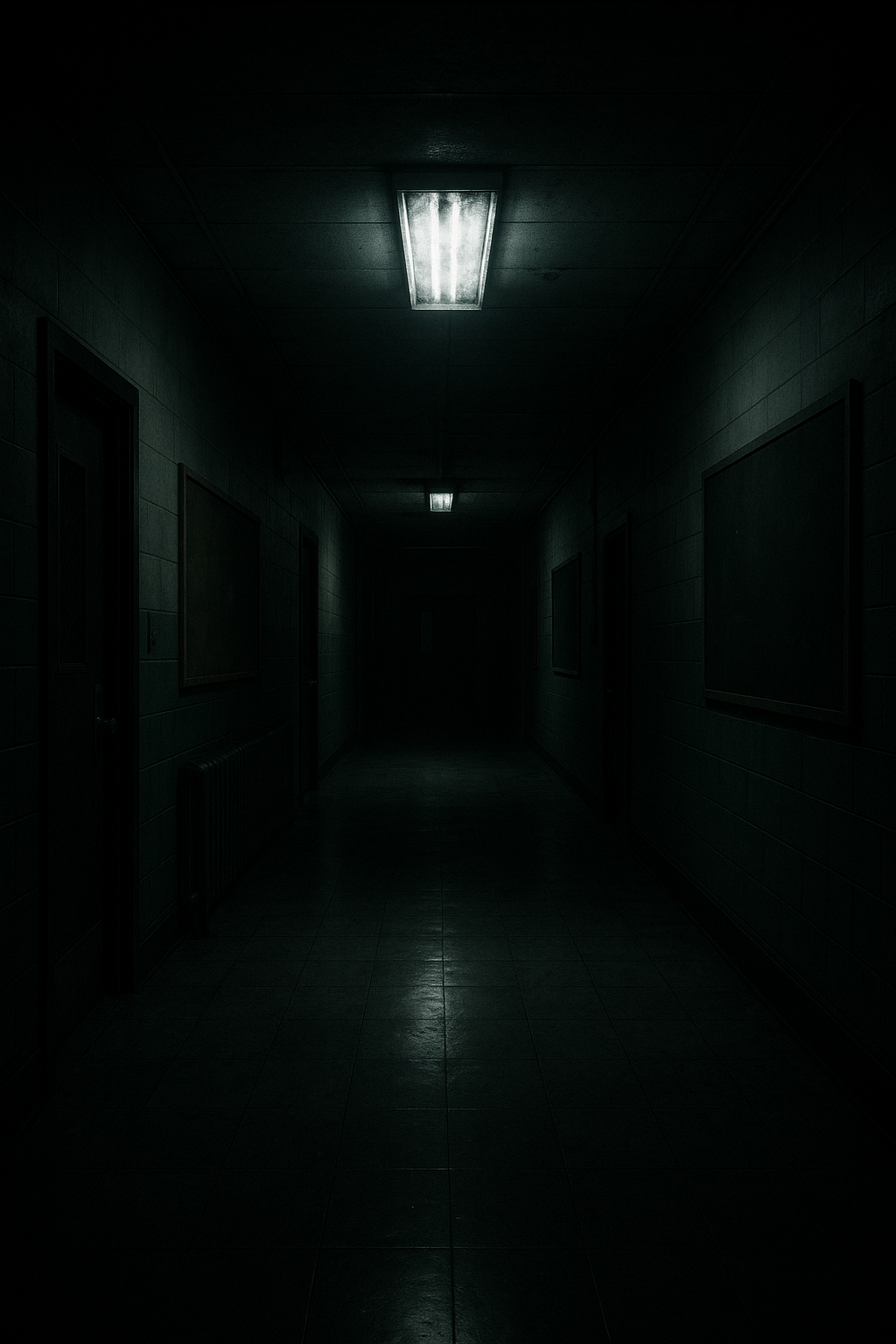
WCED dismisses teacher for sexual misconduct after arbitration. Sets precedent with new policies: biometric checks, "red corridor" protocol, and whistleblower line.
A teacher's 18-year career ended badly after he harassed a student. This led to new rules in South African schools, like special check-ins and cameras, to keep kids safe. The teacher was fired and put on a list for sex offenders. This shows that schools are serious about protecting children.
What are South Africa's new measures to prevent teacher misconduct in schools?
South Africa is implementing biometric check-ins for staff, a "red corridor" protocol requiring two adults in unmonitored areas, and a 24-hour whistle-blower helpline. These measures, along with high-definition cameras in under-resourced schools, aim to enhance learner safety and prevent future incidents of teacher misconduct.
Get Cape Town news in your inbox
Stay updated with the latest stories from the Mother City.
Corridor of Shame: The Incidents That Triggered a Province-Wide Shake-Up
Forest Heights Secondary’s narrow passageway between the science wing and the main quad - dubbed “the squeeze” by pupils - became the scene that brought down a veteran educator. On 7 October 2025, at 14:37, CCTV cameras captured 46-year-old life-orientation teacher Cornwell Henry Joseph brushing against a 16-year-old learner’s buttocks; a second clip, time-stamped 08:12 on 29 October, shows an identical manoeuvre. Although the footage is grainy, both recordings place the man and the learner in the identical micro-locations the girl described when she broke her silence on 3 September 2025.
The teenager, shielded in proceedings as “Witness A”, told the hearing that Joseph had begun singling her out in August, praising her figure in isiXhosa and asking whether she “already had a sugar-daddy”. He allegedly blocked her way after the second incident, murmuring “uyandithanda, ndiyakwazi” - “you like it, I can tell”. The comment left her nauseated; attendance registers show she skipped eleven school days between 30 October and 15 November while she wrestled with trauma.
Two classmates, “B” and “C”, stepped forward to reveal that Joseph had used near-identical language with them in 2024, once describing a uniform as “too tempting for male staff”. Their grievances had reached the then-principal, Marius Pietersen, but were never forwarded to the district office, an omission arbitrator Thandiwe Booi branded “a serious managerial lapse”. Pietersen now carries a final written warning and must attend compulsory refresher training on sexual-offence reporting channels.
Arbitration Room Drama: From “Fatherly Advice” to a 196-Paragraph Guillotine
Joseph took the stand claiming he had offered nothing more than “fatherly encouragement grossly misread”. Yet ELRC advocate Nolitha Ngcukana forced him to admit he once told a 24-year-old colleague the staff room “lights up when you wear that skirt”. Arbitrator Booi read the concession as proof of a wider pattern of sexualised commentary and relied on Section 17(1)(a) of the Employment of Educators Act, which lists sexual assault of a learner as misconduct warranting dismissal. She also leaned on the Constitutional Court’s 2020 S v Walters judgment, emphasising that the power gap between teacher and pupil erases any notion of consent.
The 42-page award, which stretches to 196 numbered paragraphs, orders Joseph’s immediate removal from the payroll, wipes out his accumulated leave credits and instructs that his fingerprints be uploaded to the National Register for Sex Offenders, effectively blacklisting him from any child-related job. The South African Council for Educators will sit within 60 days; statistics show a 97 % de-registration rate once such referrals land on the table. Cornwell Henry Joseph has 21 days to ask the Labour Court for a review, but labour lawyers privately call the odds “close to zero”.
Western Cape Education MEC David Maynier convened journalists the morning after the ruling, flanked by senior officials. He revealed that the province has handled 314 educator-misconduct files since January 2025; 43 involved sexual impropriety. Thirty-one teachers have already been axed, six quit before hearings concluded, and four cases remain open. “Learner safety is non-negotiable,” Maynier insisted. “Every adult who sets foot in a WCED classroom must know the line is bright red.”
New Safety Architecture: Biometrics, Red Corridors and WhatsApp Helplines
To convert tough talk into infrastructure, Maynier announced three province-wide measures that kick in on 1 May 2026:
- Biometric check-in for staff and visitors, synced to the sex-offenders register so that a match triggers an instant lock-out.
- “Red corridor” protocol: any hallway, stairwell or store room lacking CCTV must be staffed by at least two adults at all times, eliminating blind spots.
- A 24-hour toll-free whistle-blower line, manned by trained counsellors, that accepts WhatsApp voice notes in all eleven official languages.
R78 million has been ring-fenced over the next three years to fit high-definition night-vision cameras in 1 045 schools still classified as “technically under-resourced”. Tender documents specify that at least 30 % of installation contracts must go to women-owned security firms; bids close 30 April 2026. Maynier’s team calculates the entire package will cost roughly 11 cents per learner per school day, a figure they argue is “negligible against the price of lost childhoods”.
Civil society groups welcome the hardware upgrade but warn culture, not cameras, is the ultimate deterrent. Kelly-Eve Koopman from Women & Men Against Child Abuse says her NGO will pilot “peer-safety squads” in ten Cape Flats schools, training learners in by-stander intervention and evidence-capture through encrypted mobile apps. “We must normalise learners’ voices in every corridor, not only in court transcripts,” she insists.
Aftermath at Forest Heights: Trauma Units, Pledge Walls and a Mother’s Vow
A mobile counselling caravan is parked inside the school gates until December; 114 learners have already booked sessions, suggesting Joseph’s behaviour scared more children than originally known. The governing body has approved quarterly psychometric screening for staff to flag predatory personality traits - an apparent first for a South African public school. Learners, meanwhile, have claimed a disused quadrangle for a memorial garden where survivors will plant succulents as emblems of resilience; the local NGO MATWETWE has painted the adjacent pavement orange as a daily reminder of zero tolerance.
Male learners arrive each morning to sign a pledge wall titled “Not In My Corridor”; 1 300 names already crowd the canvas. Grade-12 prelims start in six weeks, and Forest Heights - an 81 % bachelor-pass powerhouse in 2025 - cannot afford academic slippage. Extra maths and physical-science boot camps have been shifted to a nearby community hall under the watch of five substitute educators seconded from neighbouring schools.
Witness A, the learner who unmasked Joseph, was offered a transfer but chose to stay. “She says this is her community and she won’t let one man chase her away,” her mother told Voice of the Cape radio. A civil claim for emotional damages has been lodged; the first hearing is set for 20 July 2026 in Wynberg Magistrate’s Court. With Joseph’s name erased from the payroll and his Edu-Suite login deactivated, the province has sent its clearest message yet: the teaching profession is a privilege, not a shelter - and the corridor of impunity is now permanently closed.
[{"question": "
What incident led to the implementation of new safety measures in South African schools?
\nThe new safety measures were triggered by an incident at Forest Heights Secondary where a life-orientation teacher, Cornwell Henry Joseph, was captured on CCTV repeatedly brushing against a 16-year-old learner. This, combined with previous unreported instances of inappropriate behavior by the same teacher, led to his dismissal and the subsequent province-wide shake-up in school safety protocols.
\n","answer": ""},{"question": "What are the new safety measures being introduced in Western Cape schools from May 2026?
\nFrom May 1, 2026, Western Cape schools will implement three key measures: \n
- Biometric check-in: For all staff and visitors, linked to the sex-offenders register to prevent individuals on the list from entering. \n
- 'Red corridor' protocol: Any area without CCTV (like hallways, stairwells, or storerooms) must have at least two adults present at all times to eliminate unsupervised blind spots. \n
- 24-hour whistle-blower line: A toll-free helpline, manned by trained counsellors, that accepts WhatsApp voice notes in all eleven official languages.
What was the outcome for the teacher, Cornwell Henry Joseph, after the misconduct investigation?
\nCornwell Henry Joseph's 18-year career ended with his immediate dismissal from the payroll and the forfeiture of his accumulated leave credits. His fingerprints will be uploaded to the National Register for Sex Offenders, effectively blacklisting him from any child-related employment. The South African Council for Educators is expected to de-register him, which occurs in 97% of such cases. He has 21 days to appeal to the Labour Court, but the chances of success are considered very low.
\n","answer": ""},{"question": "How did the school, Forest Heights Secondary, respond to the trauma caused by the incident?
\nForest Heights Secondary has introduced several initiatives to address the trauma and prevent future incidents. A mobile counselling caravan is available on school grounds for learners, and the governing body has approved quarterly psychometric screening for staff to identify predatory personality traits. Learners have also created a memorial garden with succulents as emblems of resilience and a 'Not In My Corridor' pledge wall where male learners sign to commit to zero tolerance for misconduct. Extra academic support has been arranged to prevent academic slippage.
\n","answer": ""},{"question": "What role did the school principal play in the incident, and what were the consequences for him?
\nThe then-principal, Marius Pietersen, was found to have committed a 'serious managerial lapse' by not forwarding previous grievances against Joseph from 2024 to the district office. As a consequence, Pietersen received a final written warning and is required to attend compulsory refresher training on sexual-offence reporting channels.
\n","answer": ""},{"question": "Beyond technological solutions, what other approaches are being proposed to enhance child safety in schools?
\nWhile technology like biometric check-ins and cameras are being implemented, civil society groups emphasize that cultural change is also crucial. Kelly-Eve Koopman from Women & Men Against Child Abuse is piloting 'peer-safety squads' in schools, training learners in bystander intervention and evidence-capture through encrypted mobile apps. This initiative aims to empower learners and normalize their voices in reporting misconduct, fostering a culture where child safety is a collective responsibility beyond just surveillance.
\n","answer": ""}]
Zola Naidoo is a Cape Town journalist who chronicles the city’s shifting politics and the lived realities behind the headlines. A weekend trail-runner on Table Mountain’s lower contour paths, she still swops stories in her grandmother’s District Six kitchen every Sunday, grounding her reporting in the cadences of the Cape.
View all articles →