
Cape Town tourism sector signals confidence amid global tensions
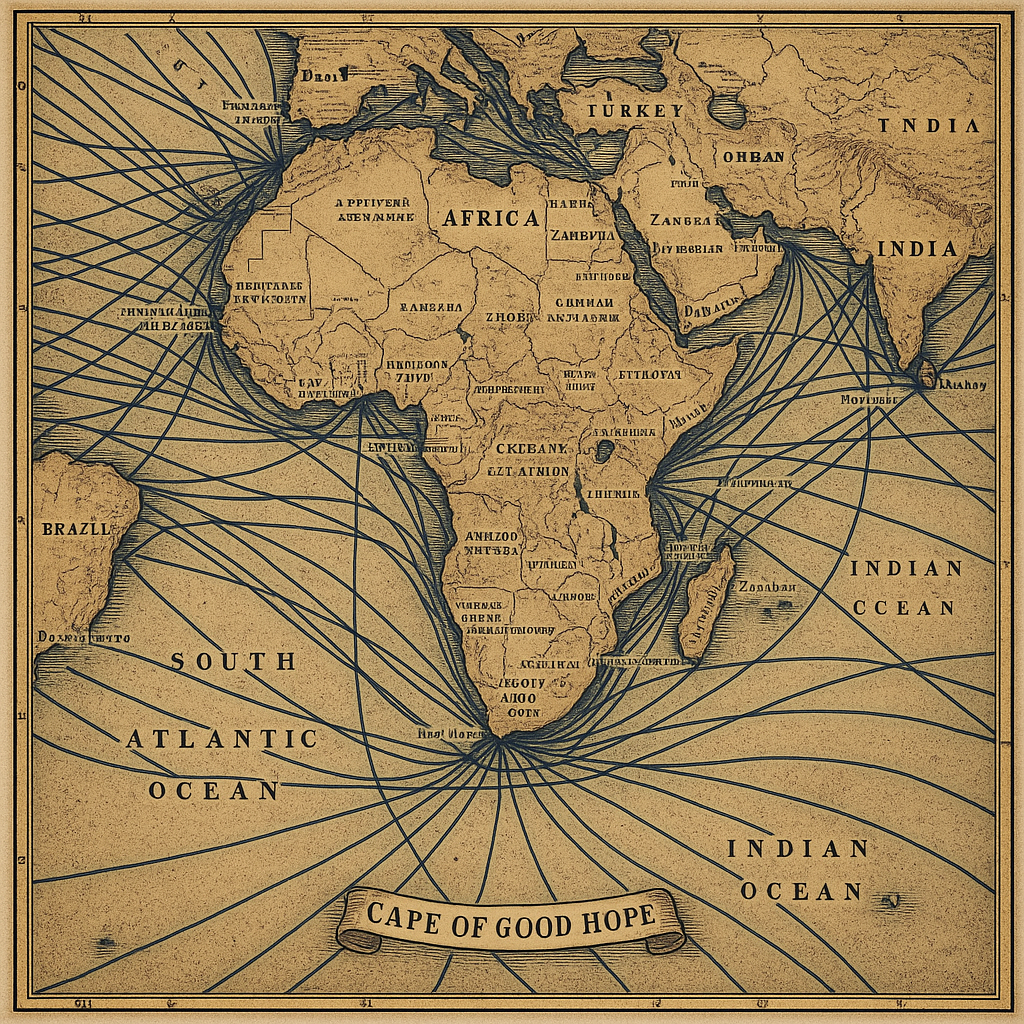
Cape Town's tourism thrives amidst global shocks, adapting with re-routed exports, diverse airlifts, and smart marketing.
Cape Town cleverly handled big problems by doing many small, smart things. They changed flight paths and focused on different countries for tourists. They also used clever ways to stop bad news from hurting their image. The city improved water use and made nightlife exciting, which helped businesses survive and grow even when things were tough.
How did Cape Town manage to thrive despite global geopolitical and economic challenges?
Cape Town thrived by implementing “micro-moves” like diversifying aviation routes and focusing on geographic diversification. The city also used sentiment arbitrage to counter negative narratives, expanded its MICE tourism, developed innovative insurance policies for businesses, improved water management, and revitalized its nightlife, creating an antifragile economic environment.
Get Cape Town news in your inbox
Stay updated with the latest stories from the Mother City.
1. Micro-Moves That Never Make Headlines
Cape Town is proving that you don’t need a G-20 economy to outmaneuver geopolitical headwinds. While cable news zooms in on Red Sea tanker queues and currency tickers, the city’s back offices have already swung into action. Wine exporters now hug the Atlantic edge of the continent, cruise ships refuel 1 600 km north in Walvis Bay, and revenue managers punch two spreadsheets every morning - one that prices in a sudden jet-fuel surcharge, another that bets on a stronger rand once the U.S. Federal Reserve blinks. None of these shifts is sensational enough for a push alert, yet together they keep planes landing, glasses clinking and paychecks clearing.
The agility was on display 48 hours before the Century City Convention Centre roundtable on 14 May. Delegates sat down to find iPads pre-loaded with a dashboard that married Oxford Economics’ forward-booking feed with anonymised SnapScan and FNB card swipes. The numbers told a calm story: German and British long-haul reservations dipped six percentage points over the previous fortnight, but West and East African routes surged eleven. Net passenger deficit: a negligible 1.8 % - inside the statistical cushion airlines use before they even think about trimming capacity. In short, five years of geographic diversification had already absorbed the shock.
Aviation is the clearest lens on how fast the city can swivel. Seat capacity into Cape Town International is 42 % larger than in 2018, yet the source mix has been stirred. Middle-Eastern carriers once claimed nearly a fifth of those seats; today they hold barely a tenth. Ethiopian Airlines, RwandaAir and United’s second Newark run - stopping once in Dakar - have filled the gap. None of those corridors overfly hot zones, so insurers skip the war-risk premium. Better still, A320-neo and 737-MAX jets burn 15 % less fuel than the wide-bodies they replaced, softening the blow of USD 90 crude. A quietly upgraded runway - re-sealed with R1.8 bn in green bonds - now lets a fully loaded A350-1000 depart for Atlanta even on a 35 °C afternoon. Delta no longer leaves 30 seats behind in high summer, an instant seven-percent revenue bump per flight.
2. Hacking traveller fear in real time
Jet fuel is predictable; emotions are not. When cable networks loop infrared clips of missiles above the Negev, European meeting planners shun anything east of Gibraltar - even cities 7 000 km south of the fray. To keep those knee-jerk risk buckets from contaminating Cape Town, the destination’s marketing arm borrowed a trick Tourism Australia deployed after the 2019 bush-fires: sentiment arbitrage. Together with a Tel-Aviv start-up, the board now scrapes 4.2 million public posts daily in nine languages, scoring each one on a fear-to-attraction spectrum. If Cape Town’s fear index tops 0.42 for more than 36 hours, an algorithm fires off pre-cleared influencer reels - kitesurfers at Blouberg, new Bo-Kaap chef’s tables, tandem paragliders drifting off Signal Hill - aimed squarely at the age bracket whose sentiment curve is sliding. Early campaigns return three rand in incremental Google Travel itinerary saves for every rand spent.
Digital wizardry helps, but the city’s analogue insurance policy is just as potent: a scatterplot of attractions that spreads risk. Meetings, incentives, conferences and exhibitions (MICE) delivered 28 % of all room-nights in 2023, overtaking pure leisure for the first time. Zeitz MOCAA - once written off as a pet project - hosted 42 corporate buy-outs last year, pharma giants staging parallel art-and-science workshops at EUR 400 a head, more than double typical leisure spend. On top of the old Breakwater parking silo, the V&A Waterfront has bolted a 9 000 m² conference deck that can be dark-sky-certified in 45 minutes, letting astro-tourists shoot the Southern Cross while astronomers livestream the same feed to donor dinners in London. When one vertical sneezes, the others barely sniffle.
Domestic doom-and-gloom stories are being rewired as well. StatsSA’s travel survey shows Gauteng residents’ trips to the Western Cape down 19 % since 2019, yet “paid-in-Gauteng, enjoyed-in-WC” card swipes rose 31 % - holiday-home owners unlocking their own flats on FlySafair. To monetise that trend, Cape Town Tourism swapped bus-ticket slogans for #HomeAdvantage, a campaign that sells Sandton’s upper-middle class a turnkey co-ownership bundle: furniture, insurance, garden service and 21 guaranteed owner nights. Four hundred conversions would inject an estimated R450 m in fresh capital and keep 1 200 hospitality workers busy year-round.
3. Insurance, diplomacy and the new water story
Balance-sheet shocks get tamed before they metastasise. Santam’s new “parametric disruption” rider pays accommodation venues R7 500 per room per month if foreign arrivals crater by more than twelve percent in a quarter due to a named geopolitical event. Premiums cost 0.35 % of insured turnover - cheap enough for a fifteen-room guest house - and payouts arrive within days, not months. The pool triggered for the first time in October 2023 after the Hamas attack; 63 properties received instant liquidity, sparing laundry firms, shuttle drivers and fynbos suppliers the usual lay-off cascade.
Diplomatic density adds another cushion. With 67 consulates, Cape Town hosts more foreign missions than any other African city below the Sahara. When multilateral crises flare, organisers pivot here. After a coup scare, the African Development Bank shifted its 2021 annual meeting from Abidjan to the Mother City, stuffing an unbudgeted R120 m into tills in six days. Contingency protocols now pre-approve visas, room blocks and even a 60-hectare tented village on the Cape Town Stadium pitch should security indexes elsewhere breach tier-three. The city’s safety premium flips into a competitive edge - proximity, not distance, is the selling point.
Water, once the nightmare of 2017, has become an unsung asset. The Berg River-Voëlvlei augmentation scheme switched on in 2022, adding 70 million litres daily. A steeply tiered tariff rewards hotels that drop below 40 litres per guest-night; the Mount Nelson hit 32 litres, banking R1.8 m in utility savings last year. The windfall funds staff bursaries, doubling as a retention strategy in an industry infamous for churn. Request-for-proposal documents now boast “water-positive destination,” a phrase that would have drawn blank stares six years ago.
Night-life, long an Achilles heel, is also getting a caffeine shot. The “Open After Dark” by-law pilot lets vetted Green Point and Observatory venues trade until 04:00 if they meet noise-curb and female-safety metrics. Card spend after 22:00 is up 17 %; Uber and Bolt peaks shifted from midnight to 02:30. City economists reckon rolling the pilot into the CBD could unlock R900 m a year without adding a single police officer - CCTV analytics show a 12 % drop in petty crime when streets stay populated.
4. Antifragile layers and the 2025 BRICS exam
No single lever guarantees immunity from a global recession, but stack enough thin layers and the composite becomes antifragile. A European corporate planner weighing Lisbon, Dubai and Cape Town for a 1 000-delegate summit now sees a matrix where the African option lags on flight time but wins on insurance cover, visa turnaround, hotel variety, water security and post-event brag-worthiness. Stir in a euro-rand exchange rate still 18 % more favourable than the 2015-19 average and the city graduates from back-up to no-brainer.
The next stress test is already pencilled in: the 2025 BRICS summit, freshly expanded to include Saudi Arabia, Iran, Ethiopia, Egypt and the UAE. Cape Town is lobbying to host the sherpa meetings that set the leaders’ agenda - a 4 000-person swirl of ministers, spies and media. Success would deposit an estimated R600 m in direct spend and crown the city as neutral ground for bruised geopolitics. Bid papers floated at the Century City roundtable outline a plan to berth a chartered Silversea vessel at E-Berth for the Saudi delegation, sidestepping hotel bottlenecks while projecting floating opulence. If the pitch lands, antifragile layering will stretch again - this time to absorb halal supply chains, diplomatic fast lanes and bullet-proof glass that still frames Table Mountain.
Meanwhile the daily mantra ping-ponging across WhatsApp groups - concierges, sommeliers, shark-cage skippers, Langa guides - remains almost monastic: keep the layers thin, the data fresh and the welcome real. Somewhere a drone will always be orbiting a conflict zone, and a news anchor will always tease the next catastrophe. But as long as the veld erupts in technicolour every September and the southeaster sculpts cartoon clouds above the mountain, Cape Town’s factory setting stays unchanged: open for business - sometimes precisely because the world refuses to stay calm.
[{"question": "
How did Cape Town manage to thrive despite global geopolitical and economic challenges?
", "answer": "Cape Town thrived by implementing “micro-moves” like diversifying aviation routes and focusing on geographic diversification. The city also used sentiment arbitrage to counter negative narratives, expanded its MICE (Meetings, Incentives, Conferences, and Exhibitions) tourism, developed innovative insurance policies for businesses, improved water management, and revitalized its nightlife, creating an antifragile economic environment.\n"}, {"question": "What are some examples of the 'micro-moves' Cape Town used to maintain its economy?
", "answer": "Cape Town made several small but smart adjustments. These included changing flight paths to avoid geopolitical hotspots and reduce fuel costs, diversifying tourist markets by focusing on West and East African routes when European bookings dipped, and developing specialized insurance policies for accommodation venues in case of geopolitical events impacting foreign arrivals. They also introduced real-time sentiment tracking to counter negative media narratives.\n"}, {"question": "How did Cape Town address potential negative impacts on its tourism image?
", "answer": "To combat negative perceptions, Cape Town's marketing arm employed 'sentiment arbitrage.' They used a Tel-Aviv start-up to scrape and score 4.2 million public posts daily in nine languages for sentiment. If fear levels for Cape Town exceeded a certain threshold, an algorithm triggered pre-cleared influencer campaigns showcasing positive aspects of the city to the affected demographics.\n"}, {"question": "What role did water management play in Cape Town's resilience?
", "answer": "Water, once a major crisis point in 2017, became an asset. The Berg River-Voëlvlei augmentation scheme increased daily water supply, and a tiered tariff system rewarded hotels for reducing water consumption, leading to significant utility savings. This allowed hotels to invest in staff bursaries, improving retention. Cape Town now markets itself as a 'water-positive destination.'\n"}, {"question": "How did Cape Town enhance its nightlife and what was the impact?
", "answer": "Cape Town revitalized its nightlife through the 'Open After Dark' by-law pilot. This allowed vetted venues in areas like Green Point and Observatory to operate until 04:00, provided they met noise and female-safety metrics. This led to a 17% increase in card spend after 22:00 and a shift in peak Uber/Bolt times, with city economists estimating a potential R900 million annual unlock if extended to the CBD, along with a 12% drop in petty crime in populated areas.\n"}, {"question": "How is Cape Town preparing for future global events, such as the 2025 BRICS summit?
", "answer": "Cape Town is actively lobbying to host the sherpa meetings for the expanded 2025 BRICS summit, which would bring an estimated R600 million in direct spend. The city is preparing contingency plans for large delegations, including potentially berthing a chartered vessel for accommodations. This demonstrates Cape Town's strategy of 'antifragile layering,' where multiple resilience measures allow it to absorb shocks and even thrive amidst geopolitical complexities.", "additional_info": "Cape Town has a high diplomatic density with 67 consulates, making it a preferred location for international events when other regions face instability. This 'safety premium' allows it to attract events like the African Development Bank's annual meeting, which shifted from Abidjan to Cape Town after a coup scare."}]
Zola Naidoo is a Cape Town journalist who chronicles the city’s shifting politics and the lived realities behind the headlines. A weekend trail-runner on Table Mountain’s lower contour paths, she still swops stories in her grandmother’s District Six kitchen every Sunday, grounding her reporting in the cadences of the Cape.
View all articles →