
Cape Town Transport System Upgrades Planned
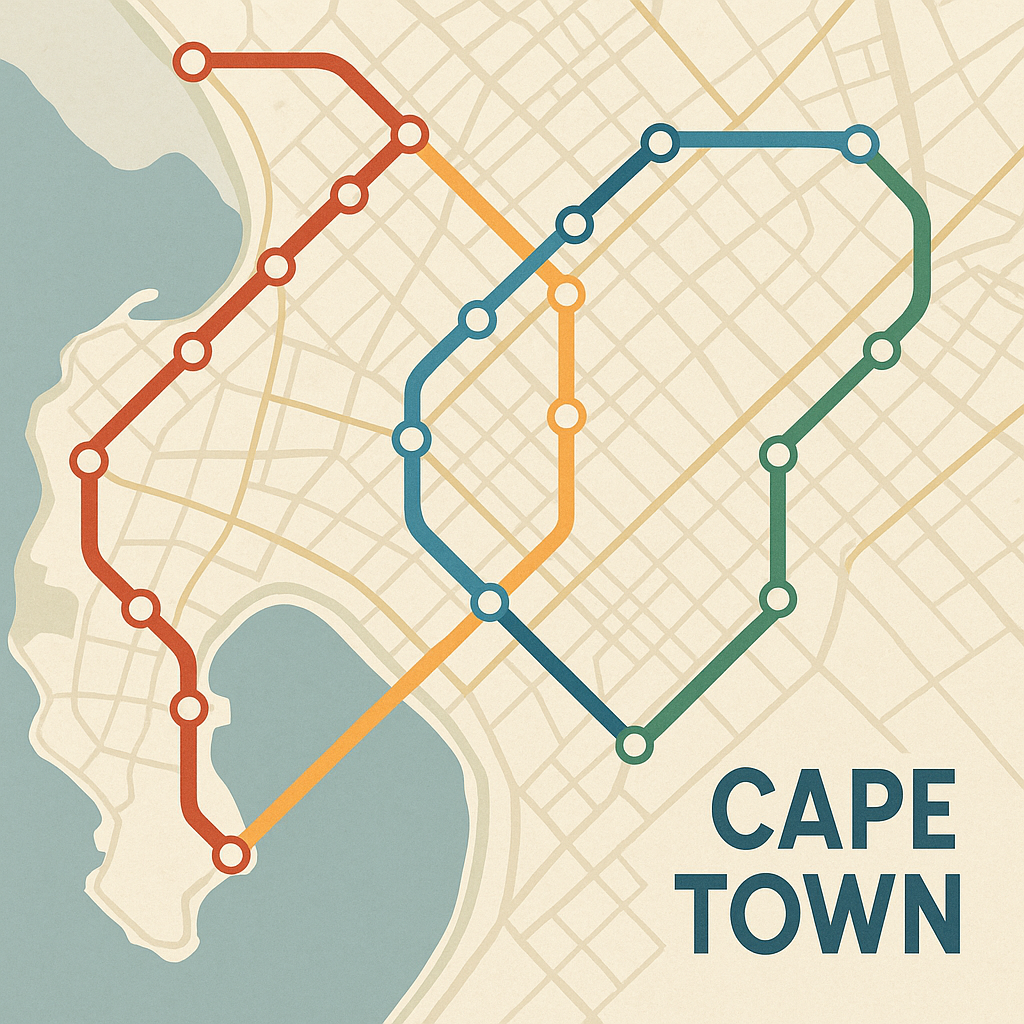
Cape Town overhauls transport with a R8.5bn upgrade. Expands public transport, implements smart traffic, and builds climate-resilient infrastructure.
Cape Town is changing its transport system big time! They're investing substantially in a MyCiTi electric bus project expansion to make travel easier and fairer for everyone. This plan includes new bus lanes, smart traffic lights, and better connections between buses and trains. They also want to help people in poorer areas get around faster and safer, and even use electric buses to keep the air clean. It's all about making the city move better for today and tomorrow.
What is Cape Town's transportation plan?
Cape Town's transportation plan is a comprehensive initiative to transform urban movement by expanding its Integrated Public Transport Network, implementing advanced traffic management technologies, and making targeted infrastructure investments. This strategy aims to alleviate gridlock, bridge historical spatial divisions, and meet the evolving demands of a growing population through substantial capital investment.
Get Cape Town news in your inbox
Stay updated with the latest stories from the Mother City.
The City of Cape Town has launched a sweeping transformation of how people and goods move through South Africa's second-largest metropolitan economy. This far-reaching initiative tackles persistent gridlock, deep-rooted spatial divisions, and the evolving transportation demands of a growing urban population. The Phase 2A MyCiTi expansion forms part of Cape Town's Integrated Public Transport Network plan and includes dedicated BRT lanes, feeder and direct routes, and upgraded transfer points that promise to bridge the historically divided landscape of the Western Cape's economic center.
Reimagining Public Transit for All Communities
The new trunk corridors feature bus-only lanes physically separated from mixed traffic, level-access boarding platforms, and off-board fare collection engineered to slash station dwell times. Supporting these main arteries, municipal authorities have greenlit extensive feeder networks using smaller vehicles capable of navigating dense residential quarters where full-size buses cannot operate efficiently. This tiered network architecture seeks to deliver frictionless multimodal trips, enabling riders to move between feeder services and trunk corridors through unified ticketing platforms now undergoing comprehensive digital upgrades.
Especially significant is the planned convergence between the MyCiTi network and commuter rail services run by Metrorail and PRASA's newer infrastructure. The enhancement program delivers upgraded intermodal hubs at strategic locations including Cape Town Station, Salt River, and Mutual, creating safer and more user-friendly connections between bus and train travel. Recognizing the region's troubled history with rail reliability, these improvements incorporate robust infrastructure featuring extended platforms, weather shelters, and strengthened security installations to rebuild rider trust in rail-bus linkages.
Smart Technologies Meet Physical Infrastructure
Cape Town's congestion-fighting efforts deploy advanced intelligent city technologies to combat the significant economic drain from traffic bottlenecks across the metropolitan region. Installation is underway for an adaptive traffic signal network harnessing real-time flow data and machine learning to optimize timing at numerous signalized crossings throughout the city. Unlike conventional fixed-schedule systems, this platform responds fluidly to collisions, special events, and shifting demand patterns throughout the day.
The central traffic operations facility has received substantial technological modernization, now incorporating high-definition camera coverage of major highways and key distributor roads across the metropolitan area. Sophisticated incident detection software automatically notifies control room staff about crashes, breakdowns, or obstacles, triggering swift response procedures that limit the ripple effects of congestion. Motorists now benefit from variable message boards displaying current travel durations and suggested alternate paths.
Alongside these digital tools, tangible infrastructure enhancements include grade-separated intersections at critical junctions, supplementary turning lanes where traffic volumes peak, and coordinated signal timing along primary movement corridors. Municipal planners have also elevated road surface rehabilitation along heavily used freight corridors linking the Port of Cape Town and Cape Town International Airport to industrial districts in Epping, Montague Gardens, and across the Cape Flats.
Confronting Spatial Injustice Through Connected Communities
The most socially transformative dimension of these transportation investments directly targets the persistent shadows of apartheid planning, which historically forced Black and Coloured residents into distant townships far from employment centers. The new transit corridors specifically aim at the "mobility deprivation" affecting Khayelitsha, Mitchells Plain, and informal settlements on the urban edges, promising significant journey time reductions compared to current minibus taxi and rail alternatives.
The infrastructure bundle allocates significant resources to non-motorized transportation, acknowledging that countless Capetonians depend on walking and cycling for initial and final leg connectivity. Segregated bicycle lanes now stretch along several primary corridors, among them Klipfontein Road and Strandfontein Road, while pedestrian enhancements encompass broader sidewalks, footbridges spanning highways, and upgraded lighting along routes serving public transport. These measures tackle safety issues that particularly impact women and at-risk travelers, embedding universal design standards to guarantee access for passengers with disabilities.
Municipal leaders have also launched trial programs for battery-electric bus deployment, with charging equipment being fitted at depots in Atlantis and Pinelands. These emission-free vehicles will first cover shorter central-city routes, with broader rollout dependent on operational data and electrical grid capacity evaluations. This shift supports Cape Town's environmental goals while tackling acute air quality problems in neighborhoods bordering major transport corridors.
Weaving Formal and Informal Transportation Together
Recognizing that minibus taxis presently carry roughly two-thirds of Cape Town's public transport users, the upgrade approach embraces structured collaboration with the informal sector rather than attempted replacement. The city has allocated dedicated priority lanes for high-occupancy vehicles, including licensed taxi operations, and committed to modernizing informal taxi stands in Bellville, Wynberg, and the central business district with organized queuing zones, washroom facilities, and administrative spaces.
Regulatory structures are being modified to allow minibus taxis to function as feeder services feeding into the formal BRT network, establishing blended operating models where taxis gather passengers from scattered low-density neighborhoods and deliver them to high-volume trunk corridors. This arrangement honors the taxi industry's operational adaptability while tackling its troubling safety reputation through compulsory vehicle roadworthiness inspections and driver qualification programs financed via the transport levy.
Powering Tourism and Economic Engines
For the visitor sector sustaining many positions across the Western Cape, the transportation enhancements incorporate dedicated airport express links connecting Cape Town International Airport to the central business district, Sea Point, and Atlantic Seaboard accommodation clusters. These services provide luggage space, wireless internet, and extended hours aligned with international arrival and departure schedules. Purpose-built tourism routes also enable efficient access to Table Mountain National Park, the V&A Waterfront, and Cape Town Stadium, diminishing dependence on rental vehicles and the parking pressures they create in crowded visitor districts.
These infrastructure commitments align with preparations for expanded convention business tied to the Cape Town International Convention Centre's growth, ensuring that delegate shuttles and event logistics can handle major international assemblies without crippling everyday commuter flows. Dedicated bus lanes along the Fan Mile and adjacent districts offer adaptable capacity that shifts between regular service and event-specific operations during significant athletic competitions and cultural celebrations.
Building for Tomorrow: Implementation and Resilience
The transportation enhancement program operates through a multi-year capital spending plan across the medium-term expenditure framework, financed through municipal income, national public transport infrastructure allocations, and green climate funding instruments. Construction sequencing emphasizes finishing trunk infrastructure ahead of feeder network rollout, reducing disruption through coordinated utility relocations and nighttime building schedules along essential arterial routes.
Technical standards for new infrastructure foreground climate adaptation, incorporating drainage systems engineered to endure increasingly severe precipitation events linked to global warming. Road pavements employ modified bitumen formulations resisting heat-induced deformation during temperature spikes, while water management systems have been oversized to prevent transport infrastructure flooding during winter storms that previously made low-lying districts inaccessible.
The city has created a specialized project management unit employing transport engineers, urban planners, and community engagement specialists charged with harmonizing efforts across municipal departments, provincial transportation agencies, and national rail providers. This organizational structure remedies historical coordination breakdowns that stalled prior infrastructure initiatives, establishing unambiguous accountability for project milestone achievement and budget oversight.
What is Cape Town's new transportation plan all about?
Cape Town is making substantial investments into a major overhaul of its transportation system. This ambitious plan aims to make travel easier and fairer for everyone by expanding the Integrated Public Transport Network, implementing advanced traffic management technologies, and making targeted infrastructure investments. The goal is to alleviate gridlock, bridge historical spatial divisions, and meet the evolving demands of a growing urban population.
How will public transport be improved, especially for disadvantaged communities?
The plan includes new trunk corridors with dedicated bus-only lanes, level-access boarding, and off-board fare collection to speed up travel. These main routes will be supported by extensive feeder networks using smaller vehicles to reach dense residential areas. A key focus is connecting historically disadvantaged areas like Khayelitsha and Mitchells Plain, promising significant journey time improvements. The initiative also aims to integrate MyCiTi services with Metrorail and PRASA's commuter rail, creating safer and more user-friendly intermodal hubs at locations like Cape Town Station.
What smart technologies are being used to combat traffic congestion?
Cape Town is deploying advanced intelligent city technologies to fight traffic bottlenecks, which create substantial economic costs for the region. This includes an adaptive traffic signal network using real-time data and machine learning to optimize timing at numerous signalized crossings throughout the city. The central traffic operations facility has also been modernized with high-definition camera coverage and sophisticated incident detection software for major highways and key distributor roads. Additionally, variable message boards provide real-time travel durations and suggest alternate routes to motorists.
How does the plan address historical spatial inequalities and promote sustainable transport?
One of the most socially transformative aspects of this plan is directly addressing the legacy of apartheid planning by improving mobility for residents in distant townships. Significant resources are allocated to non-motorized transportation, including segregated bicycle lanes and broader sidewalks, footbridges, and upgraded lighting to enhance safety, particularly for women and vulnerable travelers. The city is also trialing battery-electric buses to reduce emissions and improve air quality, supporting its environmental goals.
How will informal transportation, like minibus taxis, be integrated into the new system?
Recognizing that minibus taxis carry roughly two-thirds of Cape Town's public transport users, the plan focuses on structured collaboration rather than replacement. Dedicated priority lanes for high-occupancy vehicles, including licensed taxis, are being implemented. The city is also modernizing informal taxi stands with organized queuing zones and facilities. Regulatory structures are being modified to allow minibus taxis to function as feeder services to the formal BRT network, aiming to create blended operating models that leverage the taxi industry's adaptability while improving safety through compulsory vehicle inspections and driver qualification programs.
How will these transportation improvements benefit tourism and the economy?
For the tourism sector, the enhancements include dedicated express links connecting Cape Town International Airport to the CBD, Sea Point, and Atlantic Seaboard, offering amenities like luggage space and Wi-Fi. Purpose-built tourism routes will provide efficient access to major attractions like Table Mountain National Park and the V&A Waterfront, reducing reliance on rental cars. These infrastructure commitments also support the growth of the Cape Town International Convention Centre by ensuring efficient delegate shuttles and event logistics, with adaptable dedicated bus lanes for major athletic and cultural events.

Sizwe Dlamini is a Cape Town-based journalist who chronicles the city’s evolving food scene, from boeka picnics in the Bo-Kaap to seafood braais in Khayelitsha. Raised on the slopes of Table Mountain, he still starts every morning with a walk to the kramat in Constantia before heading out to discover whose grandmother is dishing up the best smoorsnoek that day.
View all articles →