
Cape Town welcomes 23 new library leaders on South African Librarians Day
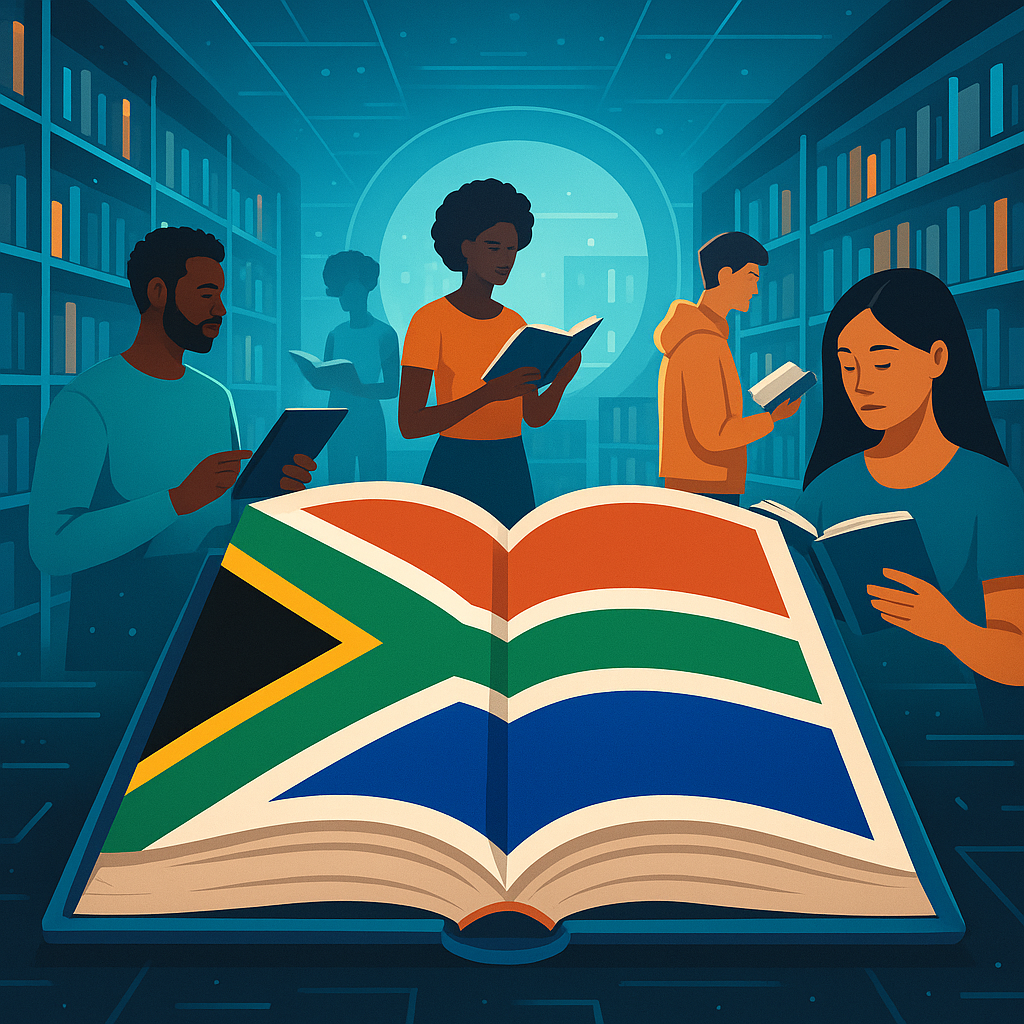
23 librarians graduate from Cape Town's SILL programme, fostering innovative leadership for future-fit public library services.
Cape Town just celebrated 23 new 'Future-Fit Librarians' who completed a special program called SILL. These librarians learned cool, new skills like design-thinking to turn libraries into happening places for their communities. They're ready to help people, especially kids, learn and grow in a world full of digital stuff. This program is making Cape Town's libraries super important for everyone, from fancy neighborhoods to gravel-road townships.
What is the Strengthening Innovative Library Leaders (SILL) program?
The Strengthening Innovative Library Leaders (SILL) program is a leadership development initiative for librarians, adapted from the Mortenson Centre at the University of Illinois. It equips librarians with innovative skills like design-thinking, community mapping, and evidence-based advocacy, enabling them to transform public libraries into vital community hubs that address local needs in the digital age.
Get Cape Town news in your inbox
Stay updated with the latest stories from the Mother City.
A National Day Turns Local Triumph: 23 Librarians Cross the SILL Finish Line
South African Librarians Day, 10 July, felt different inside Cape Town’s municipal chambers. While the country saluted its information guardians, 23 library staffers donned graduation sashes for completing the Strengthening Innovative Library Leaders (SILL) track. The ceremony, themed “Future-Fit Librarians,” doubled as a loud signal that the City is betting on people, not just buildings, to keep 104 public libraries useful in a Tik-Tok era.
The newest class pushes the alumni tally to 80 in only five cycles. Spread across wealthy atlantic suburbs, leafy southern estates and gravel-road townships, these 80 professionals now share a common dialect of design-thinking, community mapping and evidence-based advocacy. In a country where fewer than half of Grade-4 learners can read for meaning, a leadership-critical library network is no vanity project - it is survival infrastructure for self-teaching citizens who cannot afford data bundles.
Thursday’s event also served as a reunion. Earlier cohorts arrived in full regalia, creating a rare moment where a senior librarian from plush Campsul sat beside a junior colleague from stark Delft, comparing notes on podcast clubs and 3-D-printed prosthetics for primary-schoolers. The cross-pollination illustrates SILL’s hidden dividend: every graduate becomes a human fibre-optic cable, carrying new ideas across apartheid-era spatial divides.
From Illinois to Khayelitsha: How a Midwestern Blueprint Landed in the Mother City
SILL is not home-grown; it was written in the corridors of the Mortenson Centre for International Library Programs at the University of Illinois. Named after a Danish immigrant who believed libraries civilise frontier towns, the centre spent 30 years exporting not books, but frameworks that turn librarians into change agents. A 2018 seed grant from the Bill & Melinda Gates Foundation paid to translate those frameworks into South Africa’s eleven-official-language reality.
Cape Town won the hosting rights after a two-page proposal promised to treat public libraries as the last free, safe and warm indoor spaces for millions of residents. The city’s pitch coincided with national alarm over plummeting reading scores and municipal budgets that treat libraries as soft targets for belt-tightening. International backers saw a chance to pilot a replicable model for the global South: upskill cadres, measure impact, then hand the curriculum to local universities for perpetual replication.
Initial scepticism ran high. “Why import leadership theory from Illinois when we have our own Batho Pele principles?” asked one provincial official during early stakeholder meetings. Programme designers countered by inviting local academics to co-adapt every module, inserting case studies on load-shedding schedules, multilingual story-time and gang-violence peak hours. The result is a hybrid: American facilitation craft meets South African lived reality, glued together by Ubuntu values.
Inside the Syllabus: From Lego Serious Play to AI Prompt Engineering
May and June 2024 sessions began at 07:30 with “data walks.” Delegates toured neighbourhoods photographing broken sewer pipes, spaza-shop Wi-Fi signs and communal murals, then turned the images into empathy maps. The exercise forces librarians to see their catchment through a teenager’s eyes before drafting service tweaks. Later mornings moved to rapid-cycle prototyping: using Lego to build pop-up study nooks, then stress-testing them against load-shedding timetables.
Afternoons tackled hard skills rarely taught at MLIS degrees: how to negotiate a municipal budget cut, write a memorandum that mayoral committee members will actually read, and calculate return-on-investment for a R10 000 robotics kit. Evenings featured “fail festivals,” five-minute stories of botched programmes. One graduate recounted a drone-delivery book pilot that crash-landed into a pensioners’ tea garden; the lesson - consult first, buzz later.
Ceremony Voices: Politicians, Graduates and a 3-D Printer Named Lindiwe
Councillor Francine Higham, political head for Community Services and Health, borrowed a line from astronaut Mae Jemison to anchor her keynote: “Never be limited by other people’s limited imaginations.” She praised graduates for “choosing curiosity over cynicism,” then announced a municipal guarantee: any SILL alumnus who submits a viable scale-up plan within 90 days will receive seed funding and a coaching mentor. The pledge drew audible gasps; previous cohorts had no such safety net.
Sipho Fako, Wynberg Children’s Librarian, stepped to the podium next. He previewed the lightning talk he will deliver at the national LIASA conference in September: township boys mastering electrical circuitry after hours using discarded encyclopaedias and YouTube clips streamed over the library’s 5 Mbps line. His secret sauce - turning the reference desk into a “maker reception” where questions are answered with copper wire and curiosity rather than hushes.
Randal Rousseau, senior clerk at Valhalla Park, showcased “Lindiwe,” a refurbished 3-D printer that now manufactures spare parts for broken stools, saving the branch R3 200 in replacement costs. Rousseau is piloting an AI plug-in that predicts which components will crack next, allowing pre-emptive printing. He closed with a challenge to private-sector partners: “Give us filament, not pity; we already have the imagination.”
Geographic Footprint: One City, Many Library Worlds
The 23 graduates reflect Cape Town’s economic kaleidoscope. Claire from air-conditioned Claremont can swap notes with Noxolo from corrugated-iron Masakhane about simultaneous story-time over WhatsApp video. Someday a resident of leafy Rondebosch may test a teen-built robot originally coded inside sweltering Gugulethu. These interactions are not hypotheticals; they are baked into SILL’s “learning exchange” requirement that every graduate host a peer from another region for a week-long job shadow.
The list of branches represented reads like a social map: affluent hubs - Sea Point, Durbanville, Somerset West - sit alongside chronically under-resourced outlets in Bonteheuwel, Heideveld and Bishop Lavis. Programme designers intentionally kept cohorts socio-economically mixed, betting that a librarian who keeps doors open during gang shoot-outs possesses survival strategies unknown to colleagues who fret over late-night Wi-Fi leechers in beachfront suburbs.
Naming politics also entered the conversation. When Nazeema Isaacs Library joined the network, elders demanded programs in Afrikaans and isiXhosa to honour the educator’s cross-cultural legacy. Graduates now run trilingual scavenger hunts that turn local history into escape-room puzzles, proving that commemoration can be playful, not ponderous.
Global Echo: Why the World Watches a Municipal Programme
Cape Town’s experiment lands amid a worldwide push to reposition libraries as SDG (Sustainable Development Goals) accelerators. EIFL and IFLA run parallel efforts, yet SILL’s hyper-local flavour distinguishes it. External evaluators from the University of the Western Cape found that every rand invested in SILL returned R4.30 in measurable benefits - reduced truancy, increased small-business launches, higher matric pass rates - within 18 months.
Other African metros have begun knocking. Nelson Mandela Bay sent two observers to the graduation; eThekwini has already piloted a Zulu-adapted module with 12 librarians. The Gates Foundation, while sun-setting its direct involvement, gifted the curriculum to the African Library & Information Associations & Institutions (AfLIA) under Creative Commons license, ensuring replication free of licensing traps.
The pandemic’s lingering shadow also hovers. COVID-19 forced libraries to become ad-hunch food-distribution sites and digital-refugee camps for matric learners who lacked devices at home. Graduates credit SILL’s crisis-leadership unit with preparing them to pivot overnight - arranging hotspot lending, negotiating extended Wi-Fi hours with schools, and calming anxious parents. Post-graduation surveys show 92 % felt “very prepared” for the next crisis, compared with 34 % of non-participants.
What 80 Alumni Mean for Tomorrow’s Cape Town
Eighty future-fit librarians constitute roughly 14 % of the city’s total library staff. Critical mass looms: once alumni cross 100, internal culture shifts from innovation as side-hustle to innovation as default setting. Already, inter-branch WhatsApp groups buzz with questions like “Anyone tried VR story-time for autistic teens?” or “Which seed-sharing model works for winter vegetables?” Answers come within minutes, crowdfunded by colleagues who have never met face-to-face.
Municipal budget hearings this October will test political will. Alumni plan to table a joint memorandum requesting ring-fenced funds for “community innovation micro-grants.” If approved, every graduate could access up to R25 000 annually to prototype radical ideas - turning shipping-container libraries into after-hours e-sports arenas, or piloting drone book drops for remote informal settlements where roads dissolve in winter rains.
For the 23 newest graduates, Thursday’s applause has faded but a louder call persists: go back, disrupt gently, measure loudly, repeat. They step into a city where 43 % of households lack home internet, where gangs recruit bored teens faster than sports clubs do, where a single thermodynamic textbook can alter a life trajectory. Equipped with Illinois-honed tools and home-grown audacity, they no longer just issue books - they issue invitations to re-imagine what a 21st-century African public library can dare to be.
[{"question": "
What is the SILL program?
", "answer": "The Strengthening Innovative Library Leaders (SILL) program is a leadership development initiative for librarians, adapted from the Mortenson Centre at the University of Illinois. It equips librarians with innovative skills like design-thinking, community mapping, and evidence-based advocacy, enabling them to transform public libraries into vital community hubs that address local needs in the digital age."}, {"question": "Who are 'Future-Fit Librarians'?
", "answer": "'Future-Fit Librarians' are the graduates of the SILL program who have acquired new skills to make libraries more relevant and engaging for their communities in the digital age. They are trained to use innovative approaches like design-thinking to turn libraries into dynamic community spaces."}, {"question": "How is the SILL program transforming libraries in Cape Town?
", "answer": "The SILL program is transforming Cape Town's libraries by equipping librarians with skills to make them 'happening places' for communities. This includes focusing on digital literacy, engaging children, and serving diverse neighborhoods, from affluent suburbs to gravel-road townships, ensuring libraries remain crucial for learning and growth."}, {"question": "What kind of skills do librarians learn in the SILL program?
", "answer": "Librarians in the SILL program learn a diverse range of skills including design-thinking, community mapping, evidence-based advocacy, and practical applications like data walks to understand community needs. They also gain 'hard skills' such as negotiating municipal budgets, writing effective memorandums, and calculating return-on-investment for library initiatives. The curriculum even includes modules on AI prompt engineering and creative problem-solving using tools like Lego Serious Play."}, {"question": "How did the SILL program come to Cape Town from the University of Illinois?
", "answer": "The SILL program originated from the Mortenson Centre for International Library Programs at the University of Illinois. A 2018 seed grant from the Bill & Melinda Gates Foundation facilitated the translation and adaptation of these frameworks to South Africa's multi-lingual context. Cape Town successfully bid to host the program, emphasizing the role of public libraries as safe and free community spaces. The curriculum was further localized by inviting local academics to co-adapt modules, incorporating South African realities and Ubuntu values."}, {"question": "What impact has the SILL program had on Cape Town's communities?
", "answer": "The SILL program has had a significant impact, with external evaluators finding that every rand invested returned R4.30 in measurable benefits, including reduced truancy, increased small-business launches, and higher matric pass rates. Graduates are implementing innovative projects, such as maker receptions for children to learn circuitry, 3-D printing for library maintenance, and trilingual scavenger hunts. The program also fosters cross-pollination of ideas among librarians from different socio-economic backgrounds, bridging apartheid-era divides and preparing them for community challenges, including crisis leadership in situations like pandemics."}]
Sizwe Dlamini is a Cape Town-based journalist who chronicles the city’s evolving food scene, from boeka picnics in the Bo-Kaap to seafood braais in Khayelitsha. Raised on the slopes of Table Mountain, he still starts every morning with a walk to the kramat in Constantia before heading out to discover whose grandmother is dishing up the best smoorsnoek that day.
View all articles →