
Cape Town, Zimbabwe, and Namibia forge tourism partnership
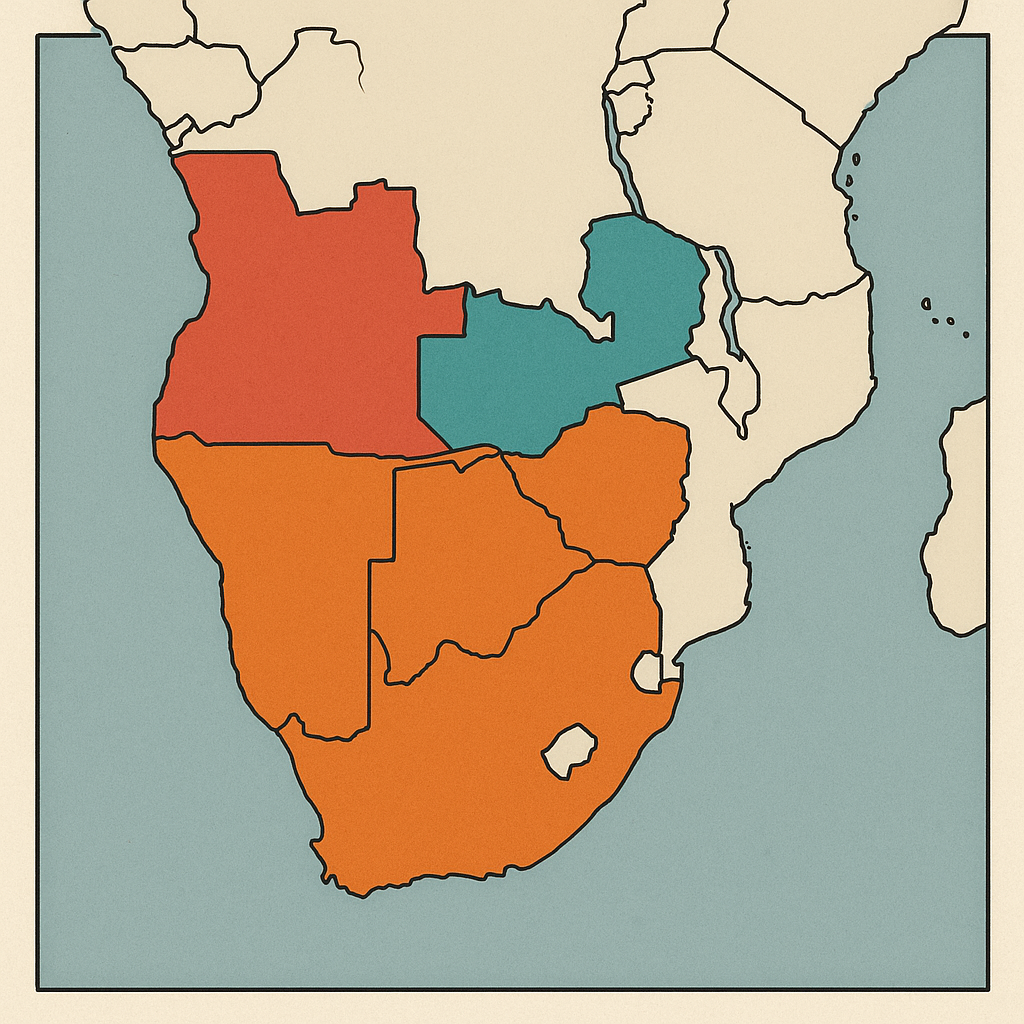
Southern Africa's "Triangle of Contrasts" unveils a seamless 2,800-km tourism corridor, integrating visas, tech, and unique experiences.
Three African nations, South Africa's Western Cape, Namibia, and Zimbabwe, have teamed up to create the "Triangle of Contrasts." This exciting new travel corridor, 2,800 kilometers long, lets you easily book trips to amazing places like Atlantic dunes, towering mountains, and stunning waterfalls all at once. It's a fresh way to explore, boosting tourism and helping the economies of these countries grow together. They've even made it easier with a single visa and cool new ways to experience everything from music festivals to stargazing.
What is the "Triangle of Contrasts"?
The "Triangle of Contrasts" is a new 2,800-kilometre travel corridor connecting South Africa's Western Cape, Namibia, and Zimbabwe. This initiative, launched at WTM Africa 2025, integrates diverse regional attractions like Atlantic dunes, mountains, and waterfalls into single-click booking itineraries, fostering multi-country tourism and regional economic growth.
Get Cape Town news in your inbox
Stay updated with the latest stories from the Mother City.
A New Symbol at WTM Africa 2025
At Cape Town International Convention Centre, three national flags - South Africa’s Western Cape, Namibia and Zimbabwe - were hoisted halfway down their staffs, hovered for a heartbeat, then snapped skyward together. The gesture, staged on the exhibition floor of World Travel Market Africa 2025, killed off the old playbook of destination-versus-destination marketing. The working name for the newcomer is “Triangle of Contrasts,” a 2 800-kilometre clockwise loop that stitches Atlantic dunes, mist-wrapped mountains, world-famous waterfalls and centuries-old salt-trade roads into one continuous story guests can book in a single click.
From Gesture to Global Shelf-Space
Before delegates had even reclaimed their luggage, developers had slipped 47 fresh multi-country itineraries into Amadeus and Travelport. Every file carries the code SRT07 * - short for Southern Regional Tour 07. The packages arrive as 8-, 12- or 18-night blocks that juggle hotel, lodge and guest-house stock across Windhoek, Victoria Falls and the Cape Winelands in real time. When a last-minute cancellation suddenly frees 15 suites in Swakopmund, the engine recommends an ocean-kayaking extension up the coast and tacks on an extra night among Franschhoek vines at a 9 % cut. Candice Verhoef, data strategist for the Cape Town & Western Cape Convention Bureau, bluntly sums it up: “We turn every empty room into bait that pulls the traveller deeper into the region.”*
Rules, Risks and Revenue
The Quiet 18-Month Treaty
Months of hushed negotiations produced a compact just three pages long but dense with change. Clause one births a single electronic visa, valid for 30 days and multiple entries, recognised at Walvis Bay, Victoria Falls and Cape Town’s new Landside Transit Facility. Clause two offers a sharp deal for investors: park at least US $3 million in approved accommodation, transport or tech start-ups that span any two of the three states and you earn a five-year holiday on landing and navigation fees. Clause three taps Old Mutual and NamibRe to underwrite a crisis-response bond; if civil unrest, pandemic lockdown or freak weather hits, liquidity unlocks within 72 hours to keep reputational contagion from spreading the way it did after the 2021 Cape Peninsula fires.
Aircraft, Trucks and Border Posts
Airlink’s planners have begun “tagging” aircraft tails, letting one E190 drop visitors at Victoria Falls on a Tuesday, reposition to Livingstone for Zambian gamers on Wednesday, then ferry German birders from Walvis Bay to Cape Town on Friday - all under a single utilisation certificate. Internal memos claim the manoeuvre shaves US $17 000 off monthly costs per airframe, money now earmarked for joint ads on WeChat and TikTok China. On the ground, Imperial Logistics repurposed 70 refrigerated trailers into rolling depots that cache lithium power banks, filtered water and gourmet lamb at remote crossings. A blockchain tag on every trailer reconciles VAT refunds and conservation levies in about 90 minutes, slashing what used to be an 80-kilometre, two-stamp, 45-minute headache into an eight-minute QR-code scan.
Stories That Travel Further Than a Safari Jeep
Niche Voices, Not the Big Five
Marketing gurus sidestepped the tired parade of lion-and-elephant clichés and instead licensed micro-influencers already filming fringe worlds: a Himba woman coding in Opuwo, a Kimberley drag troupe reviving Khoisan poetry, a third-generation Zimbabwean affineur coaxing goat gouda in Chimanimani’s cloud forests. Vertical clips, subtitled in Korean and Portuguese, appear only after a traveller’s phone lingers 18 hours in Johannesburg or Doha; early analytics from May 2025 logged a 34 % click-through from Seoul and São Paulo - markets long ignored on southern-hemisphere itineraries.
TIME Beats MICE
Convention brochures now boast “TIME” pillars: Travel, Incentives, Music, Esports.
- Travel : The 2026 Cape Town Cycle Tour starts Namibian riders at sunrise in Sossusvlei, sends them across the Namib-Naukluft gravel, then flies them on chartered Dash-8-Q400s for the final 45 km along Chapman’s Peak into Cape Town, flipping a day race into a four-day desert-to-ocean epic.
- Incentives : Deloitte US has pre-bought 1 200 room-nights for 2027, booking “hybrid safaris” where board meetings roar against Victoria Falls spray and cocktails arrive atop Namib dunes after falconry shows.
- Music : Kalahari Vibes, an electronic festival alternating between Windhoek’s Warehouse Theatre and Victoria Falls rainforest, locks in headliners Tyla and Burna Boy provided 30 % of ticket revenue seeds community conservancies.
- Esports : October 2025 sees the first Southern Hemisphere Pro-Am Apex Legends showdown inside Cape Town’s Castle of Good Hope, retrofitted with sub-10 ms fibre; every squad must field at least one Namibian or Zimbabwean gamer, turning recruitment into an indirect scholarship programme.
Future-Proofing Every Kilometre
Sky, Soil and Stars
The trio of countries applied to the International Dark Sky Association for a contiguous 300 000 km² corridor from NamibRand to Cederberg to Mana Pools. If approved in November 2025, it will dwarf Chile’s Atacama by 18 %. Robotic telescopes are already inbound; guests scan a QR code to queue celestial objects, then receive a time-stamped raw file of the Orion Nebula before pancakes arrive. A “Carbon & Carnivores” exchange allows self-drivers to rack up kilometre-based carbon credits that only extinguish when rangers upload geo-tagged photos of collared lions. French reinsurer SCOR and salmon giant Mowi have bought 42 000 credits at US $27 each, pumping US $1.1 million into anti-poaching salaries in Hwange and Etosha.
Early-Warning, Culinary Orbits and Orbital Dreams
A “Sentinel” platform scrapes social chatter, rainfall satellites and grey-market currency rates every 15 minutes. When Harare’s street USD premium breaches 25 %, bookings pause, vouchers issue and the insurance bond covers 70 % of lost margin, preventing the discount death spiral that crippled East Africa after Westgate. Food links the journey: scan your boarding-pass QR code to download a “Salt & Smoke” passport that compels you to taste smoked snoek in Cape Town, oryx carpaccio in Windhoek and sadza-bream-baobab mash at Victoria Falls, each stamp doubling as a raffle ticket for a sub-orbital Virgin Galactic spin above the Skeleton Coast.
The first 27 trainee guides - nine from each nation - study on a rolling rail academy: vintage 1960s coaches tugged by TransNamib diesels between Windhoek and Cape Town, serving real passengers while mastering botanical Latin and Korean honorifics. Graduation happens aboard a steam ferry at Victoria Falls; certificates mint as NFTs on Polygon, ready for instant employer verification. The organism now behaves less like a marketing club and more like living tissue - data, capital, culture and people pulsing through arteries of code, policy and story, every node both origin and destination, each reflection a microcosm of the whole.
[{"question": "What is the \"Triangle of Contrasts\"?", "answer": "The \"Triangle of Contrasts\" is a new 2,800-kilometre travel corridor connecting South Africa's Western Cape, Namibia, and Zimbabwe. This initiative integrates diverse regional attractions like Atlantic dunes, mountains, and waterfalls into single-click booking itineraries, fostering multi-country tourism and regional economic growth."},
{"question": "What are the key benefits of the Triangle of Contrasts for travelers?", "answer": "Travelers can enjoy simplified multi-country experiences with a single 30-day, multiple-entry electronic visa valid at Walvis Bay, Victoria Falls, and Cape Town's new Landside Transit Facility. They can also book curated 8, 12, or 18-night itineraries that combine various attractions and accommodations, and experience unique offerings from music festivals and esports tournaments to stargazing in a future dark sky reserve."},
{"question": "How does the Triangle of Contrasts support regional economies and tourism?", "answer": "The initiative boosts tourism by offering integrated travel packages and marketing the region as a single destination, moving away from country-specific marketing. It also provides incentives for investors, offering a five-year holiday on landing and navigation fees for investments of US $3 million or more in approved tourism infrastructure spanning any two of the three states. Furthermore, it incorporates community benefits through initiatives like seeding community conservancies with music festival ticket revenue and indirect scholarships via esports tournaments."},
{"question": "What new technologies and logistics are being used to facilitate this corridor?", "answer": "The Triangle of Contrasts leverages advanced logistics and technology. This includes \"tagging\" aircraft tails for efficient multi-country routes, repurposing refrigerated trailers into rolling depots for supplies, and using blockchain tags for rapid VAT refunds and conservation levy reconciliation. It also utilizes a \"Sentinel\" platform for real-time monitoring of social chatter, rainfall, and currency rates to mitigate risks, and offers digital \"Salt & Smoke\" passports for culinary experiences."},
{"question": "What unique experiences can travelers expect beyond traditional safaris?", "answer": "Beyond traditional safaris, travelers can engage in \"TIME\" (Travel, Incentives, Music, Esports) pillars. This includes multi-day desert-to-ocean cycling events, hybrid safaris for corporate incentives combining business with unique natural settings, electronic music festivals like Kalahari Vibes, and esports tournaments. The corridor also aims for a contiguous dark sky reserve for stargazing and offers opportunities for culinary exploration with regional specialties linked to a digital passport."},
{"question": "How does the Triangle of Contrasts address potential risks and ensure sustainability?", "answer": "The initiative addresses risks through a crisis-response bond underwritten by Old Mutual and NamibRe, ensuring liquidity within 72 hours for civil unrest, pandemic lockdowns, or freak weather. Sustainability is promoted through a \"Carbon & Carnivores\" exchange, allowing self-drivers to earn carbon credits by tracking mileage, which are then used to fund anti-poaching efforts. Additionally, community involvement is prioritized, and micro-influencers are used to showcase diverse, niche experiences rather than relying on traditional wildlife clichés."}]

Sizwe Dlamini is a Cape Town-based journalist who chronicles the city’s evolving food scene, from boeka picnics in the Bo-Kaap to seafood braais in Khayelitsha. Raised on the slopes of Table Mountain, he still starts every morning with a walk to the kramat in Constantia before heading out to discover whose grandmother is dishing up the best smoorsnoek that day.
View all articles →