
Cape Town’s Bree Street to host 1 600-seat Mandela Day community table
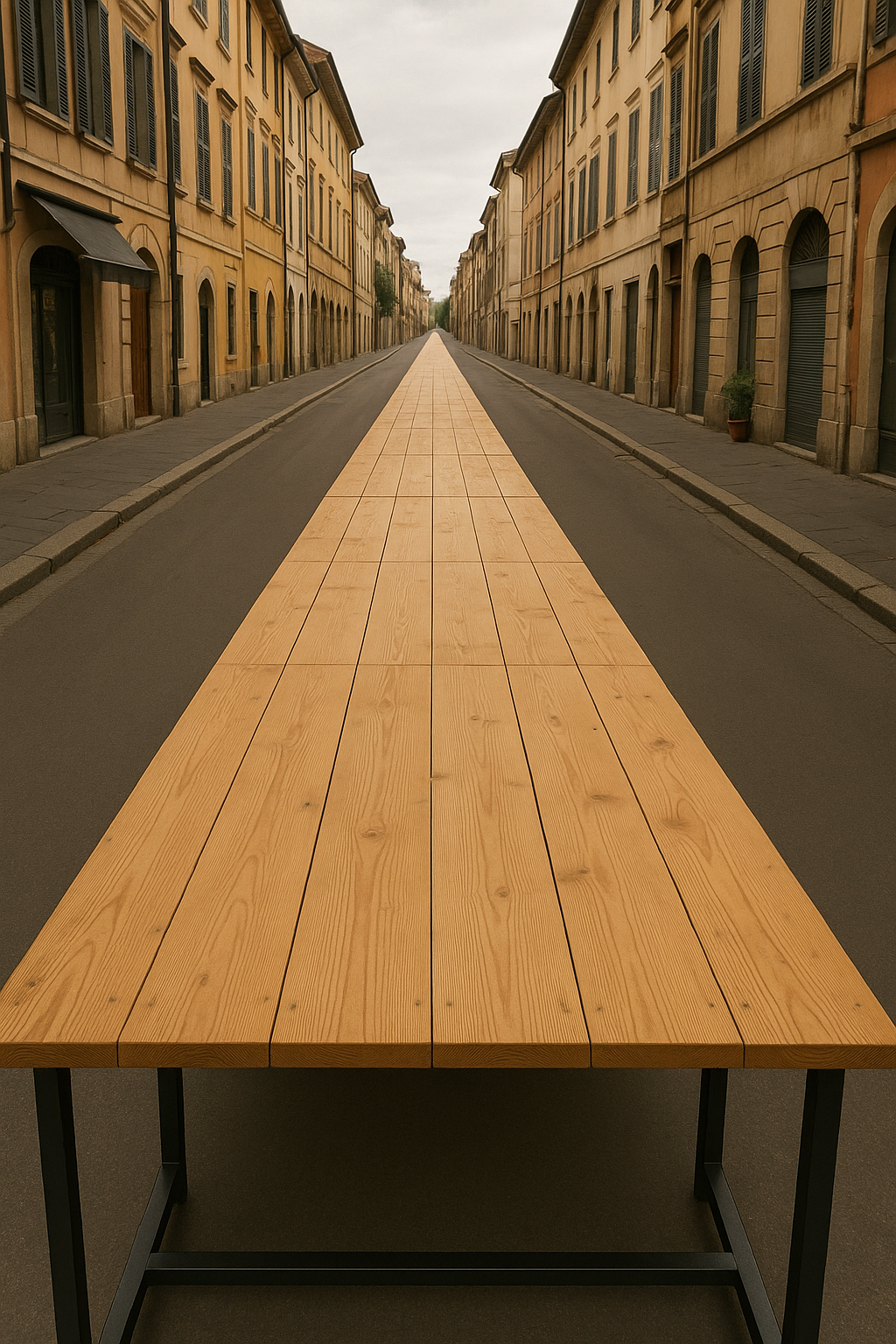
Cape Town's Mandela Day Langtafel transforms Bree Street into a 1600-person communal dining experience, redefining public space and social connection.
Imagine Bree Street in Cape Town, not with cars, but with a super long table! 1,600 people will sit down together, sharing food and stories. This amazing event wants to turn a busy street into a giant dining room, making everyone feel like part of one big family. It's about talking to strangers, sharing simple bread, and showing that every part of the city belongs to all of us. No fancy stuff, just people connecting and making their city feel like home.
What is the purpose of Cape Town's 1,600-seat street banquet?
Cape Town's 1,600-seat street banquet, called Langtafel, aims to foster community and social cohesion by transforming a busy street into a communal dining space. It encourages conversation between strangers, promotes spatial democracy by reclaiming public space, and challenges social exclusion, emphasizing shared humanity over status.
Get Cape Town news in your inbox
Stay updated with the latest stories from the Mother City.
Part 1 | From Asphalt to Tablecloth: Claiming the Road for People, Not Cars
On 18 July 2026 the familiar hum of engines and hurried footsteps on Bree Street will fall silent. In their place, a single 270-metre table will bloom, dressed simply and set for 1 600 neighbours who may never have spoken before. Young Urbanists South Africa, the group behind the stunt, refuses to call it a “food drive” or a “fundraiser”; they describe it as an open-air parliament where citizenship is expressed by pulling up a chair.
The concept borrows the Dutch word Langtafel - literally “long table” - yet its DNA is pan-African. Medieval kings used endless planks to signal that no guest ranked higher than another; Ethiopian households still circle a mesob so everyone tears injera from the same plate. The Cape Town edition adds a contemporary twist: the linen is replaced by recycled pine boards, the castle hall by a busy commercial artery, and the guest list by whoever arrives first.
By parking the table where taxis usually jostle for space, the organisers short-circuit the city’s default algorithm: move, don’t linger. Streets, they argue, are the largest untapped public rooms any municipality owns. Converting a corridor of tarmac into a place where a child can draw with chalk between the cutlery proves that spatial democracy can be built without cement or cranes - just plywood, courage, and a street-closure permit.
Part 2 | The Social Geometry of Sharing a Loaf: Why Bread Becomes a Bridge
Bree Street was once dismissed as a seam of dilapidation; today it sparkles with gin bars and concept stores. That turnaround, however, came with familiar side-effects: higher rents, older residents priced out, and designer coffee that costs more than an hourly wage. The 2026 table plants a flag against exclusion, insisting that nobody needs a reservation or a payslip to occupy prime real estate for one afternoon.
Loaves will be provided free, and the Community Chest of the Western Cape will underwrite meals for anyone who can’t buy their own. The gesture is intentionally minimal - bread, butter, and a surprise dessert - because the aim is conversation, not charity. When everyone chews the same humble staple, the usual markers of culinary capital - rare sirloin, craft beer, artisanal kimchi - temporarily dissolve, freeing attention for stories instead of status symbols.
Studio H, the design collective co-hosting the feast, has spent years prototyping low-cost housing and pop-up clinics. Their expertise guarantees that benches will sit at heights friendly to both grandmothers and toddlers, and that table-legs will bolt into pre-drilled road plates strong enough to survive the Cape Doctor, the notorious south-easter that barrels through the city bowl every summer afternoon. In short, the whole structure is engineered for dignity first, Instagram second.
Part 3 | Mandela Day Without a Paintbrush: Moving from 67 Minutes to 67 Conversations
Since 2013 South Africans have celebrated 18 July by painting classrooms, clearing alien vegetation, or handing out grocery parcels. These acts help, but they can also entrench the boundary between helper and helped. The Langtafel swaps the paintbrush for a placemat, arguing that listening to a stranger’s hopes does more for cohesion than any coat of fresh white on a crumbling wall.
Nelson Mandela’s table habits are instructive. On Robben Island he invited prison guards to share tea, convinced that face-to-face civility erodes ideological walls. Years later, he served bobotie to former jailers at Tuynhuys, proving that enemies can become fellow citizens - provided they keep showing up for supper. The 2026 banquet scales that conviction to city size, inviting 1 600 micro-Mandelas to trade seats every hour, multiplying points of human contact.
Volunteers are being recruited months in advance, not last-minute. Some will sand timber planks, others will ferry unused bread to shelters after the last diner leaves. Young Urbanists quietly tracks how many helpers return for later projects; they want to know whether a one-day party can seed a civic habit. Early pilots in Observatory and Langa show that roughly four in ten first-time volunteers sign on for subsequent park-builds or cycle-lane campaigns - evidence that feeding people is a gateway drug to fuller citizenship.
Part 4 | The Meal After the Meal: Turning a Day into a Culture
Restaurants lining Bree have been invited to create R50 “people’s plates” on the morning of the 18th, a price point low enough to undercut even fast-food value meals. The catch: diners must eat them at the communal table, not at indoor counters. A few chefs are experimenting with Cape Malay breyani, Somali basbousa, and vegan bunny chow, turning the street into a tasting menu of migratory histories that shaped the city.
No one knows what the surprise dessert will be; organisers want speculation to dominate radio call-ins and WhatsApp groups for weeks. The secrecy follows a simple behavioural principle: shared anticipation is a social glue stronger than shared satisfaction. When strangers finally spoon whatever arrives - perhaps spiced koeksister trifle, perhaps rooibos sorbet - they will already have bonded through guessing games and recipe rumours.
If the 2026 edition avoids rain, traffic gridlock, or load-shedding pandemonium, Young Urbanists intend to petition the city for an annual licence. Their longer vision includes satellite tables in Khayelitsha, Atlantis, and Mitchells Plain, all linked by livestream, turning the event into a regional conversation. Because, ultimately, the point is not to feed 1 600 bodies once; it is to remind a divided metropolis that any street can become a living room if citizens dare to bring their own chairs - and pass the bread.
[{"question": "What is the main goal of Cape Town's 1,600-seat street banquet, Langtafel?", "answer": "The primary goal of the Langtafel is to foster community, social cohesion, and spatial democracy by transforming a bustling street into a communal dining space. It aims to encourage conversation among strangers, challenge social exclusion, and make everyone feel like a part of one big family, emphasizing shared humanity over status or background. It's described as an 'open-air parliament where citizenship is expressed by pulling up a chair.'"}, {"question": "When and where will this event take place?", "answer": "The Langtafel will take place on July 18, 2026, on Bree Street in Cape Town. A single 270-meter table will be set up to accommodate 1,600 people, transforming the busy commercial artery from a corridor for cars into a space for human connection."}, {"question": "Who is organizing this event and what is the significance of the \"Langtafel\" concept?", "answer": "Young Urbanists South Africa is the group behind this initiative, co-hosting it with the design collective Studio H. The concept borrows the Dutch word \"Langtafel,\" meaning 'long table,' but its DNA is also pan-African, drawing inspiration from medieval kings' tables and Ethiopian mesob practices where everyone shares food equally. This signifies the event's commitment to equality and inclusivity, ensuring no guest ranks higher than another."}, {"question": "What kind of food will be served, and why is it intentionally minimal?", "answer": "Loaves of bread will be provided free of charge, along with butter and a surprise dessert. The Community Chest of the Western Cape will also underwrite meals for those unable to purchase their own. The gesture is intentionally minimal – focusing on simple bread – because the aim is conversation and connection, not charity or showcasing culinary capital. By sharing the same humble staple, traditional status markers dissolve, allowing for genuine interaction."}, {"question": "How does the Langtafel event relate to Mandela Day and Nelson Mandela's legacy?", "answer": "The Langtafel event, taking place on July 18th (Mandela Day), aims to shift the focus from traditional '67 minutes' acts of service to fostering '67 conversations.' Inspired by Nelson Mandela's belief that face-to-face civility erodes ideological walls, the event encourages listening to strangers' hopes and transforming enemies into fellow citizens through shared meals, scaling his conviction to a city-wide level by inviting 1,600 'micro-Mandelas' to connect."}, {"question": "What is the long-term vision for the Langtafel event?", "answer": "If successful, Young Urbanists intend to petition the city for an annual license for the Langtafel. Their longer vision includes establishing satellite tables in other communities like Khayelitsha, Atlantis, and Mitchells Plain, all linked by livestream. The ultimate goal is not just to feed 1,600 people once, but to remind the divided metropolis that any street can become a living room if citizens dare to bring their own chairs and share a meal, fostering a lasting culture of community and connection."}]

Oliver Daniels is a Cape Town journalist who chronicles the intersection of food, migration and identity in South Africa's kitchens—from wood-fired Gugulethu braai spots to Constantia vineyards. Born and raised on the slopes of Devil’s Peak, he still starts each week with a dawn walk across Table Mountain to catch the first Atlantic light before filing copy.
View all articles →