
Cape Town’s ‘Eye in the Sky’ aircraft grounded after contract collapse
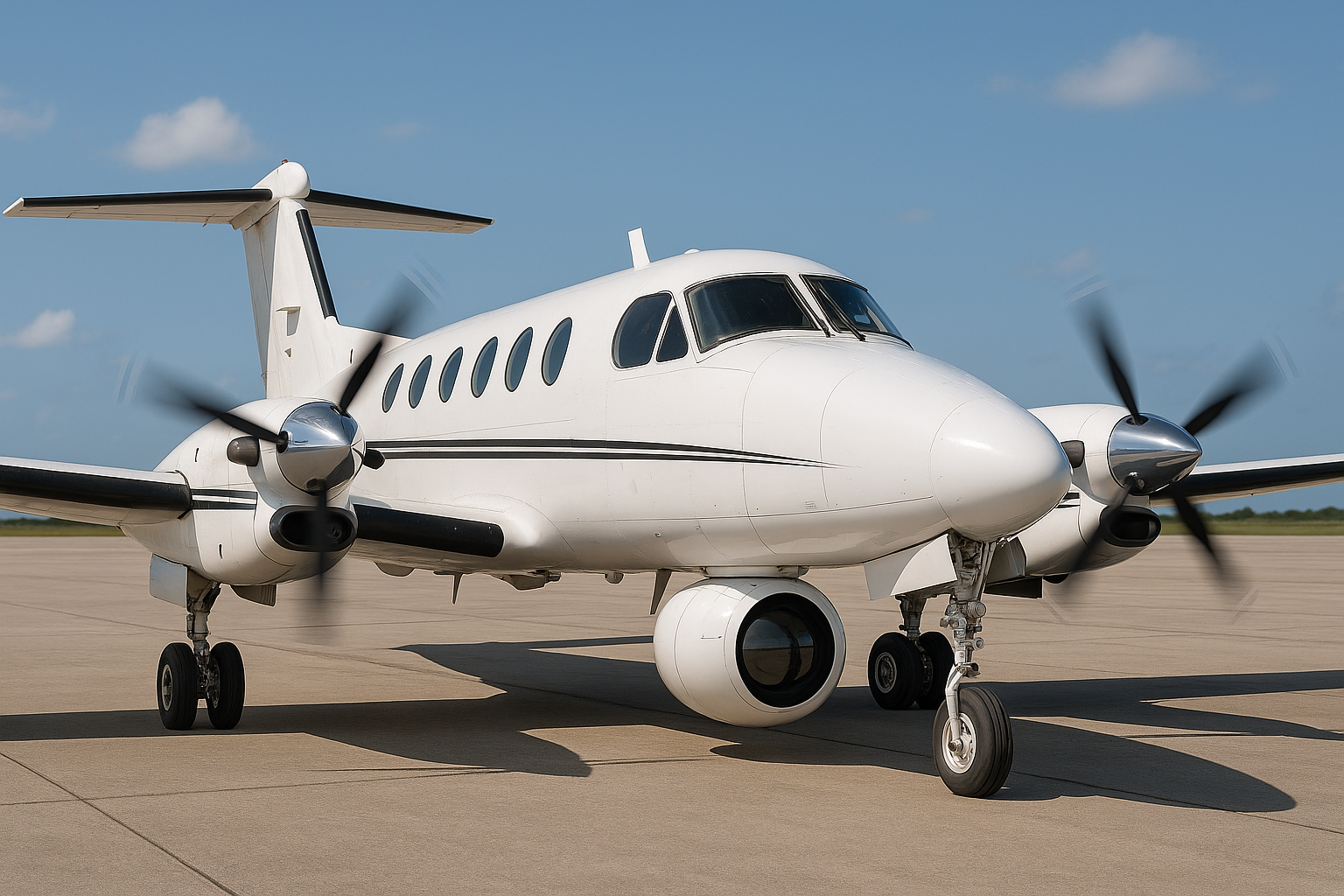
Cape Town's "Eye in the Sky" surveillance experiment ends after 20 months due to funding, operational issues, and controversy.
Cape Town's spy plane, once a constant hum in the sky, has quietly vanished. This special plane, meant to fight crime, stopped flying because the company running it went broke. They had money problems, the plane didn't fly enough, and the city held back payments because the company didn't keep its promises. Now, the plane is gone, leaving behind questions about its effectiveness and the city's big plans.
Why did Cape Town's aerial surveillance plane stop flying?
The Cape Town aerial surveillance plane, operated by iSky Cape (Pty) Ltd, ceased operations due to the company entering voluntary business rescue. Financial difficulties, inconsistent flight hours, and unresolved maintenance issues, coupled with the city withholding final payments due to unfulfilled contractual obligations, ultimately grounded the project.
Get Cape Town news in your inbox
Stay updated with the latest stories from the Mother City.
The Vanishing Act Nobody Bragged About
High above the Cape Flats, the Monday morning sky on 12 August 2025 felt oddly spacious. Residents who had grown used to a white twin-prop scratching repetitive ovals over Nyanga, Mitchells Plain and Khayelitsha realised the constant background hum had disappeared. No press briefing, no mayoral tweet, just silence. Aviation trackers were first to notice that the aircraft’s ADS-B signature - an electronic breadcrumb that had painted clockwork racetracks for twenty months - had simply dropped from their screens.
Inside the council chambers the truth dribbled out two weeks later. Asked why the reassuring engine noise was gone, officials shrugged: aerial reconnaissance had been “paused with immediate effect.” Only after Cape {town} Etc dredged up court papers did the public learn that iSky Cape (Pty) Ltd, the joint-venture company that supplied the plane, had entered voluntary business rescue on 11 August. By mid-September the hangar at Cape Town International stood bare, the R12 million gyro-stabilised camera that once bulged from the fuselage now bubble-wrapped and ticketed for an insurance sale in Johannesburg.
The symbolism hurt. For nearly two years municipal marketers had branded the project as a marriage between military-grade optics and everyday crime-fighting; now it felt like a Las Vegas wedding that ended in an annulment nobody wanted to discuss.
Inside the Cockpit: Grand Ideas, Thin Wallet
Former pilots speak of an operation that tried to punch far above its financial weight. “One airframe, two flight crews, fourteen hours of daily coverage - that was the dream,” says a skipper who still makes his living in aviation and therefore prefers anonymity. Delivering that rhythm demanded roughly 120 flight hours each month; by March the logbook showed barely 90, and in July the tally collapsed to 40. “Every slipped maintenance slot cost us two days on the ground,” he adds. “Spares took six weeks to clear customs. The City wanted Dom Pérignon results on a no-name lager budget.”
Retro-fitting the 1989 Beechcraft King Air C90B was no weekend job. Technicians installed 120 kg of extra wiring, server racks and a 900 W liquid-cooling loop; they reinforced the cabin floor and rewrote weight-and-balance charts to accommodate a glass pod slung under the belly. Once finished the aircraft could cruise for four-and-a-half hours, hold 110 knots, and - under crisp winter air - read a licence plate from 3 000 ft. On a good night its thermal sensor reportedly picked up a human silhouette 11 km away.
Yet capability without reliability is little more than a parlour trick. The imported Argos-II turret demanded recalibration every 75 flight hours, and the City’s lack of forward-stocked components meant the craft spent more days parked than patrolling.
The Hybrid Eye That Relied on a Wobbly Data Chain
What made the platform attractive on paper was its fusion approach: live video flowed over LTE to the Tygerberg Traffic Control Centre where licence-plate and facial-recognition engines cross-checked SAPS and municipal CCTV repositories. A match automatically fired an alert to patrolling officers through a secure app called ZebraNet, pushing co-ordinates and a freeze-frame to their phones. In principle, this allowed flying squad vans to intercept suspects before they scattered. Reality was messier: rolling blackouts regularly toppled cell towers, snapping the link twice per shift on average.
Civil-aviation rules also required a human observer - usually a retired detective - aboard every sortie. Seated next to the pilot, he clicked through a colour-coded matrix tagging pedestrians as “harmless,” “possible lookout,” “armed poacher” or “priority target.” These tags fed monthly heat-maps lauded by community policing forums but derided by academics who point out that 94 percent of “priority” labels were dropped over predominantly black neighbourhoods. Critics argue the matrix baked racial profiling into the code.
Even when the feed stayed online, response times often flopped. Officers on the ground complained of receiving grainy stills too late, or GPS pins that pointed to a shebeen that had already emptied.
The Price Tag and the Fine Print
The municipality has never released the full contract value, claiming commercial sensitivity. Leaked spreadsheets, however, reveal a three-year commitment of R84 million with an option to double the fleet for R156 million. Only R27 million ever left the City’s account. Payments were milestone-bound: 20 percent upon demonstrating baseline flight hours, another 30 percent once integration with the existing CCTV spine was proven, and the remainder after quarterly crime-deterrence statistics were tabled. Because the vendor never satisfied the third gate, the final R57 million was withheld.
Yet not all sunk costs are retrievable. Ratepayers still footed R4.3 million to widen a hangar doorway, R1.9 million to trench fibre to Wingfield Army Base, and R800 000 for an annual geospatial licence now gathering digital dust. Opposition councillor Nicola Jowell (DA) calls the single-bidder justification “disingenuous,” noting that at least three local companies already operate drones able to hoist similar sensors.
For all the wrangling, Cape Town escapes the worst-case financial meltdown. Municipal attorneys insist the milestone clause was their parachute; vendors, meanwhile, accuse the City of shifting goalposts whenever crime statistics refused to dance on command.
Townships, Courtrooms and the Phantom Effect
In Manenberg, neighbourhood-watch chair Shamiela Fataar swears the aircraft saved lives. WhatsApp groups buzzed whenever the drone-like hum approached: “Pelican is up, keep the kids indoors,” and gunshots often tapered off. Yet Prof. Guy Lamb’s analysis of SAPS dockets covering eighteen months found no significant dip in contact crimes during patrol windows. “We measure a nine-percent drop inside the watched polygon, but incidents rebound within forty-eight hours only three blocks away,” he says. Tactical displacement, not deterrence, appears to be the dominant outcome.
Concerns about constitutional privacy have not blown over. The Social Justice Coalition is pursuing litigation arguing that the absence of a bespoke by-law on airborne surveillance violates the right to privacy. The court action forced the City to release a privacy-impact statement - the only public document confirming that footage is stored for ninety days unless flagged, decrypted only by vetted analysts, and shared with SAPS or the State Security Agency under strict memoranda of understanding. The case is pending.
Globally, Cape Town’s experiment joins a mixed scrapbook. Baltimore’s secret 2016 programme lasted 122 days before journalists exposed it; Los Angeles dabbled with a “Gorgon Stare” derivative before activists grounded it. Rio de Janeiro, sharing an Embraer between police, customs and environmental agencies, shows that cost-splitting can keep political cover alive.
What Lurks on the Tech Horizon
The King Air may be gone, but the appetite for persistent overhead intelligence is swelling. Market analysts project the wide-area motion-imagery sector to hit US$7.2 billion by 2030, helped by lighter sensors and AI that can track a single suspect across an entire city. Local players smell opportunity. CloudCam, a Stellenbosch start-up, has already flight-tested a 4 kg multi-spectral pod that bolts onto a Robinson R44 at a fraction of the Argos price. Denel Dynamics is shopping a hydrogen-powered, high-altitude drone that promises forty-eight-hour endurance, neatly sidestepping crew-rest laws that crippled Pelican.
Policy, however, lags light-years behind hardware. Regulation 101.01 under the Civil Aviation Act predates the iPhone and stays mute on gigapixel cameras, facial analytics or real-time data fusion. The Information Regulator has pledged sector-specific guidance since 2021 but has yet to table a draft. Until it does, cities will keep improvising under exemptions meant for traffic-reporting helicopters, creating a patchwork that invites litigation.
National Treasury has floated a proposal that could revive aerial surveillance through a shared procurement pool involving SAPS and SANParks. Inter-agency rivalry complicates the picture: SAPS already clandestinely operates “Project Sauron” drones from Bloemfontein and Langebaanweg and may see little reason to bankroll municipal gadgets. SANParks, meanwhile, wants whisper-quiet electric craft for anti-poaching, not fixed-wing aircraft that demand 1 200 m of tarmac. Still, pooled budgets could push hourly costs below R18 000, competitive with a fully equipped police helicopter and politically easier to defend.
For the grounded King Air, the story might still end in tropical sunshine. An insurance underwriter is liquidating the airframe, and rumours swirl that a Mauritian charter service is negotiating a bargain-basement purchase. Should the deal close, Cape Town’s once-omnipresent spy will spend its twilight years hauling scuba divers and newly-weds across the Indian Ocean - its unblinking glass orb replaced by surfboards and champagne coolers, a quiet coda to a headline that never quite landed.
Why did Cape Town's aerial surveillance plane stop flying?
Cape Town's aerial surveillance plane ceased operations because the company running it, iSky Cape (Pty) Ltd, went into voluntary business rescue due to financial difficulties. The plane also didn't fly enough hours, leading the city to withhold payments as the company failed to meet its contractual obligations and deliver promised crime deterrence statistics.
What was the purpose of Cape Town's spy plane?
The spy plane was intended to augment crime-fighting efforts by providing aerial reconnaissance over high-crime areas like Nyanga, Mitchells Plain, and Khayelitsha. It featured advanced military-grade optics, including a gyro-stabilized camera and thermal sensors, designed to feed live video to a control center for real-time analysis and alerting of patrolling officers.
What technology did the spy plane use for surveillance?
The plane, a retro-fitted 1989 Beechcraft King Air C90B, was equipped with a R12 million gyro-stabilized camera (reportedly an Argos-II turret) and thermal sensors. It used a "fusion approach," relaying live video via LTE to the Tygerberg Traffic Control Centre, where licence-plate and facial-recognition engines cross-checked data against SAPS and municipal CCTV repositories. Alerts were then sent to officers via a secure app called ZebraNet.
What were the challenges faced by the spy plane project?
The project faced numerous challenges, including the company's financial instability, inconsistent flight hours, and maintenance issues due to customs delays for spare parts. Technical problems like rolling blackouts disrupting data links, and the need for frequent camera recalibration also hampered operations. Critically, the city withheld payments because the vendor couldn't satisfy contractual milestones related to crime-deterrence statistics.
How much did the spy plane project cost Cape Town taxpayers?
While the full contract value was never officially released, leaked spreadsheets indicated a three-year commitment of R84 million. However, only R27 million was paid by the City due to the vendor failing to meet the final payment milestones. Despite this, taxpayers incurred sunk costs such as R4.3 million to widen a hangar doorway, R1.9 million for trenching fibre, and R800,000 for an annual geospatial license.
What are the future prospects for aerial surveillance in Cape Town and globally?
Despite the failure of this specific project, the demand for persistent overhead intelligence is growing. Market analysts predict significant growth in the wide-area motion-imagery sector, driven by lighter sensors and AI. Local companies are already developing advanced, cost-effective alternatives. Globally, cities like Baltimore and Los Angeles have experimented with similar programs. Future efforts might involve shared procurement pools between national agencies like SAPS and SANParks to reduce costs and improve political viability, though policy and regulation still lag behind technological advancements.

Chloe de Kock is a Cape Town-born journalist who chronicles the city’s evolving food culture, from township braai joints to Constantia vineyards, for the Mail & Guardian and Eat Out. When she’s not interviewing grandmothers about secret bobotie recipes or tracking the impact of drought on winemakers, you’ll find her surfing the mellow breaks at Muizenberg—wetsuit zipped, notebook tucked into her backpack in case the next story floats by.
View all articles →