
Cape Town’s infamous unfinished bridge may finally be completed
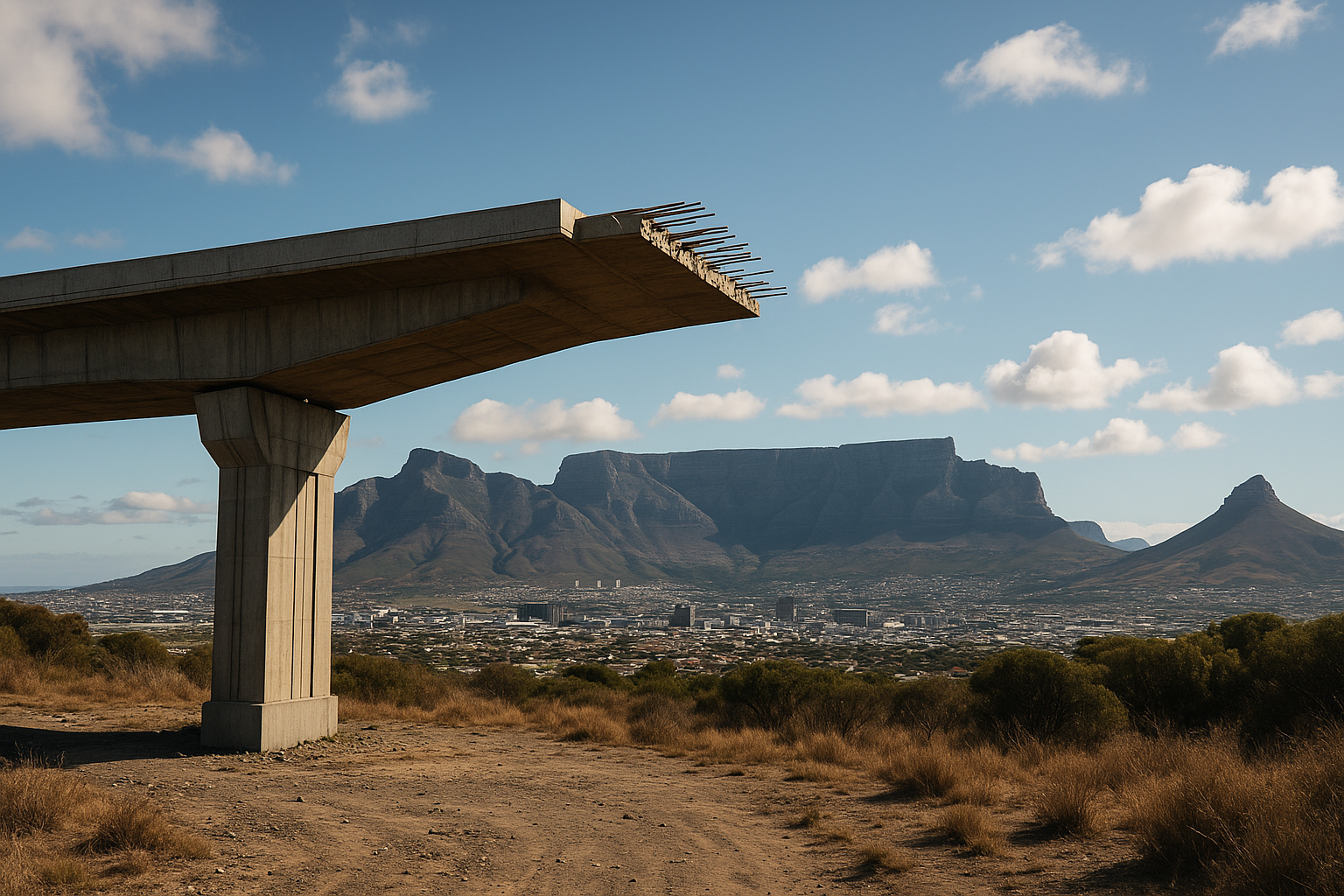
Cape Town's iconic, unfinished Foreshore Freeway Bridge nears a crossroads after 50 years. New designs for completion are due in 2026.
The Foreshore Freeway Bridge in Cape Town has been unfinished for over 50 years, looking like a road that just stops in mid-air. It was left incomplete in 1977 because the city ran out of money. Now, after being a strange landmark and even a cool spot for photos, the city might finally finish it by 2026 to help with traffic. But it will cost a lot of money, and some people wonder if finishing an old road plan is the best idea for the city's future.
Why is Cape Town's Foreshore Freeway Bridge unfinished?
Cape Town's Foreshore Freeway Bridge remains unfinished due to a budget freeze in 1977, following a global oil shock. Construction, intended to link northern suburbs to the CBD, halted abruptly, leaving the double-deck highway incomplete. Despite various proposals, funding challenges have prevented its completion for over five decades.
Get Cape Town news in your inbox
Stay updated with the latest stories from the Mother City.
The Concrete Time-Capsule No One Planned
Drive along Cape Town’s foreshore and you can’t miss it: a double-deck ribbon of pale grey that suddenly stops dead, its guardrails hanging above empty air like a magician’s interrupted trick. Since Gerald Ford sat in the White House and South Africa’s rand still out-muscled the dollar, this stub of freeway has hovered over the city, a daily reminder that big plans sometimes run out of money before they run out of concrete.
The concept was textbook 1970s thinking: keep private cars moving, link the northern suburbs to the CBD, and show the world that the southernmost African metropolis could match Los Angeles or Sydney for elevated expressways. Surveyors pegged the route, piledrivers sunk foundations, and by 1976 the upper deck was taking shape above what had once been tidal flats. Then came 1977, a global oil shock, a jittery treasury, and a sudden budget freeze. Cranes left, site huts were packed up, and the half-born flyover was simply left to weather.
In the years that followed, the structure quietly collected milestones like a concrete diary. It watched apartheid enter its violent twilight, witnessed Nelson Mandela’s first free steps from nearby City Hall, and survived the 1998 Cape floods that turned the lower decks into photographic waterfalls. Through eight national administrations, it has never moved - yet it has never stood still either, because a city can’t help but grow stories around a thing so stubbornly unfinished.
From Civic Blush to Instagram Fame
For the first two decades, City Hall spoke of the bridge only in apologetic tones. Tour guides hurried past it, planners blamed provincial counterparts, and mayoral speeches preferred to highlight new stadiums or waterfront boardwalks. But shame has a half-life; once the blush fades, curiosity creeps in. By the mid-1990s, local musicians were shooting album covers beneath the monumental pillars, using the cantilevered edge as a metaphor for living on the brink.
Photographers came next, then advertising agencies eager for a backdrop that whispered “edgy” without the cliché of graffiti tunnels. The bridge’s brute geometry - raw, unadorned, and gloriously abrupt - proved irresistible. Wedding parties posed beneath it; drone pilots looped through its ribs; rock climbers even bolted temporary routes up the support legs until city officials politely asked them to desist. In a town that markets sunsets and vineyards, the flyover became an unlikely anti-hero, a brutalist counter-weight to all that floral softness.
Online culture accelerated the romance. Hashtags such as #BridgeToNowhere and #CapeTownCliffhanger turned a municipal embarrassment into social-media candy. Foreign visitors began adding the site to self-drive itineraries, parking in the nearby Arts Garage to stroll the pedestrian ramps at golden hour. Tour operators now list it among “free things to do,” and every December newly graduated school-leavers spray-paint congratulatory messages on the lower pylons, confident the city will repaint - yet never demolish - their temporary gallery.
A Mayor Drops a Date: September 2026
Momentum shifted from anecdote to action in early 2024 when Mayor Geordin Hill-Lewis told Kfm radio that technical teams are “working toward September 2026” for the release of detailed completion drawings. That single sentence flipped decades of conversational hypotheticals into a calendar item with a deadline. For the first time since the 1970s, City Hall has attached a year - and a month - to the idea of finishing what it started.
The motivation is bluntly practical: the existing stub disgorges thousands of vehicles straight into congested Strand and Bree Streets, a daily chokepoint that costs commuter hours and freight money. Traffic modelling suggests that extending the decking to join the unfinished section with the outbound M6 could shave eight to twelve minutes off peak-hour trips between the CBD and the Atlantic seaboard, a saving that scales quickly when multiplied by freight tonnage and working-time value.
Yet realism lingers in the mayor’s next breath: “Funding is the major hurdle.” The original 1970s budget would scarcely pay for contemporary environmental-impact studies, never mind high-tensile rebar and seismic dampers. Estimates commissioned in 2022 placed basic completion at R1.9 billion in 2023 rands, a figure that could balloon once specialist geotechnical work begins on reclaimed seabed sediments. Without a national treasury subsidy or long-term bond issuance, the city must juggle competing claims for water-pipe replacement, housing delivery and bus-fleet renewal.
The World’s Family of Unfinished Giants
Cape Town’s aerial cul-de-sac is not an outlier; it is a prominent member of an international fraternity. Berlin’s unfinished Brandenburg Airport rail link, the ghost span of the Suape Bridge in Brazil, and the never-used runway of Nigeria’s Bayelsa International all testify to the same syndrome: bold blueprints colliding with tighter wallets or shifting politics. What distinguishes the Foreshore structure is its downtown visibility and daily utility - motorists still drive its completed ramps, braking only where the road ends and sky begins.
Urbanists increasingly view such infrastructure fossils as evidence that twentieth-century planning worshipped the private car long after economic and environmental logic cried stop. Cape Town’s own Transport Strategy 2030 now prioritises BRT extensions, protected cycle lanes and commuter rail upgrades. Critics therefore ask whether completing a 1970s freeway template aligns with modern climate commitments or simply locks in car dependency for another generation.
Supporters counter that the bridge already exists; the carbon is already poured. Finishing it, they argue, is a form of structural recycling, preventing detours that currently waste fuel and time. Between these positions, the September 2026 proposal will be stress-tested in public meetings, budget hearings and, inevitably, courtrooms where activists may demand fresh environmental authorization.
Whatever the outcome, the city will have to weigh engineering practicality against the intangible asset of urban legendry. Cape Town has lived alongside its elevated cliffhanger for so long that brochures, coffee-table books and even municipal logos have absorbed its silhouette. To complete it is to erase a story the world now associates with the Mother City’s quirky resilience. To leave it hanging is to tolerate daily inefficiency and a perpetual question mark in concrete. By late 2026, residents will discover which narrative - utility or mythology - wins the right to shape the skyline for the next half-century.
[{"question": "
Why is Cape Town's Foreshore Freeway Bridge unfinished?
", "answer": "The Foreshore Freeway Bridge in Cape Town was left unfinished in 1977 due to a budget freeze caused by a global oil shock. The construction, which aimed to connect the northern suburbs to the Central Business District (CBD), halted abruptly, leaving the double-deck highway incomplete. Despite numerous proposals over the decades, funding challenges have prevented its completion for over 50 years."}, {"question": "When was the Foreshore Freeway Bridge supposed to be completed?
", "answer": "The bridge's construction began in the 1970s, with work progressing until 1977. While it was intended to be a fully operational link between the northern suburbs and the CBD, no specific completion date was publicly set before the 1977 budget freeze, which brought all work to a halt."}, {"question": "What is the current status of plans to complete the bridge?
", "answer": "In early 2024, Cape Town Mayor Geordin Hill-Lewis indicated that technical teams are working towards September 2026 for the release of detailed completion drawings. This suggests a renewed push to finish the project, aiming to alleviate traffic congestion in the city."}, {"question": "How much will it cost to complete the Foreshore Freeway Bridge?
", "answer": "Estimates commissioned in 2022 placed the basic completion cost at R1.9 billion in 2023 rands. This figure could increase significantly, especially with specialist geotechnical work required for the reclaimed seabed sediments. Funding remains a major hurdle, with the city needing to secure resources either through national treasury subsidies, long-term bond issuance, or by balancing it against other critical infrastructure projects."}, {"question": "What are the benefits of completing the bridge?
", "answer": "Completing the bridge is primarily aimed at improving traffic flow in Cape Town. Traffic modelling suggests that extending the decking to connect with the outbound M6 could reduce peak-hour travel times between the CBD and the Atlantic seaboard by eight to twelve minutes. This would benefit commuters and freight transport by saving time and fuel."}, {"question": "What are the arguments against completing the bridge?
", "answer": "Critics question whether completing a 1970s freeway design aligns with modern urban planning and climate commitments, which increasingly prioritize public transport, cycling, and pedestrian infrastructure. They argue it might perpetuate car dependency rather than promoting sustainable transport solutions. Additionally, the substantial cost could divert funds from other pressing urban development needs like housing or public transport upgrades."}]
Chloe de Kock is a Cape Town-born journalist who chronicles the city’s evolving food culture, from township braai joints to Constantia vineyards, for the Mail & Guardian and Eat Out. When she’s not interviewing grandmothers about secret bobotie recipes or tracking the impact of drought on winemakers, you’ll find her surfing the mellow breaks at Muizenberg—wetsuit zipped, notebook tucked into her backpack in case the next story floats by.
View all articles →