
Cape Town’s Metrorail overhaul gains national backing
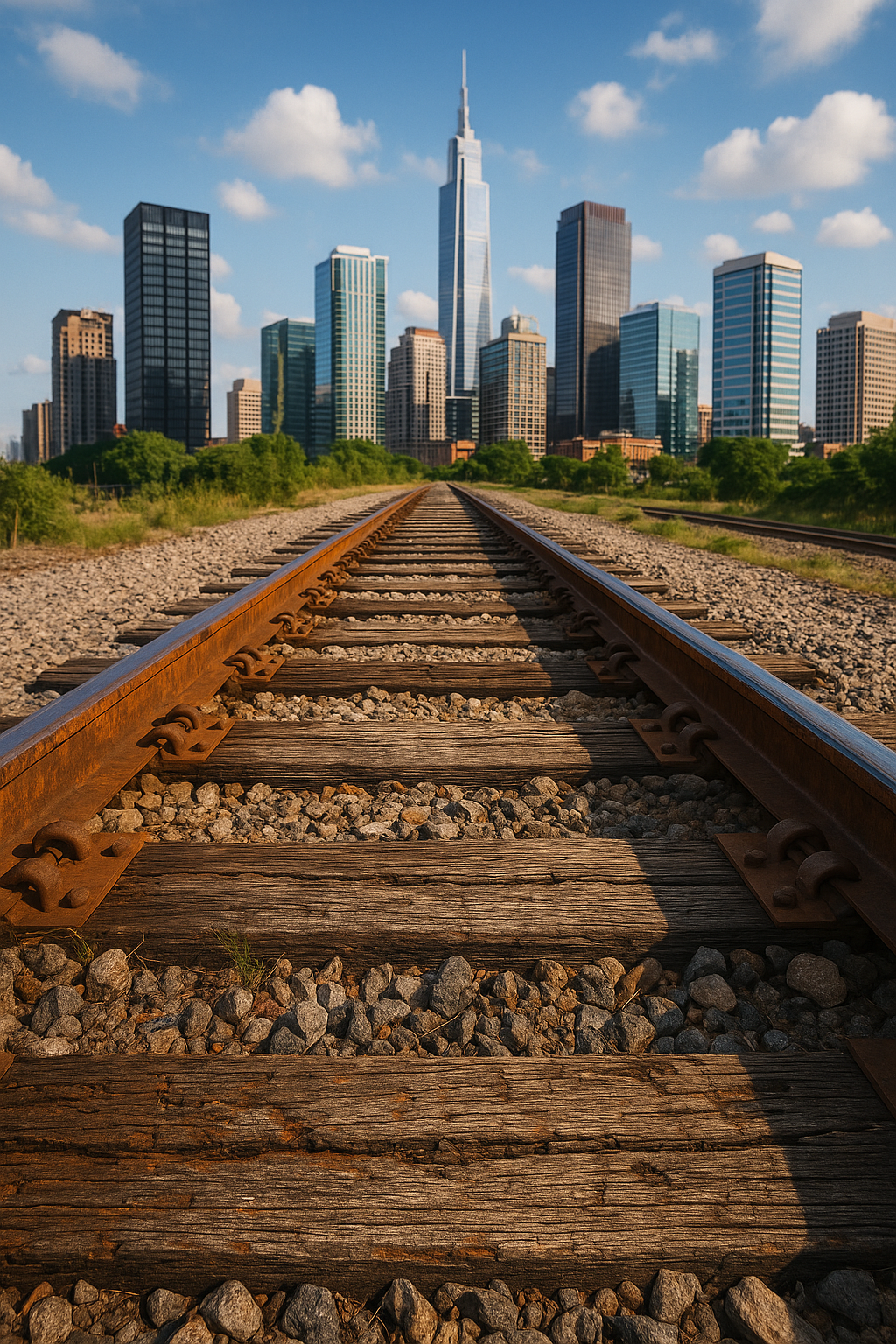
Cape Town's ambitious rail master plan aims to restore its railway system, transforming urban mobility and boosting the city's economy.
Cape Town's old train tracks, once bustling with life, became rusty and quiet. Thieves, fires, and money problems made the city's main travel veins shrivel, leaving many stranded and costing billions. But now, a quiet revolution is chugging along! The city is taking charge, fixing tracks, adding new trains, and even using clever tricks like selling carbon credits and developing land to fund this massive comeback. Soon, sleek trains will zip through the city, connecting communities faster and greener, turning the daily commute into a smooth, affordable ride for everyone!
How is Cape Town reviving its rail network?
Cape Town is reviving its 40-year-old rail network through a multi-faceted approach. This includes rebuilding and repairing infrastructure, devolving operational control to the city, and implementing innovative funding strategies such as leveraging land value and carbon offsets. New trains, modern signaling, and integrated fare systems are also key components of the revitalization.
Get Cape Town news in your inbox
Stay updated with the latest stories from the Mother City.
1. From 600 000 to 120 000: The Unraveling of a City’s Arteries
Steel tracks, pre-cast concrete ties and the faint buzz of 3 kV wires once knitted Cape Town together more reliably than any highway.
In the mid-1980s the Metrorail system carried the same number of people every weekday as a seven-lane freeway running in each direction - yet without the exhaust haze, bumper-to-bumper inertia or today’s R4 500-a-month city-centre parking fee.
Year by year the circuitry was picked apart: copper thieves worked faster than maintenance budgets, carriages were torched, politically-connected security firms vanished when contracts flipped, and Treasury quietly diverted capital to keep Eskom’s lights on.
By 2019 weekday boardings had collapsed to 120 000.
Neighbourhoods such as Khayelitsha, Mitchells Plain and Atlantis found themselves stranded: the taxi fare to town now swallowed a domestic-worker’s daily wage, so people simply stayed home.
UCT economists calculate the city forfeits R3,2-billion in GDP every year just from lost work-hours - before counting extra asthma medication, crash trauma or the 300 000 tonnes of CO₂ belched out by replacement cars.
The draft National Rail Master Plan published on 23 April does not waste ink on nostalgia.
Page one carries a single bullet: push the rail share in the six biggest metros back to 40 % within 25 years.
For Cape Town, stuck at 6 %, the leap looks Olympic, but the spreadsheet says it is doable if three levers move at once: rebuild the assets to “state-of-good-repair” inside a decade, let the city run the trains and keep the farebox, and milk the land along the line to subsidise the poorest two-fifths of riders.
All three levers are now formally on the table.
2. Devolution in Plain Clothes: The Container Cabin That Outsmarted Pretoria
What the 400-page document politely omits is that half the power shift has already happened.
Since October 2022 the morning and afternoon peaks on the Northern and Southern corridors have been dispatched from a repurposed shipping container parked next to the Century City viaduct.
Pretoria still owns the master signal computer, yet mundane calls - how many units to release, when to short-turn a late train - are now taken by municipal engineers.
Punctuality out of the central triangle has climbed from 38 % in late 2022 to 71 % in March 2024, using the same 1970s track and the same battered carriages; the only variable rewritten was accountability.
Commuters noticed quickly.
Morning queues at Mutual station re-appeared, taxi associations complained of a 12 % ridership dip on the Bellville–CBD run, and one February shoot-out between rival taxi ranks was blamed on turf erosion - grim proof that trains were winning passengers back.
National Treasury, ever wary of “loss-of-control” rhetoric, file-noted that devolution did not ignite anarchy; it merely shifted risk closer to where voters could see it.
The master plan now locks in that pilot by birthing the Cape Town Urban Rail Authority (CTURA), a city-owned company that will rent track, stations and depots from Prasa for 30 years.
Prasa keeps long-distance and freight rights; CTURA keeps the farebox, the maintenance bill and the political fallout.
A once-off transition grant of R18-billion over five years - smaller than Gauteng’s annual e-toll shortfall - will be the last direct subsidy; after that the city must balance its own books.
To do so, CTURA has been handed four revenue streams no South African rail agency has ever touched.
First, station-air rights: developers within 500 m of a hub may add three extra storeys if the ground floor offers toilets, lighting and a ticket gate; the levy, 2 % of gross rental, should yield R180-million a year once reliability tops 65 %.
Second, verified carbon offsets: the partial service recovery already prevents 42 000 t of CO₂ annually; priced at the EU spot of €80/t, that is R268-million a year - enough to cap the indigent fare at R5.
Third, fibre and advertising: a 288-core cable runs down every kilometre of servitude; two mobile carriers have signed term sheets at R1,2-million per km per year - more than ticket revenue on some branches.
Fourth, a dormant 1 800-ha Prasa land bank is transferred at book value (R12/m²); re-zoned for transit-oriented densities the portfolio is worth R14-billion on paper, collateral for a R7-billion bond to buy new trains without touching municipal debt limits.
3. New Trains, New Signals, New Stations: Engineering the 180-Minute City
Rolling stock is the obvious bottleneck.
Of 88 sets required, only 39 can roll; the rest donate spare parts in Salt River’s leaky sheds.
Instead of re-opening Prasa’s aborted 2013 Afro4000 tender, CTURA will piggy-back on Gauteng’s freshly inked Alstom-Stadler deal, ordering 120 four-car “X’trapolis Mega” units configured for Cape Town’s 1 600 V DC narrow gauge.
Seventy-percent local assembly will occur at the revived East London plant; the first 20 arrive in 2027, allowing 108 train-sets in service by 2030 - enough for three-minute headways on four core lines.
Three-minute intervals sound utopian until one realises the entire commuter belt - from Somerset West to Dunoon - spans just 90 km, shorter than London’s Central Line.
The choke has never been track capacity but 1958 single-lever signalling.
CTURA will rip out 42 km of interlocking and drop in Siemens Communications-Based Train Control, the same kit that pushes 30 trains per hour per direction on Paris RER A.
Roll-out starts on the Cape Flats spine because it is flat, straight and politically potent: Khayelitsha to Century City in 26 minutes, versus 75 minutes by car on a lucky morning.
Stations themselves are being flipped inside-out.
Forget the 2 000-bay park-and-ride; the city will import the French “Gares & Connexions” model where a hub equals transport interchange, fresh-produce market, rooftop affordable flats and a 24-hour clinic.
Pilot sites are Nyanga (2026), Heathfield (2027) and Maitland (2028).
Nyanga leads because three Metrorail lines and two BRT spurs intersect there, and because gender-based violence peaks after dark.
The new hub will feature motion-triggered lights, 360-degree cameras streamed to a community WhatsApp group, and a crèche open 05:00–21:00 so domestic workers can drop toddlers before the 05:42 departure to Sea Point.
Design charrettes in April used cardboard mock-ups; the most heated debate was turnstile height - women wanted 1,2 m so they could vault if chased, security wanted 1,8 m.
The compromise: 1,4 m with a panic button every 25 m that pops every gate at once.
4. One Card, One Sun, One City: Making the System Ours Again
Fare integration is the sleeper revolution.
Cape Town’s buses have used the “myconnect” smart-card since 2015; Metrorail still prints cardboard tickets on a 1980s dot-matrix.
CTURA will fuse both into “OneCard,” an NFC token that caps daily spend at R35 across every mode and can be topped up at spaza shops via USSD.
Crucially, minibus-taxi operators will be paid for every passenger who transfers to a train at a designated hub, mirroring Bogotá’s TransMilenio.
Early MoUs with Codeta and Cata project a 7 % drop in taxi kilometres on Klipfontein Road within 18 months, freeing tarmac for the protected cycling lane NGOs have demanded since 2014.
Energy costs could have killed the whole dream.
Eskom’s 2024 tariff path makes 1 600 V DC traction unaffordable beyond 2026, so CTURA is tendering a 75 MW solar farm inside the 30 m-wide servitude between Blackheath and Somerset West - enough to run the entire network when the sun shines.
Second-life batteries from Gautrain’s 2012 fleet will give four hours of night-time buffer, slicing peak Eskom demand by 42 %.
Modelling by the city’s climate desk shows the rail network turning net-negative by 2029, generating an extra 280 000 carbon credits - cash that neatly covers the Stadler lease interest.
None of these details appears in tourist brochures; they sit in annexures thick enough to stun a journalist at twenty paces.
Yet the minutiae matter because transport is anthropology, not civil engineering.
A Langa single mother who saves R450 a month on commuting recoups one month of school fees per year; compound that for a decade and her youngest graduates debt-free.
A Philippi spinach farmer who reaches the Epping market in 22 minutes instead of 90 can sell before the leaves wilt, lifting daily profit from R80 to R140 - enough for a second-hand fridge that cuts post-harvest losses and steadies street-food prices.
These micro-narratives never suit policy op-eds, but they explain why 06:30 platforms are already fuller than six months ago and why copper-theft incidents have fallen 28 %: when citizens believe the rails belong to them, they protect them better than any rent-a-cop.
Whether steel wheels will again outnumber tail-lights on the N2 will not be decided in cabinet memos but in the small rituals of daily commuting - queues shortening, card readers beeping, station gates staying open after eight o’clock.
For the first time the hardware, the software and the money point in the same direction; the only remaining variable is the city’s stamina for the slow, unglamorous grind of implementation.
How is Cape Town reviving its rail network?
Cape Town is reviving its 40-year-old rail network through a multi-faceted approach. This includes rebuilding and repairing infrastructure, devolving operational control to the city, and implementing innovative funding strategies such as leveraging land value and carbon offsets. New trains, modern signaling, and integrated fare systems are also key components of the revitalization.
What led to the decline of Cape Town's rail network?
The decline of Cape Town's rail network was a gradual process caused by a combination of factors. These included rampant copper theft, which damaged essential infrastructure, frequent train torching, and mismanagement by politically connected security firms. Additionally, capital originally allocated for rail maintenance was diverted to other state entities, such as Eskom, further exacerbating the problem. This neglect led to a significant drop in ridership, from 600,000 daily commuters in the mid-1980s to just 120,000 by 2019.
How will the new Cape Town Urban Rail Authority (CTURA) be funded?
CTURA will receive a significant once-off transition grant of R18-billion over five years. After this, it will become self-sustaining through innovative revenue streams. These include leveraging "station-air rights" (a levy on developers near stations), verified carbon offsets from reduced CO2 emissions, revenue from fibre optic cables and advertising along the rail servitude, and developing a dormant 1,800-hectare land bank transferred at book value. This land, once re-zoned, will serve as collateral for bonds to purchase new trains, ensuring financial independence.
What improvements can commuters expect in terms of trains and signaling?
Commuters can expect a significant upgrade in rolling stock, with CTURA ordering 120 new four-car "X’trapolis Mega" units, with the first 20 arriving in 2027. These new trains, coupled with the implementation of modern Siemens Communications-Based Train Control signaling (similar to Paris RER A), will allow for three-minute headways on core lines by 2030. This will drastically reduce travel times, for example, making the Khayelitsha to Century City journey 26 minutes instead of 75.
How will fare integration and energy needs be addressed?
Fare integration will be achieved through the "OneCard" NFC token, replacing outdated cardboard tickets. This card will cap daily spend at R35 across all modes and can be topped up easily. Crucially, minibus-taxi operators will be integrated into the system, receiving payment for passengers transferring to trains, similar to Bogotá's TransMilenio. To address energy needs, CTURA is tendering a 75 MW solar farm to power the entire network during the day, supplemented by second-life batteries for night-time operation, aiming for a net-negative carbon footprint by 2029.
What broader societal and economic impacts are expected from the rail revival?
The rail revival is expected to have profound societal and economic impacts. Economically, the city aims to recover R3.2 billion in GDP lost annually due to lost work-hours and reduce CO2 emissions by 300,000 tonnes. Socially, it will offer affordable and reliable transport, saving commuters significant money (e.g., R450 per month for a single mother). Improved connectivity will also benefit local farmers and businesses by reducing transport times and costs, potentially leading to increased profits and a more stable food supply for communities. The increased sense of ownership among citizens is also leading to reduced copper theft, reflecting a restored belief in the system.

Thabo Sebata is a Cape Town-based journalist who covers the intersection of politics and daily life in South Africa's legislative capital, bringing grassroots perspectives to parliamentary reporting from his upbringing in Gugulethu. When not tracking policy shifts or community responses, he finds inspiration hiking Table Mountain's trails and documenting the city's evolving food scene in Khayelitsha and Bo-Kaap. His work has appeared in leading South African publications, where his distinctive voice captures the complexities of a nation rebuilding itself.
View all articles →