
Cape Town’s port performance lags as city calls for urgent reforms
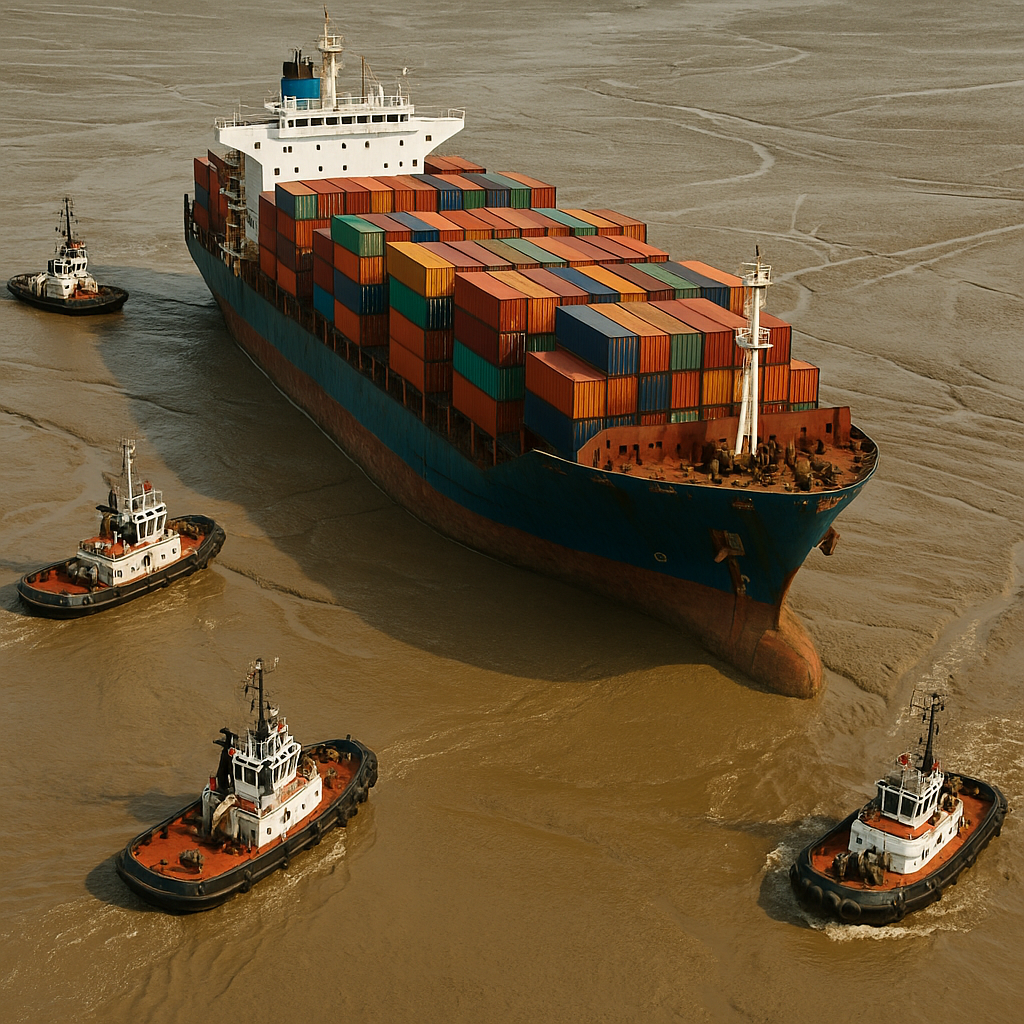
Cape Town's port is failing, ranking 351st globally. Discover its critical issues, economic impact, and a 24-month plan for urgent reform.
Cape Town's port is in big trouble, making ships wait five days instead of two! Imagine a parking lot that's way too full, with broken machines and not enough train tracks. This mess makes everything more expensive for people and costs the area tons of money. If they don't fix it, the port will fall behind, and the whole city will suffer.
What are the main problems plaguing Cape Town's port?
Cape Town's port faces severe congestion, ranking last globally, with ships waiting five days instead of two. Key issues include yard overcapacity (104%), idle gantry cranes (one-third of the time), inefficient rail links, and excessive truck traffic. These problems result in higher import costs and significant economic losses.
Get Cape Town news in your inbox
Stay updated with the latest stories from the Mother City.
1. The Mountain, The Sea, And The Missing 48 Hours
Table Bay looks postcard-perfect: a flat-topped mountain behind, two great ocean currents meeting beyond the breakwater, and a ring of quays that should shuffle more than a million rectangular steel boxes a year.
In theory, a vessel ought to berth, discharge, load and sail within two days.
Reality laughs at the timetable: the global port league table now ranks Cape Town dead last among 351 harbours, with ships kept waiting almost five days.
That single bleak metric turns the port into a clogged artery for every apricot grower, wine exporter and automotive-parts maker west of the Hex River.
The outward view hides a yard bursting at the seams - 104 % of the room it was designed for - and gantry cranes that stand idle one-third of the time because the spare-part warehouse is eight time-zones away.
Add a rail link that carries barely six in every hundred containers and a daily parade of 3 300 diesel trucks that were supposed to top out at 2 800.
Fold those frictions together and even a 15-metre-deep berth capable of hosting 8 000-box ships effectively shrinks to 5 000.
2. What “Slow” Really Costs
Congestion is an invisible surcharge on every household budget.
Importers quietly pay eight-to-twelve percent more to land a pallet here than in Durban, a gap that ultimately pads the national consumer-price index by almost half a percentage point.
Flip the scenario and a simulation run by the provincial treasury says merely reaching the midpoint of global benchmarks would unleash six billion rand in extra exports, create 19 000 year-long jobs and pour 1.6 billion into public coffers annually.
Fresh-fruit packers could swap break-bulk holds for chilled boxes, trimming spoilage by almost a fifth and pocketing premium prices in Europe and the Gulf.
The wider blue-green economy stands to gain as well.
Offshore wind manufacturers at Saldanha could load turbine towers directly instead of trucking them to another port first.
E-commerce warehouses in Montague Gardens and Epping could align sailings with Asia-Pacific loops, carving five to nine days of working capital off every shipment.
Miss the window and those same advantages evaporate, because liner alliances confronting Red Sea detours are re-drawing strings every quarter; once Cape Town is dropped from a loop the omission tends to last five years.
3. The Moving Parts That Never Move
Look inside the terminal fences and you find rubber-tyred gantries broken more often than they run, yard tractors waiting forty-five minutes for the next box, and customs queues that snake six kilometres down the R27.
Each subsystem is stuck in its own molasses: a crane-operator shift thinned by voluntary exit packages, procurement cycles that take longer than the factory lead-time for new hoists, and three separate Transnet divisions that all need to initial a single rail-wagon move.
Stacked reefers occupy three tiers, sealing the lower plugs and leaving the port with only 1 800 reefer points - half the ratio maintained in Rotterdam.
The invisible glue of data is equally scarce.
Dwell time is still tallied weekly from hand-written gate stamps, missing the fifteen percent of boxes that idle in off-dock depots.
A real-time ledger would let every importer see a container the way Amazon traces a parcel, yet governance fragmentation blocks the API ports, fibre backhaul and optical-character gantries already in place.
4. How To Re-Engineer A Gateway
The cheapest upgrade is not steel but software: a digital booking platform that dishes out gate slots by the minute and prices late arrivals out of the queue.
Pilot programmes elsewhere trimmed truck queues by more than a quarter and cut diesel fumes at the same stroke.
Next, revive six kilometres of disused Bellville track to yank two hundred lorries a day off the road and feed the yard by rail instead of diesel.
The bill, four-hundred million rand, costs less than a single new ship-to-shore crane.
Then invite a private operator to take over a contiguous twelve-hundred-metre face of Duncan Dock under a long lease that rewards over-achievement with an extra decade, caps tariff rises at inflation-plus-two, and insists on local-maintenance quotas and climate-resilience plans.
Western Cape already graduates eleven hundred supply-chain analysts a year; bind academia, Transnet and terminal concessionaires into a Port Academy that keeps skills on the crane deck instead of in the classroom.
Ring-fence a slice of the fuel levy, blend green bonds with African Development Bank equity and let exporters pre-buy port credits, and the pipeline is bankable without blowing Pretoria’s sovereign debt ceiling.
Fix the port and you rehabilitate more than a berth: you free the city from truck smog, add four percent to the region’s foreign sales, protect local stores from imported inflation and carve out space on the global map for African produce.
Fail, and the next sailing schedule leaves without you.
[{"question": "What are the main problems plaguing Cape Town's port?", "answer": "Cape Town's port is severely congested, ranking last globally with ships waiting five days instead of the intended two. Key issues include yard overcapacity (104%), one-third of gantry cranes being idle due to spare part shortages, inefficient rail links handling only 6% of containers, and excessive truck traffic (3,300 daily vs. a 2,800 limit). These inefficiencies lead to higher import costs and significant economic losses for the region."}, {"question": "How does the port's inefficiency impact the economy and consumers?", "answer": "The port's inefficiencies act as an 'invisible surcharge' on household budgets. Importers pay 8-12% more to land goods in Cape Town compared to Durban, contributing almost half a percentage point to the national consumer price index. A provincial treasury simulation suggests that merely reaching global benchmarks could generate R6 billion in extra exports, create 19,000 year-long jobs, and add R1.6 billion annually to public coffers. Conversely, failure to improve could lead to Cape Town being dropped from crucial shipping routes for extended periods."}, {"question": "What are the operational challenges within the port terminal?", "answer": "Inside the terminal, operational challenges include frequently broken rubber-tyred gantries, yard tractors experiencing long waits for containers, and customs queues extending for six kilometers. Other issues involve a shortage of crane operators due to voluntary exit packages, slow procurement cycles for new equipment, and bureaucratic hurdles requiring approval from three separate Transnet divisions for a single rail-wagon move. Furthermore, stacked refrigerated containers (reefers) limit available power points to only 1,800, half the ratio in Rotterdam."}, {"question": "How does a lack of data and digital tools contribute to the port's problems?", "answer": "The port suffers from a scarcity of real-time data and digital integration. Dwell time is still tracked weekly using handwritten gate stamps, missing 15% of containers idling in off-dock depots. While infrastructure like API ports, fiber backhaul, and optical-character gantries exist, 'governance fragmentation' prevents the implementation of a real-time ledger that would allow importers to track containers like parcels, similar to how Amazon operates."}, {"question": "What are the proposed solutions to re-engineer Cape Town's port?", "answer": "Proposed solutions include implementing a digital booking platform for gate slots to reduce truck queues and emissions, and reviving six kilometers of disused Bellville track to shift 200 lorries daily to rail, costing less than a new crane. Additionally, inviting a private operator for a long lease on a section of Duncan Dock, with incentives for over-achievement and requirements for local maintenance and climate resilience, is suggested. Establishing a Port Academy to retain skilled workers and securing funding through fuel levies, green bonds, and pre-purchased port credits are also key."}, {"question": "What are the broader benefits of fixing Cape Town's port?", "answer": "Fixing the port would offer numerous benefits beyond improved logistics. It would free the city from truck smog, boost the region's foreign sales by four percent, protect local stores from imported inflation, and enhance Cape Town's position on the global map for African produce. Conversely, failure to address these issues risks the port being excluded from future shipping schedules, leading to significant economic detriment for the city and region."}]

Oliver Daniels is a Cape Town journalist who chronicles the intersection of food, migration and identity in South Africa's kitchens—from wood-fired Gugulethu braai spots to Constantia vineyards. Born and raised on the slopes of Devil’s Peak, he still starts each week with a dawn walk across Table Mountain to catch the first Atlantic light before filing copy.
View all articles →