
Cape Town’s push for policing powers gets backing from top SAPS official
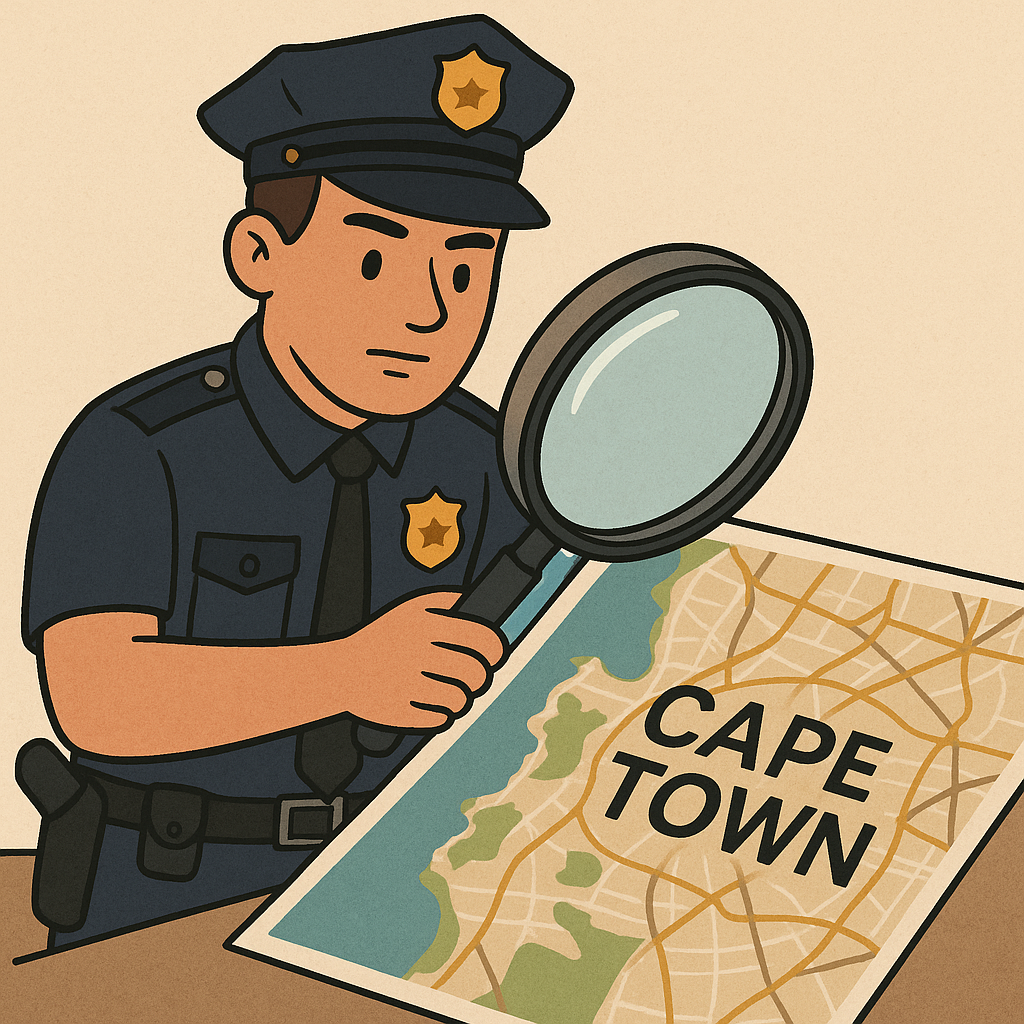
Cape Town's Metro Police could get expanded powers to combat crime. Learn about the city's plan, challenges, and potential impact.
Cape Town's Metro Police want bigger powers like solving crimes and collecting evidence. This is because there aren't enough national police detectives, and too many bad guys get away, especially with gun crimes. If Metro Police can do more, they hope to catch more criminals and make the city safer. They're looking at special training and new systems to make this happen, even though there are legal and political hurdles to jump.
What additional powers does Cape Town's Metro Police seek, and why?
Cape Town's Metro Police seek expanded detective powers, including launching case files, gathering forensic proof, and interviewing complainants. This is driven by dangerously low SAPS detective numbers, rising organised-crime killings, and low conviction rates for firearm possession, aiming to improve crime investigation and prosecution within the city.
Get Cape Town news in your inbox
Stay updated with the latest stories from the Mother City.
The Spark That Lit the Debate
On a chilly afternoon in early May 2024, Lieutenant-General Thembisile Patekile - head of the Western Cape SAPS - sat across from News24’s crime reporters and uttered the sentence every municipal official had waited years to hear: “Some duties can, in fact, be handed over.” The unnamed group was Cape Town’s Metro Police; the duties were squarely detective-level, including launching case files, gathering forensic proof, interviewing complainants and turning the entire package over to the National Prosecuting Authority.
Within moments Mayor Geordin Hill-Lewis posted a 37-second clip on X - sunlight slicing through blinds onto a map of gang-plagued precincts - declaring, “This is the breakthrough we’ve demanded.” Inside the Civic Centre, WhatsApp groups exploded with gifs of Metro cops trading traffic wands for Sherlock-style magnifying glasses.
The endorsement is grounded in brutal realities: SAPS detective numbers remain dangerously low, organised-crime killings keep climbing (2 998 murders in 2023 alone) and the conviction rate for unlawful firearm possession is, in the mayor’s words, “practically nil.” By signalling a willingness to share investigative turf, Patekile - historically wary of jurisdictional leakage - offered an olive branch few saw coming.
What Metro Cops Can (and Cannot) Do Today
Cape Town’s Metropolitan Police were born in the 1995 SAPS Act and still live under Section 64E of the Criminal Procedure Act. Their official toolbox looks like this: enforce traffic law, police city bylaws (from noise to street trading), run visible patrols, arrest suspects caught red-handed in schedule-one crimes, and confiscate guns or narcotics encountered on duty.
Equally important is what’s missing. They cannot create a docket, pursue follow-up enquiries or launch prosecutions. Once a firearm is bagged and a suspect cuffed, the entire bundle is driven to the nearest SAPS counter. In Bishop Lavis or Philippi East that hand-off routinely ends with lost files, witnesses terrorised before statements are taken and the same pistol surfacing weeks later.
Metro officers cynically summarise their day as “pick up, drop off, repeat.” The mayor’s office maintains “The Carousel,” a spreadsheet that tracks each seized firearm, its serial number and court outcome. Over the last five years the conviction rate stands at five per cent - putrid when compared with the 62 per cent success rate seen in drunk-driving cases handled entirely in municipal court.
Why the Province Is Willing to Bend
Resource maths makes the offer almost inevitable. South Africa averages one officer for every 413 citizens; the Western Cape scrapes by on one for 560. Patekile commands 7 258 detectives for 7.2 million people, while the UN recommends one detective per 220 residents. Under the National Development Plan the country should add 54 000 officers by 2030; Treasury’s mid-year adjustment funded barely 1 400 trainees nationwide, of whom only 112 are ticketed for the Western Cape.
During a closed management session Patekile told his team, “We can either outsource or drown.” Delegating non-specialist work to better-resourced municipalities has become the least painful escape hatch. Politically, the optics help him as well. Gang-linked acquittals regularly humiliate SAPS at national level; leaked Hawks numbers from March revealed 82 per cent of AK-47s seized from the 28s gang arrived at court with no usable chain-of-custody paper trail. Letting Metro own the first 48 hours of evidence handling reduces SAPS exposure yet still yields prosecutions.
The Mayor’s Blueprint: “Gradual, Court-Proof”
City Hall has circulated a three-stage plan titled “Gradual, Court-Proof.” The details:
Step One – Evidence Stewards (six to twelve months)
At ten gang-crime “heat stations,” Metro constables would take an oath as Section 204 peace officers, allowing them to record witness statements, draw photo plans and ferry exhibits to SAPS labs under strict custody rules. Each officer must finish a ten-day detective conversion course at the Faure Public Safety Training College, adapted from the FBI’s own syllabus.
Step Two – Docket Control (one to two years)
The Minister of Police would gazette a SAPS Act schedule empowering the mayor - after provincial concurrence - to designate Metro detectives as “authorised officers” for firearm, ammo or drug cases. Metro would own the dockets but a joint oversight board would review every file every 21 days to guard against political abuse.
Step Three – Prosecutor Integration (two to three years)
The NPA would second two prosecutors to Metro HQ for vertical prosecution, echoing New York’s model for organised-crime cases. R28 million is already pencilled into the 2025/26 draft budget for an e-Docket system that talks seamlessly with NPA software.
Global Examples, Local Roadblocks
Municipal forces investigating serious crime is far from radical. New York’s NYPD, London’s Met, and Los Angeles’ LAPD all overlap with state or national agencies. Closer to home, Medellín and Cali pioneered “metropolitan police” hybrids in 2016, folding traffic and bylaws staff into one command that tackles homicide forensics and environmental offences. Medellín’s murder rate slid from 19.8 to 6.8 per 100 000 between 2016 and 2023, while conviction rates for gun-and-drugs cases doubled.
South Africa’s Constitution, however, is less forgiving. Section 205(3) decrees that “national legislation must establish the powers and functions of the police service.”’ Johannesburg’s long-promised “JMPD detectives” remain shelved for this reason; any shift must start in Parliament, not a provincial gazette. Cape Town’s lawyers are therefore pushing for an amendment via the Criminal and Related Matters Amendment Bill already on the late-2024 parliamentary calendar.
Training Ground Zero
At Faure, once a windswept vineyard east of Khayelitsha, the city has flipped a 1970s tractor shed into a 200-seat Crime Scene Simulation Hub. Recruits in navy boiler suits dust confiscated 9 mm pistols under the eye of retired SAPS Colonel Piet Burger, a 34-year ballistics veteran. Every learner must execute a full chain-of-custody drill - from heat-sealing evidence bags to barcode logging - under HD cameras meant to pre-empt courtroom scepticism.
Mock cross-examinations scripted by ex-NPA regional head Advocate Susan Dukada have become the course climax. “If you can’t survive 45 minutes of Craig Webster,” she warns, naming Cape Town’s feared firearms defence counsel, “you have no business holding a docket.” Pass marks for the evidence module have been set at 85 per cent, well above SAPS’s own 70 per cent bar.
Townships Watch with Hope and History
In Gugulethu, site of 73 murders last year, the Nyanga Community Policing Forum hosted two packed meetings this month. Chair Lindela Mashumi describes generational split: “Elders remember apartheid-era municipal cops as bulldozer men; youngsters just want the gunfire to stop.” To bridge the divide, Metro is piloting open-door sessions where residents watch seized firearms being logged. The first drew 147 people queuing to photograph serial numbers.
Meanwhile the Mitchells Plain United Residents’ Association has launched a petition demanding that any new detectives reflect the area’s 90 per cent coloured majority, fearing “outsider policing.” City recruitment data show 42 per cent of the latest intake already comes from Mitchells Plain, Elsies River and Manenberg high schools.
National Hurdles in Pretoria
Western Cape ministers happily tweet pictures of cadets at Faure, but national politics remain thorny. The Police and Prisons Civil Rights Union (POPCRU) warns of “creeping privatisation,’ arguing that Cape Town’s per-officer budget (R225 000 vs SAPS’s R142 000) will siphon talent. COSATU has filed a Nedlac objection, demanding a national salary adjustment so SAPS members are not “downgraded by stealth.”
ANC Chief Whip Pemmy Majodina says the party “has no philosophical objection to metro evolution,” yet insists on a single national framework rather than a Western Cape carve-out. That stance likely freezes Cape Town’s plan until after the 2026 local elections.
Money, and Where It Will Come From
Cape Town’s safety and security budget already stands at R5.3 billion for 2024/25, almost double Johannesburg’s R2.8 billion. The proposed expansion needs R120 million next year for detective training, another R75 million for an upgraded digital forensics lab, and about R30 million yearly to insure officers against civil claims once they testify.
Treasury officials whisper that any new transfer must be offset elsewhere. One option is to outsource traffic-fine collection, freeing administrative staff for detective support. Another is a “safety surcharge” on alcohol licence renewals, permitted under the City’s 2018 outdoor-advertising by-law. The liquor lobby threatens court action, citing double taxation.
Sensors, Servers and Sceptics
Cape Town already runs the southern hemisphere’s densest network of acoustic gunshot sensors: 652 nodes spanning 250 km² of gang corridors, pinging a Goodwood control room in real time. Ex-NYPD commissioner Bill Bratton, invited to audit the system, called it “world-class hardware in search of investigative software.”
Metro now wants to pipe sensor feeds straight into the NPA’s Caselines app, letting prosecutors animate heat-maps for juries. Early pilots show a 37 per cent faster court path when Metro curates the digital bundle instead of SAPS couriering it by hand.
Privacy advocates are unimpressed. The Legal Resources Centre has filed a PAIA request asking how long raw audio - possibly capturing private speech - is retained. The mayor’s office insists microphones filter out sounds below 2 kHz and therefore “cannot capture speech,” but outside acousticians remain doubtful.
Two Lawsuits That Could Change Everything
Western Cape High Court is now host to two pivotal cases.
City of Cape Town v Minister of Police (Case 2453/24) asks the court to confirm that Section 205(3) of the Constitution does not bar the Minister from letting municipal police open dockets “under clear safeguards.” Hearings are set for October; Advocate Wim Trengove SC leads for the city, while the Minister fields State Attorney counsel who argue only SAPS members can be Criminal Procedure Act “peace officers.”
Gun Free South Africa v City of Cape Town (Case 3122/24) claims any Metro detective who opens an illegal-firearm file without using the official SAPS 551 form would breach the Firearms Control Act. The city retorts that it has already digitised the SAPS 551 inside its e-Docket system. Judgement is reserved.
A Night on the Ground: Rehearsal for the New Regime
In Manenberg, shortly before midnight, Metro constables Sipho Mthembu and Charne Adams stop a white Toyota Avanza and fish out a CZ 75 pistol from beneath the driver’s seat. Every move is being watched as a dress rehearsal. Instead of calling SAPS to collect the exhibit, Mthembu dons purple nitrile gloves, seals the weapon in a tamper-proof pouch, scans the barcode into a rugged tablet and hands the driver a printed receipt. Adams simultaneously uploads body-cam footage to a secure cloud.
At Philippi East charge office SAPS Captain Lindiwe Booi logs in and finds an electronic docket already titled “Metro-initiated.” She has 21 days to add supplementary statements; miss that window and the oversight board triggers alerts to provincial SAPS and the Metro Detective Chief. At dawn prosecutor Samantha April sees the case on her Caselines dashboard. “Last year that pistol would have sat in a cardboard box for six weeks before anyone asked for a decision,” she says. By 14:00 the driver - an alleged 22-year-old Hard Livings affiliate - faces court; GPS and shot-spotter data anchor the bail opposition.
Counting Convictions: From 400 Seized Guns to 4 Court Wins
City analysts ran 10 000 Monte Carlo simulations under different assumptions. If Metro preserves evidence integrity, links ballistic matches and secures at least one cooperative witness, illegal-firearm convictions could climb from 5 % to 34 % within three annual cycles. That represents roughly 140 extra convictions per year, removing an estimated 600 repeat shooters based on historic re-offence figures.
The same model warns that without proper witness-protection money the gain collapses to 8 %. Investigative muscle without social armour merely redistributes risk instead of reducing it.
What additional powers does Cape Town's Metro Police seek, and why?
Cape Town's Metro Police seek expanded detective powers, including launching case files, gathering forensic proof, and interviewing complainants. This is driven by dangerously low SAPS detective numbers, rising organised-crime killings, and low conviction rates for firearm possession, aiming to improve crime investigation and prosecution within the city.
What are the current limitations of Cape Town's Metro Police powers?
Currently, Cape Town's Metro Police can enforce traffic law, police city bylaws, run visible patrols, arrest suspects caught red-handed in Schedule One crimes, and confiscate guns or narcotics encountered on duty. However, they cannot create dockets, conduct follow-up inquiries, or launch prosecutions; once evidence is collected, it must be handed over to SAPS.
Why is the Western Cape SAPS now willing to consider delegating powers to Metro Police?
The Western Cape SAPS, specifically Lieutenant-General Thembisile Patekile, is willing to consider delegating powers due to severe resource constraints, including a critical shortage of detectives (one officer for every 560 citizens compared to a UN recommendation of one per 220). This delegation is viewed as a necessary 'outsourcing' to avoid being overwhelmed by crime, especially given the high number of gang-related acquittals and poor chain-of-custody handling by SAPS.
What is Cape Town's three-stage plan for expanding Metro Police powers?
Cape Town's 'Gradual, Court-Proof' plan involves three stages: Evidence Stewards (6-12 months), where Metro constables become Section 204 peace officers to record witness statements and handle exhibits; Docket Control (1-2 years), where the Minister of Police designates Metro detectives as 'authorised officers' for specific cases, allowing them to own dockets; and Prosecutor Integration (2-3 years), where the NPA seconds prosecutors to Metro HQ for vertical prosecution, supported by an e-Docket system.
What legal and political challenges does Cape Town face in expanding Metro Police powers?
Legally, Section 205(3) of the Constitution mandates that

Liam Fortuin is a Cape Town journalist whose reporting on the city’s evolving food culture—from township kitchens to wine-land farms—captures the flavours and stories of South Africa’s many kitchens. Raised in Bo-Kaap, he still starts Saturday mornings hunting koesisters at family stalls on Wale Street, a ritual that feeds both his palate and his notebook.
View all articles →