
Cape Winelands Airport clears major hurdle as appeals are thrown out
Explore how the Cape Winelands Airport project overcame 8 years of challenges, red tape, and appeals to become a reality.
After eight years of waiting, the Western Cape finally got the green light for its second big airport! This new airport, Cape Winelands, will be a game-changer, bringing tons of jobs and aiming for zero emissions. Imagine giant planes landing where farms used to be, connecting the region to the world. It's a huge step forward, promising a bright future for everyone.
What is the Cape Winelands Airport?
The Cape Winelands Airport is a new commercial airport in the Western Cape, South Africa, approved in May 2026 after eight years of planning. Located between Klipheuwel and Klapmuts, it will feature a 4 200m runway, a logistics precinct, and aims for net-zero emissions by 2035, creating thousands of jobs.
Get Cape Town news in your inbox
Stay updated with the latest stories from the Mother City.
The Notice That Broke Eight Years of Limbo
A quiet Monday morning in May 2026 cracked open a new chapter for the Cape Winelands when Provincial Gazette 4872 printed a single, understated paragraph. Environmental Affairs Minister Anton Bredell signed Order 34/2026, wiping every remaining objection off the table for the planned Cape Winelands Airport. Fewer than sixty words inside a routine bulletin did what fleets of lawyers had failed to do for almost a decade: end the stand-off.
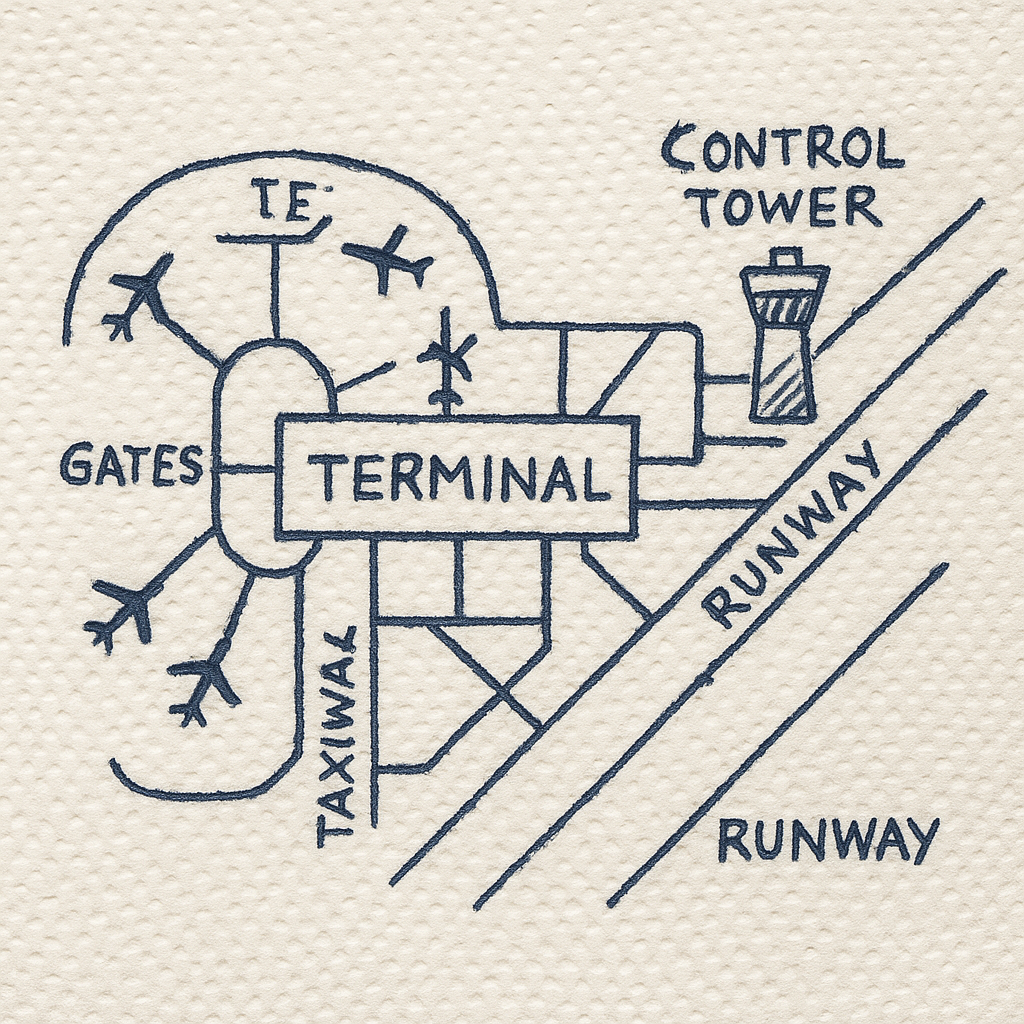
The signature arrived eight years after Deon Cloete - former air-force pilot turned entrepreneur - scribbled the first sketch of the airfield on a Stellenbosch wine-estate napkin. Since that afternoon in 2018 the idea had gathered thick folders of impact studies, appeals and parliamentary queries. Now, with the final bureaucratic padlock lifted, financiers, farmers, flight crews and nearby residents all know the concept is genuinely leaving the drawing board.
From Sketch to Signature: A Timeline No One Could Rush
Quiet Beginnings and a Very Loud Pandemic
Between 2008 and 2017 the notion of a second commercial airport for Cape Town flickered only in provincial logistics documents. ACSA’s expansion of Cape Town International shelved any urgency. In the third quarter of 2018 RSA Aero, the private consortium led by Cloete, quietly purchased 2 850 hectares of disused grain and sheep farms between Klipheuwel and Klapmuts for roughly R930 million. A low-key pre-application meeting with the Department of Environmental Affairs in July 2019 triggered what would become the longest single-phase aviation EIA in South African history.
COVID-19 did not spare the paperwork. While passenger numbers crashed, specialists logged 48 000 hours of bird observations, drilled 190 soil cores and collected seventeen seasonal groundwater samples. Four rounds of public engagement unfolded on Zoom and WhatsApp voice notes as lockdown rules shifted overnight.
Approvals, Objections and the Final Gavel
October 2025 produced the Record of Decision: authorisation for a Category 1 airport with a 4 200 m runway able to accept next-generation wide-body aircraft, plus a 200 hectare logistics precinct. Six formal appeals, fourteen friend-of-the-court briefs, one hastily withdrawn Garden Cities submission and two provincial legislature motions later, the file landed on Minister Bredell’s desk. Four months later he closed the book.
Anatomy of the 2 850 Hectare Site
Land, Water and Wind
The property straddles a gentle saddle below the Drakenstein range. Natural drainage feeds the Krom River, and three seasonal wetlands act as ecological sponges. Grain fields cover more than half the surface, irrigated vines another twelve percent. Poultry layer units, fallow plots and scattered homesteads fill in the rest; invasive plants still claim five percent.
Runway 09/27 lines up with the prevailing south-easter, keeping climb and descent corridors over vineyards rather than the expanding Durbanville suburbs. That geometry alone removed one potential political flash-point.
What Worried the Neighbours
Six appeals captured every major fear:
- Klipheuwel Poultry Consortium - engine noise raising cortisol in hens, soft shells and a six percent drop in yield.
- Stellenbosch University BirdLab - blue-crane collision risk.
- Drakenstein Ratepayers Forum - 19 000 additional daily car trips on the already-congested R44.
- Western Cape Gliding Club - winch-launched gliders squeezed out.
- Agri-Western Cape - jet blast and kerosene vapours tainting grapes at véraison.
- Aberfeldy Farm - R75 million free-range broiler expansion sterilised by height-restriction overlays.
How Developers Turned Obstacles into Specifications
Noise, Birds and Bottlenecks
Acousticians predict 48 dB Lden contours barely touching the nearest farmhouse. Live noise meters will stream data to an open dashboard. Scheduled flights stop between 23:30 and 04:30 except for state or medical aircraft. A five-year adaptive-management plan, co-financed with Stellenbosch University, will run radar-assisted bird tracking and keep grass strips at 150 mm - unattractive to waders and raptors alike.
Traffic engineers will spend R1.2 billion up-front: eleven kilometres of widened R44, a new Klapmuts interchange, BRT-ready median and cycle lanes. Weekend glider operations move 800 m south to a disused polo field, protected by a NOTAM-defined 3 km exclusion cylinder.
Wine, Chickens and Hard Numbers
Chilean data shows negligible anthocyanin impact past 500 m from runway edges; wind-tunnel smoke tests during harvest will verify. A 147 hectare buffer south of the strip, part buy-out and part height easement, compensates Aberfeldy Farm via a 20-year discounted cash-flow model.
Financing and Building the Skyport
Money From Every Pocket
- Debt: Standard Bank heads a R6.1 billion green-bond syndication tied to ICAO’s carbon programme.
- Equity: RSA Aero 35 %, Old Mutual Infrastructure 15 %, Sanlam Life 10 %, Klapmuts Communal Property Association 5 %, Stellenbosch University Endowment 5 %.
- Grants: R400 million from the EU–SA Green Economy Facility for 32 MW solar and a 44 MWh lithium-iron-phosphate micro-grid.
- Concessions: 30-year fuel farm to Astron Energy, 25-year duty-free retail to Dufry.
Jobs, Skills and Long-Term Careers
Construction will employ 9 200 full-time equivalents across piling, asphalt, electrical and runway-lighting crews. Once the doors open the tally climbs to 14 800 direct jobs and 28 600 indirect posts in logistics, hospitality and agri-tech spin-offs. False Bay TVET College secures a 20-seat aircraft-maintenance apprenticeship from 2027 onward.
A Climate-Smart Aerotropolis Takes Shape
Carbon, Water and Data
Warm-mix asphalt with 30 % recycled tyre rubber will drop surface temperature by three degrees, reducing tyre-burst risk. The terminal’s façade sandwiches locally quarried quartzite around phase-change salts, cutting HVAC demand almost a fifth. A closed-loop water system will polish runway runoff through biochar and reuse 78 % for toilets and dust suppression.
Net-zero Scope 1 and 2 emissions are promised by 2035 through on-site solar, sustainable-aviation-fuel blending mandates and mangrove-restoration credits in the Berg Estuary. A private 5G grid will power augmented-reality wayfinding and AI baggage-sortation that trims transfer times to under 25 minutes.
Community Dividends Carved in Granite
Every departing traveller will pay a 0.5 % levy into the “Winelands Futures Trust,” overseen half by community representatives and half by airport directors. The carved 3-tonne granite slab in the departure hall lists the beneficiaries in English, Afrikaans and isiXhosa: early childhood education, smallholder extension, aviation scholarships, wetland restoration and heritage preservation.
What Still Needs to Happen, and Voices on the Ground
Countdown to First Landing
July 2026 should deliver the township-establishment record of decision. SACAA certification will then run 280 days of runway-strength tests, calibration flights and emergency drills. Mark the calendar: 17 September 2029, Heritage Day week, for the first ceremonial landing - an Airbus A321neo chartered by Lufthansa running on sustainable fuel.
Stories Already Taking Off
- Mariaan Jantjies, third-generation chicken farmer: “The 65-cent-per-bird levy isn’t retirement money, but it proves they’re listening.”
- Thabo Nodada, avionics student: “Next week I wire the landing lights I once saw from the highway.”
- Clara Manuel, Klapmuts cooperative chair: “From roadside grapes to airline snack trays - five tonnes of dried fruit a month is the opening order.”
Wine Route 2.0 now sells 15-minute “taxi-time” helicopter hops to vineyard helipads; 4 000 slots vanished in 11 minutes. Lightstone reports Klipheuwel smallholdings up 34 % since the ROD release, while larger farms dipped 8 % amid hospitality speculation. Rooibos growers are piloting pallet-sized cold rooms to reach Frankfurt and Dubai without the 120 km haul to Cape Town International.
Every final Friday of the month the runways will go dark after 21:00, giving astronomers and photographers the Southern Cross unfiltered. A petition for “Dark Sky Fridays” already carries 12 000 names - proof the project has already taken flight in the region’s collective imagination.
[{"question": "
What is the Cape Winelands Airport?\n
\nThe Cape Winelands Airport is a new commercial airport in the Western Cape, South Africa. It was approved in May 2026 after eight years of planning and is located between Klipheuwel and Klapmuts. It will feature a 4,200-meter runway, a logistics precinct, and aims for net-zero emissions by 2035, creating thousands of jobs.
\n","answer": ""},{"question": "When was the Cape Winelands Airport approved and by whom?\n
\nThe Cape Winelands Airport received its final approval in May 2026. The Environmental Affairs Minister Anton Bredell signed Order 34/2026, which removed all remaining objections to the project. This marked the end of an eight-year planning and approval process.
\n","answer": ""},{"question": "What are the environmental goals of the Cape Winelands Airport?\n
\nThe Cape Winelands Airport is committed to environmental sustainability, aiming for net-zero Scope 1 and 2 emissions by 2035. This will be achieved through on-site solar power generation, mandates for sustainable aviation fuel blending, and mangrove-restoration credits in the Berg Estuary. The airport will also use warm-mix asphalt with recycled tyre rubber, a terminal façade with phase-change salts to reduce HVAC demand, and a closed-loop water system that reuses 78% of treated runoff.
\n","answer": ""},{"question": "How will the Cape Winelands Airport impact local employment and the economy?\n
\nThe airport is projected to significantly boost employment, creating 9,200 full-time equivalent jobs during construction. Once operational, it will support 14,800 direct jobs and 28,600 indirect jobs in logistics, hospitality, and agri-tech. There will also be a 0.5% levy on every departing traveler, contributing to the \"Winelands Futures Trust\" for local community initiatives like early childhood education, scholarships, and wetland restoration.
\n","answer": ""},{"question": "What measures are being taken to address concerns raised by local communities and stakeholders?\n
\nDevelopers have addressed various concerns: noise prediction models show minimal impact on farmhouses, with live noise meters and quiet hours. A five-year adaptive-management plan will track birds to mitigate collision risk. Traffic engineers are investing R1.2 billion in road infrastructure. A 147-hectare buffer compensates Aberfeldy Farm, and wind-tunnel tests will verify the impact of jet blast on vineyards. A 65-cent-per-bird levy will be paid to poultry farmers as compensation.
\n","answer": ""},{"question": "When is the first landing expected at the Cape Winelands Airport?\n
\nThe first ceremonial landing at the Cape Winelands Airport is scheduled for September 17, 2029, coinciding with Heritage Day week. This will be an Airbus A321neo chartered by Lufthansa, operating on sustainable fuel. Before this, SACAA certification will involve 280 days of tests and drills following the township-establishment record of decision in July 2026.
\n","answer": ""}]
Thabo Sebata is a Cape Town-based journalist who covers the intersection of politics and daily life in South Africa's legislative capital, bringing grassroots perspectives to parliamentary reporting from his upbringing in Gugulethu. When not tracking policy shifts or community responses, he finds inspiration hiking Table Mountain's trails and documenting the city's evolving food scene in Khayelitsha and Bo-Kaap. His work has appeared in leading South African publications, where his distinctive voice captures the complexities of a nation rebuilding itself.
View all articles →