
Cashless taxi payments coming to Cape Town taxis in June
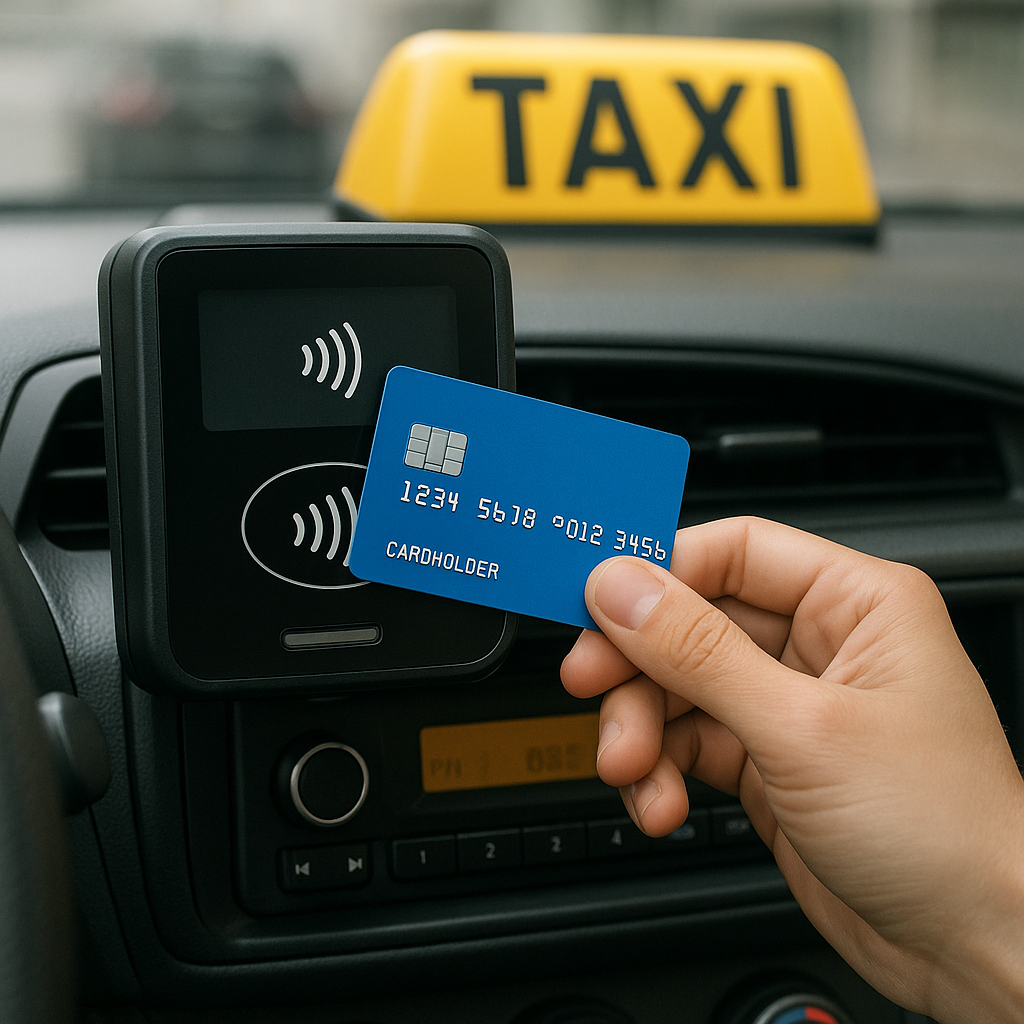
Cape Town's minibus taxis are going cashless! Discover how Codeta's new tap-and-go system aims to boost safety and efficiency.
Cape Town's taxi world is buzzing with a huge change! Soon, you'll ditch cash and just tap a "Codeta Go" card to pay for your ride. This cool new card, which also works with your phone, means safer, cheaper trips and less fuss for everyone. It's a big step into the future, making travel smoother and smarter for thousands of people every day.
What is the "Codeta Go" card?
The "Codeta Go" card is a new cashless payment system for Cape Town's minibus taxis, launched by the Cape Organisation for the Democratic Taxi Association (Codeta). It's a MIFARE DESFire EV3 chip card that also integrates with Apple or Google wallets, powered by Yoco's enterprise gateway. It aims to replace cash fares, offering lower prices and enhanced security.
Get Cape Town news in your inbox
Stay updated with the latest stories from the Mother City.
The Dawn of Cash-Free Journeys in the Mother City’s Backbone Transport
June 1 marks a turning point for the Western Cape’s commuter arteries: the Cape Organisation for the Democratic Taxi Association (Codeta) will flick the switch on the largest cashless fare trial the city has ever seen. Every weekday roughly three million trips are made by minibus taxi, and from next month the coins, folded notes and shouted confirmations that have ruled the 16-seat Toyota Quantums since the early 1980s will begin to disappear. On more than thirty routes - stretching from Khayelitsha, Nyanga and Philippi to Bellville, Claremont and the CBD - passengers will touch a small plastic card to a dashboard reader and hear an approving beep instead of feeling coins pass down the aisle.
The card has been christened Codeta Go. It is a MIFARE DESFire EV3 chip inside a wafer-thin PVC card that also slots into Apple or Google wallets. Yoco’s enterprise gateway powers every transaction; a six-month pilot on the Bellville-Khayelitsha corridor achieved 99.3 % uptime during the 07:00–08:00 crush load. Riders can top up at spaza shops flying a yellow Go Kiosk sticker, at Pick n Pay or Shoprite tills, or via USSD from any feature phone. The smallest reload is R10, the maximum balance is R1 000, and prices are deliberately lower than today’s cash fares: 0–5 km drops to R9.50, 5–15 km to R11, 15–25 km to R13.50 and long cross-peninsula runs cap at R18, shaving about forty cents off each ride to speed up adoption.
Drivers were shown the system in small groups; owners watched a live dashboard where every swipe appeared in under half a second. A green light and the quick beep replace the metallic chorus that drivers have endured for decades. “We will never again count sweaty banknotes while dodging traffic,” one owner joked during training. The switch is not cosmetic - it is a complete rewiring of how value moves through the network.
Security, Data and the Economics Behind the Card
Nceba Enge, Codeta’s chairperson and former long-distance driver, keeps his professional driving permit up to date and speaks bluntly: “Cash turned our people into walking ATMs.” Between January 2023 and April 2024 robbers struck 38 times in the grey pre-dawn hours while drivers tallied night-shift takings. Bulelani Qwesha still drives despite two bullets lodged in his shooting hand; Enge’s own brother lost R18 000 on the N2 on-ramp at Borcherds Quarry. Eliminating cash removes the scent that attracts criminals, Enge insists: “No banknotes, no blood in the water.”
The stream of taps that replaces cash is itself a new currency - data. Each beep captures timestamp, GPS coordinate, vehicle registration, passenger ID and fare band. Merge thousands of such events and a live picture emerges: how Site C’s 06:42 is actually squeezing twenty-three bodies inside a fifteen-seater, and where forty passengers stand abandoned because an earlier taxi left half-empty. Stellenbosch start-up WhereIsMyTransport has built a dynamic scheduler that ingests the anonymised feed; simulations indicate shifting just 7 % of departures could cut queue times by 22 % and boost daily fleet earnings by R1.3 million across Codeta’s 1 800 vehicles.
Money is now split automatically at midnight: 78 % to the owner, 15 % to the driver, 4 % to Codeta for system upkeep and 3 % to the SA Taxi Finance Development Fund which insures cars against default. Rank marshals can no longer levy informal “taxes”; owners follow every cent on a mobile dashboard. Drivers leave the rank without the thick rubber-band wads that once bulged in their pockets. The algorithmic ledger settles accounts while they sleep.
Voices of Doubt and the Soft-Launch Safety Net
Skepticism flares at every rank. Last Friday chalk graffiti in Khayelitsha shouted “NO TO GO CARDS - CASH IS KING.” Drivers fear flat scanner batteries, passengers without bank accounts and the collapse of ilima , the informal credit that lets regulars pay on Friday payday. Enge’s compromise is a six-month “dual till”: during the transition taxis may still accept banknotes, yet the terminal must print a paper slip; after December pure cash trips will trigger a R50 fine cut from the driver’s digital commission.
Commuter worries mirror the drivers’. Esethu Saliwa, a call-centre agent who rides Delft to Century City six days a week, likes shorter queues yet wonders why this card will succeed when her bank card sometimes fails at Pick n Pay. Ayanda Maboyana, a hairdresser, fears her gogo will be left behind - “she can’t read but she knows a R20 note.” In response Codeta has printed 200 000 starter guides in isiXhosa, Afrikaans and English and hired 120 “digital marshals” from the City’s Expanded Public Works Programme. Armed with tablets and bright bibs, the marshals roam ranks teaching passengers how to top up and tap in.
Small details have been rehearsed obsessively. Technicians installed 12-channel antennas on Bree Street rank’s corrugated roof to reinforce 4G signal for the coming data surge. A war-room in Codeta’s offices shows a heat-map wall: green dots for taxis with engines running, amber for scanners below 20 % battery, red for those offline more than thirty minutes. Each red dot triggers a WhatsApp alert to driver, owner and the closest digital marshal.
Cameras, EVs and the City-Wide Mobility Re-imagined
Every taxi in the programme will hold two dome cameras that stream to a 256 GB solid-state drive and upload over 4G when the ignition turns off. The footage is stored for seven days unless a commuter files a complaint - harassment, reckless driving, over-loading - via WhatsApp. Passengers scan a QR code on every window to watch a three-minute privacy video performed by local TikTok stars. Enge says the cameras protect drivers against false claims that the sliding door bumped a passenger’s head, a once-common insurance scam.
While minibus taxis cut cash, the ride-hailing world is electrifying. Bolt commands 68 % of Cape Town’s e-hailing market and is quietly rolling out 75 Chinese-built Dongfeng Box EVs leased through YugoRide on a week-to-week basis. Drivers pay R2 495 weekly plus R1.05 per kWh at 22 kW AC hubs in Observatory, Paarden Eiland and Philippi. The cars’ 42 kWh batteries deliver 220 km - ample for a full day’s hustle. Bolt calculates drivers logging 180 km daily will save R1 800 a month even after lease fees, and the plan is to reach 2 500 EVs in Cape Town and Johannesburg by 2027, further sweetened by an anticipated R70 000 national EV subsidy.
These parallel revolutions - cashless taxis and battery-powered ride-hails - are nudging Cape Town toward a new transport grammar where data, not diesel, is the scarce resource. Codeta is already talking to the City’s Transport and Urban Development Authority about marrying the Codeta Go dataset with MyCiTi buses. One card could let a commuter tap off a taxi at the Waterfront and onto a trunk bus to Table View without paying an extra boarding fee - something Cape Town has chased since 2011. National Treasury’s Urban Mobility Directorate has promised a R450 million grant to pilot cities that prove a 20 % shift from private cars within five years; verifiable digital trails are the key to unlocking the purse.
Nairobi’s failed Visa-backed BebaPay project in 2014 looms large, yet Codeta believes the South African model differs: two-thirds of the fleet sit inside 17 large cooperatives that voted 78 % in favour of the switch, and Codeta owns 35 % of the special-purpose vehicle that holds the fare-switching license, keeping control local.
On the ground the story is still being written, one tap at a time. Whether a grandmother balancing grocery bags remembers to scan, whether a driver resists tomorrow’s promise of “double pay,” whether a tech agent answers a panicked 05:17 call for a cracked card - each interaction will fill the next page. The first chapter begins on 1 June, when the rustle of paper money will cede to a beep, and Cape Town’s circulatory system will start beating to a new rhythm.
What is the "Codeta Go" card?
The "Codeta Go" card is a new cashless payment system for Cape Town's minibus taxis, launched by the Cape Organisation for the Democratic Taxi Association (Codeta). It's a MIFARE DESFire EV3 chip card that also integrates with Apple or Google wallets, powered by Yoco's enterprise gateway. It aims to replace cash fares, offering lower prices and enhanced security.
When does the "Codeta Go" card system launch?
The city-wide rollout of the "Codeta Go" card system is set to begin on June 1. This marks the start of a six-month "dual till" transition period where both cash and card payments will be accepted.
Where can passengers top up their "Codeta Go" cards?
Passengers can top up their Codeta Go cards at spaza shops displaying a yellow "Go Kiosk" sticker, at the tills of Pick n Pay or Shoprite stores, or via USSD from any feature phone. The minimum reload amount is R10, and the maximum balance allowed on the card is R1,000.
How will "Codeta Go" benefit passengers and drivers?
For passengers, the card offers lower fare prices (shaving about 40 cents off each ride), increased safety by reducing cash on hand, and a smoother, faster boarding process. For drivers and owners, it eliminates the risk of robbery associated with carrying cash, provides a transparent and automatic accounting system for earnings, and reduces the time spent counting money, allowing them to focus on driving.
What are the security features of the new system?
The system significantly enhances security by eliminating cash, which was a major target for criminals. Each taxi in the program will also be equipped with two dome cameras that stream footage to a solid-state drive and upload via 4G, providing a deterrent against harassment, reckless driving, and false claims. This footage is stored for seven days and can be accessed if a complaint is filed.
What happens after the transition period regarding cash payments?
During the initial six-month transition period, taxis will still accept banknotes, but the payment terminal must print a paper slip for cash transactions. After December, pure cash trips will result in a R50 fine, which will be deducted from the driver's digital commission. This incentivizes a full transition to the cashless system.

Michael Jameson is a Cape Town-born journalist whose reporting on food culture traces the city’s flavours from Bo-Kaap kitchens to township braai spots. When he isn’t tracing spice routes for his weekly column, you’ll find him surfing the chilly Atlantic off Muizenberg with the same ease he navigates parliamentary press briefings.
View all articles →