
Chinese consulate honours Table Mountain rescuers
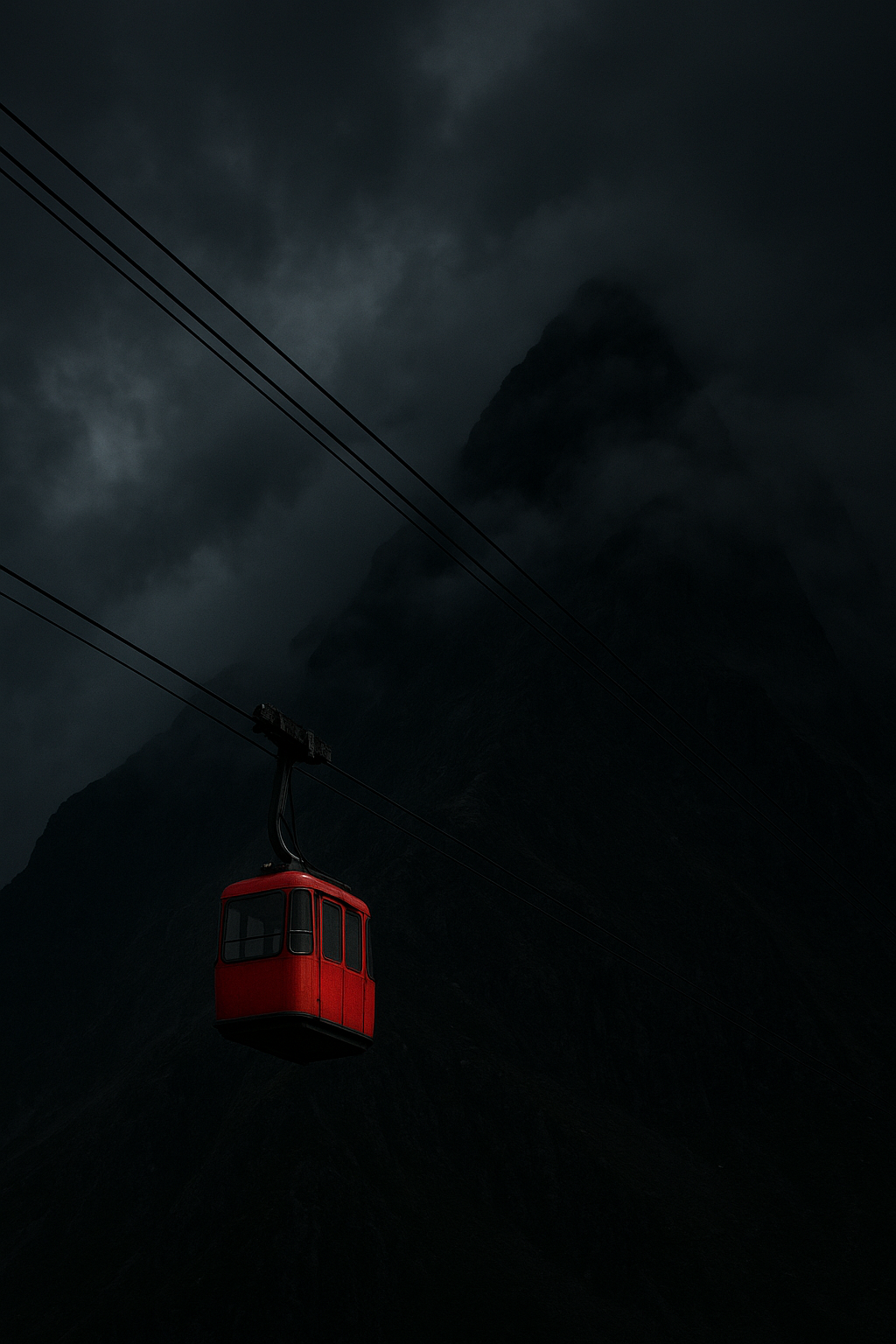
A thrilling rescue on Table Mountain as a birthday hike turns critical. Cape Town's emergency services race against time to save a lost tourist.
A birthday hike on Table Mountain turned into a night of peril for a young woman from Beijing. Lost and alone, technology became her lifeline. From a faint voice message reaching across continents to thermal cameras finding her in the dark, a global team worked together. Specialized gear, like a beacon for GPS without satellites and a unique hypothermia cocoon, helped rescuers bring her to safety, showing how amazing tools can save lives in tough mountain rescues.
How did technology aid in the Table Mountain rescue?
Technology was crucial, including a Photonic Phased-Array Beacon for GPS without satellites, a Hypothermic Litter Cocoon to prevent heat loss, and a firmware patch enabling asymmetrical cableway loading. Thermal imaging also located the hiker, and a global Zoom war-room facilitated rapid coordination across continents, demonstrating the vital role of advanced tools in mountain rescues.
Get Cape Town news in your inbox
Stay updated with the latest stories from the Mother City.
Part I – Last Light, First Panic
18:47. The final cable car glided down the cableway line like a tired firefly, its red bulbs blinking against the bruised late-autumn sky. Thirty-two passengers rocked inside, selfies already chosen for Instagram, unaware that 200 metres above them a 22-year-old woman from Beijing - whose friends had belted out “生日快乐” on a rocky platform only hours earlier - now cowered under a sandstone slab. Her phone glowed at 4 % battery. A spiteful southeaster scythed across the 1 086-metre summit, dragging the first ribbons of the famous “tablecloth” cloud behind it. In minutes the entire massif would become a ghost to satellites.
Down on Adderley Street, Cape Town’s Friday night chorus - minibus taxis hooting, the yeasty perfume of frying vetkoek - drifted up the slopes unheard. Up here the city lights looked like spilled rhinestones, beautiful but useless. Every degree the sun dropped raised the wind speed by another notch. The hiker clenched her phone like a talisman yet realised the birthday candles would never reach this altitude.
19:08. She thumbed a voice note to her hiking group back in Beijing: “No trail, only rock and night.” The clip rode Chinese networks through a Hong Kong hub, arriving 47 seconds late and grainy. Yet one recipient, a medical intern who had spent a semester at Stellenbosch, caught the faint Afrikaans echo of “Tafelberg” in the wind. He rang South Africa’s 112 hotline, which bounced the call straight to the City of Cape Town’s Disaster Risk Management Centre.
Part II – From Pager to War-Room
Before the operator even finished typing the transcript, David Nel’s pager chirped in Plattekloof. Protocol Charlie - an overdue-hiker script - sent a staccato wave of SMS blasts to volunteer rope techs, trauma doctors, SANParks rangers, and the handful of helicopter pilots qualified for mountain night work. First to react were the off-duty Medic-5 crew outside a Rondebosch pizza joint. They abandoned half-eaten Margheritas, apologised to the waiter, and rolled with blue lights slicing the restaurant’s neon.
19:25. A Zoom war-room popped open on an encrypted Air Mercy Service channel. Tiles lit up from four continents: senior ranger Lulama Booi beamed in from the Kruger via Starlink; cableway duty engineer Reinhardt Vosloo logged on while manually cranking the backup generator; Chinese Consul-General Ren Faqiang watched from his Newlands residence so he could ping Beijing with real-time subtitles.
Nel’s opening task: shrink the search box. Superimposing the tourist’s last network ping onto a 3-D terrain layer revealed a narrow ravine nicknamed “Die Nek.” Locals avoid the spot - compasses spin there thanks to iron-rich sandstone, and the rock exfoliates like overbaked pastry. The wind forecast promised gusts to 65 km/h by 21:00. Every second shaved now saved minutes later.
Part III – Heat Signatures and Hand-Tied Anchors
19:42. Air Mercy’s Bell 407 lifted from the V&A Waterfront, rotors slapping the darkness. Pilot Candice Badenhorst - one of only four women in the province certified for night-vision-goggle flight - shared the cockpit with flight paramedic Zaid Hendricks. Table Mountain sits inside Class-G restricted airspace, so Air Traffic Control patched an open mic and cleared them for a single orbit.
Back at the upper cable station, rangers bolted a thermal-imaging ball - normally used to count baboons - onto the roof railing. The sensor reads temperature differences down to 0.05 °C. At 20:00 the monitor blinked: an orange sliver wedged between two buttresses, body heat glowing against 12 °C sandstone. The mountain had answered first, before any human voice.
20:07. Nine rope-access volunteers hopped out of a Land Cruiser carrying 600 m of 11 mm static rope, Petzl Grigris, and a freshly unboxed D4 descender donated after the Kammanassie fire. They jogged the western rim of Maclear’s Beacon, past 1898-era wooden ladders worm-eaten but still solid. The wind now punched 70 km/h, forcing the chopper to retreat for fuel. Plan B became the plan: a twin-rope system anchored to an A15 rock-bolt emplaced during a technical symposium two summers earlier.
20:58. The tricky vector was up, not down. Cableway operator Vosloo petitioned City Hall to reboot the tram after hours, a procedure likened to jump-starting a jumbo with a lawn-mower battery. Engineers synced the mountain’s diesel generator to the city grid. Two silent minutes later, the cables thrummed back to life. Cabin C-5, lights dimmed so the NVG crews above wouldn’t be blinded, climbed into the cloud.
Part IV – The Longest Three Metres and the Shortest Three Centuries
Inside the cabin - temperature forcibly held at 18 °C by emergency heater cannisters usually reserved for Devil’s Peak frostbite cases - the rescued hiker lay vacuum-packed in a titanium litter. Paramedics counted capillary refill: four sluggish seconds. They cocooned her in an aerogel-lined shell that cuts heat loss by a third, then slid a Ready-Heat blanket that oxidises iron powder to 40 °C for eight hours. At 21:33 the doors opened onto the lower plaza where Medic-5 waited with an infrared vein-finder and warmed IV fluid.
22:10. Groote Schuur’s trauma bay. Dr Hassan Gani logged superficial abrasions and early hypothermia at 34.6 °C. By 02:40 the birthday girl was cleared for discharge. Before drifting off she whispered, “The mountain spoke Afrikaans tonight, but to me it murmured in Mandarin.”
By 09:00 WSAR triggered Protocol Echo - mandatory drone photogrammetry. Data confirmed she had detoured at waypoint P-14 chasing a viral geotag labelled “Secret Birthday Ledge.” Erosion had eaten 42 cm of soil since 2019 due to intensified freeze-thaw cycles. SANParks fenced the spot overnight and stapled bilingual warnings in English and Mandarin.
Afterthoughts, Gear, and Gratitude
The Chinese Consulate asked for a closed-circuit presser inside the national-park auditorium to protect her image from Weibo face-scrapers. Consul-General Ren released a 45-second clip captioned in Simplified Chinese and isiXhosa - “Camissa’s spirit danced on the slopes tonight.” The post hit 1.3 million likes in three hours, pushing #TableMountainBirthdayRescue to Douyin’s coveted third-trend slot.
Three pieces of kit proved decisive. A torch-sized Photonic Phased-Array Beacon bounced encoded light off the cloud base to report GPS without satellites - range 12 km in clear air, 3 km in soup. The Hypothermic Litter Cocoon, an inflatable aerogel shell, cut conductive heat loss by 34 %. And engineer Vosloo’s firmware patch allowed asymmetrical cabin loading so the cableway could haul 140 kg of extra human and equipment without stressing the counterweight.
Eleven days later the Sea Point consulate hosted a thank-you Zoom. The tourist, now bundled in a Protea-emblazoned sweater, called the team “the mountain’s own WeChat group,” forcing the interpreter to pause so she didn’t laugh on camera. Nel clipped a jade medallion carved with 山友 - “mountain friend” - to his SAR harness. It still clinks beside every carabiner on every future callout, a tiny green witness to a night when technology translated wind gusts, infrared blobs, and diesel fumes into a single word: safe.
[{"question": "What technological innovations were crucial in the Table Mountain rescue?", "answer": "Several advanced technologies were pivotal: a Photonic Phased-Array Beacon provided GPS location without satellite access by bouncing encoded light off cloud bases, a Hypothermic Litter Cocoon significantly reduced heat loss in the rescued hiker, and a firmware patch allowed the cableway to operate with asymmetrical loading for the rescue. Additionally, thermal imaging pinpointed the hiker's location, and a global Zoom war-room facilitated real-time coordination among international teams."}, {"question": "How was the lost hiker's distress call received and acted upon internationally?", "answer": "The hiker sent a voice message to her hiking group in Beijing using her phone's limited battery. Despite being grainy and delayed, a medical intern in Beijing, who had studied in South Africa, recognized the Afrikaans word 'Tafelberg' and immediately contacted South Africa's 112 emergency hotline. This call was then routed to Cape Town's Disaster Risk Management Centre, initiating the rescue effort."}, {"question": "What specific challenges did the rescue team face due to the mountain's conditions?", "answer": "The rescue operation was complicated by severe weather conditions, including a strong southeasterly wind gusting up to 70 km/h, which forced the helicopter to retreat. The mountain's summit became obscured by dense cloud cover, making satellite tracking impossible. Navigating the treacherous terrain of 'Die Nek,' known for its iron-rich sandstone that interferes with compasses and unstable rock, further added to the difficulties. Furthermore, the rescue required an extraordinary after-hours reboot of the cableway, a complex procedure to transport the specialized equipment and the rescued individual."}, {"question": "How was the hiker located on Table Mountain?", "answer": "Initially, the search area was narrowed by superimposing the hiker's last network ping onto a 3-D terrain map, identifying 'Die Nek' as a likely location. The definitive location was confirmed using a thermal-imaging ball, typically used for baboon counting, which was mounted on the upper cable station. This sensor detected the hiker's body heat at 20:00, appearing as an orange sliver against the cooler sandstone."}, {"question": "What measures were taken to combat hypothermia during the rescue?", "answer": "To prevent hypothermia, the rescued hiker was vacuum-packed into a titanium litter and then placed inside an aerogel-lined Hypothermic Litter Cocoon, which reduced conductive heat loss by 34%. A Ready-Heat blanket, designed to oxidize iron powder to 40 °C for eight hours, was also used. Inside the cable car, the temperature was actively maintained at 18 °C using emergency heater canisters."}, {"question": "What was the outcome of the rescue and the subsequent impact?", "answer": "The hiker, suffering from superficial abrasions and early hypothermia (34.6 °C), was successfully rescued and discharged from Groote Schuur Hospital by 02:40. Post-rescue analysis revealed she had deviated from the trail to chase a viral geotag, highlighting the dangers of relying on unverified online information. SANParks quickly fenced off the hazardous area and installed bilingual warnings. The incident garnered significant international attention, with the Chinese Consulate expressing gratitude and the story trending on platforms like Douyin, emphasizing the spirit of 'mountain friends' and the power of technology in saving lives."}]

Zola Naidoo is a Cape Town journalist who chronicles the city’s shifting politics and the lived realities behind the headlines. A weekend trail-runner on Table Mountain’s lower contour paths, she still swops stories in her grandmother’s District Six kitchen every Sunday, grounding her reporting in the cadences of the Cape.
View all articles →