
Christel House South Africa expands Cape Town campus for underserved learners
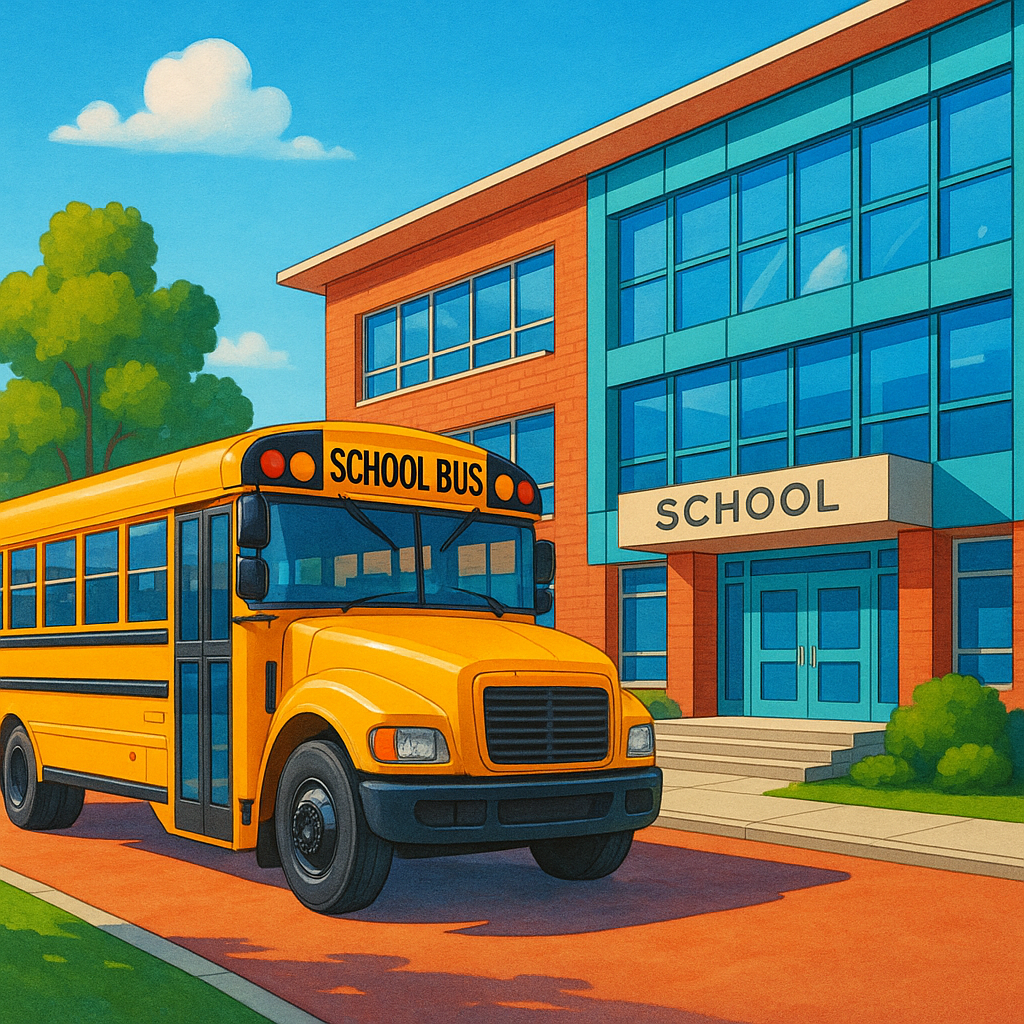
Christel House South Africa unveils a new high-school wing, redefining education for underserved Cape Town communities with innovative facilities and holistic support.
Christel House South Africa (CHSA) is changing lives by giving poor kids a top-notch education. They just opened a super cool new building, adding space for 300 more high schoolers. This new block has awesome science labs and a media hub, helping kids fight poverty and get a better future. It's all about making sure where a child lives doesn't stop them from shining bright.
What is Christel House South Africa's mission and recent expansion?
Christel House South Africa (CHSA) aims to provide quality education to underprivileged children, believing a postal code shouldn't determine a child's fate. They recently opened a state-of-the-art senior block, expanding capacity by 300 high school students and offering advanced facilities like science studios and a media hub to combat poverty and educational inequality.
Get Cape Town news in your inbox
Stay updated with the latest stories from the Mother City.
From a Single Dream to a State-of-the-Art Wing
Two and a half decades ago, one woman decided that a postal code should never settle a child’s fate. That conviction grew into Christel House South Africa (CHSA), set in Ottery on the Cape Flats. Last week the school took its next leap: it opened a double-storey senior block that will change the skyline and - more importantly - recalibrate what an under-resourced community may expect from education. Western Cape Education MEC David Maynier cut the ribbon beside donors, alumni, parents and 120 wide-eyed Grade 8 pupils who had stepped off the signature yellow buses only moments before. The building is not merely extra square metres; it is an engineered rebuttal to poverty, joblessness and the city’s sprawling spatial injustice.
Inside the Numbers That Make the Difference
The new addition delivers twelve light-filled classrooms, two science studios that morph instantly into robotics arenas, and a media hub whose walls slide away to seat 120 people for public events. Pupils also inherit a Computer Applications Technology lab stocked with Raspberry-Pi workstations primed for coding competitions, 3-D print sprints and cloud-based productivity marathons. In plain terms, CHSA can now welcome 300 more high-school pupils, pushing overall enrolment from 1 000 to 1 300 by 2026. The first wave of admissions - 120 Grade 8 and 9 learners - was culled from a waiting list that runs into the thousands across thirty neighbourhoods stretching from Philippi and Khayelitsha to Athlone and Lavender Hill.
Financing the build took imagination as well as cash. The architectural drawings locked in R48 million through three deliberate levers: a legacy gift from founder Christel DeHaan’s estate, a low-interest social-impact loan arranged by the Bertha Centre at UCT’s Graduate School of Business, and sweat equity from construction giant WBHO whose trainee artisans poured slabs and laid insulation. The structure itself is future-proofed: corridors wide enough to be re-zoned as pop-up maker-spaces; underfloor fibre ready for any virtual-reality headset that arrives tomorrow; a roof carrying 120 kW of photovoltaic panels feeding 400 kWh of lithium-ion storage. The upshot is a projected R400 000 drop in the annual electricity bill while Grade 11 science classes monitor live kilowatt flows for physics assignments.
The School Day Starts Before the First Bell
Hit the gate at 06:30 in mid-July and the air carries the scent of steaming peanut-butter oats drifting from the dining hall. Every learner eats chef-designed breakfast and lunch at no cost, while parents upstairs queue for vaccinations or eye tests in the on-site clinic. Once inside, the timetable begins with a twenty-minute “Check-In Circle.” Learners flash green, amber or red cards; green signals readiness to conquer algebra, amber earns a quiet word from the social worker, red triggers an immediate appointment with the campus psychologist. Last year 214 pupils booked one-on-one counselling, and 82 % raised their mark by at least one symbol within two terms.
Curriculum is not cut-and-paste South African CAPS nor imported IB, but a deliberate cocktail. Maths teachers borrow Singaporean bar modelling; English classes unpack Stanford’s “Reading Like a Historian” approach; Life Orientation in Grade 10 stages design-thinking sprints that ask how a household surviving on R3 500 can still squirrel away a university registration fee. The external metric is emphatic: CHSA’s class of 2023 secured a 97 % bachelor-pass rate versus the Western Cape average of 43 %.
Moving Learners Safely, Powering Them Digitally
A new wing is worthless if roads and gangs lie in the way. The school therefore sank an extra R4 million into retrofitting 25 Toyota Quantum taxis. Each vehicle features Wi-Fi routers, belted booster seats and GIS-planned routes that shorten commuting time every term. Drivers complete trauma-informed training so the ride does not echo township turf lines. Real-time tracking and five-minute SMS alerts to shift-working parents helped push daily attendance from 87 % to 96 % across the senior phase.
Digital literacy is not an elective; it is treated as a civil right. Grade 10 pupils spend one full afternoon each week in the “Digital Citizen Studio.” They start with touch-typing and finish the year by deploying an AI chatbot on the school website that answers bursary questions around the clock. Seniors may add data-science modules (Python and Google Colab) or digital-marketing electives where they run live Facebook ad campaigns for micro-traders at Langa market. This year an all-girl Grade 11 squad claimed second place in the national TANK AI hackathon with code that predicts clinic queues. Negotiations are under way to license the tool back to the City of Cape Town Health Department; royalties will flow straight into the learner bursary fund.
Health, Safety and the Architecture of Aspiration
The theory of change at CHSA is simple: excellence is the outcome, not the starting line. Inputs therefore include high-impact medical care. Every Grade 8 pupil gets a dental checkup; 42 % required fillings or extractions over the past two years - silent infections that teachers once mistook for laziness. A mobile vision clinic, run with the Peek Vision Trust, tested 600 learners last year; 112 walked away with free prescription spectacles. A campus clinic hosts weekly sessions for teen mothers. Twenty-three pregnant or parenting girls stayed in school last year thanks to a lactation room and an on-site crèche managed by early-childhood trainees.
Career guidance begins in Grade 9 with psychometric tests calibrated for local realities - think “Which wire toy will climb a gravel slope?” rather than abstract puzzles. Learners then shadow professionals for a week: one cohort spent mornings coding at Amazon’s Cape Town data centre and afternoons helping physiotherapists at Groote Schuur Hospital. The point is to stretch the envelope of what feels possible.
An Open-Source Blueprint for Township Turnaround
CEO Adri Marais is blunt: CHSA never aimed to be a boutique island. Instead, the campus is producing “an open-source toolkit for township school turnaround.” Lesson plans, 3-D printer wiring diagrams and even the code behind the SMS bus-alert bot live on a Creative Commons repository. Two Mitchells Plain schools have already cloned the morning Check-In Circle after a free Saturday workshop; attendance in Grade 10 at one pilot site rose 3.2 % within a term. The Western Cape Education Department has assigned a curriculum adviser to sift which practices can slip into the public system without overloading teachers.
The Roadmap to 2030 and the Alumni Flywheel
The ribbon-cutting is only waypoint 1.3 on a board-approved roadmap to 2030. By 2026 modular “pop-up” classrooms built from shipping containers will add 150 seats to the junior-primary block. A second campus, for which land has been optioned near Blue Downs, will break ground in 2025 if the environmental-impact assessment clears. The full build will run from Grade RR to Grade 12, replicating every non-negotiable of the Ottery model - right down to the peanut-butter oats. KPMG pegs the price at R220 million; half is already pledged by a European family foundation on condition that CHSA secures the balance locally, a deliberate stress-test of domestic buy-in.
Alumni do not come back for nostalgic speeches; they plug into an active talent engine. Ninety-five per cent of the 2023 matric cohort moved into employment, university or further study within six months. Twenty-eight graduates now serve as paid “near-peer tutors” while studying education part-time. Amazon’s new Cape Town customer-service hub hired its first fifteen employees through one WhatsApp message from an alum. The school’s “Alumni Venture Seed Fund,” launched with R2 million from an anonymous donor, awards up to R50 000 to graduates prototyping township e-commerce ventures; three start-ups are profitable and collectively employ 21 former classmates.
Global Roots, Local Branches
Indianapolis-based founder Christel DeHaan passed away in 2020, but her rule stands: every Christel House must be locally led within ten years. CHSA beat the deadline. The board chair is an actuary born in Khayelitsha; the CFO sharpened her skills at Old Mutual; the principal once taught at Wynberg Girls’ and grew up in Langa. Knowledge now flows both ways: CHSA’s learner-tracking dashboard, built on open-source DHIS 2, is in use at Christel House Mexico, while the Mexican campus’ restorative-discipline playbook reached Ottery through a UN-funded teacher swap.
Voices from the Yard - and the Worry List
Phumlisa Mabaso, 14, boards the 06:05 bus in Philippi and rolls onto campus by 06:45. “I used to think only rich kids became software engineers, but our teacher says a Raspberry-Pi is basically a R500 computer and the only limit is imagination.” Her mother, a domestic worker, adds, “I pay nothing for transport, food or books. My only job now is getting her up early - she wants to be first through the gate.”
Alumnus Luthando Soqaga, class of 2018 and now a mechatronics diploma student, returned to install the new 3-D printers. “In Grade 10 I had never seen a lathe. Today I can design in CAD and print before lunch. The magic isn’t the printer - it’s permission to think bigger.”
Minister Maynier, touring the lab, reflected a wider provincial lesson: “Traditional brick-and-mortar timelines cannot keep pace with the demographic surge. Partnerships like Christel House give us a living laboratory for what’s possible when innovation meets compassion.”
Yet the leadership never sleeps soundly. Head of School Dr Ronald Fortune worries about “excellence fatigue,” the slow slide into complacency once the fresh-paint smell fades. To counter it, CHSA invites an external “Red Team” every other year to stress-test everything from classroom acoustics to psychosocial pathways. Last year’s panel recommended replacing paper lesion-tracking at the clinic with a tablet app; nurses reclaimed eleven hours a week - hours now spent counselling anxious teenagers.
Funding waves rise and fall. The R48 million campaign lasted twenty-eight months, and the next must launch soon if the 2030 timetable is to hold. The school is experimenting with an income-share agreement: ed-tech firms rent anonymised Grade 11 code repositories and pay royalties into the bursary fund. Critics raise data-privacy flags, but early models suggest the scheme could yield R3 million a year if scaled.
Finally, the intangible mandate: keep the campus a place of joy. Every Friday ends with “Time-Out Circles.” Learners and staff step forward with public appreciations. At the launch, Grade 10 learner Aaliyah Davids grabbed the microphone to thank the cleaning staff. “They wipe away yesterday so that we can invent tomorrow,” she said, as applause rippled across the freshly painted walls.
[{"question": "What is Christel House South Africa's mission and recent expansion?", "answer": "Christel House South Africa (CHSA) is dedicated to providing high-quality education to children from impoverished communities, believing that a child's potential should not be limited by their socio-economic background. They recently opened a new, state-of-the-art senior block, which expands their capacity by 300 high school students. This new facility includes advanced features such as science studios that can transform into robotics arenas, a media hub, and a Computer Applications Technology lab equipped with Raspberry-Pi workstations, all designed to combat poverty and educational inequality."}, {"question": "What specific facilities and technological advancements does the new senior block offer?", "answer": "The new senior block at CHSA features twelve light-filled classrooms, two science studios capable of converting into robotics arenas, and a media hub with reconfigurable walls to accommodate 120 people for public events. It also boasts a Computer Applications Technology lab with Raspberry-Pi workstations for coding, 3-D printing, and cloud-based productivity. The building is future-proofed with wide corridors for pop-up maker-spaces, underfloor fiber optics for virtual reality, and a roof equipped with 120 kW of photovoltaic panels and 400 kWh of lithium-ion storage, projected to save R400,000 annually on electricity costs."}, {"question": "How does Christel House South Africa support the holistic well-being of its students beyond academics?", "answer": "CHSA provides comprehensive support for its students' holistic well-being. This includes chef-designed breakfast and lunch provided free of charge, an on-site clinic offering vaccinations and eye tests, and a 'Check-In Circle' system where students can signal their emotional state to receive support from social workers or psychologists. They also offer high-impact medical care, such as dental check-ups and mobile vision clinics, and support for teen mothers with a lactation room and on-site crèche to enable them to stay in school. Additionally, the school provides safe transportation with Wi-Fi-equipped taxis and trauma-informed drivers, significantly improving attendance rates."}, {"question": "What makes Christel House South Africa's curriculum unique and effective?", "answer": "CHSA's curriculum is a deliberate blend of various effective educational approaches. It does not strictly follow the South African CAPS or imported IB but incorporates methods like Singaporean bar modeling for maths and Stanford's 'Reading Like a Historian' for English. Life Orientation includes design-thinking sprints to address real-world challenges, such as managing household finances on a limited income. This innovative approach has led to exceptional results, with the class of 2023 achieving a 97% bachelor-pass rate, significantly higher than the Western Cape average of 43%."}, {"question": "How does CHSA foster digital literacy and career readiness among its students?", "answer": "Digital literacy is treated as a fundamental right at CHSA. Grade 10 students spend one afternoon a week in the 'Digital Citizen Studio,' learning touch-typing and deploying AI chatbots. Seniors can pursue data science modules (Python, Google Colab) or digital marketing electives, running live Facebook ad campaigns for local micro-traders. Career guidance starts in Grade 9 with psychometric tests tailored to local contexts, followed by week-long professional shadowing opportunities at companies like Amazon and Groote Schuur Hospital, aiming to broaden students' perceptions of what is possible. The school also leverages its alumni network for employment opportunities, with 95% of the 2023 matric cohort securing employment or further study within six months."}, {"question": "What are Christel House South Africa's future expansion plans and long-term vision?", "answer": "CHSA has an ambitious roadmap to 2030. By 2026, modular 'pop-up' classrooms will add 150 seats to the junior-primary block. A second campus, replicating the Ottery model from Grade RR to Grade 12, is planned near Blue Downs, with groundbreaking anticipated in 2025. This expansion requires R220 million, with half already pledged by a European family foundation. The school aims to create an 'open-source toolkit for township school turnaround,' sharing its successful practices, lesson plans, and technological blueprints with other schools. Furthermore, it's exploring innovative funding models like income-share agreements with ed-tech firms, potentially generating R3 million annually for its bursary fund."}]

Sarah Kendricks is a Cape Town journalist who covers the city’s vibrant food scene, from township kitchens reinventing heritage dishes to sustainable fine-dining at the foot of Table Mountain. Raised between Bo-Kaap spice stalls and her grandmother’s kitchen in Khayelitsha, she brings a lived intimacy to every story, tracing how a plate of food carries the politics, migrations and memories of the Cape.
View all articles →