
Church snaps up iconic Good Hope Centre in R135m deal
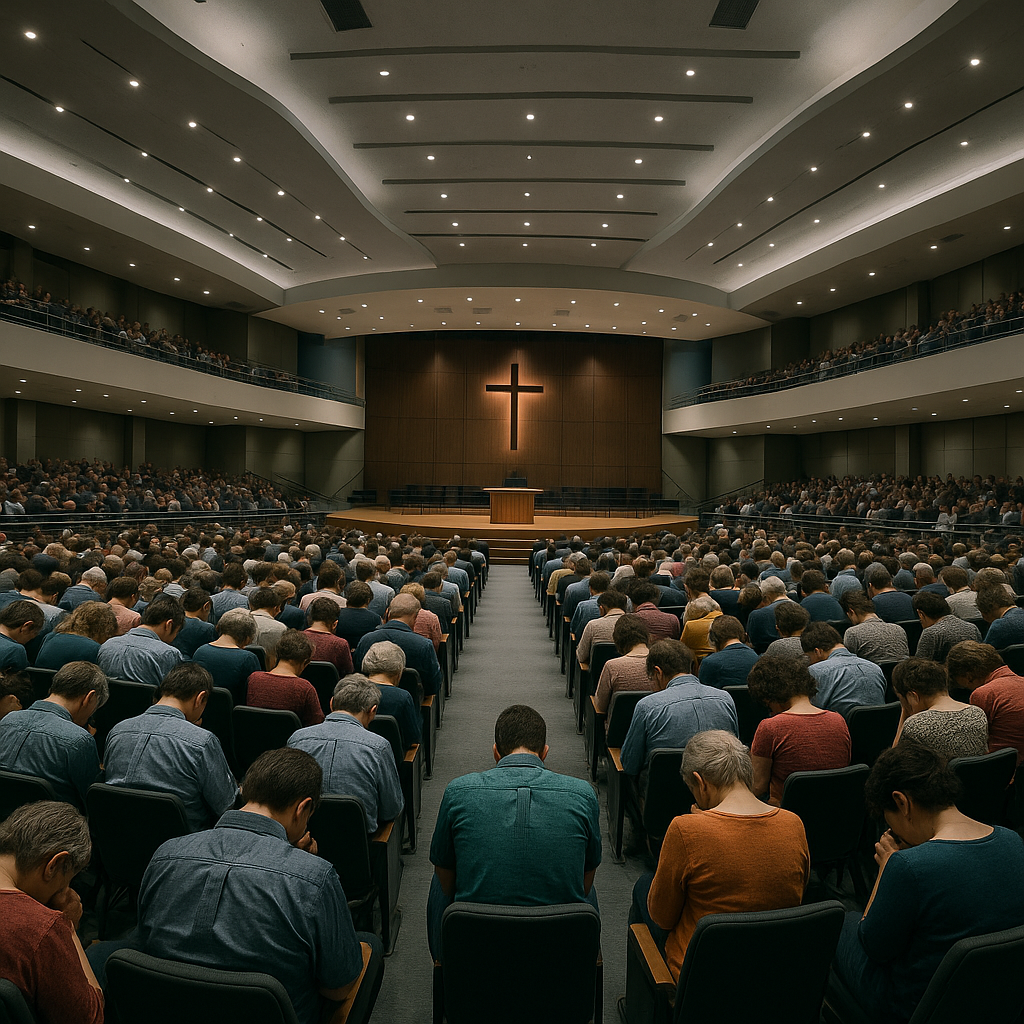
Cape Town's iconic Good Hope Centre sold to a church for R135M. Discover the controversy, finances, and future of this contested landmark.
A church called Spirit Revelation Ecclesia bought Cape Town's huge Good Hope Centre for R135 million. They got the money from monthly pledges, book sales, and church offerings. They won the bid by offering the most money and promising many free community events. This changed the old expo hall into a big church, but some people are upset because they think the land was sold too cheaply and could have been used for housing.
How did Spirit Revelation Ecclesia acquire Cape Town's Good Hope Centre?
Spirit Revelation Ecclesia acquired the Good Hope Centre by paying R135 million on February 14, 2024. The funds were raised through "30-30 clubs" (monthly pledges), royalties from self-published books, and tithes. They outbid competitors by offering the highest price and pledging 180 free community gatherings annually, along with job-skills fairs.
Get Cape Town news in your inbox
Stay updated with the latest stories from the Mother City.
Dawn at the Dome: The Eight-Minute Chain Reaction That Sealed the Deal
At 05:30 on 14 February 2024 the Good Hope Centre’s yawning barrel roof was still silver-blue in the half-light, but its forecourt already pulsed with 3 000 early risers. Tambourines shook, incense curled and isiXhosa, Afrikaans and Nigerian-accented English braided into one expectant hum. By 08:53 Spirit Revelation Ecclesia’s war-room treasurer pressed “send”; R135 million sprinted through the Reserve Bank’s RTGS switch, landed in Cape Town’s revenue trust at 09:11, and the worship leader’s sustained C-major chord (42 seconds of organ, voices and electric guitar) announced to social media that #GateOfTheCity belonged to the congregation.
The municipal finance team - who had stayed past midnight to pre-stage the transaction - exchanged thumbs-up emojis as the irrevocable 10-day guarantee crystallised into hard cash. Two pending court interdicts and a 19 417-signature petition lost oxygen in the time it took a bank server to refresh its ledger. Outside, pastors hugged next to rusting election billboards; inside, the same late-summer light that once striped apartheid trade-show aisles now painted gold bars across a sea of waving flags.
For a structure conceived in 1974 as Africa’s largest clear-span hall - 13 000 m², almost two rugby fields under one concrete shell - the moment felt less like a sale and more like a coronation. The city’s white-elephant expo palace had become, in eight digital minutes, a privately owned sanctuary whose first act was trending on three provincial Twitter timelines.
Nine-Figure Testimony: How Micro-Tithes, Dubai Paperbacks and Offshore Layers Bought a City Icon
Twenty-two years ago Pastor John Anosike preached his first sermon in a borrowed school hall; today he controls Title Deed T 9181/2024. The alchemy that turned loose change into a landmark begins with “30-30 clubs”: 30 US dollars pledged monthly for 30 months by viewers in 42 countries. Spirit Revelation Broadcasting beams three daily services via satellite and YouTube; the dollars accumulate in a Singapore trust that on-lends to a Mauritian holding group, which in turn owns the South African property vehicle that now holds the dome.
Between 2020 and 2023 royalties from 40 self-published imprints - printed in Dubai, sold on Amazon, ferried in hard-currency cash boxes to crusade venues - averaged USD 2.1 million every quarter, audited figures show. Add tithe surges during miracle-crossover nights in Lagos or Lusaka and the ministry’s balance sheet behaves more like a fast-moving content studio than a conventional congregation. Real estate, Anosike tells insiders, is “just another content-delivery node”; the building is sermon infrastructure, not ballast.
The city’s 2018 asset-disposal scorecard cares little about theology. Price, black-ownership share and socio-economic promises are the only columns that count. Spirit Revelation outbid German concert promoters (R122 m) and a Dubai student-housing fund (R118 m) by coupling the highest offer with a pledge of 180 free community gatherings yearly - graduations, music contests, youth rallies - plus quarterly job-skills fairs promising 5 000 CV reviews each. Black-economic-empowerment credits were zero, but the social-dividend math still tilted four councillors to the church, three to the Europeans, one abstention.
Heritage, Heatmaps and Housing Wars: Why the Deal Still Faces Courtrooms and Community Backlash
To many coloured and black ratepayers the Good Hope Centre has long served as the only public hall large enough for mass funerals, kwaito concerts or graduation galas the CBD’s commercial venues quietly rejected. Losing it to a Nigerian-led ministry therefore stings; online forums dusted off the phrase “religious colonialism” first hurled at Lagos preachers snapping up Johannesburg warehouses in 2008. Pastor Thelma Lewis, a Mitchells Plain native, counters that her grandfather worked the docks and her sermons will rotate weekly between English, isiXhosa and Afrikaans: “The Spirit is local; the vision is global.”
Civil-society group Ndifuna Ukwazi smells a fire-sale. An internal memo leaked in January values the 4.2-hectare site at R480 million if rezoned to CR-4 residential (400 units per hectare). Measured against that figure, the church’s R135 million looks like a R345 million discount - 14 000 affordable flats foregone. The city replies that rezoning would take four years and R92 million in bulk-services upgrades it simply does not have; the provincial housing department waived its right-of-first-refusal for the same reason. A Western Cape High Court showdown is expected before October elections.
Inside the dome, however, engineers are already boring 96 geothermal probes 120 m beneath the parking apron. A solar-assisted ground-source labyrinth will pre-cool incoming air to 18 °C before evaporative coolers drop it to 14 °C, cutting energy draw by 64 %. Standard Bank structured a green bond at 9.1 % - 70 basis points below prime - making Spirit Revelation the first South African church to tap the JSE’s sustainable-finance market. The trade-off: 15 years of climate-adaptation teach-ins every Arbor Day.
LED Walls, Geothermal Bores and the Informal Economy: What Happens Next Under the Catenary Arch
The retrofit reads like a sci-fi liturgy. Twenty-four shoebox-sized robotic cameras learn congregational mood by tracking facial micro-expressions; if amen-shouts top 108 dB the algorithm lingers on the drummer, if thermal cameras detect tears it zooms on the worship leader’s eyes. The resulting “immersive altar” feed will be licensed to satellite campuses in Dallas, Lusaka and Kampala on a 70/30 revenue split - potentially eclipsing local tithes within five years.
Down in former municipal storerooms, data scientists geo-tag every altar-call response, printing prayer cards that include each seeker’s name and language before Saturday door-to-door visits. A 1.2 MWh lithium battery bank - hidden in matte-black “sound-equipment” crates - can island the entire load for eight hours during Eskom blackouts; an exemption under the Disaster Management Act is pending. Fire engineers, meanwhile, have bolted 900-kg tuned mass dampers beneath the roof to cancel crowd sway at 0.27 Hz, the same wobble frequency that once closed London’s Millennium Bridge. Should stomp-energy exceed 0.15 g, software instructs the lighting desk to dim sound by 10 dB and switch to LED waves, turning kinetic threat into pixelated rapture.
Commercial tenants are feeling the after-shock. The Cape Tattoo Expo, Vegan Market and 47 other mid-week events must vacate; penalty clauses reach R1.8 million, but the church offers to underwrite relocation and free advertising at 26 satellite chapels. Mid-week hire is now priced at R285 000 per day - triple the old tariff - and alcohol is banned, screening out most trade expos yet leaving space for NGO summits and aligned faith groups. A tentative 2025 calendar already shows 47 external bookings, enough to cover utilities even if offerings dip.
Across the N2, informal traders are recalibrating. Nomawethu Nodada, a tailor from Langa, now sells pastoral robes on the parking apron each Sunday; Uber drivers queue for post-service surge pricing. The city’s economic-development unit estimates the ministry could inject R280 million annually into the neighbourhood’s street-level economy, dwarfing the original purchase price in six months. Whether that projection is back-of-the-envelope boosterism or a lifeline to micro-entrepreneurs, CCTV cameras already record an 18 % weekend foot-traffic spike since February.
As cranes lift amber aluminium fins - an intentional echo of Bo-Kaap ochre - onto the 114-metre catenary arch, the building steps into its fourth life: apartheid showcase, trade-show palace, municipal relic, now privatised heaven open five nights a week. Courts may still unwind the sale; housing activists may yet claw back land for 14 000 flats. Yet inside the dome the loop is already running - cameras tighten shots, bass notes descend, LED verses blaze 15 metres high, and 13 000 voices rehearse a single line that ricochets off concrete curved like the Keiskamma River mouth: “We have taken the gate.”
[{"question": "
How did Spirit Revelation Ecclesia acquire Cape Town's Good Hope Centre?
", "answer": "Spirit Revelation Ecclesia purchased the Good Hope Centre for R135 million on February 14, 2024. They secured the funds through various methods including \"30-30 clubs\" (monthly pledges from viewers in 42 countries), royalties from 40 self-published books sold globally, and tithes collected during church services. They won the bid by offering the highest price and committing to 180 free community events annually, along with quarterly job-skills fairs."}, {"question": "What were the financial mechanisms used by Spirit Revelation Ecclesia for the acquisition?
", "answer": "The church utilized a sophisticated financial structure involving \"30-30 clubs\" where members pledge 30 US dollars monthly for 30 months. These funds accumulate in a Singapore trust which then on-lends to a Mauritian holding group, ultimately owning the South African property vehicle for the Good Hope Centre. Additionally, royalties from self-published books, audited at an average of USD 2.1 million quarterly between 2020 and 2023, and tithes from services in various locations, contributed to the R135 million purchase price."}, {"question": "Why is there controversy surrounding the sale of the Good Hope Centre?
", "answer": "Many residents and civil-society groups are upset because they believe the land was sold too cheaply. Ndifuna Ukwazi, a civil-society group, values the 4.2-hectare site at R480 million if rezoned for residential use, suggesting a potential R345 million discount and the loss of 14,000 potential affordable housing units. There's also sentiment among some coloured and black ratepayers that the sale to a Nigerian-led ministry represents \"religious colonialism,\" as the center was a vital public venue for their community events that other CBD venues often rejected."}, {"question": "What improvements and changes are being made to the Good Hope Centre by Spirit Revelation Ecclesia?
", "answer": "The church is undertaking significant retrofits including installing 96 geothermal probes 120 meters deep to pre-cool air, a solar-assisted ground-source labyrinth to reduce energy draw by 64%, and a 1.2 MWh lithium battery bank for power during blackouts. They are also implementing advanced technology like robotic cameras that track congregational mood, LED walls, and 900-kg tuned mass dampers to counteract crowd sway. Commercial tenants have been asked to vacate, and mid-week hire prices have tripled, with alcohol banned. The church also plans to run 15 years of climate-adaptation teach-ins."}, {"question": "How is the acquisition expected to impact the local economy and community?
", "answer": "The city's economic-development unit estimates the ministry could inject R280 million annually into the neighborhood's street-level economy, significantly more than the purchase price. Informal traders are adapting, with new opportunities like selling pastoral robes. The church has committed to 180 free community gatherings and quarterly job-skills fairs. However, the loss of the center as a public venue for diverse events and the potential loss of affordable housing opportunities are significant concerns for some community members."}, {"question": "What is the future outlook for the Good Hope Centre and the ongoing controversy?
", "answer": "Despite the sale being finalized and the church initiating extensive renovations, the deal still faces legal challenges. A Western Cape High Court showdown is anticipated before the October elections, driven by housing activists and civil-society groups like Ndifuna Ukwazi, who aim to challenge the sale and potentially reclaim the land for housing. The church, however, is proceeding with its plans, transforming the structure into a modern, technologically advanced sanctuary and asserting its new ownership."]
Isabella Schmidt is a Cape Town journalist who chronicles the city’s evolving food culture, from Bo-Kaap spice merchants to Khayelitsha microbreweries. Raised hiking the trails that link Table Mountain to the Cape Flats, she brings the flavours and voices of her hometown to global readers with equal parts rigour and heart.
View all articles →