
City unveils R31m Wesfleur stadium upgrade
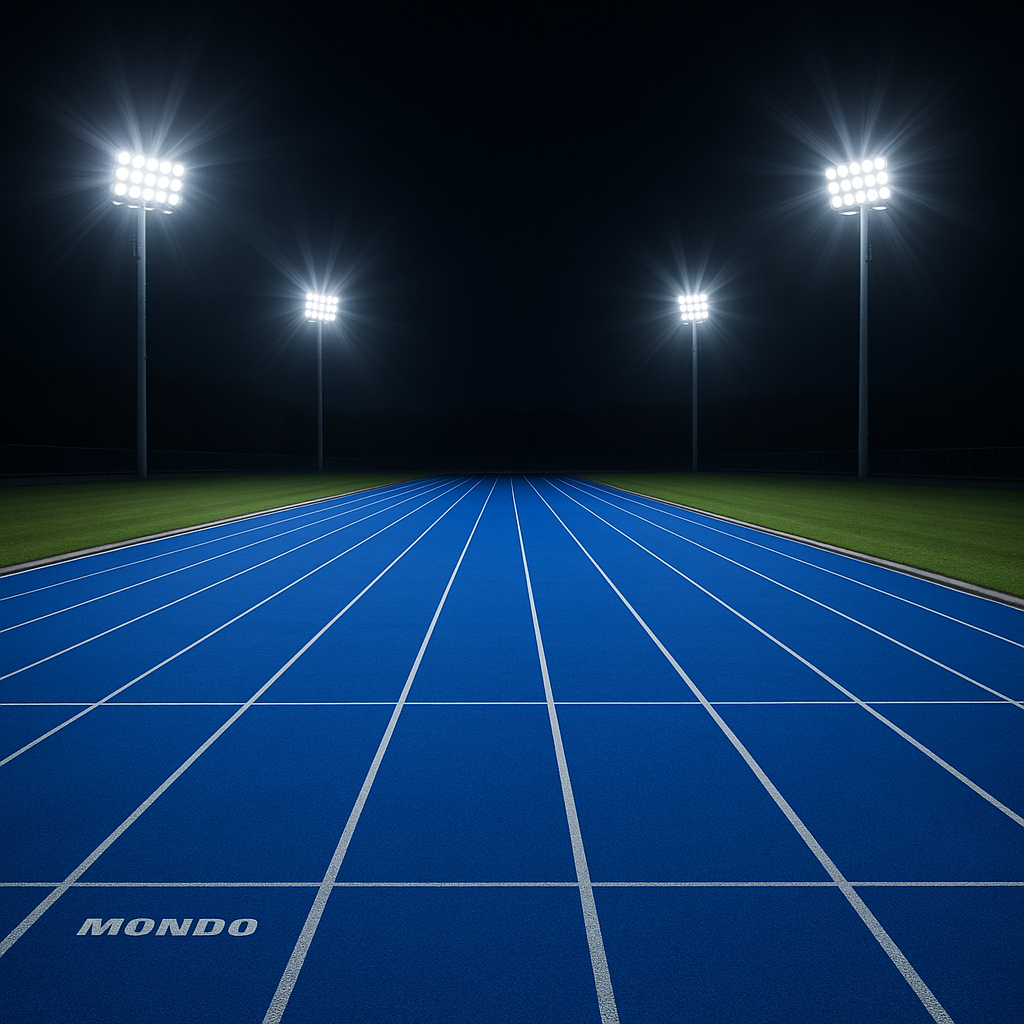
Wesfleur Stadium's R31M rebirth transforms Atlantis into a top athletics hub, boasting a World Athletics Class 1 track, jobs, and community impact.
{"summary": "Wesfleur Athletics Stadium, once a broken-down mess, has been reborn! A R31 million investment turned it into a dazzling, royal-blue track, making it a super-fast new hub for sports. It's now a fancy World Athletics Class-1 place, with cool lights, comfy seats, and even solar power. This amazing upgrade has brought jobs, new skills, and a whole lot of community pride, proving that even old ruins can become champions!"}
How much did it cost to rebuild Wesfleur Athletics Stadium?
The Wesfleur Athletics Stadium was rebuilt for R31 million (approximately $1.65 million USD), transforming a deteriorated facility into a World Athletics Class-1 certified oval. This investment provided a state-of-the-art track, modern amenities, and advanced technology, making it a premier regional recreation hub.
Get Cape Town news in your inbox
Stay updated with the latest stories from the Mother City.
1. Ghost Stripes to Floodlight Blaze – The Night the Stadium Came Back
For twenty-plus years the only evidence that Atlantis once ran, jumped and threw was a sun-bleached silhouette of lane paint on broken tar. Sprinters stretched beside a netball ring warped by wind; discus throwers drove forty kilometres to Bellville just to find a cage that did not sway like a clothes line. On 25 February that story line cracked in half when Mayor Geordin Hill-Lewis thumbed a remote and 128 LED masts poured daylight onto a brand-new royal-blue Mondo oval. The starter’s horn bounced off the Koeberg dunes and Wesfleur Athletics Stadium stopped being a cautionary ghost and started acting as Cape Town’s newest “Regional Recreation Hub”.
The relaunch felt like a street festival. Grandmothers sold koesisters from car boots, kids queued to scuff their takkies on the still-sticky blue surface, and a minstrel trumpeter tested the echo under the refurbished grandstand. In less time than it takes to run a 400 m lap, a community that had exported its talent now owned a reason to stay.
The symbolism was impossible to miss: the same week the lights came on, the neighbouring high-school team won its first-ever inter-school relay - on the new track, in new spikes donated by a local logistics firm. The principal later joked that the only homework the athletes did that night was counting their strides down the home straight.
2. Price Tag, Performance, Pay-back – What R31 Million Actually Buys
Cough up R31 million and you can resurface a busy slice of the N7 once, maybe twice. Spread the same cheque over 5.8 hectares of dead asphalt and you get a World Athletics Class-1 certificate - the same paper that lets Doha’s Khalifa Stadium call itself championship-grade. Engineers first hacked out 7 400 m² of failed road, then laid a sandwich of calibrated asphalt, cushion and polyurethane able to return 92 % of the energy a foot plants, accept spikes from 3 mm to 9 mm and still yawn off an eight-year warranty - virtually unheard-of in the public sector.
Cost per square metre? R535, cheaper than a kitchen refit in the southern suburbs, yet the brief demanded Olympic geometry: 42 km of white ceramic rail, gravity-fed steeple drains that empty in 45 minutes after a 25 mm West-Coast cloudburst, and a hammer cage with a gate that lets officials rake the sector without stepping into the danger zone. Every bolt was torqued to 120 mm, every line sprayed by airless gun within 0.0001 % tolerance. The result: a surface that promises to shave 0.8–1.2 seconds off a 400 m - time that can shatter age-group records and, more importantly, lift bursaries.
The City’s bean-counters already see upside. Night-hire for private clubs is set at R1 200 an hour - lights, guardhouse and free Wi-Fi included - still 60 % cheaper than Athlone Stadium. At that rate the electricity bill (R1.2 million a year) is covered after 40 bookings, everything beyond that is reinvestment into school-bus subsidies and junior coaching clinics.
3. Anatomy of a 21st-century Oval – Seats, Safety, Solar and Graphene
Seats first: 1 450 olive-green moulded chairs rescued from Newlands Rugby, scrubbed, UV-treated and re-mounted on aluminium stringers wide enough for FIFA exit rates. Eighteen new toilets - six with adult-changing hoists - sit behind the west curve, tiled in the same cobalt fleck as the track so the colour story never breaks. A 2.4 m palisade fence wears a 1 m anti-scale overhang; 16 bullet cameras feed into Goodwood’s ShotSpotter hub, while a fibre backbone beams 200 Mbps to spectators who want to Instagram their PBs in real time.
Throwing toys matter just as much. The javelin runway now tilts 0.05 % - enough to stop spears rolling back, not enough to breach legality. Long-jumpers get twin 48 m run-ups: north side for trophies, south side for drills, both sharing a removable fibreglass board certified for triple jump as well. A graphene-laced hammer cage quietly logs impact force and pushes the data to an open-source app so coaches can marry strike pattern to distance without a R50 000 force plate.
Energy? A 5 kW rooftop solar array keeps the scoreboard alive and a 50-inch coaching screen flicker-free through four hours of load-shedding. Even the lanes carry tech: passive RFID tags every 10 m let a hand scanner confirm the distance has not crept - a safeguard born after Beijing 2008’s warm-up track shrank by 9 cm under tropical heat.
4. Jobs, Skills and the Reminder Lane – Making Concrete Pay Social Dividends
The build was never just about tartan. A Khayelitsha-based, black-woman-owned civils outfit took the main contract and immediately subcontracted 62 % of labour to Atlantis households. Twenty-eight youngsters walked away with National Construction Authority cards in rare trades - bituminous surfacing, geotextile welding, ceramic rail bedding, torque-wrench calibration. Chanté Jassen, 19, poured the final layer on a Friday, laced up borrowed basketball shoes on the Saturday, and clocked 12.34 s in a friendly 100 m trial. Western Province Athletics answered with a bursary and a pair of Nike Superfly spikes - proof that the track can give back faster than it gives in.
Across the main tunnel builders left a 2 m strip of the original asphalt, sealed under clear epoxy. Coach Gavin September - Comrades 1986 finisher and now volunteer mentor - calls it “the reminder lane.” Kids feel the chipped stones, glance at the flawless blue eight lanes over, and understand the distance their hometown has travelled. Nobody trains on the rough strip; nobody needs to. Yet every Friday at 17:30 September makes newcomers place a hand on the epoxy and repeat the club mantra: “No spikes, no attitude, just laps.”
Programming is already locked tight. Western Province Athletics signed a 20-year concession: 40 premium meet days a year, one ASA Label event every second season, R180 k annual rent plus 12 % gate share. Schools keep 180 weekday afternoons; corporates can hire the in-field for product launches or night-time relays. Events inked so far include an ASA Label 10 km with a R250 k purse and a SPAR Women’s 5 km live on SuperSport. Female participation has leapt from 17 % to 42 % since the LEDs went up, patrol guards walk in pairs, and a panic button at Gate 3 links straight to neighbourhood-watch WhatsApp groups. The stadium that once chased talent away now courts it, measures it, and beams the biometric proof to the cloud - ready for the next Olympic cycle.
[{"question": "
How much did it cost to rebuild Wesfleur Athletics Stadium and what does that investment cover?
\nThe Wesfleur Athletics Stadium was rebuilt for R31 million (approximately $1.65 million USD). This significant investment transformed a dilapidated facility into a state-of-the-art World Athletics Class-1 certified oval. The cost covered the installation of a royal-blue Mondo track, advanced lighting systems with 128 LED masts, comfortable seating (1,450 olive-green moulded chairs rescued from Newlands Rugby), 18 new toilets including adult-changing hoists, a 2.4m palisade fence with anti-scale overhang, 16 bullet cameras, and a fibre backbone providing 200 Mbps Wi-Fi. It also included specialized athletic infrastructure like javelin runways, long-jump run-ups, and a graphene-laced hammer cage. The stadium is also equipped with a 5 kW rooftop solar array for energy efficiency.
\n","answer": ""},{"question": "What makes the new track at Wesfleur Athletics Stadium 'super-fast'?
\nThe new track is a World Athletics Class-1 certified surface, built with Olympic geometry and advanced materials. Engineers laid a sandwich of calibrated asphalt, cushion, and polyurethane designed to return 92% of the energy a foot plants. This high-performance surface is expected to shave 0.8–1.2 seconds off a 400m race, potentially allowing athletes to shatter age-group records and improve their chances for bursaries. The precision in its construction, with every line sprayed within 0.0001% tolerance and every bolt torqued to 120 mm, contributes to its speed and efficiency.
\n","answer": ""},{"question": "How has the Wesfleur Athletics Stadium benefited the local community and economy?
\nThe redevelopment of the stadium has brought numerous benefits to the local community and economy. It created jobs and skills development opportunities, with a Khayelitsha-based, black-woman-owned civils outfit taking the main contract and subcontracting 62% of the labour to Atlantis households. Twenty-eight young people gained National Construction Authority cards in rare trades. The stadium serves as a 'Regional Recreation Hub,' providing a world-class facility that encourages local talent to stay and train. Furthermore, night-hire for private clubs at R1,200 an hour (60% cheaper than Athlone Stadium) helps cover operational costs and generates revenue for reinvestment into school-bus subsidies and junior coaching clinics, fostering athletic development.
\n","answer": ""},{"question": "What advanced technologies and sustainable features are incorporated into the new stadium?
\nThe Wesfleur Athletics Stadium boasts several advanced technologies and sustainable features. It includes 128 LED masts for energy-efficient lighting, a 5 kW rooftop solar array to power the scoreboard and coaching screen, and a graphene-laced hammer cage that logs impact force data for coaches. The facility also features gravity-fed steeple drains that can empty in 45 minutes after heavy rain, ensuring optimal playing conditions. For security, there are 16 bullet cameras linked to Goodwood's ShotSpotter hub, and a fibre backbone provides high-speed internet. Even the lanes have passive RFID tags every 10m to confirm distance accuracy, a unique safeguard.
\n","answer": ""},{"question": "What is the 'reminder lane' and what is its significance?
\nThe 'reminder lane' is a 2-meter strip of the original asphalt, sealed under clear epoxy, left intentionally across the main tunnel of the stadium. Coach Gavin September, a Comrades 1986 finisher and volunteer mentor, refers to it as such. Its significance lies in symbolizing the journey and progress the community has made, from a broken-down facility to a world-class stadium. It serves as a tangible link to the past, reminding newcomers and athletes of the distance their hometown has travelled. While no one trains on it, it reinforces the club mantra: \"No spikes, no attitude, just laps.\"
\n","answer": ""},{"question": "How has the new stadium impacted athletic participation, especially among women?
\nThe new stadium has significantly boosted athletic participation and created a vibrant sporting environment. Western Province Athletics has signed a 20-year concession, ensuring regular premium meet days and ASA Label events. Female participation has seen a remarkable leap from 17% to 42% since the LED lights were installed, indicating a more inclusive and welcoming environment for women in sports. The stadium's modern amenities, enhanced safety measures (including patrol guards and a panic button linked to neighborhood watch groups), and opportunities for competitive events like the SPAR Women's 5 km race, have all contributed to this positive shift.
\n","answer": ""}]
Lerato Mokena is a Cape Town-based journalist who covers the city’s vibrant arts and culture scene with a focus on emerging voices from Khayelitsha to the Bo-Kaap. Born and raised at the foot of Table Mountain, she brings an insider’s eye to how creativity shapes—and is shaped by—South Africa’s complex social landscape. When she’s not chasing stories, Lerato can be found surfing Muizenberg’s gentle waves or debating politics over rooibos in her grandmother’s Gugulethu kitchen.
View all articles →