
Codeta launches cashless taxi payment pilot in Khayelitsha
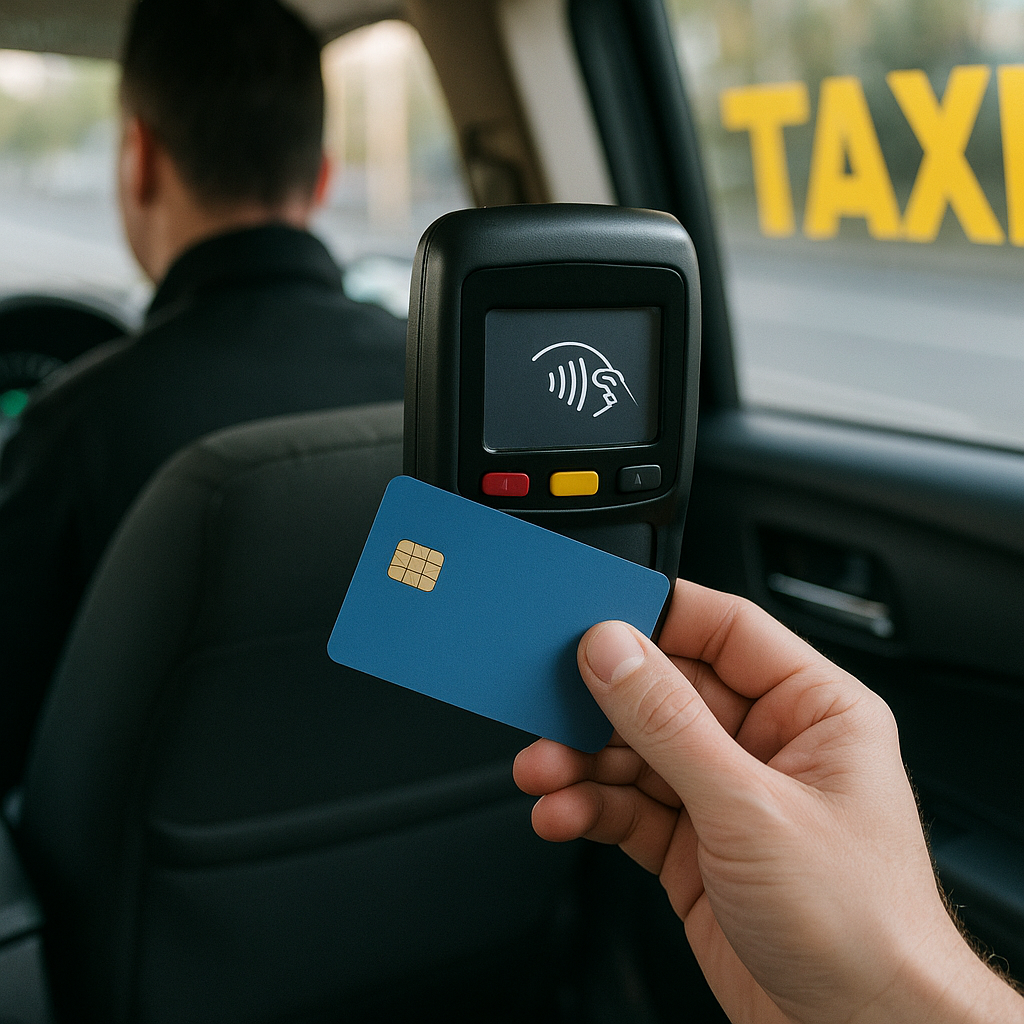
Khayelitsha's cashless taxi experiment: digital taps replace cash, boosting safety & efficiency in SA's busiest commuter corridors.
A new plastic card called the GoCard is changing how people pay for taxi rides in Khayelitsha, South Africa. It lets commuters tap to pay, just like a bus pass, making rides smoother and safer. This card helps students and older people get cheaper fares and even gives discounts for connecting rides. It's a big step towards easier, cash-free travel and could change how everyone gets around in South Africa.
What is the GoCard and how does it work for Khayelitsha commuters?
The GoCard is a contactless payment card for minibus taxis in Khayelitsha, South Africa, launched by the CODETA taxi association. Commuters pick up a no-charge card, top it up with cash or digital payments at kiosks or spaza shops, and then tap it on a dashboard-mounted reader to pay for their fare. It allows for discounted fares for scholars, pensioners, and clinic patients, and offers half-price connecting rides.
Get Cape Town news in your inbox
Stay updated with the latest stories from the Mother City.
A silent launch at Site C
On the first of June, Site C’s Khayelitsha Mall taxi loop sounded almost foreign. Gone was the metallic clatter of coins and the hoarse cries of “Kura! Kura!”. Instead, travellers formed one neat line, touched a grey-green card to a dashboard-mounted reader, and swung into their seats. Four minutes later the Toyota Quantum rolled toward Killarney without a single coin exchanged, argument overheard, or cent counted.
More than fifteen million South Africans board minibus taxis each weekday – a figure greater than twice the Western Cape’s population. Until this summer, only boutique pilots in Sandton’s e-hailing fleets and the MyCiTi bus network had flirted with contactless payment. Now CODETA, one of the nation’s largest taxi associations, has yanked the experiment onto the roads, staking its credibility on forty vehicles and two test corridors: Site C–Killarney (thirty-eight kilometres) and Mfuleni–Killarney (forty-four kilometres).
Each Quantum carries a Yoco Transit NFC reader that plugs into the lighter socket, uploads via a 4G SIM, and caches three days of trips for those dead zones on the Mew Way on-ramp. The hardware is the offspring of the same fintech that let spaza owners from Langa to Louis Trichardt accept card payments, proving that local coders can move money as fast as Silicon Valley ever did.
Getting, loading, and riding with the GoCard
1. Pick up your card
Passengers collect a no-charge GoCard at any terminus or at pop-up kiosks tucked inside Khayelitsha Hospital, Mfuleni Mall, and Killarney’s Racecourse Road entrance. The first top-up can be as small as twenty rand, paid in cash, SnapScan, EFT, or via SASSA card, and the plastic is live the instant it’s printed.
2. Top up anywhere the lights are on
Once issued, the card reloads at the same kiosks or at eighty spaza shops that already run Yoco point-of-sale systems, converting the neighbourhood tuck-shop into an informal ATM. No queue at the mall? You can still feed your wallet while buying bread.
3. Boarding and saving
A single tap shows “Welcome, Sisi” and subtracts the full fare. Registered scholars, pensioners, and clinic patients see the price drop from twenty-five to fifteen rand automatically, no proof flashed across three panicked rows. If you catch a connecting ride within forty-five minutes, the second fare is halved – a trick borrowed from Bogotá’s TransMilenio.
Less cash, less danger, more clarity
The 2023 National Taxi Lekgotla report calculates that cash theft costs operators R1.2 billion every year in stolen takings, protection rackets, and lost hours. A single Quantum can lug four to seven thousand rand in small change on a busy Friday – the equivalent of a month’s rent balanced beside the gear lever. Swapping notes and coins for binary code erodes that motive.
Marshals who once dipped into drivers’ takings now scan a QR code to log trips. Every entry and exit carries an encrypted timestamp, producing a digital diary the association can wave at insurers when windscreens get shattered. In other words, the card is both wallet and witness.
A subsidy that never touches the Treasury
The ten-rand concession for pupils, pensioners, and medical travellers is bankrolled by shifting 8 % of CODETA’s monthly fleet-insurance rebate. Old Mutual Insure trimmed its premium once actuaries showed that cash-free cabs cut hijacking risk by almost a fifth. Instead of banking the windfall, the association turned it into targeted fare relief. Should the project widen, municipal officials hint they could mirror the rebate with a conditional grant – South Africa’s first micro-subsidy that skips the state and lands straight in commuters’ pockets.
Tapping into the city’s invisible rhythms
Every card touch births a geotagged record: origin, destination, time, fare class, and vehicle ID. In only six weeks the pilot corridor has produced 320 000 individual journeys – intelligence the Western Cape Mobility Department never owned. Overlay these dots onto GIS maps and planners suddenly see movement patterns that were previously hidden:
- A surge between 06:20 and 06:45 from Mew Way rank to Gatesville Medical Complex, a tell for an express feeder once BRT Phase 2A goes live in 2026.
- A thin, late-night ribbon of solo riders drifting from Constantia domestic-work shifts back to Mfuleni, a signal for a subsidised owl service.
The data stream is pseudonymised after forty-eight hours, letting the province tweak bus lanes, signal timing, and rank design before the first spade of concrete hits the ground.
Behind the dashboard – hardware, alerts, and solar trickle
Long-time driver Ncediso Booi, eleven years on the Khayelitsha–Claremont run, has a new cockpit rhythm: tap, green light, release brake. The reader’s LED doubles as a silent panic switch – two quick taps from any commuter shoots a distress ping to CODETA’s control room and the closest sector van. “My eyes stay on the road now,” he says.
Behind his seat, a 20 000 mAh power bank with solar pads keeps the router alive during load-shedding, turning each Quantum into a roaming edge node. Future firmware could push live load counts to platforms like WhereIsMyTransport so that commuters see “3 seats left” before they leave the house.
Voices from the queue
Thandiwe Mnxati, Grade-11 at Sizimisele High, used to miss extra maths because the return fare plus safety-coin buffer cost too much. The ten-rand discount slices her weekly spend from R200 to R120 – half a grocery bag of spinach and tomatoes.
Sipho Ngcukana, 72, taps his pensioner GoCard clipped to his Bible like a conjurer revealing a dove: tap, R15, seat 4B.
Zukiswa Ndamase, a street hawker, is less enthused. Monday morning kiosk lines snake longer and her customers still pay in cash. Until she can sell with QR codes, she must dip into Shoprite to cash out, then reload – a reminder that fintech is frictionless only inside its own walled garden.
Banking, risk, and the week-one hiccup
Yoco Transit and Nedbank ring-fence passenger float in an escrow account audited by the Payments Association of South Africa. Drivers get settlement within twenty-four hours straight to their personal accounts – a shock for crews used to nightly cash splits. During launch week, two drivers slid back to coins while KYC paperwork crawled through the scanner. CODETA now hosts WhatsApp voice-note clinics on how to photograph your ID and proof of address using a feature phone.
Rivals, rules, and the turf question
More than 300 associations scatter across the national taxi landscape. The pilot purposely avoids the contested southern suburbs prowled by Golden Arrow, carving instead through CODETA-dominated northeast corridors where sabotage risk is low. Still, SANTACO critics brand the scheme “surveillance dressed as convenience.” The national amendment act (2019) limits location pings to fare calculation, and raw logs cannot reach SAPS without a court order, counters a ministerial adviser named Sileku.
Hardware costs and the December promise
If the ninety-day test hits key numbers – 60 % digital load-factor, 95 % driver uptime, under one-percent fraud – CODETA will push into Mitchells Plain and Philippi East by December. Order volumes of 500 readers drop the unit price from R2 750 to R1 950, courtesy of Yoco’s Shenzhen supplier. City officials mutter that the same device might one day be certified for minibus-ferry legs along the unfinished MyCiTi N2 Express trunk, knitting a hybrid public-private mesh.
Ripple effects on corner shops and coders
- Spaza reload points report a fourteen-percent jump in foot traffic, mostly for bread and airtime.
- Mechanics servicing the pilot fleet now charge phones and swap cracked screens during oil changes.
- A Khayelitsha coding club is prototyping a USSD balance checker so that non-smartphone owners can dial 134 86# to see their purse in isiXhosa or English.
Global ghosts and local swagger
Medellín’s “Tarjeta Civica” and Nairobi’s BebaPay collapsed once foreign funders pulled out. CODETA’s twist is that the association itself drives the business case, anchored in insurance savings and self-financed social rebates. Gauteng’s treasury has quietly asked for a briefing; if Johannesburg’s fractured taxi wars can copy the playbook, the national mobility map may redraw itself faster than any BRT blueprint ever could.
Tamper-proof guts and green math
Each reader carries a Thales secure-element chip – the same French firm that supplies our biometric passports. Triple DES encryption hugs every packet, tokenisation swaps card numbers with sixteen-digit aliases renewed per transaction, and epoxy-coated screws trigger a honey-pot shutdown if someone cracks the shell.
A cashless cab still drinks diesel, but shorter rank dwell times shrink idle minutes. Early GPS logs show Killarney layovers falling from fourteen to nine minutes per circuit, slashing 45 minutes of engine idling daily. At scale that prevents twenty-two tons of CO₂ monthly – the yearly footprint of eighty-eight LPG-cooking households.
Language, literacy, and design tweaks
LCD screens default to isiXhosa with a one-tap English toggle. Voice prompts recorded by local radio voice Ntsika guide illiterate users: “Khetha ubuncinci okanye okukhulu”. Touch a raised dot beside the reader to confirm the amount, a cue lifted from Delhi’s metro smartcards.
No app required
Knowing that only forty-one percent of Khayelitsha homes own smartphones, CODETA built a web portal that runs inside Facebook Lite and Opera Mini. Users check balances, track trips, and report lost cards via a zero-rated site that costs no data from 18:00 to 23:00 on MTN’s public-benefit program.
Dynamic pricing and the NITS-2 dream
By year-end the association will test off-peak discounts of fifteen percent to fill seats between 09:00–14:00, plus a ten-percent surcharge on rainy days. The algorithm ran through Nairobi test rigs using anonymised Cape Town weather data and keeps driver income within two percent of the flat-rate baseline.
Hop a few years ahead and CODETA wants GoCard to chat with the national integrated ticketing standard (NITS-2) now under transport-department review. One tap could move a commuter from a Mfuleni minibus onto a BRT trunk bus and then onto a Metrorail spur at Century City – an interoperability fantasy that once sounded laughable in South Africa’s siloed transport landscape.
For today, the most revolutionary gesture is also the smallest: a neat tap that turns a 1999 Toyota Quantum into a node on Cape Town’s still-growing digital nervous system.
[{"question": "
What is the GoCard?
", "answer": "The GoCard is a new contactless plastic card launched by the CODETA taxi association in Khayelitsha, South Africa, designed to revolutionize how people pay for minibus taxi rides. Instead of cash, commuters can tap the card on a dashboard-mounted reader to pay their fare, making transactions smoother and safer."}, {"question": "How can commuters get and use a GoCard?
", "answer": "Commuters can pick up a no-charge GoCard at any taxi terminus or pop-up kiosks located at Khayelitsha Hospital, Mfuleni Mall, and Killarney's Racecourse Road entrance. The card can be topped up with cash or digital payments (SnapScan, EFT, SASSA card) at these kiosks or at 80 participating spaza shops equipped with Yoco point-of-sale systems. Once loaded, a single tap on the Yoco Transit NFC reader in a taxi pays the fare."}, {"question": "What benefits does the GoCard offer to commuters?
", "answer": "The GoCard provides several benefits, including discounted fares for registered scholars, pensioners, and clinic patients, reducing the fare from R25 to R15 automatically. Additionally, it offers half-price connecting rides if taken within 45 minutes of the first journey. It also promotes cash-free travel, enhancing safety by reducing the amount of cash carried by both drivers and passengers."}, {"question": "How does the GoCard enhance safety and efficiency for taxi operators?
", "answer": "By moving to a cashless system, the GoCard significantly reduces the risk of cash theft, which costs operators substantial amounts annually. Each transaction is digitally recorded with an encrypted timestamp, providing a clear digital diary of trips that can be used for insurance claims. The system also includes a silent panic switch, allowing commuters to alert CODETA's control room in case of distress."}, {"question": "How is the GoCard project funded and sustained?
", "answer": "The discounted fares for vulnerable groups are self-bankrolled by CODETA through a shift in their monthly fleet-insurance rebate. Old Mutual Insure reduced their premiums after actuarial data showed that cash-free cabs cut hijacking risks by almost a fifth. This innovative approach means the subsidy does not rely on government treasury, but rather on the operational savings generated by the system itself."}, {"question": "What impact does the GoCard have on urban planning and future transport?
", "answer": "Every card tap generates geotagged data (origin, destination, time, fare class, vehicle ID), providing invaluable insights into commuter movement patterns. This data, pseudonymized after 48 hours, allows the Western Cape Mobility Department to make informed decisions for urban planning, such as optimizing bus lanes, signal timing, and rank design. In the future, the GoCard aims to integrate with the national integrated ticketing standard (NITS-2), potentially allowing seamless travel across different modes of public transport like BRT buses and Metrorail.", "question": "Is there a mobile app required to use the GoCard?
", "answer": "No, a dedicated mobile app is not required. Recognizing that only 41% of Khayelitsha homes own smartphones, CODETA developed a web portal accessible via Facebook Lite and Opera Mini. This zero-rated site, costing no data from 18:00 to 23:00 on MTN's public-benefit program, allows users to check balances, track trips, and report lost cards. For non-smartphone users, a USSD balance checker is being prototyped, allowing them to dial 134 86# to check their balance in isiXhosa or English."}]
Michael Jameson is a Cape Town-born journalist whose reporting on food culture traces the city’s flavours from Bo-Kaap kitchens to township braai spots. When he isn’t tracing spice routes for his weekly column, you’ll find him surfing the chilly Atlantic off Muizenberg with the same ease he navigates parliamentary press briefings.
View all articles →