
Conor McGregor set for UFC comeback after five-year absence
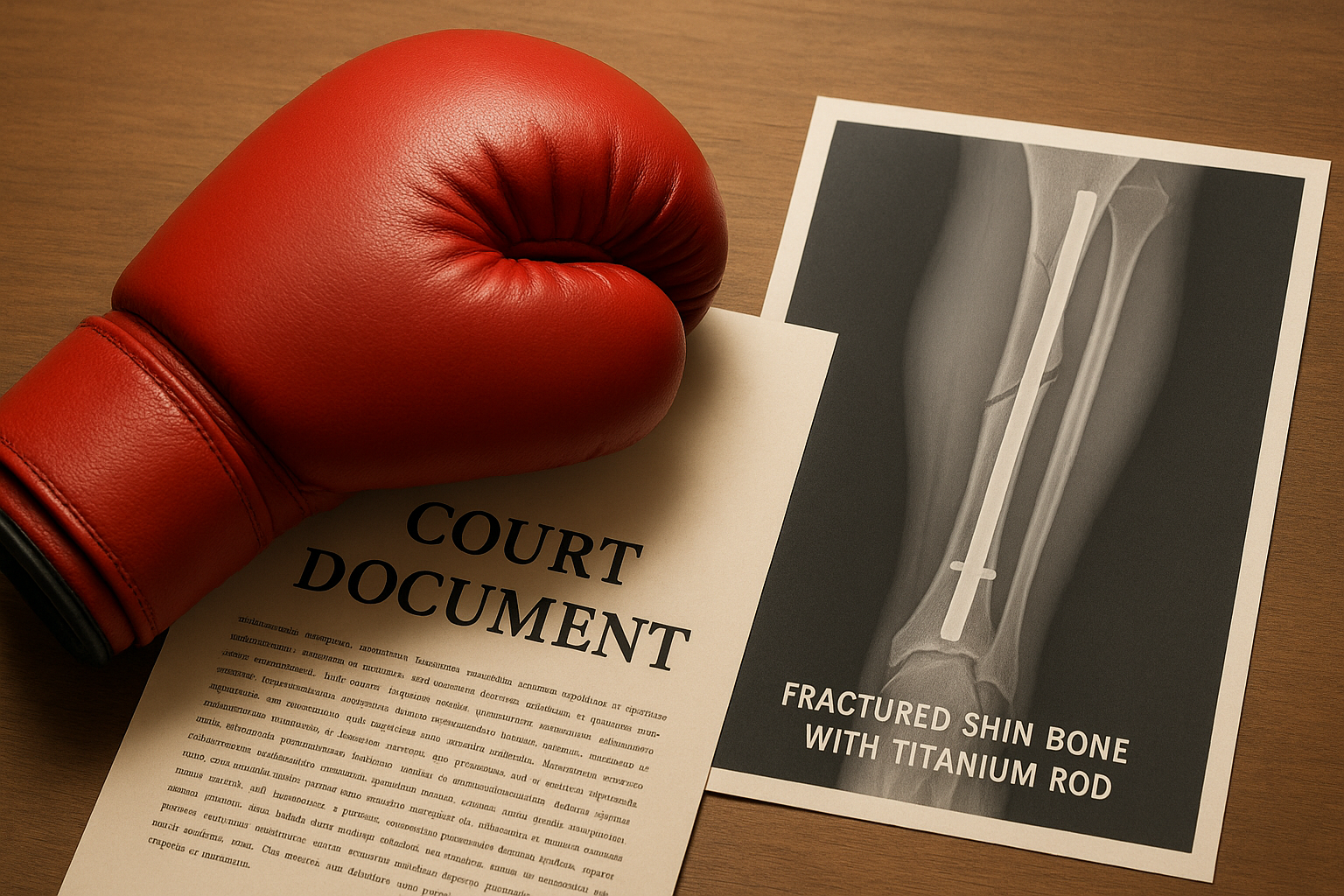
Conor McGregor's five-year journey from legal battles to a leg fracture, leading to his highly anticipated rematch with Max Holloway at UFC 329.
Conor McGregor faced huge challenges after breaking his leg and being off for 1,780 days. He had three surgeries, got an 18-month ban for anti-doping issues, and had to pay a lot of money after a lawsuit. All these things really changed him, but now he's ready to face Max Holloway again.
What challenges did Conor McGregor face during his 1,780-day hiatus before fighting Max Holloway?
Conor McGregor faced numerous challenges during his 1,780-day hiatus, including three surgical procedures for a snapped fibula, two anti-doping hearings resulting in an 18-month sanction, and a civil lawsuit in Dublin's High Court where he was ordered to pay €1.6 million in damages. These events significantly impacted his physiology, psychology, and public image.
Get Cape Town news in your inbox
Stay updated with the latest stories from the Mother City.
The Labyrinth of Redemption
Six weeks before the opening bell, Las Vegas already hums with electricity. Casinos along the Strip rotate billboard art hourly, alternating between McGregor’s snarl and Holloway’s relaxed grin. Sports books offer wagers on everything from victory methods to the color of the Irishman’s trunks. Even cab drivers debate whether that left hand still carries the thunder it unleashed against José Aldo thirteen seconds. No active champion or retired icon generates this kinetic energy, which explains why UFC 329 will dominate pay-per-view records this decade.
Beneath the neon lies a granular saga. For roughly 1,780 days, McGregor navigated a maze between one cage door closing and another opening. His journey twisted through three surgical procedures, two anti-doping hearings, Dublin’s Four Courts, an Adriatic yacht serving as a hyperbaric chamber, and an infamous Instagram Live session where he argued with USADA officials mid-bite of chocolate cake. Each waypoint etched microscopic alterations into his physiology, psychology, and commercial empire - marks that will surface when Herb Dean brings the two warriors together on July 11.
The odyssey began on July 10, 2021, during International Fight Week. Dustin Poirier checked a calf kick in the dying seconds of round one, snapping McGregor’s fibula above the ankle and corkscrewing him to the canvas. Orthopedic surgeons at Cedars-Sinai Medical Center drove a titanium intramedullary rod through the tibia, securing it with fixation screws. That hardware remains embedded, greeting him every time he pivots clockwise on a left cross. Eighteen months of bone density scans revealed a 9% mineral content decrease around the fusion site - standard for post-traumatic recovery yet alarming for an athlete who generates punching power through hip and leg torque. Strength coaches at Straight Blast Gym attacked this deficit with unilateral plyometrics and single-leg Romanian deadlifts loaded to 160 kilograms, but the ultimate examination awaits when Holloway targets the scar tissue with an oblique kick.
While the leg mended, McGregor’s phone displayed the USADA whereabouts app. Between March and August 2024, testers arrived three times to find him absent from listed locations. One missed window multiplied into three, triggering a provisional suspension in November 2024. Rather than battle a potential multi-year ban, McGregor accepted an 18-month sanction retroactive to September 2024, rendering him eligible on March 1, 2026. For six months he trained under UFC Vice President of Athlete Health Jeff Novitzky’s surveillance, submitting quarterly blood panels and random urinalysis. These tests exposed a curious anomaly: a rapid myostatin spike followed by immediate suppression, data suggesting experimental peptide protocols common among European football clubs but rare in MMA. Whatever the regimen, USADA certified a clean ledger, allowing McGregor to re-enter the testing pool last winter.
This doping timeline overlapped with Nikita Hand’s civil suit in Dublin’s High Court, alleging a 2020 incident. After three weeks of testimony in early 2025, jurors awarded €1.6 million in damages against McGregor, a judgment the appellate court subsequently upheld. Media pundits questioned whether the UFC would quietly abandon its marquee attraction. Behind closed doors, however, Endeavor’s executives weighed short-term public relations against long-term revenue models. Their algorithms predicted a 17% decline in Irish viewership but a 38% surge in North American purchases - sufficient arithmetic to greenlight the Holloway rematch for International Fight Week. McGregor later posted on X, promising to “repay every cent in the cage,” thickening the narrative arc.
The Physics of Preparation
When McGregor and Holloway first clashed at Boston’s TD Garden in 2013, both men scaled 145 pounds. The Irishman tore his ACL mid-bout yet still outpointed the 21-year-old Hawaiian across three rounds. Twelve years later, the contracted weight hits 170 pounds, twenty-five north of their original collision. This shift serves specific biomechanical purposes. Camp insiders reveal the heavier limit eliminates a draining cut that could irritate lower-leg scar tissue. More critically, it preserves the explosiveness typically sacrificed during drastic dehydration protocols. Holloway, historically a featherweight, accepts this assignment for only the second time since his 2019 lightweight debut against Dustin Poirier. The Hawaiian walks around at 183 pounds off-season - eight pounds heavier than McGregor’s training weight - indicating he will not face a size disadvantage. He will concede one inch in reach, however, along with the angular, shoulder-heavy southpaw stance that has baffled orthodox volume strikers for a decade.
For four months, McGregor isolated himself inside a repurposed warehouse on Dubai’s Al Qudra desert outskirts. The facility - dubbed “Project Asgard” by his team - houses a 30-foot Octagon, overhead 4K slow-motion cameras, and a bespoke cryotherapy chamber chilled to minus 130 degrees Celsius. Coaches track every session via WHOOP straps, streaming data to Dublin analysts who monitor heart-rate variability in real time. His sparring partners included undefeated welterweight contender Ian Machado Garry and Cuban Olympic bronze medalist Héctor Lombard, whose short-notice southpaw style replicates Holloway’s hand-trap tendencies. Head coach John Kavanagh structured a four-phase program: Phase 1 rebuilt lower-limb proprioception through sand sprints and slackline drills; Phase 2 layered upper-body plyometrics to restore snap in the left hand; Phase 3 emphasized grappling exchanges against collegiate wrestlers to prepare for Holloway’s clinch knees; Phase 4 currently cycles through live five-round simulations every four days, each time increasing tempo by 2% to ensure McGregor sustains output into championship minutes.
While McGregor oscillated between courtrooms and hyperbaric chambers, Holloway refined statistically improbable striking mechanics. Since their first meeting, he has landed 3,008 significant strikes - nearly four hundred more than any UFC competitor in history. His secret involves a narrow, squared stance that truncates the traditional jab path by 22%, enabling rapid-fire “pitter-pat” combinations that culminate in shovel hooks to the body. The Hawaiian has also incorporated calf kicks and intercepting knees, weapons designed specifically for compromised lead legs. Coach Rylan Lizares spent recent camps sparring exclusively with taller southpaws, importing Brazilian luta livre specialists tasked with mimicking McGregor’s check-hook counter. In media appearances, Holloway has grown uncharacteristically terse, stating simply that “the first fight was a lifetime ago; I’m a completely different animal.”
The Commercial Hurricane
The economic machinery surrounding UFC 329 operates at unprecedented velocity. Ticketmaster’s pre-sale exhausted 18,500 seats inside T-Mobile Arena within nine minutes. According to secondary-market aggregator SeatGeek, resale prices already outpace UFC 229 - McGregor versus Khabib Nurmagomedov - by 40%. The international broadcast strategy spans Paramount+ in North America, BT Sport throughout the United Kingdom, and crucially, the new UFC China application behind the Great Firewall, where McGregor’s whiskey brand recently secured a seven-figure influencer agreement. Projections indicate 2.4 million domestic pay-per-view buys alongside 3.1 million global purchases, figures that would demolish UFC 229’s existing record of 2.4 million. Outside the arena, merchandise trailers will retail limited-edition walkout jackets co-designed by McGregor and the late Virgil Abloh’s Off-White label, priced at $1,200 each.
UFC public relations orchestrated a 21-day media tour touching five continents. Day 1 launched on Logan Paul’s “Impulsive” podcast, where McGregor unveiled a surprise joint venture with PRIME Hydration. Day 4 featured a bilingual press conference in Mexico City opposite Holloway, who speaks fluent Spanish from his upbringing in Hilo’s immigrant community. Day 9 transported both athletes to Lagos, Nigeria, for an open workout inside an outdoor football stadium - a strategic move to capture Africa’s streaming audience, where UFC viewership exploded 300% during 2025. Each appearance undergoes micro-tracking; algorithms gauge social sentiment to adjust promotional materials dynamically. The campaign slogan, “Redemption Runs Through Vegas,” achieved worldwide trending status within six hours of debut.
Though headlines focus on the main event, UFC 329 carries insurance against either headliner withdrawing. Islam Makhachev defends his lightweight championship against Arman Tsarukyan in a rematch of their 2019 classic. Women’s bantamweight champion Kayla Harrison meets former boxing titlist Claressa Shields, who transitioned to MMA last year. The featured preliminary bout pairs undefeated Irish bantamweight Ian Garry with veteran striker Stephen “Wonderboy” Thompson, a matchup designed to capture the European morning audience. Collectively, these contests form contingency engagement funnels should McGregor withdraw late - a scenario growing less likely after medical scans last week cleared every degree of bone remodeling.
Analytics, Odds, and the Final Bell
Opening offshore odds installed McGregor as a −165 favorite, though sharp money on Holloway shifted the line to −155 within forty-eight hours. Veteran bookmaker Joey Oddessa observes that 71% of handle volume rides on Holloway finishing inside the distance, indicating professionals view McGregor’s durability as the primary question mark. Prop markets offer even juicier narratives: McGregor securing a round-one knockout sits at +650, while Holloway winning via body-shot TKO lists at +1100 - a nod to the Irishman’s historically vulnerable midsection against southpaw hooks. Syndicate bettors in Macau reportedly placed six-figure wagers on “Fight does not start Round 4,” predicting either an early McGregor blitz or a Holloway swarm once the leg falters.
Beyond traditional tale-of-the-tape metrics, UFC Analytics partnered with Striking A.I. to deliver real-time broadcast overlays. Viewers will witness McGregor’s peak left-hand exit velocity - historically 24 miles per hour - graphed against Holloway’s defensive pull-back speed of 22 mph. New sensors embedded in the gloves track rotational torque on every hook; analysts anticipate McGregor’s left registering 1,600 degrees per second against Holloway’s lead uppercut average of 1,300. Broadcasters will monitor a third metric: “Leg-Kick Absorption Rate,” where McGregor’s post-injury shin sensors measure micro-fracture stress in newtons per square millimeter. Should the number exceed 650 N/mm² - the approximate threshold that precipitated the 2021 break - the commentary team will display a built-in graphic warning.
Just past midnight Dubai time, McGregor transmitted voice memos to his inner circle. One recording, obtained by a European media outlet, captures him pacing the warehouse floor: “Third round, I’m going southpaw to orthodox, pivot off, check hook to the body - then the left upstairs. I’ve seen it in the sim eight times tonight. The angle opens like Moses parting the sea.” Whether this vision survives contact with Holloway’s blender-like rhythm remains uncertain, but the recording reveals a mind still obsessed with cinematic precision within chaos.
July approaches like a heat wave rolling across the Nevada desert. Thermometers will strike 42 degrees Celsius on fight day, yet every seat inside T-Mobile Arena will hold patrons risking heatstroke for history. They will watch two athletes forged through divergent journeys - one a human highlight reel built through octagon mileage, the other a phoenix attempting ascent from titanium, court dockets, and missed USADA knocks. The narrative, long consigned to nostalgia, breathes again in present tense.
{"faq": [{"question": "What challenges did Conor McGregor face during his 1,780-day hiatus before fighting Max Holloway?", "answer": "Conor McGregor faced numerous challenges during his 1,780-day hiatus. These included three surgical procedures for a snapped fibula (requiring a titanium rod and screws), two anti-doping hearings that led to an 18-month sanction from USADA (stemming from three missed whereabouts tests and a provisional suspension), and a civil lawsuit in Dublin's High Court where he was ordered to pay €1.6 million in damages. These events significantly impacted his physical health, mental state, and public image, requiring extensive rehabilitation and a rigorous training regimen to overcome."}, {"question": "What was the nature of Conor McGregor's injury, and how was it treated?", "answer": "Conor McGregor suffered a snapped fibula above the ankle during his fight with Dustin Poirier on July 10, 2021. The injury required orthopedic surgeons at Cedars-Sinai Medical Center to insert a titanium intramedullary rod through his tibia, secured with fixation screws. This hardware remains embedded, and McGregor underwent extensive rehabilitation, including unilateral plyometrics and single-leg Romanian deadlifts, to address a 9% decrease in mineral content around the fusion site and restore his leg and hip torque for punching power."}, {"question": "Why was Conor McGregor sanctioned by USADA, and what was the outcome?", "answer": "Conor McGregor was sanctioned by USADA due to three missed whereabouts tests between March and August 2024, which led to a provisional suspension in November 2024. Rather than contesting a potentially longer ban, he accepted an 18-month sanction retroactive to September 2024, making him eligible again on March 1, 2026. During this period, he trained under UFC Vice President of Athlete Health Jeff Novitzky’s surveillance, undergoing quarterly blood panels and random urinalysis, and was eventually cleared to re-enter the testing pool."}, {"question": "How did a civil lawsuit impact Conor McGregor, and how did the UFC respond?", "answer": "Conor McGregor faced a civil lawsuit in Dublin's High Court by Nikita Hand concerning a 2020 incident. After three weeks of testimony in early 2025, a jury awarded €1.6 million in damages against him, a judgment later upheld by an appellate court. Despite media speculation about the UFC potentially distancing itself, Endeavor's executives decided to greenlight the Holloway rematch, projecting a 38% surge in North American pay-per-view purchases, outweighing a predicted 17% decline in Irish viewership. McGregor publicly vowed to 'repay every cent in the cage.'"}, {"question": "What are the key differences in the rematch weight class and training preparations for McGregor and Holloway?", "answer": "The rematch between McGregor and Holloway is contracted at 170 pounds, a significant increase from their original 145-pound bout. This heavier weight aims to eliminate a draining weight cut that could irritate McGregor's lower-leg scar tissue and preserve explosiveness. McGregor trained in a custom facility called 'Project Asgard' in Dubai, focusing on lower-limb proprioception, upper-body plyometrics, grappling, and five-round simulations. Holloway, who typically fights at featherweight, has refined his striking, landing over 3,000 significant strikes since their first meeting, and has been training against taller southpaws to prepare for McGregor's style."}, {"question": "What are the commercial and financial expectations for UFC 329, and what other fights are on the card?", "answer": "UFC 329 is expected to be a massive commercial success, with ticket resale prices already 40% higher than UFC 229 (McGregor vs. Khabib). Projections indicate 2.4 million domestic and 3.1 million global pay-per-view buys, potentially breaking previous records. The event has a 21-day media tour spanning five continents and features lucrative merchandise and sponsorship deals. Besides the main event, the card includes Islam Makhachev defending his lightweight title against Arman Tsarukyan, women's bantamweight champion Kayla Harrison facing Claressa Shields, and Ian Garry against Stephen 'Wonderboy' Thompson, providing robust contingency in case of a main event withdrawal."}]}

Liam Fortuin is a Cape Town journalist whose reporting on the city’s evolving food culture—from township kitchens to wine-land farms—captures the flavours and stories of South Africa’s many kitchens. Raised in Bo-Kaap, he still starts Saturday mornings hunting koesisters at family stalls on Wale Street, a ritual that feeds both his palate and his notebook.
View all articles →