
CRANES IN SOUTH AFRICA
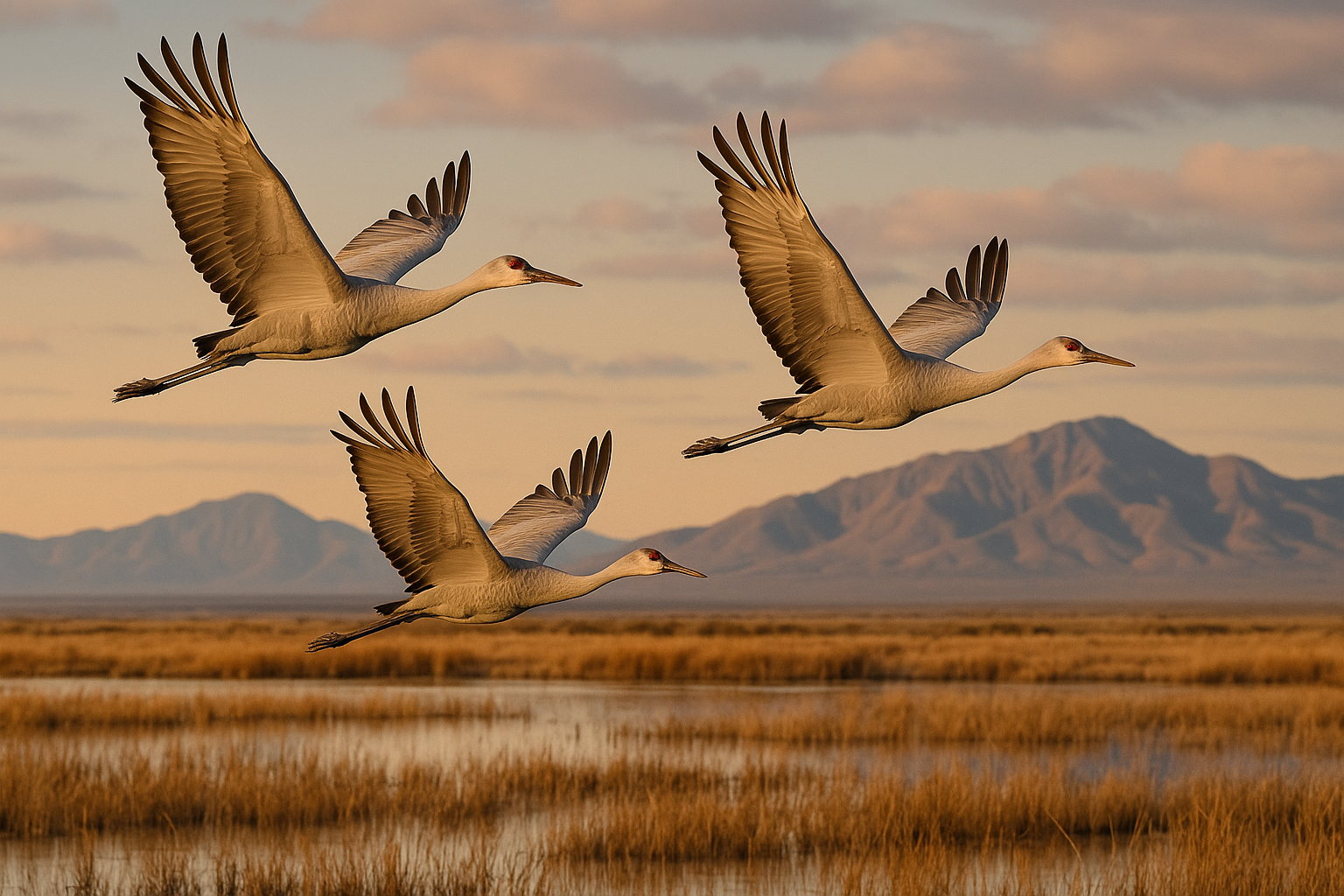
Help save SA's iconic cranes! Join the 2026 census (July 24-27) to protect Blue, Wattled, & Grey-crowned cranes. Citizen science needed!
South Africa is counting its cranes from July 24-27, 2026, to help save them. This big count will track Blue, Wattled, and Grey-crowned cranes. Everyone can help by reporting crane sightings to protect these special birds and their homes. This data will guide conservation plans and protect wetlands, which are super important for nature and people.
What is the purpose of South Africa's 2026 Crane Count?
The 2026 Crane Count aims to assess the populations of Blue, Wattled, and Grey-crowned cranes across South Africa. This citizen science initiative will gather crucial data to update conservation strategies, guide land management decisions, and protect these key indicator species and their vital wetland habitats.
Get Cape Town news in your inbox
Stay updated with the latest stories from the Mother City.
South Africa’s wetlands and grasslands are losing their most stately dancers. From 24–27 July 2026 the country will stage its first full-scale crane count in two decades, a four-day “open-air audit” of three flagship species that double as living barometers of freshwater and rangeland health. The Endangered Wildlife Trust and the International Crane Foundation are inviting farmers, hikers, bird-club members, hikers, school groups and passing travellers to log every sighting - because science alone can no longer keep pace with the losses.
The census is deliberately timed: mid-winter drought forces birds into open, visible congregations around dams, feedlots and pans. A single WhatsApp message - species, number, GPS pin and, if possible, a photograph - goes straight to a live dashboard that analysts will compare with 1998-2006 baselines. If you can spare ten minutes at dawn or dusk, you become a co-author of the next National Biodiversity Assessment.
Results will not gather dust. Updated maps will guide Eskom’s power-line rerouting, steer Working-for-Wetlands restoration budgets, and decide which privately owned grasslands qualify for new stewardship contracts. In short, the 2026 count is part survey, part insurance policy against silent disappearance.
Blue, Wattled, Grey-crowned: Three Birds, Three Plot Twists
Blue Crane: National Icon in Retreat
Blue cranes are still the face of the R100 note, but their post-2010 crash - almost four in ten birds gone - has biologists re-writing management plans. Roughly 30 000 remain, yet the Free State stronghold is emptying while Northern Cape irrigation circles and Western Cape stubbles report new, fragmented pockets. Whether the shift tracks climate drift, fence-lessness, or simply mirrors intensified cropping is the puzzle the count must solve.
Wattled Crane: The KwaZulu-Natal Few
Fewer than 300 wattled cranes survive in South Africa, most nested in the Umgeni–Mooi wetlands of KwaZulu-Natal. Mpumalanga’s story is bleaker: 45 territories in the 1990s now down to four pairs, a 91 % breeding collapse in one generation. Because each female lays a single egg and needs three months of undisturbed marsh, even light human traffic can tip a territory into silence. The 2026 tally will test whether last year’s innovative “floating nesting rafts” and volunteer site-guards have slowed the free-fall.
Grey-crowned Crane: Stable Today, Vulnerable Tomorrow
Grey-crowned numbers hover around 7 000, a figure that sounds comfortable until one remembers the species shares the same wetland mosaics under siege from coal mines, peri-urban malls and invasive plants. Because flocks move nightly between roost and foraging sites, disturbance at either end triggers rapid local crashes. A stable headline figure can mask a mosaic of empty patches, hence the count’s role in exposing hidden holes before they widen.
Why Lose a Crane, Lose a Catchment
A crane’s presence is shorthand for a functioning catchment. The birds need knee-high sedge beds for nesting, shallow floodplains for chick-rearing and intact grasslands for safe roosting. Lose any layer and the population folds, often before fish kills or crop failures announce wider trouble.
South Africa’s wetlands occupy less than 5 % of the land surface yet store half of the nation’s threatened flora, recharge 57 % of its aquifers and sequester more carbon per hectare than any terrestrial biome. When cranes vanish, the same forces - drainage, trampling, fertiliser seepage - soon erode every co-benefit, from flood buffering to water purification.
Economists estimate the annual value of wetland services at R50 billion nationally; cranes are the red-flag indicators that flash when these invisible subsidies are being withdrawn. Saving the birds is therefore cheaper, by orders of magnitude, than building new water-treatment works or repairing flood damage after the fact.
Threats in One Word - Us
Habitat conversion heads the list: every 3 % annual expansion of irrigated grain circles in the central grasslands clips crane territories. Power-line collisions kill an estimated 1 000 cranes countrywide each year, a figure Eskom aims to halve by 2030 through bird-flight diverters and redesigned conductor spacing.
Secondary poisoning still claims hundreds of birds: farmers targeting crop-raiding Egyptian geese with carbofuran inevitably take out curious crane colts as well. Meanwhile the illicit pet trade in crowned-crane chicks fuels road-side arrests from Limpopo to the Eastern Cape, a black-market feedback loop the census can flag through sudden cluster absences.
Climate change is rewriting the hydrological script; shorter, sharper rainfall seasons desiccate nesting marshes before chicks fledge. The north-westerly drift of blue cranes possibly mirrors their search for cooler, reliably wetter highlands as the subcontinent warms.
From Threats to Tactics - What Works Now
No single intervention suffices. Stewardship agreements, now covering 1.2 million ha of private land, pay landowners to keep breeding wetlands untrampled and unfertilised; crane occupancy on these sites has risen 18 % since 2018.
Eskom’s “Crane-friendly Route” programme reroutes or insulates 600 km of medium-voltage lines in KZN and the Eastern Cape, cutting collision fatality by 45 % where fully implemented. Meanwhile community “crane custodians” patrol nests, escort chicks to safe roosts and run sustainable craft markets that turn living birds into tourist revenue.
Captive-breeding and “egg-pulling” protocols - removing first eggs to induce a second clutch - have stocked a release pool of 60 wattled cranes that will bolster the four tenuous Mpumalanga pairs, while a national DNA barcode library cracks down on laundering of wild-caught chicks as “captive bred”.
Your Four-Day Window: How, Where and When
Dawn and the first two hours after sunset yield 80 % of sightings; cranes leave roosts at first light and return at dusk, calling loudly while overhead. Choose an unobstructed pan, pasture or stubble field, park safely off the road and scan with binoculars in a 360-degree arc; even distant “floating” dots usually resolve into cranes when panning.
Record the species: blue is pigeon-grey with a black “necklace”; wattled is ghost-white with a red facial wattle; grey-crowned carries a gold feather crest like a punk rocker’s mohawk. Tally adults, juveniles and, for wattled, any banded legs. Drop a GPS pin, note the exact time and WhatsApp the lot to +27 60 086 9053. A blurry phone photo is fine - analysts can confirm tricky IDs from wing posture or leg colour.
No cranes in an area that used to have them? Send the “zero” anyway; negative data anchors range-contraction models and flags sites for urgent restoration. If unsure, submit under “crane sp.”; researchers will triangulate neighbouring reports to assign the correct species.
Citizen Science on African Terms
Africa’s conservation science workforce is thin - one professional ecologist per 3 500 km² against one per 60 km² in Europe - so volunteers are not decorative extras, they are infrastructure. The 2026 count joins Mozambedian wild-dog road surveys, Kenyan “MammalMap” camera-trap grids and Ghanaian parrot-roost counts in proving that data collected by shepherds, taxi drivers and bird-blogger teenagers can pass peer-review when protocols are simple and verification tight.
Cranes suit mass participation: bigger than geese, louder than hadedas, they bob, dance and bugle in open terrain, reducing mis-identification risk that plagues forest projects. The fixed July window also dodges migration noise - every crane counted is a resident South African bird, so population arithmetic stays clean.
Past counts show that once citizens name, count and worry about cranes, ripple effects follow: wetland clean-ups, local bans on goose poisons, even election of pro-conservation ward councillors. In short, the census is gateway drug to broader stewardship.
From Spreadsheet to Safeguard - What Happens After July
Within six weeks analysts will release preliminary totals, updated range maps and an interactive “heat map” of sightings. Conservation managers will overlay these layers with power-line plans, mining applications and land-use zonings, creating an early-warning system that funnels new infrastructure away from core breeding sites.
By December the data will feed into a formal Red-List reassessment. If wattled cranes drop below 250 adults or blue cranes lose another 10 %, the species automatically trigger “Critically Endangered” status and stronger legal protection under the National Environmental Management: Biodiversity Act.
Looking further, the volunteer WhatsApp group will stay live, feeding ad-hoc sightings into BirdPix and the second Southern African Bird Atlas. What begins as a frantic four-day burst matures into a permanent neighbourhood watch for wetlands.
Keep Looking Up
South Africa’s cranes have already outlived the dodo, the passenger pigeon and, closer to home, the bluebuck. Their continued survival is no longer pre-ordained by vast wilderness; it now hinges on maps, meters and messages tapped into a phone.
Between the winter dawn chorus of 24 July and the dusk of 27 July, every citizen possesses equal power to tip the balance. Submit one sighting - or one informed absence - and you write yourself into the next chapter of a story that began with San rock-art dancers and still unfolds above our marshes today.
What is the purpose of South Africa's 2026 Crane Count?
The 2026 Crane Count, scheduled from July 24-27, 2026, aims to assess the populations of Blue, Wattled, and Grey-crowned cranes across South Africa. This large-scale citizen science initiative will gather crucial data to update conservation strategies, guide land management decisions, and protect these key indicator species and their vital wetland habitats. This census, the first full-scale count in two decades, will help understand population changes, especially given the significant decline in Blue and Wattled crane numbers.
Which crane species are being counted in the 2026 census?
The 2026 Crane Count will specifically focus on three flagship crane species: the Blue Crane, the Wattled Crane, and the Grey-crowned Crane. These species are considered living barometers of freshwater and rangeland health in South Africa. Each has its unique conservation status, with the Blue Crane being the national bird, the Wattled Crane critically endangered, and the Grey-crowned Crane stable but vulnerable to habitat changes.
How can ordinary citizens participate in the crane count?
Everyone can contribute to the crane count. Participants are asked to report crane sightings between July 24-27, 2026, particularly during dawn and dusk when cranes are most active and visible. To report a sighting, send a WhatsApp message to +27 60 086 9053 with the species, number of birds, a GPS pin, and if possible, a photograph. Even reporting the absence of cranes in an area where they used to be seen is valuable data.
Why are wetlands so important for cranes and the environment?
Wetlands are crucial for cranes, providing essential habitats for nesting, chick-rearing, and roosting. Beyond cranes, wetlands are vital ecosystems that occupy less than 5% of South Africa's land but store half of its threatened flora, recharge 57% of its aquifers, and sequester more carbon per hectare than any other terrestrial biome. Their disappearance due to drainage, trampling, and pollution leads to broader environmental issues like reduced flood buffering and impaired water purification, impacting both nature and human well-being.
What are the main threats facing South Africa's cranes?
Cranes in South Africa face several significant threats, primarily driven by human activities. Habitat conversion due to expanding irrigated agriculture is a major factor. Power-line collisions kill an estimated 1,000 cranes annually, though initiatives are in place to mitigate this. Secondary poisoning from pesticides used by farmers and the illicit pet trade in crane chicks also pose serious dangers. Climate change, leading to shorter, sharper rainfall seasons, further impacts nesting marshes and influences crane distribution.
What happens with the data collected after the count?
The data collected during the four-day count will be rapidly analyzed. Within six weeks, preliminary totals, updated range maps, and an interactive

Emma Botha is a Cape Town-based journalist who chronicles the city’s shifting social-justice landscape for the Mail & Guardian, tracing stories from Parliament floor to Khayelitsha kitchen tables. Born and raised on the slopes of Devil’s Peak, she still hikes Lion’s Head before deadline days to remind herself why the mountain and the Mother City will always be her compass.
View all articles →