
CTICC to host key SACU meetings
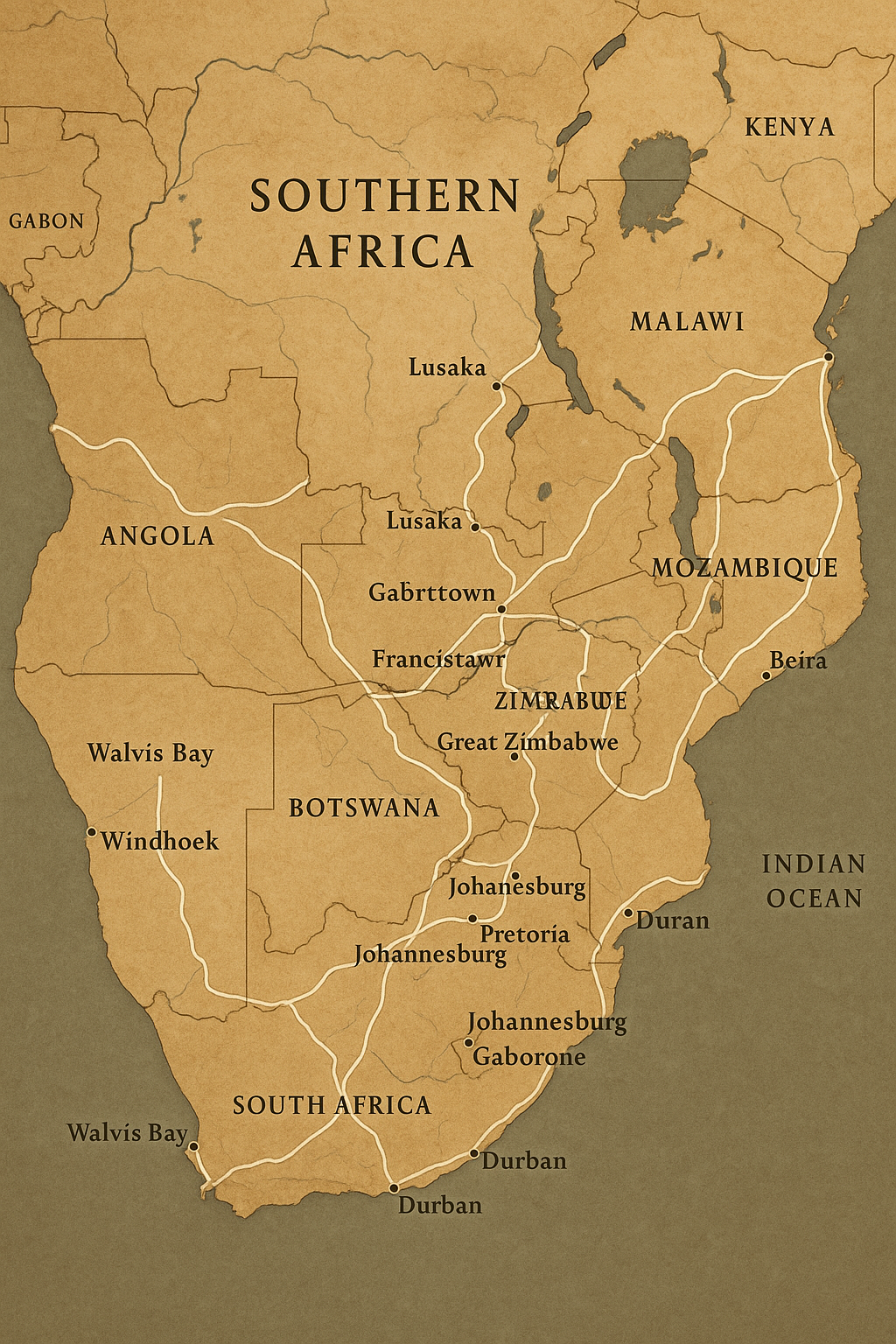
Cape Town hosts SACU's 9-day summit (June 18-26, 2026), shaping Southern Africa's trade future with key agendas on AfCFTA, green tech & border modernization.
The Cape Town 2026 summit is a super intense, nine-day meeting where leaders from Southern Africa are going to make big decisions about trade. They want to make it easier and cheaper to move goods around, like using cool new tech and improving border crossings. This will help connect their economies with the rest of Africa, turning an old system into a modern trade powerhouse. It's all about boosting business and making life better for everyone in the region.
What is the purpose of the Cape Town 2026 summit?
The Cape Town 2026 summit aims to compress a year of trade diplomacy into nine days, re-wiring Southern Africa’s trade spine. Leaders from SACU nations will finalize agreements on the SACU 2035 Strategy, Green Industrialisation Framework, and Border Modernisation Masterplan to boost trade, cut costs, and integrate SACU with AfCFTA.
Get Cape Town news in your inbox
Stay updated with the latest stories from the Mother City.
1. The Gathering Storm
Heads of state from Botswana, Eswatini, Lesotho, Namibia and South Africa will land in Cape Town on 18 June 2026 with one goal: compress a year of trade diplomacy into nine working days. The moment they step into CTICC2 they will trigger the most intensive policy sprint the region has seen since AfCFTA went live in 2021. The city has locked dates 18–26 June so that three separate yet interlocking programmes unfold without pause.
First, technical experts huddle on 18 June and again from 23–26 June to iron out wording and numbers. Ministers follow from 19–20 June, debating the drafts until the small hours. Finally, presidents arrive on 21–22 June to sign off or send the dossiers back for more polish. The idea is simple: no one flies home until every square-bracketed paragraph is turned into law.
Cape Town is treating the run like an engine-rebuild. Every moving part - from translation booths to fibre loops - has been tuned so that once the starter flag drops the only permissible stop is the finish line on 26 June.
2. 137 Years Young: SACU Rebooted
Founded in 1889 to let imperial Britain pool customs cash, SACU will blow out 137 candles in 2026. Yet the union has never looked younger. Its collective GDP of roughly US$420 billion outstrips the next two African customs unions combined, and its revenue-sharing rule is the planet’s only modelance tool hard-coded into national budgets. Lesotho’s teachers, Windhoek’s drought-relief trucks and Mbabane’s rural clinics all draw salaries and fuel from the same monthly SACU transfer.
The 1889 parchment has evolved into a living ledger that now talks blockchain. Delegates will decide whether to graft that ledger onto AfCFTA so that SACU becomes the continent’s “single border” by 2035. If they succeed, a container cleared in Walvis Bay could roll to Gaborone without a second glance from any inspector.
All of this explains why the Summit matters beyond the fine print: it transforms a colonial relic into the operating system for tomorrow’s African marketplace.
3. What’s Really on the Table
Three sealed briefs have already slipped into delegates’ inboxes. SACU 2035 Strategy sketches a 25 % cut in intra-union logistics costs within five years and mandates a blockchain-backed certificate-of-origin platform. The Green Industrialisation Framework proposes a US$750 million Green Fund seeded from five per cent of annual customs surpluses, plus an immediate common-tariff rebate for solar panels or wind turbines bolted together inside SACU borders.
The Border Modernisation Masterplan wants smart scanners at twelve choke-points, unified axle-load rules between South Africa and Botswana to shrink the Kopfontein/Tlokweng truck queue by forty percent, and a single mobile-payment app for every road-user charge in the region.
Negotiators know these papers are not wish-lists; they’re the difference between ordinary and exponential trade growth.
4. South Africa’s Double Role as Host and Power Broker
South Africa is more than a gracious host - it wrote half the agenda and hired the orchestra. The National Treasury will chair the Ministerial Council; SARS has seconded forty mid-rank officers to the CTICC2 war-room; Cape Town’s Port and the new Digistics Data Hub in Bellville will serve as live testbeds for the blockchain certificate. Hosting also means footing the bill for interpretation booths that will whisper in all eleven South African languages plus Portuguese and French so that SADC observers feel at home.
On the revenue-sharing front, Pretoria must defend its collection bill while avoiding the optics of bullying smaller partners. Rumour points to a “Swiss dual-key” fix: eighty-five per cent of the pool locked to historical import shares and fifteen per cent tied to an audited cost ledger. Every decimal shift affects national budgets, teacher pay and hospital stock-outs, so the stakes could hardly be higher.
The city itself turns into a stage prop: extra freight shuttles run nightly to keep grain exports moving, 180 off-duty traffic officers form a cordon around the venue, and low-bed trucks line up to ferry oversized exhibition gear straight from the tarmac to CTICC2.
5. Side Dialogues, Public Expo and Legacy Projects
Cape Town’s hotels have become a movable feast of mini-ministerials. On 19 June a sunset session at One&Only will pit Lesotho and Eswatini textile bosses against the ticking AGOA deadline. Dawn of 21 June finds Botswana and Namibia hashing out Trans-Kalahari Railway finance over coffee. Meanwhile, the CTICC2 Level-2 expo keeps its doors open 22–25 June so schoolchildren can pilot a drone through Lesotho’s Maluti Sky corridor or watch a digital twin of Walvis Bay track tuna on ice.
After the final gavel drops, the city refuses to waste the momentum. Three thousand square metres of modular exhibition panels will be trucked to township incubators in Khayelitsha and Philippi. Two hundred and forty TVET students will emerge with micro-credentials in event and diplomatic services, résumés already stamped by the biggest trade show in SACU history.
Electric shuttles, NFC water bottles and catering offset through GreenCape credits ensure the Summit walks its own sustainability talk. In just nine days, Cape Town will prove that tradition and terabytes can share the same dance floor - and that Southern Africa’s oldest customs club still has the loudest beat on the continent.
[{"question": "What is the main goal of the Cape Town 2026 summit?", "answer": "The primary goal of the Cape Town 2026 summit is to significantly enhance and modernize Southern Africa's trade infrastructure. Through a nine-day intensive meeting, leaders aim to finalize agreements that will make it easier and cheaper to move goods, integrate economies, and transform the region into a modern trade powerhouse, connecting it more effectively with the rest of Africa."}, {"question": "Which countries are participating in the Cape Town 2026 summit?", "answer": "Heads of state and representatives from the Southern African Customs Union (SACU) member states will be participating. These countries include Botswana, Eswatini, Lesotho, Namibia, and South Africa."}, {"question": "What are the key initiatives and documents that will be discussed and finalized at the summit?", "answer": "Three major initiatives will be on the table: the SACU 2035 Strategy, which aims to cut intra-union logistics costs and implement a blockchain-backed certificate-of-origin platform; the Green Industrialisation Framework, proposing a US$750 million Green Fund and tariff rebates for green technologies; and the Border Modernisation Masterplan, focusing on smart scanners, unified axle-load rules, and a single mobile-payment app for road user charges."}, {"question": "What is the structure and timeline of the nine-day summit?", "answer": "The summit is structured to maximize efficiency. Technical experts will huddle on June 18th and again from June 23rd to 26th. Ministers will debate drafts from June 19th to 20th. Finally, presidents will arrive on June 21st to 22nd to sign off on agreements. The aim is for no one to leave until all agreements are finalized and ready to become law."}, {"question": "How does the Cape Town 2026 summit aim to modernize SACU?", "answer": "The summit aims to reboot SACU by transforming its 137-year-old structure into an operating system for tomorrow's African marketplace. This includes integrating SACU with the AfCFTA to potentially create a 'single border' by 2035, leveraging blockchain technology for trade processes, and implementing significant cost-saving and efficiency-boosting measures across logistics and border operations."}, {"question": "Beyond the main negotiations, what other activities and legacy projects are planned around the summit?", "answer": "In addition to the core negotiations, there will be side dialogues and 'mini-ministerials' at various venues, a public expo at CTICC2 from June 22nd to 25th for schoolchildren and the public, and several legacy projects. These include trucking modular exhibition panels to township incubators, providing micro-credentials to TVET students in event and diplomatic services, and ensuring the summit itself adheres to sustainability practices with electric shuttles and catering offsets."}]

A Russian-Spanish journalist and Cape Town native, channels his lifelong passion for South Africa into captivating stories for his local blog. With a diverse background and 50 years of rich experiences, Serjio's unique voice resonates with readers seeking to explore Cape Town's vibrant culture. His love for the city shines through in every piece, making Serjio the go-to source for the latest in South African adventures.
View all articles →