
DGSA Creative Awards launch in Cape Town, celebrating SA’s top screen directors
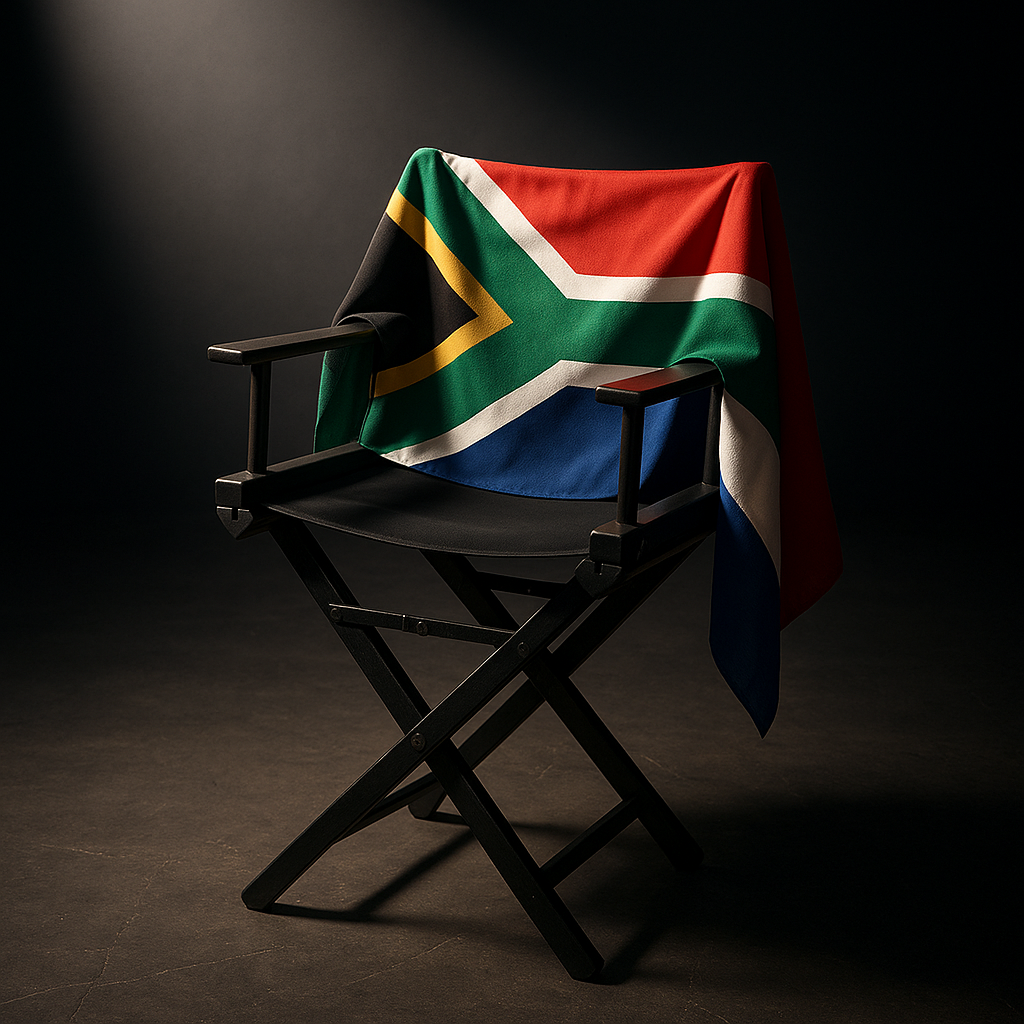
DGSA Creative Awards redefine SA screen culture, celebrating directorial authorship and pushing for narrative sovereignty. A new era for filmmakers.
The first DGSA Creative Awards in Cape Town was a huge deal for South African film! It celebrated directors and their amazing ideas, not just big budgets. The awards highlighted powerful local stories, from old ghost tales to modern city dramas. They even found new ways to fund movies and made sure everyone had a fair chance, with diverse judges and categories. This event truly showed the world that South Africa is a powerhouse of creative talent!
What was the significance of the Directors Guild of South Africa's (DGSA) first Creative Awards?
The DGSA's inaugural Creative Awards in Cape Town significantly rewired South African film by shifting focus to directorial vision over budget, fostering local storytelling, introducing new funding models, and promoting diversity with gender-balanced juries and inclusive categories. It aimed to establish South Africa's creative independence and global presence.
Get Cape Town news in your inbox
Stay updated with the latest stories from the Mother City.
1. A New Power Grid: Rewriting the Pecking Order
Century City’s glass-and-steel conference hub morphed into a live wire for South African storytelling when the Directors Guild of South Africa threw its debut Creative Awards this April. For two straight days the escalators buzzed with cinematographers, show-runners and commissioning editors, but the name on everyone’s lips was the person who actually shouts “Action!” The ritual usually tucked inside a glitzy variety show was yanked into the spotlight, forcing financiers and crews alike to toast the creative brain that decides where a camera sits, how long a gaze lingers and when colour shifts from cold rebellion to warm surrender.
The ceremony arrived while alarm bells ring louder each quarter: the National Film & Video Foundation predicts home-grown titles could account for less than two percent of domestic ticket sales by 2026. International platforms splash cash across Cape Town and Johannesburg lots, yet the calling clapboard still belongs, more often than not, to a visiting Los Angeles or Berlin freelancer. Guild chair Andile Sinqoto channelled that anxiety into a battle cry, telling 650 seated artists, “We’re not begging for leftovers at someone else’s table; we’re setting our own menu, plating our own myths, and deciding the serving order.”
Statuettes were only part of the stake driven into the ground. A 27-person jury, gender-balanced and schooled in unconscious-bias protocol, spent four months blind-screening 147 entries. Instead of pitting a no-budget Karoo thriller against a lavish streamer epic, the guild carved four spending brackets - shoestring, emerging, mid-tier, flagship - so that vision, not wallet size, decided the podium. The final line-up was a linguistic atlas: isiZulu colonial ghost story, Afrikaans queer rites-of-passage, Setswana lunar fable, Durban surf memoir, Xhosa cellphone mini-series.
2. Spotlight Stories: From Township LED Light to Infrared Robot Brawls
Mandla Dube walked away with two top honours, cementing his status as the event’s unofficial laureate. The Soweto-raised ex-photojournalist projected storyboard sketches while dissecting how he transformed a bland Pretoria bank into a Pan-African colour field using gelled tubes and motivated pans. Cyan evoked state intimidation, amber whispered uprising, desaturated green oozed ethical rot. Delegates gasped when he flashed the canvas: doodles executed on expired South African passport forms - “because bureaucracy is also our archive,” he shrugged.
Jozua Malherbe and co-pilot Karen Jeynes scooped the TV Series prize for “Recipes for Love and Murder,” a trilingual countryside whodunit shot among Stanford vineyards. Malherbe credits the show’s off-kilter rhythm to a writers’ boot camp held in an abandoned rail depot where ovine extras wandered through takes and mobile reception crashed at the climax of every brainstorm. The resulting tonal cocktail - Agatha Christie meets Karoo gothic - signals a break from the telenovela heartbeat that once defined local television.
Short-form wizard Meekaaeel Adam described building a 360-degree camera rig from junked PlayStation lenses to craft “The Trek,” a VR portrait of a Namaqualand elder lugging his granddaughter’s coffin across the desert. Post-production happened between rolling blackouts, a car battery keeping his laptop alive. Archival apartheid reels were grafted onto present-day drone footage so yesterday bleeds into tomorrow inside the same pixel. Price tag: R28 000, smaller than a single morning of volumetric scanning on the Marvel blockbuster renting space down the road.
Lourens van Rensburg’s Chicken Licken advert “Soulfluncer” snatched commercials gold with an 87-second tracking journey that slides from a Soweto bedroom into a pop-up comic dimension and lands at a family supper table. Motion-control robots, LED volume screens and 412 VFX layers delivered intergalactic gloss, yet the yearning is township-specific: the hunger to transcend geography without forgetting home.
Macmillan Mabaleka’s “Big 3 Trilogy” for rapper A-Reece split the screen between Hillbrow cheering Nelson Mandela in 1994 and the same blocks scarred by xenophobic fire in 2024. YouTube clocked 1,7 million plays in its first weekend and birthed a trending hashtag that crowdsourced memories of inner-city collapse.
3. Contracts, Carbon and Posthumous Baton Passes
Connie Ferguson used her Best Actress acceptance to announce a contractual clause she will slip into every future deal: a mandatory “cultural consultation” window guaranteeing at least three revision passes by South African women writers before cameras roll. Producers already whisper that the rider is becoming an A-list litmus test.
Documentary category winner “Robots” follows Cape Town kids who weld fighting machines out of scrap washing-machine shells. Director Yaseen J Khan, trained in metallurgy, shot night bouts on donated infrared gear, turning township streets into a mauve “Blade Runner” veld. The victory positions the 29-year-old as a front-runner for November’s IDFA Lumière prize and reassures science-curious filmmakers that labs can moonlight as character departments.
Veteran thespian Connie Chiume, who died last August, received a posthumous Lifetime trophy via a relay of eleven one-minute scenes recreated by directors she mentored. A beaded walking stick travels from 1980s Sophiatown to 2020s Wakanda before landing in the grip of a ten-year-old girl staring down the lens - continuity as resistance, nostalgia converted to ignition key.
4. Spreadsheets, Pickets and the 2025 Preview
Dawn panels fed hungover delegates black coffee and blue-sky policy. A proposal dubbed “25-and-25” zipped across note apps: streaming houses would surrender a quarter share of copyright to the director plus a quarter of lifetime gross, flipping the current hire-and-forget model.
Western Cape Finance MEC Mireille Wenger gate-crashed the final session to unveil a R120-million Director Equity Fund for features budgeted R5–25-million. Projects need a majority South African director and must ring-fence one-fifth of below-the-line spend for youth trainees from rural districts. Applications launch in July, with the guild acting as gate-keeper, effectively turning the association into banker and tastemaker.
Tech start-up Cine-XR demoed an AI tool that gulps English screenplay pages and spits out isiZulu storyboards while a 22-year-old coder sold photoreal LED blocks of Soweto streets to a German series too cash-strapped to fly south.
Gender parity moved from pledge to metric: thirteen of the 22 trophies landed in the hands of women or non-binary creatives. A “shadow director” clause that plants South African women on service shoots above R50-million has already fed three of this year’s nominees.
Dates for the 2025 edition are locked - 14 and 15 April - with a 5 000-seat outdoor venue added for public screenings. Entry gates swing open on 1 September, welcoming fresh brackets: Best Indigenous Language Feature and Best Climate-Friendly Production, the latter audited by an independent carbon counter. Meanwhile, the 2024 laureates will circle the globe under the banner “DGSA Story Sovereignty,” touching London’s BFI, Durban’s FilmMart and Washington’s Smithsonian African American festival, chasing acquisition coin that can bankroll the next cadre of fearless vision-makers.
When cleaners finally rolled away the red carpet, producers were still swapping call sheets in the parking lot, two writers blocking a co-production on pilfered bar napkins. Between the champagne sprays and spreadsheet formulas, the guild pulled off a magic trick it never asked permission to perform: an awards evening that green-lit an entire national slate, owned - frame by frame - by the voices who shout “Cut!”
[{"question": "What was the primary goal of the first DGSA Creative Awards in Cape Town?", "answer": "The primary goal of the first DGSA Creative Awards was to celebrate and elevate the vision of directors in South African film, emphasizing creative storytelling over large budgets. It aimed to establish South Africa's creative independence and global presence by showcasing powerful local stories and fostering new funding models."}, {"question": "How did the DGSA Awards address the challenge of varying production budgets among film entries?", "answer": "To ensure fairness and highlight vision rather than financial scale, the DGSA Awards categorized entries into four spending brackets: shoestring, emerging, mid-tier, and flagship. This allowed films with diverse budgets to compete on an equal footing, judged on their creative merit."}, {"question": "What are some examples of the diverse stories and innovative techniques highlighted at the awards?", "answer": "The awards celebrated a wide range of stories, including an isiZulu colonial ghost story, an Afrikaans queer rites-of-passage film, a Setswana lunar fable, and a Xhosa cellphone mini-series. Innovative techniques were also recognized, such as Mandla Dube's use of color in a bank setting, Meekaaeel Adam's DIY 360-degree camera rig for a VR portrait, and Lourens van Rensburg's use of advanced VFX for a Chicken Licken commercial."}, {"question": "What significant policy and funding initiatives were discussed or announced at the event?", "answer": "Key initiatives included the '25-and-25' proposal, suggesting streaming platforms grant directors a quarter share of copyright and lifetime gross. Additionally, the Western Cape Finance MEC unveiled a R120-million Director Equity Fund for features budgeted R5–25-million, requiring a majority South African director and a fifth of below-the-line spend for youth trainees from rural districts."}, {"question": "How did the DGSA Awards promote diversity and gender parity in the South African film industry?", "answer": "The awards actively promoted diversity through a 27-person, gender-balanced jury trained in unconscious-bias protocol. Notably, thirteen of the 22 trophies went to women or non-binary creatives. A 'shadow director' clause also ensures South African women are placed on service shoots above R50-million, further fostering inclusivity."}, {"question": "What are the future plans and international aspirations for the DGSA Creative Awards?", "answer": "The DGSA plans for the 2025 awards on April 14 and 15, introducing new categories like Best Indigenous Language Feature and Best Climate-Friendly Production. The 2024 laureates will embark on a 'DGSA Story Sovereignty' tour, visiting international events like London's BFI, Durban's FilmMart, and Washington's Smithsonian African American festival to secure funding and global recognition for South African talent."}]

Sizwe Dlamini is a Cape Town-based journalist who chronicles the city’s evolving food scene, from boeka picnics in the Bo-Kaap to seafood braais in Khayelitsha. Raised on the slopes of Table Mountain, he still starts every morning with a walk to the kramat in Constantia before heading out to discover whose grandmother is dishing up the best smoorsnoek that day.
View all articles →