
District Six families ordered to vacate Searle Street cottages
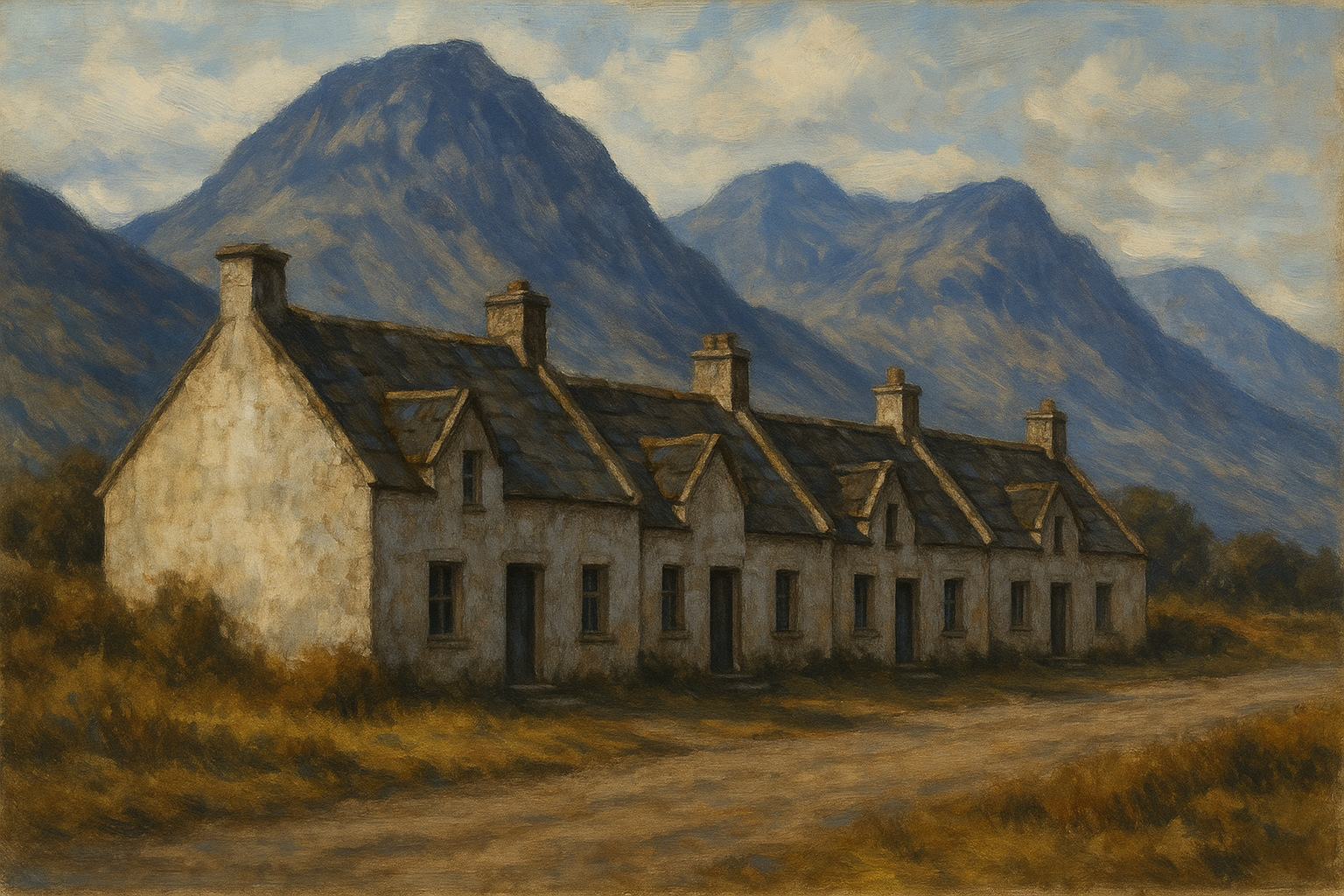
In District Six, five families face eviction from their historic homes, set to become luxury micro-lofts, despite a century of heritage.
A Fractured Smile in the City Bowl: The Last Victorian Cottages of Searle Street
In the heart of District Six, five old Victorian cottages on Searle Street face a grim future. Despite years of brave resistance and legal battles, they're set to be knocked down for fancy new 'micro-lofts'. These homes, once a haven for families and a symbol of defiance against forced removals, are now just another target for developers. The court sided with the developer, meaning families will soon lose their homes, and a piece of history will vanish forever.
What is the fate of the last Victorian cottages in Searle Street, District Six?
The last five Victorian cottages on Searle Street, District Six, are slated for demolition and redevelopment into "micro-lofts with mountain views" by March 6, 2026. Despite a rich history of resistance against forced removals and legal battles by current residents, the High Court has ruled in favor of a developer, leading to imminent evictions and the gutting of these heritage-listed buildings.
Get Cape Town news in your inbox
Stay updated with the latest stories from the Mother City.
1. Dawn on the Edge of Erasure
Table Mountain’s first blush spills over five crooked gables whose broekie-lace still glints like petticoat hems.
For ninety-odd years these cottages have cradled the same pulses: coffee set to boil at cock-crow, umbilical cords sleeping beneath lemon trees, grandmothers hushing toddlers with the promise that the wind rattling sash-panes is only ancestors who refused the bulldozer’s invitation.
On 6 March 2026 that lullaby ends; keys must be surrendered to Etienne du Toit, a Highveld developer who has still never spent a full night in District Six.
After the locks flip, heritage-sanctioned gutting will begin, and estate-agency chatter already bets each skinny front door will fetch close to R3 million.
No court paper explains how land once stamped “whites only” by the 1966 Group Areas Act, land rescued by Irish nuns who formed a human rosary around the evictors’ trucks, has slipped back into the private market as “micro-lofts with mountain views.”
2. Nuns, Notices and a 1938 Earthquake
The journey on paper starts in 1928, when the Holy Cross Sisters paid a Jewish widower cash for erf 2593 because he was fed up with municipal rent hikes.
They hammered together six timber-and-iron shacks for “coloured” domestics born in the city, added a seventh in brick after the earth shuddered in 1938, and treated every “white space” notice as fire-lighter material.
During the forced-removal frenzy of the seventies they hid children in the chapel crypt, invented baptisms that placed toddlers on imaginary farms, and marched petitions in English, Afrikaans and isiXhosa to the magistrate’s desk.
The row survived; the rest of the grid vanished.
By 1982 the Sisters were duplicating leaflets that warned: “A city that forgets its children will one day auction its soul.”
They did not foresee those same leaflets - brittle, incense-scented - being rejected four decades later as “hearsay” in a PIE application, the words treated like gossip instead of prophecy.
3. A Cessna Over the Cradle
Etienne du Toit’s first encounter with the street came in 2013, circling above in his brother’s four-seater, seeing five red rooftops squeezed between university dorms and the skeleton of an old Caltex.
He had turned student beds into cash in Potchefstroom and storage cages into rent in Polokwane; Cape Town’s accommodation famine looked like the next margin to harvest.
He produced R2.45 million straight from the sale of a White River game farm and told his attorneys to “normalise the tenancy profile.”
The letter that landed on each threshold - parchment-coloured, calligraphic font - opened with: “Dear Occupant, Re: termination of gracious but informal hospitality.”
No-one on Searle Street had ever labelled themselves “occupants”; they were simply home.
4. Bloodlines vs Balance Sheets
Today the households answer to the surnames Marcus, Koopman, October, Abrahams and Lewis, stretching from nine-month-old Aaliyah Marcus - whose universe fits under one cracked ceiling - to eighty-seven-year-old Uncle Boeta Koopman who still keeps his dominee licence beside the sugar tin.
Their legal champions, a pro-bono squad from the Workers’ Advice Office, fired three shots: lifelong inheritable tenure granted for guarding the chapel; sale invalid because Kilkenny’s Mother House never signed off; eviction a breach of the constitutional right to adequate housing plus the state’s duty to make land reform real.
The High Court swatted each argument away - no paper trail, canon law not reviewable, “bald assertions” of homelessness too fuzzy for section 26(3).
With that, the file slid downhill to the magistrates’ court for a straight PIE test: would it be “just and equitable” to fling these lives into the street?
5. A Magistrate, a Grey Sheet of Rain
Acting magistrate Juan de Pontes - usually arresting ships in the harbour - drew the file because the civil-roll judge was on maternity leave.
Across seventeen months he digested 2,417 pages, including a 92-page saga from Auntie Rachel October that opens: “My ouma slid the frangipani seed into soil that now throttles the sewer pipe.”
He walked the lane twice: once in August when the mountain vanished inside a grey rain sheet, once in December when the corrugated iron hit 48 °C.
Social-workers filed five reports that all sighed the same sentence: “Client possesses no movable wealth bar a stockpile of memory.”
The City’s housing desk coughed up two paragraphs: emergency stock depleted; offer on the table was either Wolwerivier - 45 km past the last bus stop - or a DIY starter pack of four zinc sheets plus a hinge door.
De Pontes drove to Wolwerivier on a Saturday, tasted the dust, clocked the commute, and “felt a contraction in the chest the statute orders me to disregard.”
6. Scales without Weights
PIE is brutally elegant: it balances the owner’s property, the residents’ shelter, the public interest in redress, and the court’s gut feeling - yet names no calibration weights.
De Pontes hunted for hard facts.
Rent receipts? Zero.
Permanent improvements? Just lace curtains and a satellite dish bolted to flaking plaster.
Effort to find alternatives? Uncle Boeta waved a retirement-home letter: “Waiting list 2019-2028”; the rest shrugged.
Du Toit’s counsel accused the families of “weaponising nostalgia,” trading on District Six’s brand to dodge market discipline; twenty-three academics fired back an amicus brief labelling the claim “commodification of trauma,” but the magistrate ruled it late and struck it out.
7. Heritage by Category IIb
While arguments flew, the city quietly graded the façades “category IIb - street-scape contributory.”
Translation: new money must keep the gables, 19-inch stone walls, sash windows, original teak gutters - everything you can photograph from the pavement.
Du Toit’s architect has already leaked pastel renderings: guts ripped out for double-volume loft air, Oregon pine swapped with laminated birch, backyard loos reborn as glass-box studies.
Investor flyers promise 9.4 % net yield “assuming full academic-semester occupancy.”
The frangipani and its root-clogged pipe do not feature in the spreadsheet.
8. Plastic Chairs and a Dentist-Kettle Whistle
Each sunset, survivors’ organisations plant plastic chairs on the broken pavement, strike a paraffin lamp and ring the chapel bell at 19:30 sharp; the clang drifts across weed-covered lots that once held 60,000 neighbours.
Motorists occasionally hoot, but traffic is thin - CPUT lectures stayed online after Covid and the students never really returned.
The vigils stream to a Facebook page titled “Searle Street 5 – No Eviction,” watched from Toronto fish-plants and Manchester care homes.
Donations land as £20 from a Hanover Street sax player, R5 airtime from a Pollsmoor cell; not enough to rent a city-bowl broom cupboard.
9. The Monument Behind Razor Wire
City technocrats mutter about context: the District Six restitution process launched in 1998 has handed back only 139 of 1,780 successful claims.
The rest got R35,000 once-off - fine for a second-hand Toyota, useless for a flat deposit.
The returned houses squat behind razor wire on renamed streets, many tenanted by claimants’ children who ride call-centre shifts to the suburbs.
Forty-two hectares remain mown grass and interpretive boards, popular with Swedish tourists who snap selfies and leave.
Developers whisper that full release could absorb R20 billion, deliver 4,000 mid-market units and a boutique hotel - all that’s missing is political courage to tell 2,500 outstanding applicants that postcard views of the mountain are incompatible with spatial justice.
10. Surrender in Small Suitcases
Inside No 17, Auntie Rachel parcels out her sideboard: a 1961 Cape Standard, brass thimbles, the programme from her brother’s 1974 jazz funeral.
Seven-year-old Marcus twins have been promised “an adventure,” yet they keep asking if the ginger cat is included.
Uncle Boeta fills one suitcase with sermons, another with soil from the frangipani base; he jokes that if he must die on distant township sand, at least the grave will hold a teaspoon of home.
Du Toit’s lawyer concedes the walls may stay un-scribbled until 5 March; on the sixth a photographer will arrive to snap every crack for pre-renovation evidence.
Already the brass numeral “17” has vanished into someone’s pocket during vigil - a petty theft that feels like salvaging a vertebra from a spine the city is ready to toss.
11. March Weather and the Sheriff’s Watch
The Prevention of Illegal Eviction Act demands the sheriff witness the exit, list the possessions, allow a “reasonable” window for removal - usually two dry hours.
March is late-summer; stats say 8 % chance of rain.
Lawyers have begged the Red Cross for marquees, just in case the sky decides to weep on eviction day.
[{"question": "What is the current situation of the Victorian cottages on Searle Street?", "answer": "The five Victorian cottages on Searle Street in District Six are slated for demolition to make way for new 'micro-lofts'. Despite legal battles and their historical significance as homes that resisted forced removals, the High Court has ruled in favor of the developer. This means the families residing there will soon lose their homes, and these heritage-listed buildings will be significantly altered or destroyed."}, {"question": "When is the demolition and eviction expected to occur?", "answer": "The demolition and eviction of the residents from the Searle Street cottages are scheduled for March 6, 2026. The keys to the properties must be surrendered to the developer on this date."}, {"question": "Who is the developer behind the redevelopment of the Searle Street cottages?", "answer": "The developer is Etienne du Toit, who acquired the properties in 2013. He has a history of converting student beds and storage units into rental properties in other parts of South Africa and aims to develop 'micro-lofts with mountain views' on the site."}, {"question": "What historical significance do these cottages hold?", "answer": "These cottages have a profound historical significance, particularly in the context of District Six. They were originally purchased by the Holy Cross Sisters in 1928 to house 'coloured' domestics and became a symbol of resistance against the 1966 Group Areas Act and the forced removals of the 1970s. The Sisters actively protected residents and preserved these homes when much of the surrounding area was demolished, making them a rare surviving historical cluster."}, {"question": "What legal arguments were made to save the cottages and their residents?", "answer": "The pro-bono legal team for the residents argued for lifelong inheritable tenure due to their role in guarding the chapel, claimed the sale was invalid as the Mother House never signed off, and cited a breach of the constitutional right to adequate housing. However, the High Court dismissed these arguments due to lack of paper trail, non-reviewability of canon law, and 'bald assertions' of homelessness."}, {"question": "What are the future plans for the Searle Street site after demolition?", "answer": "After the demolition and 'heritage-sanctioned gutting', the site is planned to be redeveloped into 'micro-lofts with mountain views'. While the façades have been graded 'category IIb - street-scape contributory', meaning elements like gables and sash windows must be kept, the interiors will be completely transformed with modern materials like laminated birch and glass-box studies. Investor flyers promise a high net yield from academic-semester occupancy."}]

Zola Naidoo is a Cape Town journalist who chronicles the city’s shifting politics and the lived realities behind the headlines. A weekend trail-runner on Table Mountain’s lower contour paths, she still swops stories in her grandmother’s District Six kitchen every Sunday, grounding her reporting in the cadences of the Cape.
View all articles →