
Durbanville winemaker Richard Schroeder earns acclaim for Chenin Blanc
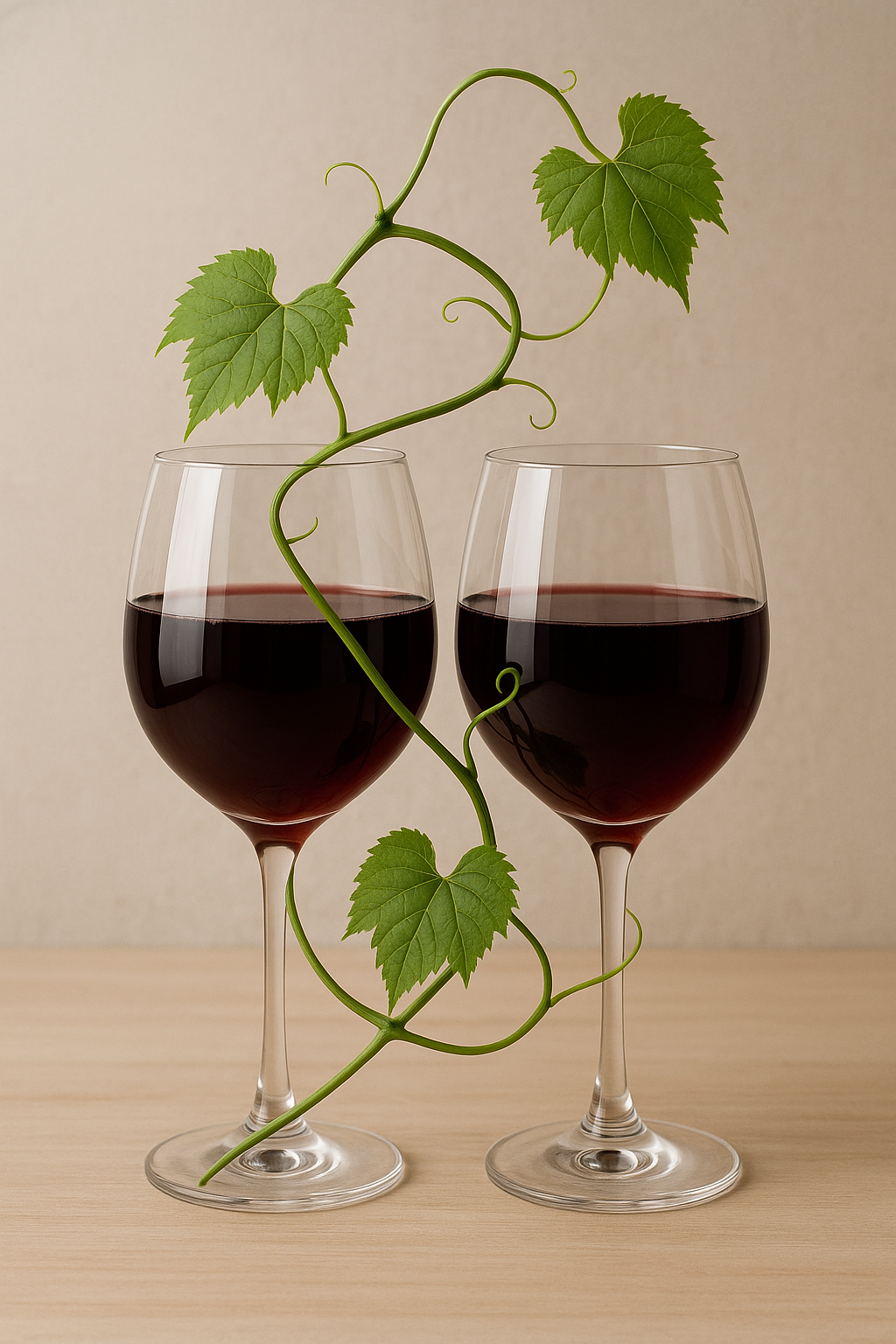
Groot Phesantekraal pioneers exceptional Chenin Blanc in Durbanville, blending tradition with innovative viticulture for award-winning wines.
In Durbanville, a special Chenin Blanc is made at Groot Phesantekraal. It grows in a cool place with sea fog, making its flavors unique. The winemaker, Richard Schroeder, uses old ideas and new ways to make the wine, like a special leaf-plucking trick and ancient pots for fermenting. This creates a wine with bright lime and creamy flavors, showing that Durbanville can make amazing wines, not just Sauvignon Blanc.
What makes Durbanville's Chenin Blanc unique?
Durbanville's Chenin Blanc, particularly from Groot Phesantekraal, stands out due to its cool-climate advantage, meticulous vineyard management including a unique "sun brake" leaf plucking technique, and innovative cellar practices. This results in a wine with exceptional balance, combining lime-leaf precision with marzipan cream and a long, humming finish, setting new benchmarks for the region.
Get Cape Town news in your inbox
Stay updated with the latest stories from the Mother City.
How Sauvignon Country Shifted Its Spotlight
Just north of Cape Town, the Atlantic fog scribbles pale ribbons across Durbanville’s sky almost every afternoon, signalling to travellers that they’ve entered Sauvignon Blanc terrain. Electric-green labels, whiffs of gooseberry and sherbet, and the unmistakable slap of sea-salt acidity have long ruled these slopes. Yet on a gentle ridge that leans toward the Tygerberg hills, Groot Phesantekraal is writing a fresh chapter. The new protagonist is not another clone of Sauvignon; it is a block of Chenin Blanc vines planted in 1979 – Block 7 – that once served as grazing land for cattle rather than treasure for harvest bins.
Richard Schroeder, 33, still prefers vineyard dust to press-room spotlights and has now spent four straight seasons mapping the same rectangle of shale and iron-rich clay. At dawn he wields a refractometer, sampling sugar levels berry by berry; at dusk he pinches skins between thumb and forefinger, judging tannic grip the way a chef tastes for salt. Up to seven passes are made during harvest. These micro-picks feed three fermentation vessels: upright concrete eggs whose three-millimetre walls iron out temperature spikes; petite terracotta amphorae lined with beeswax, allowing optimal oxygen without cedar noise; and seasoned Burgundy barrels that have seen eight previous Chenin vintages and contribute little more than structure.
The finished wine, released under the Anna de Koning Reserve label, drinks like a string quartet in perfect tune: high notes of elderflower and white peach carried on the silky bow of ginger and nutmeg. When Winemag.co.za blind-tasted both the 2024 and 2025 bottlings, the scores of 94 and 93 points set a new Durbanville benchmark in the competition’s eight-year run. Judges praised its “lime-leaf precision tied to marzipan cream” and a finish that “doesn’t fade, it simply keeps humming like a buried power line.”
The Cool-Climate Advantage
Durbanville’s summer average of 25.1 °C at midday is markedly lower than Stellenbosch’s 28.6 °C and far cooler than Swartland’s 30 °C peaks. A relentless south-easter surges through the gap between Table Mountain and the Hottentots-Holland range, injecting both chill and 63 % humidity. That breeze slows sugar build-up and evens out phenolic development. Yet fierce ultraviolet radiation can still pile on sugar ahead of flavour, so Schroeder choreographs leaf plucking: three weeks after fruit-set he strips only the afternoon-exposed leaves, waits ten more days, then completes the northern side - an elegant “sun brake” that cools without shocking.
Beneath Block 7, forty centimetres of grey loam sit atop brittle shale-clay. During the 2017-2022 drought the clay band stored moisture at sixty centimetres, allowing the 46-year-old vines to stay photosynthetically active while neighbours irrigated. In wetter years such as 2025 the same clay risks waterlogging. Schroeder counters by drilling quick-cycle white mustard between rows each October. The roots carve vertical drainage channels; the flowering biomass is rolled flat to release natural nematode-suppressing compounds. In effect, the clay is coaxed from liability to sponge.
Chenin Blanc’s genetic elasticity – its ability to keep acidity while achieving full ripeness – turns Durbanville’s cool anomaly into a stylistic weapon. Schroeder cites Savennières as his compass, noting that those schist-grown wines rarely top 12.5 % alcohol, whereas the 2025 Anna de Koning Reserve carries 13.2 % yet still finishes with Loire-like anise and lemon-pith snap. The dialogue between volume and edge is fast becoming the region’s signature.
From 1734 Terracotta to 2026 Egg-shaped Concrete
Anna de Koning, daughter of freed slave M Manda, owned vast tracts of Cape farmland by 1730. In the Cape Archives her ledgers list “steen” – the old name for Chenin – fermenting in terracotta kruike, the very vessels now re-animated at Groot Phesantekraal. During barn restoration Schroeder and estate owner André Brink unearthed these accounts; each harvest morning a photocopied page from 1734 is clipped above the sorting table as a reminder that innovation can honour the past.
The 2023 cellar itself is a rammed-earth oval dug into the slope. Inside, concrete eggs from Nomblot rest on cork pads to eliminate vibration; ten Georgian qvevri line up nearby, their beeswax interior hand-brushed by Schroeder’s ceramist mother. All ferments start wild, yet when spontaneous fermentation stalls below 1 °Brix the team inoculates with two vineyard-native yeasts – one scraped from the bark of a 300-year-old eucalyptus, another harvested from the waxy bloom on Block 7 berries. These cultures finish the job without erasing terroir. Malolactic conversion is blocked in seventy per cent of the blend, preserving a malic snap against the richer barrel-matured portion.
Ageing deliberately zig-zags. After eight months the concrete-egg lots are racked to stainless for cold settling, then returned to amphorae on fine lees for a further three months. The crew calls the manoeuvre “suspended animation”; it sands down phenolic edges while keeping the oxygen-poor conditions amphorae are prized for. Bottling occurs under DIAM 10 corks calibrated to 0.6 mg O₂/year – the exact figure Schroeder once measured in a 1966 Lanessan Chenin still vibrantly alive at Stellenbosch University.
Looking Ahead: Pop-ups, Pét-Nats and Politics
Winter 2026 has already delivered 212 mm of rain by mid-June, the highest since 2014. Schroeder welcomes the deluge but watches soil-moisture probes vigilantly. To hedge against oversaturation he has sown drought-resistant fescue in every seventh row; the dense turf curbs evaporation, its shallow roots acting as living mulch. Mown and redistributed, the fescue contributes 2.5 tons of organic carbon per hectare. Stellenbosch University trials show up to 18 % water savings in wet years – key to keeping Durbanville Chenin dry-farmed and sustainable.
The 2024 vintage - only 1,460 six-bottle cases - vanished in 38 hours online at R295 a bottle. Johannesburg sommelier Kelly Mahon poured it alongside springbok loin with pickled white asparagus at an exclusive pop-up, calling it “the moment Burgundy’s nerve shoulder-barges Swartland generosity.” Liberty Wines in London has pre-booked 1,800 cases of the 2025 release, eyeing the gap between rising Chablis prices and scarce Loire stock.
In an adjacent experimental block, “Frankenstein” heritage Chenin - so nicknamed for its irregular bunch shapes - delivered 21.8 °Brix at pH 3.18 in its first commercial harvest. Rather than deacidify, Schroeder split the must three ways: direct press, five-day skin contact, and whole-bunch carbonic in a repurposed autoclave. The resulting pét-nat, christened “Kaapse Nervositeit,” will be bottled at 11.8 % alcohol under crown cap next spring for South Africa’s booming pétillant-natural scene.
Every Friday the gates open to young winemakers for open-vat tastings. Schroeder insists interns smell the ferment at 6 a.m. and again at 6 p.m. to witness diurnal aroma swings. In April he live-streamed a Zoom session with Angers’ École du Vin, projecting real-time fermentation curves while beaming microscopic lees images to France. Conversation ricocheted from tit and acidity to post-apartheid land reform, proof that terroir talk can shoulder social urgency.
Politics and preservation walk alongside viticulture. Groot Phesantekraal is one of six farms ceding sixty hectares of pristine renosterveld to Cape Town’s Metropolitan Open Space System, the first farmland ever folded into this biodiversity plan. The fynbos breaks wind, invites indigenous pollinators that thicken grape skins and boost terpene counts, and embodies a moral contract: excellence in the glass cannot ignore custodianship of the land above it.
As a premature dusk fog folds over Block 7 one late-autumn afternoon, Schroeder strolls between rows with his baby daughter balanced on his hip, pointing out a single vine whose leaves have turned antique-parchment gold weeks too early. That oddity, he says, marks the start of the next chapter – perhaps a mutation, a rogue pH shift, an extra cluster. Between eucalyptus-bark yeast and Anna de Koning’s 1734 ledger, Durbanville’s identity is still being drafted, one cool-climate Chenin barrel at a time.
[{"question": "What makes Durbanville's Chenin Blanc unique?", "answer": "Durbanville's Chenin Blanc, particularly from Groot Phesantekraal, stands out due to its cool-climate advantage with sea fog, meticulous vineyard management including a unique \"sun brake\" leaf plucking technique, and innovative cellar practices. Winemaker Richard Schroeder uses ancient terracotta amphorae and modern concrete eggs for fermentation, resulting in a wine with exceptional balance, combining bright lime and creamy flavors, and a long, humming finish. This approach has led to high scores and recognition, establishing a new benchmark for the region."}, {"question": "Who is Richard Schroeder and what is his approach to winemaking?", "answer": "Richard Schroeder is the 33-year-old winemaker at Groot Phesantekraal, known for his hands-on approach and dedication to the vineyard. He meticulously monitors sugar levels and tannic grip, making up to seven passes during harvest for micro-picks. His winemaking philosophy blends old and new techniques, utilizing upright concrete eggs, beeswax-lined terracotta amphorae, and seasoned Burgundy barrels for fermentation. He also employs vineyard-native yeasts and precise leaf-plucking to manage sun exposure, all aimed at expressing the unique terroir of Block 7 Chenin Blanc."}, {"question": "What is the \"sun brake\" technique mentioned in the text?", "answer": "The \"sun brake\" is an elegant leaf-plucking technique choreographed by Richard Schroeder to manage the fierce ultraviolet radiation in Durbanville. Three weeks after fruit-set, he strips only the afternoon-exposed leaves, waits ten more days, and then completes the northern side. This method cools the vines without shocking them, helping to slow sugar build-up and even out phenolic development, thus preventing sugar from piling on ahead of flavor."}, {"question": "What are the unique fermentation vessels used at Groot Phesantekraal?", "answer": "Groot Phesantekraal utilizes a blend of traditional and modern fermentation vessels. These include upright concrete eggs with three-millimetre walls to regulate temperature, petite terracotta amphorae lined with beeswax for optimal oxygen exchange without wood influence, and seasoned Burgundy barrels that contribute structure rather than overt oak flavors. This diverse approach allows for different textural and aromatic contributions to the final wine."}, {"question": "How does Groot Phesantekraal ensure sustainability and adapt to climate challenges?", "answer": "Groot Phesantekraal employs several sustainable practices. To counter potential waterlogging in wetter years, Richard Schroeder drills quick-cycle white mustard between rows, which carves vertical drainage channels and releases nematode-suppressing compounds. In anticipation of drought, he sows drought-resistant fescue in every seventh row to curb evaporation. Furthermore, Groot Phesantekraal is contributing sixty hectares of renosterveld to Cape Town's Metropolitan Open Space System, demonstrating a commitment to biodiversity and land custodianship."}, {"question": "What is the significance of Anna de Koning in the history of Groot Phesantekraal's Chenin Blanc?", "answer": "Anna de Koning, a daughter of freed slave M Manda, owned vast tracts of Cape farmland by 1730. Her historical ledgers, unearthed by Richard Schroeder and estate owner André Brink, indicate that she fermented \"steen\" (the old name for Chenin) in terracotta kruike. This discovery inspired the revival of terracotta amphorae at Groot Phesantekraal, serving as a reminder that innovation can honor the past and linking the contemporary winemaking practices to a rich historical lineage.", "source": "Durbanville's Quiet Revolution: An Unlikely Chenin Takes Centre Stage"}]

Sarah Kendricks is a Cape Town journalist who covers the city’s vibrant food scene, from township kitchens reinventing heritage dishes to sustainable fine-dining at the foot of Table Mountain. Raised between Bo-Kaap spice stalls and her grandmother’s kitchen in Khayelitsha, she brings a lived intimacy to every story, tracing how a plate of food carries the politics, migrations and memories of the Cape.
View all articles →