
Elon Musk set to become world’s first trillionaire
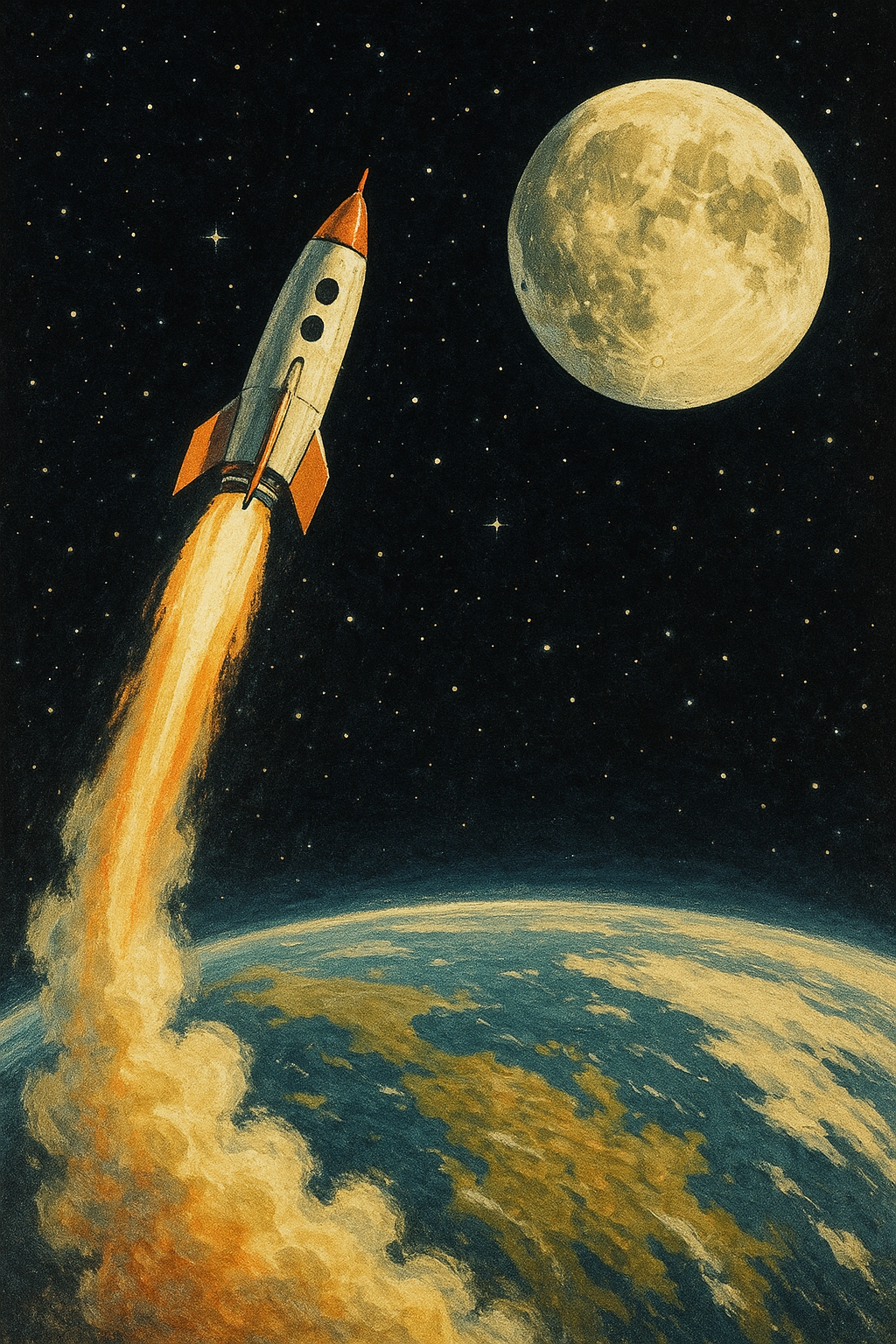
Explore how SpaceX, now "SPACE," achieved a $1.77 trillion valuation, driven by future space commodification and Elon Musk's vision.
SpaceX reached a mind-blowing $1.77 trillion value by claiming future riches from space, like moon water and asteroid platinum. Because interest rates are super low, even far-off money from mining and launching new rockets made its value soar past old oil companies. This incredible growth was also fueled by a massive public offering that made the stock "SPACE" a sensation, turning employees into millionaires and reshaping how people think about money and space.
How did SpaceX achieve a $1.77 trillion valuation?
SpaceX achieved its $1.77 trillion valuation by extending financial models to include ownership of the inner solar system's resources like lunar water and asteroid platinum. With near-zero risk-free rates, even distant cash flows, fueled by a recursive mining and launching model, contributed significantly to its present value, surpassing traditional oil giants.
Get Cape Town news in your inbox
Stay updated with the latest stories from the Mother City.
1. Dawn of a New Ticker
The 9:29 A.M. Signal
One minute before the Nasdaq bell, the Times Square screen abandons its generic star-scape for a slow-motion Falcon 9 landing. To tourists it is another SpaceX ad; to traders it is ignition. By 9:29, $270 billion in pre-market orders - Finland’s entire annual output - already sit in the book. At 9:30 “SPACE” surpasses “Tesla” and “Bitcoin” as the most-searched symbol on every retail platform in America, all within forty breathless seconds.
Liquidity at Lift-Off
The opening auction clears north of $160 per share. Headlines spin the ticker into a verb - “Let’s SPACE our portfolios!” - while Robinhood’s servers stutter under the load. The phrase “orbital market cap” trends on X, half joke, half prophecy.
Visual Trigger, Financial Detonator
The looping video is not mere marketing; it is a countdown. The footage encodes a promise: every launch is a revenue beat, every landing a margin gain. Retail, sovereign funds, and quant desks all read the same image, but translate it into different strategies that converge on one price vector: up.
2. Pricing the Impossible Valuation
From 4.3 Billion to 1.77 Trillion in One Leap
Quarterly revenue stands at $4.3 billion, yet bankers hang a $1.77 trillion price tag on the door. They do it by resurrecting a long-dormant financial alchemy: line-item ownership of the inner solar system. Page 213 of the S-1 embeds transition matrices that treat future lunar water and asteroid platinum as entries no stranger than barrels of crude.
The Discounted Dream Spreadsheet
Risk-free rates hover near zero, so even distant cash flows collapse into present value with startling potency. The model layers recursive loops on top: SpaceX mines the resources, then uses the proceeds to launch more miners. Each cycle tightens the gravitational pull on valuation.
Why Oil Giants Feel Tiny
Exxon, Chevron and Shell together weigh roughly the same in market terms, yet their reserves are stuck beneath one crust. SpaceX’s reserves float overhead, multiplied by orbital mechanics. The comparison is unfair, and that is the point.
3. Shares, Collateral, and Side Quests
Voting Power under Lock and Key
Elon Musk controls 42 % of the votes via Delaware trusts, a Wyoming LLC, and an Irish “Starlink Voting Vehicle.” A 360-day lock-up prevents outright sales, but not pledging. A single footnote reveals 61 million shares already backstop lines of credit worth $108 billion.
Three Ventures on Margin
• Boring Company’s Vegas-to-LA tunnel
• Neuralink’s first human implants
• A stealth geothermal play in Iceland
Each loan is callable if the share price slips below a weekly moving average, turning the equity chart into a live ECG for Musk’s side hustles.
Instant Wealth, Delayed Gravity
Employees with four-year badges become paper millionaires overnight. Cocoa Beach real-estate agents host midnight Zoom calls titled “RSUs to Keys.” Chase Bank installs a second high-denomination ATM outside its Cape Canaveral branch; launch day withdrawals spike 400 %.
4. Cosmic Cash-Flow Calendar
Year 2035, Broken into Buckets
Page 186 lists five revenue lines with gating milestones:
- $35 billion from Mars-cargo prepayments, contingent on Starship’s 100 flawless landings
- $22 billion suborbital passenger hops Dubai-LA, pending safety certification
- $18 billion renting lunar lava tubes for low-temperature AI clusters
- $4 billion trading carbon credits from methane-oxygen engines
- $28 billion licensing Starlink’s protocol stack to 6G carriers spectrum-starved on Earth
Each figure carries a confidence interval and a “go-no-go” metric, translating science fiction into spreadsheet algebra.
Language Becomes Infrastructure
The ticker “SPACE” is the first verb-as-symbol in market history. Linguists at Oxford register the transitive use - “to space the supply chain” - as evidence that SpaceX is not just a corporation but a grammatical upgrade for commerce itself.
Risk Factors in Orbit and On Earth
Page 47 flags four existential tripwires:
1. Raptor 3 engines must survive fifty reuses without overhaul
2. One laser-mesh hiccup triggers $9 billion in Starlink SLA penalties
3. ViaSat and Kuiper patent suits hang over phased-array IP
4. Debris rules could force early retirement of 2,200 legacy satellites, slicing 7 % off revenue
These footnotes read like science-fiction footnotes that could become front-page news with a single bad day on the pad.
5. Launch Window, Meet IPO Window
Orbital Mechanics and Market Mechanics
Every orbital launch has an instantaneous window; miss it and Earth must spin back around. The IPO version required three planetary-scale alignments: a Fed pivot to dovish policy, Hormuz-strait jitters boosting satellite bandwidth premiums, and a brand-new SEC rule allowing direct listings with simultaneous primary capital raise. Slip this conjunction and the next sane date is Q2 2025, when Mars hype peaks again.
Gravity Turn on the Tape
The stock’s first hour mimics a gravity turn: vertical pop, then gradual tilt into horizontal stability above $160. Options dealers step in at 2 p.m. to delta-hedge, supplying the sideways velocity needed to maintain orbit. A single Musk tweet about Dogecoin on Mars could slam the trajectory into circuit-breaker territory.
Monday’s Index Shuffle
S&P 500 inclusion must wait until Q3 2025 for GAAP-profit streaks, but MSCI’s Global Space Economy Index will weight SpaceX at 18.5 % the Monday after stabilization. Passive vehicles will need to buy $12 billion of “SPACE” in five trading days, creating an artificial floor stronger than any booster.
6. Echoes of Rockefeller, But at Escape Velocity
Oil Barons versus Orbital Barons
John D. Rockefeller hit 2.5 % of U.S. GDP - $620 billion in 2024 dollars - after four decades. Musk reaches a trillion in twenty. Rockefeller refined kerosene, then pivoted to gasoline when cars arrived; Musk refines launch services, then pivots to off-Earth bandwidth and minerals when AI and robotics arrive.
Compressed Time, Amplified Leverage
Global capital markets now vaporize time. Visions that once needed generations now collateralize overnight loans. The same banking regulations that melted in 2008 now allow founders to mint liquid wealth against assets that are literally still in orbit.
The Hyperloop Side-Quest
A Wednesday filing spun out the Boring Company’s intellectual property into “Hyperloop Frontier SPAC,” boasting $38 million in hard assets and zero signed right-of-way deals. Grey-market warrants trade up 300 % anyway. The episode shows Muskian gravity bends capital even toward tunnels without track.
7. After the Bell: A Future Written in Delta-V
Cape Canaveral’s Friday Night
Engineers queue at ATMs for crisp hundreds, then pick up Tesla Model Ys in midnight silver. Surfers rent boards under neon lights, paid for with sudden RSU cash. Real-estate signs sprout like weeds reading “Orbital Views - In Escrow Above Asking.”
Risk, Reward, and the Martian Ledger
The S-1’s “Second Earth” appendix teases a Mars coin backed by deuterium exports. Analysts tack on a 20 % “Mars-optionality” premium to their terminal value, gifting the stock an extra $300 billion in implied equity. The line between prospectus and screenplay blurs.
Closing Image
By Monday the ticker “SPACE” hovers above $155, an equilibrium forged from orbital mechanics, discount rates, and pure narrative thrust. The first trillionaire is not an end state but a launch window; the next gravity turn will decide whether the trajectory remains orbital or re-enters in flames.
How did SpaceX achieve a $1.77 trillion valuation?
SpaceX reached its $1.77 trillion valuation by extending financial models to include ownership of the inner solar system's resources, such as lunar water and asteroid platinum. With near-zero risk-free interest rates, even distant cash flows from a recursive mining and launching model contributed significantly to its present value, allowing it to surpass traditional oil giants in market capitalization.
What fueled the massive public offering of "SPACE" stock?
The public offering was fueled by an unprecedented alignment of market conditions and strategic timing. This included a dovish shift in Federal Reserve policy, geopolitical tensions in the Hormuz Strait boosting satellite bandwidth demand, and a new SEC rule allowing direct listings with simultaneous primary capital raises. This "launch window" enabled the stock to become a sensation, turning employees into millionaires and reshaping perceptions of money and space.
How were future space resources valued in SpaceX's IPO?
Bankers valued future space resources by incorporating a concept called "line-item ownership of the inner solar system" into the S-1 filing. Page 213 of the S-1 embedded transition matrices that treated future lunar water and asteroid platinum as tangible assets, similar to barrels of crude oil. The near-zero risk-free rates allowed even these distant cash flows to be heavily discounted into present value, contributing significantly to the $1.77 trillion valuation.
What are some of the key future revenue streams outlined for SpaceX?
Page 186 of the S-1 detailed several key future revenue streams by 2035, contingent on specific milestones. These included $35 billion from Mars-cargo prepayments (requiring 100 flawless Starship landings), $22 billion from suborbital passenger hops between global cities, $18 billion from renting lunar lava tubes for AI clusters, $4 billion from trading carbon credits, and $28 billion from licensing Starlink's protocol stack to 6G carriers.
How does Elon Musk maintain control and leverage his SpaceX shares?
Elon Musk controls 42% of SpaceX's voting power through a complex structure involving Delaware trusts, a Wyoming LLC, and an Irish "Starlink Voting Vehicle." Although a 360-day lock-up prevents outright sales of his shares, he was able to pledge 61 million shares as collateral for lines of credit totaling $108 billion. These funds are used to back his other ventures, such as The Boring Company, Neuralink, and a stealth geothermal project in Iceland, with the loans callable if the SpaceX share price drops below a weekly moving average.
How does SpaceX's growth compare to historical industrial giants like Rockefeller's Standard Oil?
SpaceX's growth far surpasses that of historical giants like John D. Rockefeller's Standard Oil in terms of speed and scale. Rockefeller achieved 2.5% of U.S. GDP (around $620 billion in 2024 dollars) over four decades, while Elon Musk's SpaceX reached a trillion-dollar valuation in just two decades. This accelerated growth is attributed to compressed timeframes in global capital markets and amplified leverage, allowing the collateralization of future, even orbital, assets to generate liquid wealth overnight.

Sizwe Dlamini is a Cape Town-based journalist who chronicles the city’s evolving food scene, from boeka picnics in the Bo-Kaap to seafood braais in Khayelitsha. Raised on the slopes of Table Mountain, he still starts every morning with a walk to the kramat in Constantia before heading out to discover whose grandmother is dishing up the best smoorsnoek that day.
View all articles →