
Encounters Documentary Festival 2026 returns with powerful films across SA
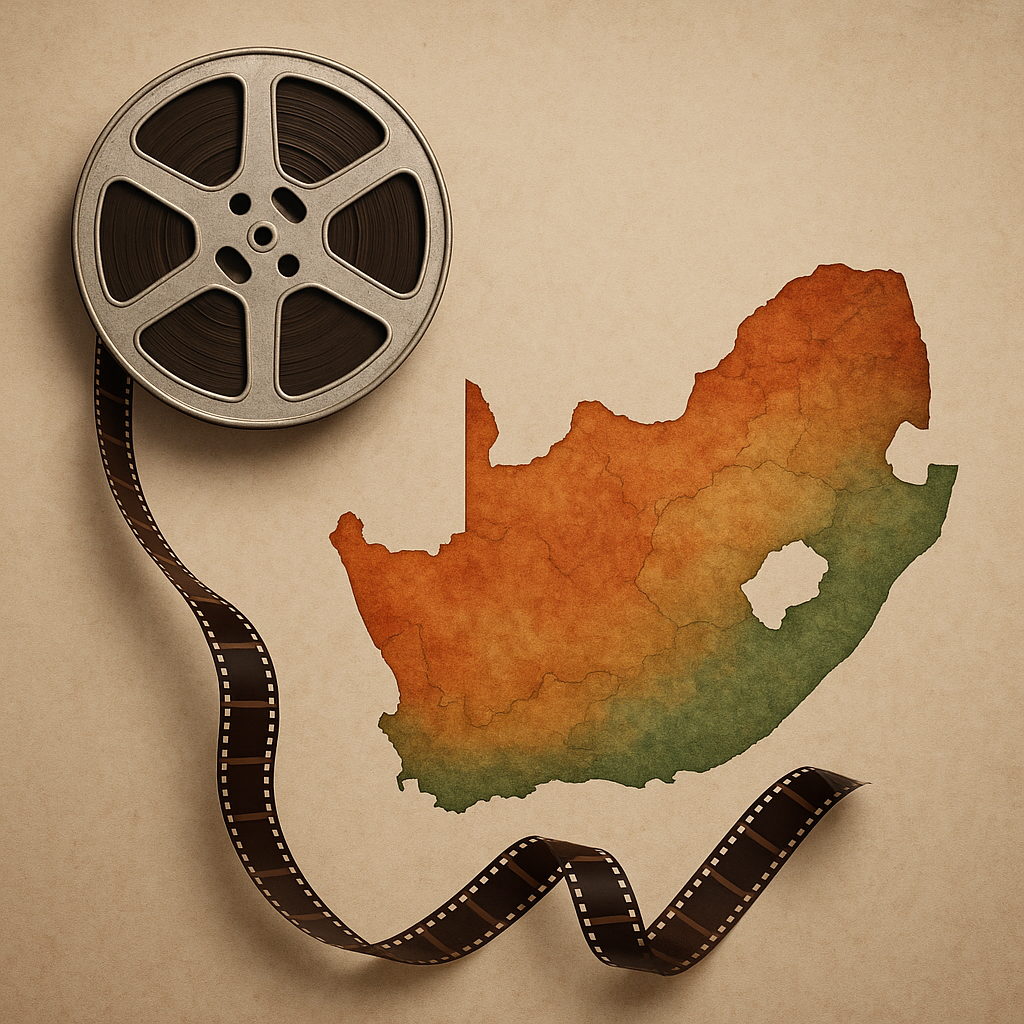
Encounters 2025: Celebrating 28 years of South Africa's premier documentary festival, shaping tomorrow's storytelling.
Encounters 2025 is Africa's top non-fiction film festival, now in its 28th year. It's shaking things up with super short, powerful documentaries, making big themes fit into tiny films. The festival is reaching new audiences with screenings everywhere, from mining towns to prisons. They're even using cool tech and making movies with tiny budgets, showing that great stories can come from anywhere.
What is Encounters 2025?
Encounters 2025 is the 28th edition of a leading African non-fiction film festival, showcasing a diverse range of documentaries. It features short, impactful films, explores grand themes, and innovatively engages audiences through satellite screenings, immersive experiences, and a focus on micro-epics, reflecting a dynamic evolution in documentary storytelling.
Get Cape Town news in your inbox
Stay updated with the latest stories from the Mother City.
From One Screen to a Movement
When Encounters first lit a projector in 1996, South Africa had only recently sworn in Nelson Mandela, mobile phones were chunky bricks, and nobody spoke of a “local documentary canon.” Today the opening queue at Cape Town’s Labia Theatre curls around the block, Lagos-, Havana- and Tehran-based directors land with drives still warm from the edit-suite, and streaming platforms bid feverishly because the public now trusts tightly-told truths more than the nightly bulletin. The 4–14 June 2025 programme is no victory lap; it is a controlled explosion that tests every inherited rule - length, finance, circulation, even the difference between a “subject” and a co-author - under an African sky.
Since those first 35-millimetre reels, attendance has grown by triple digits every fifth year. Curators no longer talk about “educating” viewers; they talk about keeping pace with an audience that binge-watches short documentaries on the taxi ride home. Ticket sales for the 2024 cycle broke six figures, while festival-branded TikTok extracts clocked 12 million views, proving that the stories leak far beyond the auditorium.
This year, for the first time, satellite pods beam films to mining hostels in the North West, prison libraries in KwaZulu-Natal, and pop-up screens on Durban’s beachfront. The point is obvious: if a festival wants to matter, it must follow its own story after the credits roll.
The Micro-Epic Takes Centre Stage
Festival head Mandisa Zitha and her team sorted through 2 700 entries, a mountain that dwarfs many European fiction slates. Their first pass was brutal: nothing longer than 40 minutes advanced. The result? An average runtime of 23 minutes, each short arriving like a controlled detonation. Veteran cutter Khalid Shamis calls the new shape the “micro-epic”: the emotional force of a feature packed into the time it takes to finish your coffee. Neuroscientists advising the festival confirm that oxytocin - the empathy chemical - peaks in the first twenty minutes of character contact, then levels off. Short, in other words, is not emerging; it is already optimal.
Yet brevity never means small stakes. The 2025 lineup tackles grand themes in pocket-sized bursts: ecocide, queer survival, urban hunger, digital narcissism, post-trauma rebirth. One programmer jokes that the next submission portal should ask, “Can you crash a viewer’s heart rate in under half an hour?” If the answer is yes, you’re in.
The financial upside is equally tidy. A polished 25-minute piece can be shot, graded and sound-mixed for less than the craft-service bill on a prestige-series episode. That price tag attracts young crews who grew up crowdfunding on BackaBuddy and thrived on WhatsApp writers’ rooms.
Eco-Noir, Street Ballads and Vanishing Cacti
Green Crime Under the Desert Stars
“Vet vannie Land” shadows Pieter van Wyk, a soft-spoken botanist who looks like he should be pressing daisies but has spent half a decade undercover in the succulent black market. Thumb-sized plants harvested illegally in the Richtersveld fetch up to US $2 000 in Seoul because they resemble living jewels and never need watering. Director Jolene van Antwerp hid motion-triggered cameras inside fake boulders, yielding night-vision chases that feel like narco thrillers - except the contraband photosynthesizes. After a triumphant showing at Silwerskermfees, buyers tagged the film as the birth certificate of “eco-noir,” a genre where the murdered body is an entire biome.
Street Sonnets at the Traffic Light
Just up the urban coast, “Just Because I’m a Street Kid” plants a pin-mic on Shorty, a twenty-six-year-old poet who flogs home-made booklets for R30 at Melville’s red lights. When a driver yells, “Get a job,” Shorty snaps back, “I’m rewriting the city’s subconscious.” The Johannesburg premiere erupted in mid-film applause - the first time Encounters felt like a stage play trapped inside a cinema.
Rewriting Struggle into Paint
Lwanda Dlamini’s “Inyembezi Zendoda” begins with the artist’s scarred back filling the frame while he blends vermillion oil with tears stored in a perfume vial. Eleven stab wounds, inflicted in a 2019 homophobic attack, are sutured by every brushstroke instead of a surgeon’s needle. A foot-pedal camera controlled by Dlamini himself records a self-portrait in reverse: the subject paints himself whole while the lens erases injury. Trauma counselors programmed the short into a “Catharsis Loop,” pairing screenings with art-therapy workshops - an African festival first.
Plates, Palates and the Archive of Soil
“The Hands That Feed” eavesdrops on closing night at Oom Bennie’s Stellenbosch café, open since 1978. The directors splice grainy 8 mm film from the restaurant’s whites-only era with 2025 footage of drag brunches and mixed tables. Memory is served hot; the bill is a reckoning with apartheid’s leftovers.
Meanwhile “Taste of the Land” rides with Ncumisa Mkabile as she turns abandoned bowling greens into mini-farms of imifino and sorghum. The punch line arrives when Gautrain engineers wolf down a buffet grown on a 400-square-metre strip beside their own station. Food sovereignty, Mkabile proves, can sprout in the cracks of late-capitalist concrete.
Havana, Lagos, Tehran: Lights Flicker 12 000 km Away
Cuban journalist Yusimi Moya threads a national blackout into 18 minutes of sheer dread in “Apagón.” The film is stitched solely from WhatsApp voice notes; every ringtone becomes a jump scare. Over in “Lagos After Dark,” a drone descends from 120 metres to rooftop level above Alaba market, carving a vertical slice of Africa’s loudest megacity. Iran’s “Green, Again” exhumes 2009 protest footage ferried out in cake-batter memory cards; fifteen years of digital rot blur the pixels into haunting impressionism. The takeaway: the Global South now shares a single, elastic storyboard.
Tech Tricks and Zero-Budget Wonder
When the Canyon Becomes a Billboard
“The Spectacle” opens on Iceland’s Fjaðrárgljúfur canyon packed with tourists recreating a Justin Bieber video still. Director Mirah Van Zijl then hacks the location’s Instagram metadata and beams live posts onto the cliff faces; minute twelve, the canyon is a scrolling LED screen and the hikers revolt. The Labia’s 11 p.m. slot emptied viewers into the night clutching phones that suddenly felt toxic.
Stop-Motion on a Shoestring
“Mama Micra” compresses Philile Mthethwa’s 18-month residency in a red Fiat 500 (while finishing her anthropology PhD) into 15 minutes of stop-motion gold. Miniature sets of lecture halls, palace corridors and motorway underbellies were animated with algorithmically generated micro-facial expressions taken from Mthethwa’s own WhatsApp voice notes. Budget: R260 000 - less than the coffee budget on some reality shows. Streaming giants are now in a bidding war.
Immersive Rooms, Pint-sized Ale and Post-Festival Oxygen
Labia Theatre - once an Italian embassy ballroom - still carries whiffs of popcorn and anti-fascist ghosts. This year it hosts “Documentary Karaoke,” where audience members read subtitles aloud and become impromptu narrators. Cross the N2 into Khayelitsha and the Bertha Movie House throws free outdoor projections so blanket-wrapped neighbors can join. In Maboneng the Bioscope brews “Session IPA: The Non-Fiction Ale,” each can tattooed with a QR code that unlocks bonus footage. Pretoria’s Brooklyn Ster-Kinekor dims the lights only halfway and hands out tissues for “cry-friendly” screenings; middle-aged men finally feel licensed to sob.
After the closing awards on 14 June, every film unlocks for 24 hours inside South African borders, a deliberate push against the nation’s 38 % cinema-to-streaming lag. Then the work embarks on a year-long festival tour. A WhatsApp bot called ‘Enco’ keeps the conversation alive, pinging trivia - “poachers used Pokémon GO coordinates to GPS rare cacti” - and alerting users to library, church or shebeen pop-ups.
And for the brave, a hush-hush “Ghost Section” beckons. Access is by sunrise SMS; you hike up Signal Hill leaving your phone in a locked box. Rumor lists a VR cell-block reconstruction built only from Pollsmoor prison audio, and an AI-generated short that remixes the day’s headlines nightly. The end credit reads: “by Anonymous, for Everyone.”
What is Encounters 2025?
Encounters 2025 is the 28th edition of Africa's premier non-fiction film festival. It is renowned for showcasing powerful, short documentaries (often under 40 minutes, with an average runtime of 23 minutes) that tackle significant global themes. The festival is committed to expanding its reach through innovative screening methods, including satellite pods in mining towns and prisons, and utilizing low-budget, high-impact filmmaking techniques.
When and where does Encounters 2025 take place?
The festival runs from June 4th to June 14th, 2025. While the Labia Theatre in Cape Town is a central venue, Encounters 2025 is significantly expanding its reach. Screenings will take place in various locations, from mining hostels in the North West and prison libraries in KwaZulu-Natal to pop-up screens on Durban's beachfront. Other venues include the Bertha Movie House in Khayelitsha, the Bioscope in Maboneng, and Brooklyn Ster-Kinekor in Pretoria.
What kind of films can I expect at Encounters 2025?
Encounters 2025 focuses on 'micro-epics' – short documentaries (typically under 40 minutes) that deliver the emotional impact of a feature film. The lineup covers a wide array of grand themes, including ecocide, queer survival, urban hunger, digital narcissism, and post-trauma rebirth. Examples include "Vet vannie Land" (eco-noir), "Just Because I'm a Street Kid" (street poetry), and "Inyembezi Zendoda" (trauma and art).
How is Encounters 2025 making documentaries more accessible?
The festival is employing several innovative strategies to reach new audiences. This includes satellite pods beaming films to remote locations like mining hostels and prison libraries, and free outdoor projections in areas like Khayelitsha. They also use a WhatsApp bot ('Enco') to share trivia and alert users to pop-up screenings in various community spaces, and for the first time, all films will unlock for 24 hours within South African borders after the festival ends.
What are some of the unique technological and production aspects of the festival?
Encounters 2025 highlights low-budget filmmaking and creative use of technology. For instance, films like "Mama Micra" was made with a budget significantly lower than typical productions, utilizing stop-motion animation and algorithmically generated facial expressions from WhatsApp voice notes. "The Spectacle" uses hacked Instagram metadata to project live posts onto a canyon, while international films like "Apagón" are stitched solely from WhatsApp voice notes, showcasing how great stories can be told with minimal resources and innovative approaches.
Are there any special events or experiences beyond traditional screenings?
Yes, Encounters 2025 offers several unique experiences. The Labia Theatre will host "Documentary Karaoke," where audience members read subtitles aloud. The Bioscope in Maboneng will offer a "Session IPA: The Non-Fiction Ale" with QR codes for bonus footage. There will be "cry-friendly" screenings at Brooklyn Ster-Kinekor where tissues are provided. Additionally, a mysterious "Ghost Section" is accessible via sunrise SMS, involving a hike up Signal Hill and rumored VR cell-block reconstructions and AI-generated shorts.
Thabo Sebata is a Cape Town-based journalist who covers the intersection of politics and daily life in South Africa's legislative capital, bringing grassroots perspectives to parliamentary reporting from his upbringing in Gugulethu. When not tracking policy shifts or community responses, he finds inspiration hiking Table Mountain's trails and documenting the city's evolving food scene in Khayelitsha and Bo-Kaap. His work has appeared in leading South African publications, where his distinctive voice captures the complexities of a nation rebuilding itself.
View all articles →