
Eskom reaches major milestone as five provinces become load reduction-free
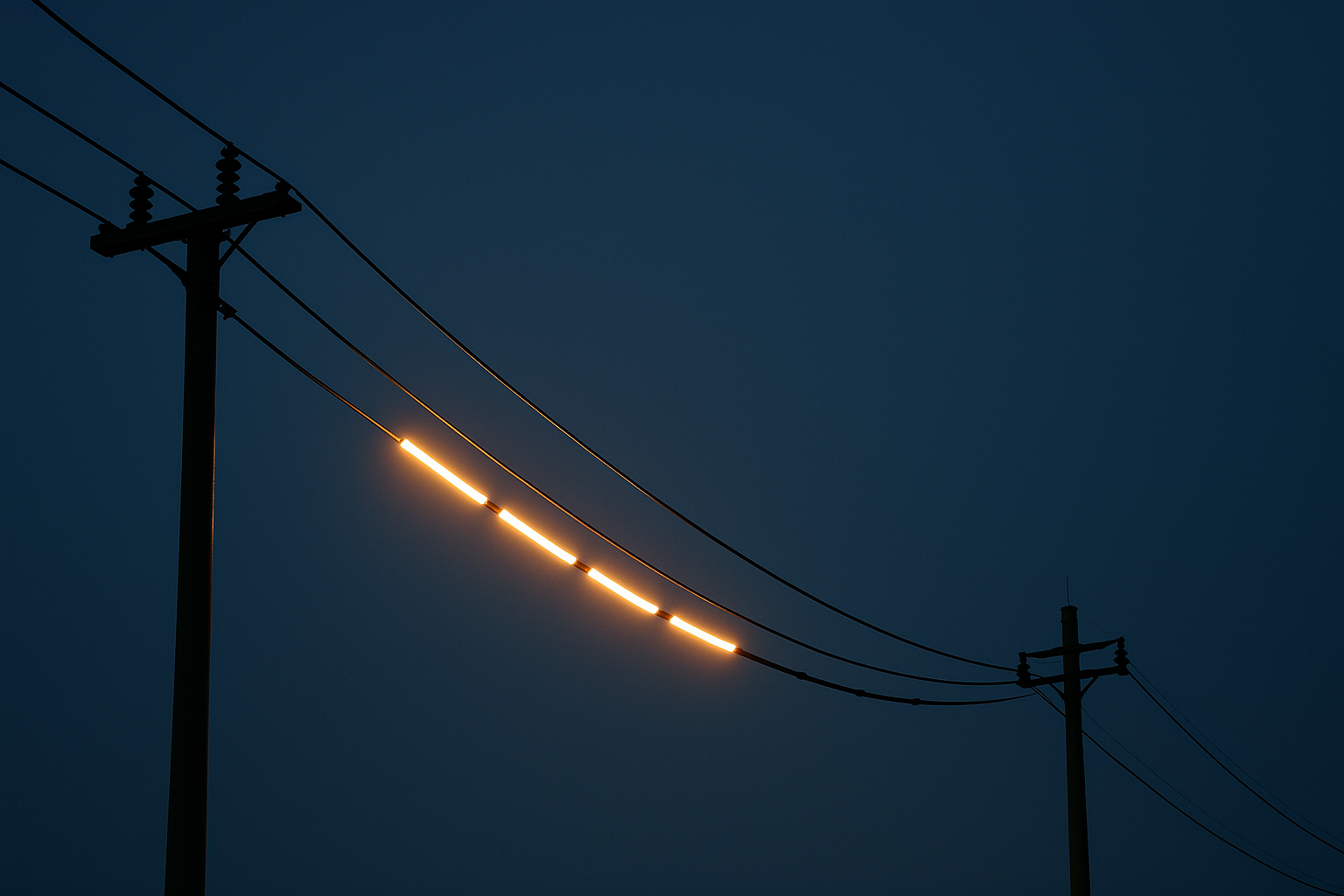
Eskom eliminates load reduction in 5 provinces, restoring power to 1.1M customers. Focus now shifts to Gauteng & KwaZulu-Natal for full stability.
Good news for electricity users! Eskom has stopped local power cuts in five provinces. This is a huge win against old power lines and illegal connections, not the big national blackouts (load shedding). Over a million homes now have steadier power. Eskom aims to fix all local cuts nationwide by next March, showing that investing in better equipment truly helps.
What is the difference between load shedding and load reduction?
Load shedding is a national emergency protocol where Eskom orchestrates rotating blackouts across the country to prevent total grid collapse due to insufficient generation. Load reduction, conversely, targets specific local areas to protect equipment from failure when demand exceeds local capacity, often due to unauthorized connections or aging infrastructure.
Get Cape Town news in your inbox
Stay updated with the latest stories from the Mother City.
South Africa's national power provider has reached a pivotal moment in its battle to secure consistent electricity delivery across the country. Eskom has officially scrapped load reduction protocols in five of the nine provinces, marking a decisive victory in its campaign to tackle persistent infrastructure weaknesses that have long crippled local distribution systems. This breakthrough represents more than operational progress - it embodies a strategic pivot from emergency power cuts to enduring network resilience.
The achievement comes after years of communities enduring unpredictable electricity interruptions caused not by power station failures, but by overloaded local equipment. By resolving these bottlenecks, Eskom demonstrates that targeted infrastructure intervention can restore reliability even in challenging environments. The five-province milestone offers proof that systematic investment yields measurable results.
Decoding the Power Interruption Lexicon
South African electricity consumers frequently conflate two distinct phenomena that darken their homes and businesses. Understanding the critical differences between load shedding and load reduction illuminates why some areas lose power while others remain illuminated.
Load shedding constitutes a national emergency protocol. When electricity generation falls short of nationwide demand, Eskom orchestrates rotating blackouts across the entire country to avert total grid collapse. This measure responds to macro-level supply crises - power plant outages, coal shortages, or maintenance backlogs that diminish available generation capacity. Consumers receive advance notice through published schedules, allowing households and enterprises to prepare for predictable interruptions.
Load reduction operates through an entirely different mechanism. This intervention targets specific neighborhoods, suburbs, or townships where local transformers, substations, or distribution lines face demand exceeding their engineering limits. Rather than protecting the national grid, these cuts safeguard local equipment from catastrophic failure. A transformer pushed beyond capacity overheats, explodes, and triggers extended repairs - load reduction prevents this outcome through temporary supply throttling.
The practical distinction matters enormously to affected residents. Load shedding follows public timetables based on supply forecasts. Load reduction strikes reactively when local demand spikes unpredictably, making its timing erratic and frustrating for communities attempting to plan daily activities. Recognizing this difference helps explain why your lights may flicker off despite ample national generation capacity.
The Provincial Success Stories
Mpumalanga's recent graduation to load reduction-free status brings the provincial total to five, joining an eclectic mix of regions spanning South Africa's geographical diversity. The Western Cape, Northern Cape, Free State, and North West previously achieved this designation, creating an encouraging pattern of progress.
The Western Cape deserves particular recognition. As South Africa's fourth-largest province by population and a cornerstone of national economic output, it presented formidable distribution complexities. Cape Town's urban density, sprawling informal settlements straining makeshift connections, and substantial industrial load combined to create severe infrastructure pressures. Eliminating load reduction here proves that even the most demanding environments can achieve stability through persistent, well-resourced intervention.
The Northern Cape and Free State, though sparsely populated, anchor crucial agricultural and extractive industries where power reliability directly translates to economic productivity. Their inclusion confirms that Eskom's programme transcends urban bias, delivering solutions across settlement types - from isolated Karoo villages to concentrated mining towns.
North West and Mpumalanga share profiles as resource-rich provinces with expanding urban footprints and significant informal settlement growth. Mpumalanga's achievement particularly reflects success in communities experiencing rapid demographic change, where electricity demand has historically outpaced infrastructure expansion.
Quantifying the Transformation: Over a Million Reconnected
Eskom's progress carries impressive numerical weight. More than 1.1 million customer accounts have exited load reduction protocols, surpassing halfway toward the utility's complete elimination target.
This statistic reveals multiple insights about South Africa's electricity landscape. First, it exposes the vast population affected by distribution constraints independent of generation problems - over a million customers whose supply suffered from local network inadequacy rather than power station dysfunction. These households, shops, schools, and clinics experienced interruptions despite adequate national capacity.
Second, the 56% completion rate acknowledges remaining work while celebrating substantial headway. Nearly half the target population still faces supply limitations, tempering premature celebration with realistic assessment.
Third, the customer metric highlights infrastructure investment leverage. Each upgraded transformer or reinforced feeder line potentially restores hundreds of connections, making capital deployment extraordinarily efficient in customer terms. This multiplier effect justifies concentrated spending on high-impact network nodes.
Diagnosing the Infrastructure Disease
Eskom's load reduction programme emerged from specific, cumulative pressures that degraded distribution networks over decades. Comprehending these origins clarifies why elimination demands sustained, multi-pronged assault rather than superficial policy adjustments.
Unauthorized electricity connections constitute the most visible pathology, particularly prevalent in underserved communities and informal settlements. Clandestine tapping into distribution lines creates lethal safety risks while imposing unmeasured demand on equipment engineered for specific loads. These bypasses defeat metering systems, depriving Eskom of consumption data essential for capacity planning and revenue collection.
Electricity theft extends beyond crude connections to encompass sophisticated meter manipulation, circuit bypassing, and organized criminal exploitation that simultaneously erodes income and corrupts demand intelligence. The financial hemorrhage from theft starves infrastructure renewal budgets, perpetuating underinvestment and accelerating network decay.
Ageing equipment compounds these afflictions. Much distribution infrastructure dates to previous decades, with transformers, switchgear, cabling, and support structures approaching or exceeding design lifespans. Environmental exposure, electrical stress, and deferred maintenance progressively diminish capacity and elevate failure probability. Replacement demands capital that theft and non-payment partially prevent.
Rising consumption in electrified communities - driven by population growth and improving living standards - further taxes infrastructure conceived for lighter loads. These converging forces created conditions where load reduction became the least-worst alternative to equipment destruction.
Parallel Victory: Generation Stability Sustained
Load reduction elimination unfolds alongside equally noteworthy generation performance. Eskom has maintained uninterrupted electricity supply for over 413 consecutive days, establishing one of the most extended load shedding-free periods in recent history.
This simultaneous success carries significant implications. It demonstrates that South Africa's electricity crisis has been genuinely three-dimensional, requiring concurrent attention to generation, transmission, and distribution. Single-track improvement cannot deliver system-wide stability. The generation reprieve also creates favorable conditions for distribution investment, liberating resources and management attention previously consumed by power station emergencies.
Thirteen months of continuous supply suggests structural rather than cyclical improvement. Sustained operation without rotational blackouts indicates enhanced plant reliability, superior maintenance discipline, and effective demand management.
Concentrating Firepower: Gauteng and KwaZulu-Natal
Despite provincial breakthroughs, formidable obstacles persist in South Africa's demographic and economic heavyweights. Gauteng and KwaZulu-Natal harbor the remaining communities subjected to load reduction, presenting Eskom's most intensive challenges.
Gauteng, as the nation's economic engine, concentrates massive electricity demand within complex distribution architectures serving dense urban populations, industrial corridors, and extensive informal settlements. Johannesburg, Pretoria, and surrounding municipalities generate infrastructure pressures dwarfing less populated regions. The province's continued load reduction status reflects both challenge magnitude and strategic prioritization.
KwaZulu-Natal similarly combines major urban centers - Durban, Pietermaritzburg - with rural and informal areas experiencing severe infrastructure strain. The province's varied topography, from subtropical coastline to interior highlands, complicates distribution logistics.
Eskom's sustained focus on these provinces indicates calculated prioritization of maximum-impact areas. Eliminating load reduction here would dramatically accelerate national target achievement.
Target Dates and Strategic Commitments
Eskom has established explicit milestones for programme completion. The utility targets seven load reduction-free provinces by October, with nationwide elimination scheduled for March of the following year.
This timeline implies roughly six months for conquering challenges in two additional provinces, followed by approximately five months for resolving Gauteng and KwaZulu-Natal complexities. The sequencing signals confidence in replicating proven solutions, while acknowledging that final provinces demand intensified resources.
March completion would constitute a watershed moment, terminating a programme that has burdened communities for years. Achievement would validate that infrastructure investment, technology deployment, and operational reform can overcome entrenched distribution dysfunction.
Investment Strategies and Technological Modernisation
Eskom credits progress to interconnected initiatives. Physical infrastructure renewal replaces deteriorated equipment and expands capacity where demand growth necessitates. These capital-heavy endeavours require sustained funding streams and skilled implementation capacity.
Smart meter proliferation drives technological transformation. Advanced metering infrastructure enables remote surveillance, automated fault identification, and demand management that alleviates network pressure. Smart meters also combat theft through tamper detection and remote unauthorized-connection severance.
Theft suppression combines technological and enforcement dimensions. Enhanced detection, legal prosecution, and community partnership aim to reduce unauthorized demand overloading legitimate infrastructure. Revenue protection from theft reduction funds further upgrades, generating virtuous investment cycles.
Community Perspectives and Future Expectations
For residents still enduring load reduction, provincial progress offers concrete hope grounded in demonstrated results. The five-province precedent suggests infrastructure investment delivers reliable outcomes, and similar interventions will eventually reach remaining areas.
The elimination timeline enables planning, though communities maintain healthy skepticism regarding utility promises. The 413-day generation stability record may nonetheless bolster confidence that current leadership can fulfill distribution commitments.
Ultimately, load reduction elimination would normalize electricity supply, permitting economic activity, household functioning, and community services without distribution-protection interruptions.
What is load reduction and how does it differ from load shedding?
Load reduction is a localized intervention by Eskom to prevent equipment failure in specific areas where demand exceeds the capacity of local infrastructure (like transformers or distribution lines), often due to unauthorized connections or aging equipment. In contrast, load shedding is a national emergency protocol involving rotating blackouts across the country to prevent a total grid collapse due to insufficient electricity generation.
Which provinces have successfully eliminated localized power cuts (load reduction)?
Five provinces have successfully eliminated localized power cuts: the Western Cape, Northern Cape, Free State, North West, and most recently, Mpumalanga. This success demonstrates that targeted infrastructure investment can restore reliability even in challenging environments.
How many customer accounts have been reconnected as a result of these efforts?
More than 1.1 million customer accounts have exited load reduction protocols. This represents a significant milestone, surpassing halfway towards Eskom's goal of completely eliminating localized power cuts nationwide.
What are the main causes of the infrastructure problems leading to load reduction?
The primary causes include unauthorized electricity connections, electricity theft (which also includes sophisticated meter manipulation), and aging equipment. These issues lead to overloaded infrastructure, revenue loss for Eskom, and deferred maintenance, perpetuating a cycle of network decay.
When does Eskom plan to eliminate all localized power cuts nationwide?
Eskom aims to have seven provinces free from load reduction by October and to achieve nationwide elimination of all localized power cuts by March of the following year. This ambitious timeline reflects their strategic commitment to improving distribution network resilience.
What strategies is Eskom employing to achieve these improvements?
Eskom is focusing on physical infrastructure renewal, which involves replacing deteriorated equipment and expanding capacity. They are also implementing technological modernization through the proliferation of smart meters, which help with remote monitoring, fault identification, demand management, and theft detection. Additionally, robust theft suppression efforts are underway, combining technological solutions with enforcement and community partnerships.

Sizwe Dlamini is a Cape Town-based journalist who chronicles the city’s evolving food scene, from boeka picnics in the Bo-Kaap to seafood braais in Khayelitsha. Raised on the slopes of Table Mountain, he still starts every morning with a walk to the kramat in Constantia before heading out to discover whose grandmother is dishing up the best smoorsnoek that day.
View all articles →