
Explainer: Why does the rand exchange rate matter?
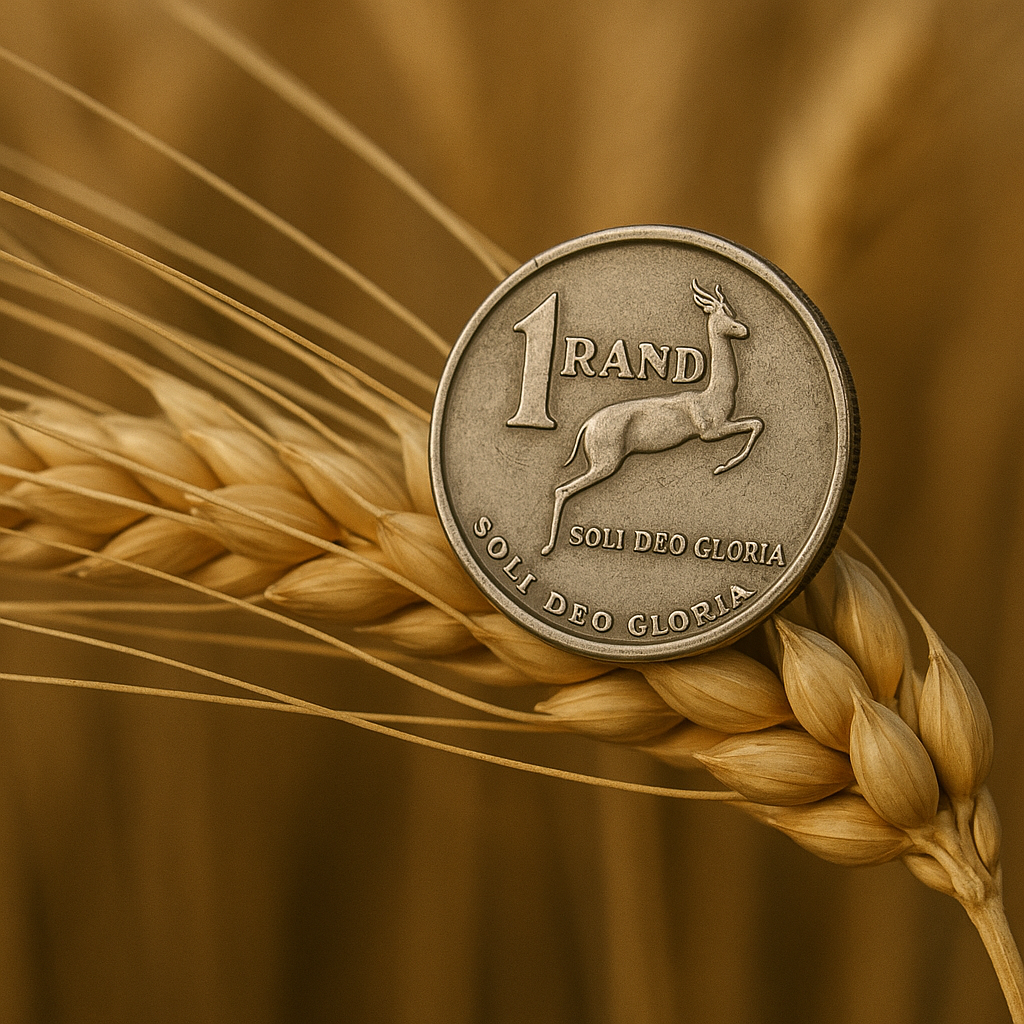
The rebounding Rand in South Africa quietly rewrites daily life, from cheaper imports and gaming to pension impacts and economic shifts.
Imagine a world where your favorite online game's top-up suddenly costs less, or your fridge is filled with cheaper imported goodies. That's what happened in 2025 for South Africa, as the Rand got stronger! This meant good news for shoppers and those buying things from other countries, making their money go further. But it was a bit tougher for businesses that sell goods abroad, as their earnings didn't stretch as far. This quiet change touched everything from gaming to groceries, showing that even small shifts in money can make a big splash in daily life.
What does a stronger Rand mean for South Africa?
A stronger Rand in South Africa makes imported goods cheaper, benefiting consumers and businesses importing products. However, it can negatively impact exporters as their foreign earnings translate to fewer Rands, and may slow down tourism from abroad, while making overseas travel more affordable for South Africans.
Get Cape Town news in your inbox
Stay updated with the latest stories from the Mother City.
1. A Teen’s Gaming Top-Up and the Hidden Tide
On the first trading morning of 2025 a Khayelitsha learner loaded US-denominated credit for her favourite online game and paid R18.76 for every greenback. On the final trading afternoon of the same year the identical digital dollar cost her only R16.60. The game itself never changed - same characters, same server in Oregon - yet the rand price dropped a crisp 11.5 %. That invisible discount is the gateway to a much larger story, one that reaches the price of a supermarket loaf, the colour of municipal budget spreadsheets and the digit on a grandmother’s pension advice slip.
Nothing dramatic was announced; no headlines screamed. Nonetheless, by December everyday imported products - from Korean televisions to Czech beer bottles - had become cheaper in local money. The teenager’s smaller gaming bill is therefore a mirror for a national shift: the country’s exchange price firmed, and the shift rippled outward faster than social-media gossip.
The phenomenon is easy to miss because it seldom arrives with fanfare. But once you know how to read the signals, you see them everywhere: the garage forecourt quoting lower petrol, the furniture chain shouting “price freeze,” the independent cinema able to keep popcorn at last season’s level. A currency movement is abstract only until it reaches your wallet; then it feels as real as coins in a palm.
2. What an Exchange Quote Really Means (Spoiler: Nobody Sets It)
Picture a sprawling night market that never closes. Banks, hedge funds, manganese exporters, Japanese pension schemes, a Bloemfontein dealer ordering minibus engines from Taiwan - all shout bids and offers for rands around the clock. The visible quote on your banking app is simply the last price at which someone agreed to swap spending power. When the crowd wants more exposure to South African assets, ore, wine or just a quick speculation, the rand’s price rises. When they rush for the exit, the figure drops. No president, minister or central-bank governor unilaterally “decides” the number; at best they influence the mood of the bazaar.
Viewed this way, a currency is nothing more exotic than a referendum on the collective desirability of everything a nation produces, owns and promises. A stronger ballot therefore signals higher global appetite for local assets and export receipts, or weaker enthusiasm for holding the alternative - usually the United States dollar.
The practical takeaway is that the figure flashing on the screen is simultaneously a price and a story. Appreciate the narrative - about politics, commodity markets, interest-rate gaps - and you gain a predictive edge for household budgets, wage talks and inventory choices. Ignore the story and you live at the mercy of tides you never notice.
3. Anatomy of 2025: Why the Rand Flexed Its Muscle
Measured against the Reserve Bank’s trade-weighted currency basket the rand strengthened 9.4 % through 2025. The dollar leg of that move was the most dramatic - down 11.5 % - while the euro and sterling components slid 6.8 % and 5.9 % respectively. Only the Chinese yuan stayed almost flat, slipping a marginal 1.2 %. Two macro forces did the heavy lifting:
First, the United States Federal Reserve lowered its policy rate three times in response to cooling inflation, dragging the greenback downward against almost every peer. Second, South Africa’s current-account shortfall narrowed to a microscopic 0.8 % of gross domestic product, the slimmest gap since 2003. A tourism boom, firmer platinum-group-metal receipts and a record citrus crop meant fewer rands had to be exchanged to square the external ledger. Less supply, firmer price - Economics 101 played out in real time.
The upshot was a year when the country’s paper gained ground without a domestic interest-rate increase or a miraculous political turnaround. That combination - external dollar weakness plus local inflow abundance - created a sweet spot that few forecasters had pencilled in twelve months earlier.
4. Shop Shelves Cool Down While Haircuts Stay Hot
Roughly three-tenths of the basket that statisticians use to calculate the consumer price index is either imported directly or priced on import-parity sums. A firmer rand therefore trims the landed cost of anything from Malaysian palm oil to Saudi jet fuel. Goods inflation consequently ended 2025 at 3 % year-on-year, a marked drop from the 5.2 % printed in January. Prices of durable items fell fastest - new cars registered minus 0.7 % inflation for the first time since 2020, laptops dropped roughly 4 %, and even bottle imports from the Czech Republic became cheaper. One Franschhoek brewpub responded by freezing draught prices for the first time in half a decade.
Yet services tell a stickier tale. Hairdressers, dentists, medical-aid schemes and city councils mostly invoice in rand for inputs that are not traded across borders. Their costs hinge on local wages, electricity hikes and administrative whims, so services inflation lingered at 5.4 %. The Reserve Bank colourfully labels the split the “inflation crocodile”: the goods tail is down, but the services jaws remain open, keeping overall CPI at 4.1 %.
For shoppers the divergence means televisions and new sedans look attractively priced, but school fees, rent and insurance premiums continue climbing faster than headline figures suggest. Household budgets therefore improve only for the portion spent on tradable items; protecting the rest still requires wage negotiations and disciplined saving.
5. Exporters Feel the Pinch, Importers Pop the Champagne
Take a Free State wheat farmer who forward-sold a thousand tons at 240 US dollars per ton in March. The contract promised about R4.5 million of revenue at the prevailing exchange rate. When delivery arrived in November the muscular rand had shaved the local-currency value to just under R4 million, erasing R520 000 even though global wheat quotes never moved. Such “currency haircuts” rippled through tractor dealerships - where new orders fell 14 % - and the Kimberley casino, which recorded an 8 % slump in slot-machine income as farmers tightened purse strings.
Conversely, a Durban electronics distributor imported forty thousand gaming consoles in November and paid 16 % fewer rands than in January. Instead of banking the entire windfall the firm cut shelf prices 9 %, igniting a pre-Christmas price war that benefited consumers city-wide. Import volumes across the economy surged 7.3 % in real terms, the fastest spurt since 2011, as companies rebuilt inventories depleted by the 2024 port strike.
The asymmetry illustrates a timeless rule: currency strength redistributes income from producers who price in dollars (farmers, miners, call-centre outsourcers) toward buyers who invoice in foreign money but sell at home. Society on aggregate is neither richer nor poorer - purchasing power simply changes pockets - yet the political noise favours the louder losers over the silent winners.
6. Jobs, Taxes and the Second-Round Dominoes
Cheaper refrigerators from Korea undercut local plastic-moulding plants. One Pretoria factory experienced an 11 % order decline and froze hiring, eliminating two hundred potential entry-level positions. Simultaneously, the customs-duty take in rand terms slipped 5 % because the dutiable value of shipments fell even as volumes climbed. National Treasury therefore inserted a R9 billion revenue hole into its preliminary 2026 budget arithmetic, trimming policy wriggle room just as wage negotiations in the public sector heat up.
On the JSE, share performance split along currency-exposure fault lines. Retailers and general importers (Mr Price, Dis-Chem, Massmart) beat the all-share index by 12–18 %, whereas pure exporters such as Sibanye-Stillwater and Anglo American Platinum lagged by a similar margin. Seizing the moment, an asset manager listed two low-cost exchange-traded notes - ticker IMP for importers, EXP for exporters - allowing retail investors to punt explicitly on rand direction. Combined assets already top R7 billion, a record for narrowly themed South African ETFs.
Pension funds felt a subtler sting. Roughly 30 % of retirement-scheme assets sit in offshore securities via rand-denominated feeder funds. When the local unit strengthens the rand value of New York or London holdings falls, even if the underlying shares rally. The average balanced portfolio returned 4.2 % in 2025, but half of that evaporated through currency translation. A 60-year-old engineer in Centurion saw her projected monthly pension drop from R19 800 to R18 100 through no fault of her fund manager, highlighting how an apparently external market can redraw personal retirement horizons.
7. Tourism Plateaus, Locals Pack for Zanzibar
A buoyant rand makes Kruger safari lodges pricier in euro or yen terms, so international arrivals expanded a modest 3 % in 2025, down from 17 % the previous year. Outbound travel, on the other hand, leapt 14 % as South Africans discovered that Victoria Falls, Zanzibar and even Dubai suddenly looked cheap in rand terms. OR Tambo departure lounges now vibrate with Setswana, isiZulu and Afrikaans conversations - locals have become the premier spenders.
The phenomenon underscores a psychological flip: currency strength feels like prosperity when you holiday abroad yet resembles hardship when foreigners avoid local attractions. Policy makers therefore confront a balancing act - cheer the cheaperimports that tame inflation while lamenting the lost bed-nights that sustain rural employment.
8. Crypto, Co-ops and the Township Dividend
An estimated 2.3 million citizens now hold dollar-linked stable coins on offshore platforms, a grassroots attempt to escape rand volatility. The 2025 appreciation triggered a 30 % drop in local crypto trading as punters converted back into rands to crystallise gains. SARS is drafting rules to treat such switches as “disposal events” for capital-gains purposes, teeing up the next regulatory skirmish.
Yet the same currency move financed micro-miracles. In Botshabelo a women’s co-op used a stronger rand to import 15 % more second-hand sewing machines with an unchanged NGO grant, expanding a school-uniform project that now hires 120 part-time workers. Spaza shops stocking Zambian mealie-meal priced in dollars passed on marginal savings, nudging food inflation in Free-State townships below 2 %, a level last seen in 2010.
9. Toolkit and Take-Outs: How to Surf, Not Drown
- Importers: Layer hedges - cover half your six-month requirement with forward contracts, leave a quarter open to capture further gains, and cap downside on the balance with zero-cost collars.
- Exporters: Seek natural offsets - invoice Zimbabwean clients in rand, or diversify inputs that you now buy cheaper from abroad.
- Workers: Anchor wage talks to services inflation, not headline CPI; your employer’s import bill just shrank.
- Savers: Tilt discretionary portfolios 60 % toward domestic names that benefit from cheaper inputs, 25 % to global funds via rand feeders, and 15 % to income funds set to rally if rate cuts follow.
- Tourists: Book refundable overseas hotels now; a rand reversal could add 10 % to next summer’s European vacation.
10. The Bigger Picture: A Currency Holds Up a Mirror to Society
Strength in a currency is never a mere economic footnote; it is a running referendum on political risk, logistical competence and global appetite for everything the country makes, digs or serves. The 2025 rand revival meant flood-lit citrus terminals humming at 3 a.m., public-hospital codeine shipments costing 11 % less, and an Mdantsane student streaming MIT lectures on a tablet that left the retailer R600 cheaper than twelve months earlier.
The statistics arrive as spreadsheets, but the consequences are tactile: the softness of bread, the growl of a tractor engine, the hopeful chatter inside a corrugated-iron co-op office. Whether the tide lasts or recedes will depend on choices yet to be taken - budget discipline, rail-reform speed, and the outcome of next year’s ruling-party conference. Until then South Africans will keep meeting the rand’s verdict every time they fuel up, load gaming credit, or price a holiday. The numbers may be abstract, yet daily life is the place where those digits turn into dinner, dreams and, occasionally, disappointment.
What does a stronger Rand mean for South Africa?
A stronger Rand means that South Africans can buy more foreign goods and services for the same amount of local currency. This makes imported items like electronics, cars, and even online gaming top-ups cheaper. It also makes international travel more affordable for South Africans. For businesses, those who import goods benefit from lower costs. However, it can make South African exports more expensive for international buyers, potentially reducing demand and impacting exporters' earnings. Tourism to South Africa might also become pricier for international visitors.
How did a stronger Rand impact ordinary South Africans in 2025?
In 2025, a stronger Rand led to noticeable changes in daily life. For example, a teenager's online gaming credit, denominated in US dollars, became significantly cheaper. Everyday imported products, from televisions to beer, became more affordable. Consumers saw lower petrol prices, price freezes on some furniture, and even stable popcorn prices at independent cinemas. However, while goods became cheaper, services like haircuts, medical aid, and school fees, which are tied to local costs, continued to rise, leading to an "inflation crocodile" effect where goods inflation dropped but services inflation remained high.
What caused the Rand to strengthen in 2025?
The Rand's strengthening in 2025 was primarily due to two macro forces. Firstly, the United States Federal Reserve lowered its policy rate three times, weakening the US dollar against most other currencies, including the Rand. Secondly, South Africa's current-account shortfall narrowed significantly to a mere 0.8% of GDP, the lowest since 2003. This was driven by a tourism boom, higher platinum-group-metal receipts, and a record citrus crop, meaning fewer Rands needed to be exchanged to balance external accounts. This combination of external dollar weakness and local inflow abundance created a favourable environment for the Rand.
How did a stronger Rand affect different types of businesses?
A stronger Rand created a clear divide among businesses. Importers, such as electronics distributors, benefited greatly as they paid fewer Rands for their goods, often leading to lower shelf prices and increased sales volumes. Conversely, exporters, like wheat farmers, experienced a "currency haircut" where their foreign earnings translated into fewer Rands, impacting their revenue and leading to reduced orders for related industries (e.g., tractor dealerships). Retailers and general importers generally outperformed, while pure exporters lagged on the JSE.
What impact did the stronger Rand have on government revenue and employment?
The strengthening Rand had mixed effects on government revenue and employment. While consumers benefited from cheaper imports, this led to a decline in customs duty revenue in Rand terms, creating a R9 billion revenue shortfall for the National Treasury. In terms of employment, cheaper imported goods, like refrigerators from Korea, undercut local manufacturing, leading to reduced orders and hiring freezes in some South African factories. However, in other instances, a stronger Rand enabled initiatives like women's co-ops to import more resources for projects, indirectly supporting local employment.
How can individuals and businesses adapt to currency fluctuations like a strengthening Rand?
To navigate currency fluctuations, various strategies can be employed. Importers can use hedging techniques like forward contracts and zero-cost collars to manage risk. Exporters can seek natural offsets, such as invoicing international clients in Rand or diversifying cheaper foreign inputs. Workers should anchor wage negotiations to services inflation rather than headline CPI, given that import costs have decreased for employers. Savers can adjust their investment portfolios, tilting towards domestic companies benefiting from cheaper inputs and considering global funds via Rand feeders. Tourists can book refundable overseas hotels when the Rand is strong to lock in favourable exchange rates, anticipating potential future reversals.

Lerato Mokena is a Cape Town-based journalist who covers the city’s vibrant arts and culture scene with a focus on emerging voices from Khayelitsha to the Bo-Kaap. Born and raised at the foot of Table Mountain, she brings an insider’s eye to how creativity shapes—and is shaped by—South Africa’s complex social landscape. When she’s not chasing stories, Lerato can be found surfing Muizenberg’s gentle waves or debating politics over rooibos in her grandmother’s Gugulethu kitchen.
View all articles →