
Extortion threat hits rubbish collection in Cape Town
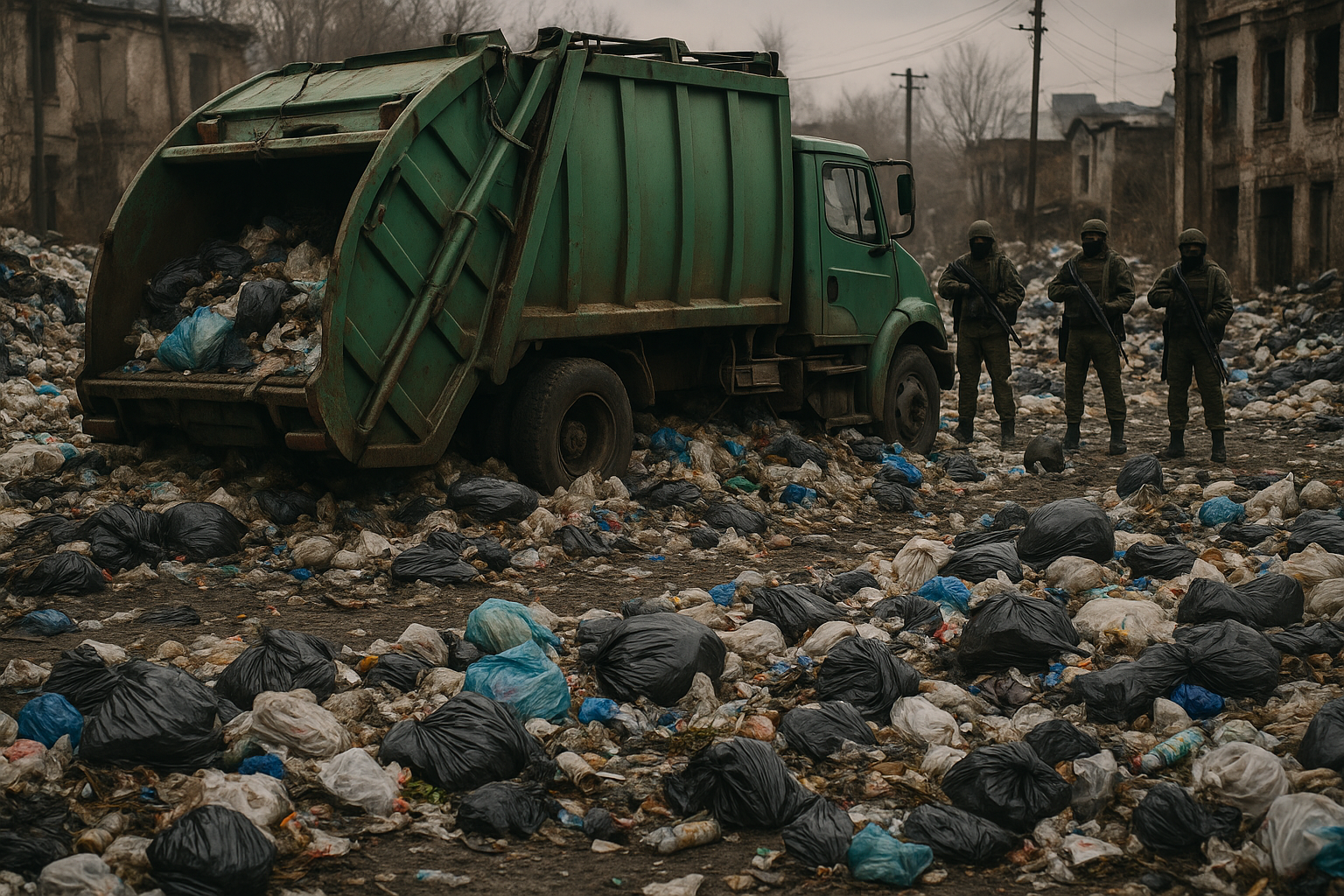
Cape Town's informal settlements face a refuse crisis as armed gangs extort waste contractors, leading to uncollected trash and health hazards.
Cape Town's informal settlements are under a garbage siege! Wicked gangs demand "gate money" from waste trucks, turning daily pickups into rare events. This means trash piles high, sewers choke, and sickness spreads. People are forced to illegally dump, making the problem even worse, and showing how crime can hold a whole city hostage.
What is the garbage problem in Cape Town's informal settlements?
Cape Town's informal settlements face a severe garbage crisis due to armed gangs extorting "gate money" from waste haulers. This has reduced waste collection to a few times a week, leading to accumulating refuse, clogged sewers, and health hazards. Residents resort to illegal dumping, further exacerbating the problem and linking it to a wider protection racket.
Get Cape Town news in your inbox
Stay updated with the latest stories from the Mother City.
The choke-points no spreadsheet predicted
Nyanga, Philippi, Samora Machel - names that normally flash red on homicide maps - now darken another municipal dashboard: waste-logistics. Armed crews have turned the narrow entrances to shack settlements into cash kiosks, demanding “gate money” from the private hauler hired to empty the bright-blue shipping-container skips. Eighteen months of this levy have trimmed the original daily schedule to a reluctant three-visits-a-week. When the compactor stays out, refuse climbs the alley walls, storm-water grids clot, and the downstream bill for sewer unblocking rockets. Luthando Tyhalibongo, City spokesperson, confirms a criminal docket exists; detectives, however, are short of cars, staff, and fearless witnesses. Law-enforcement can ride shotgun only when they are not already racing to a mass-shooting or babysitting a repair gang at the next shakedown corner. The timetable now flexes around terror, not public-health logic, and the neighbourhood literally inhabits its own discards.
Mid-morning on Mshumpela Way delivers the stench before the sight: sweet-acrid fog from rotting cabbage, torn nappies, grey sludge leaking out of bags ripped open by dogs. Residents no longer wait for the skip to be serviced; they fling their bags over the nearest vacant-plot fence. Xolile Phila, 63, points to a mound where a dead Rottweiler lies curled like a sleeping infant, ribs exposed. “We warn the kids to stay clear, but space is tight and they forget.” Rotational clean-ups - one household sweeps the lane per day - collapsed after a fortnight: “You can’t shame people into hygiene when the system itself is broken,” Phila shrugs. Three kilometres west, in Samora Machel, the headache is builder’s rubble, not kitchen waste. Every week another family jacks up a micro-loan wall; broken bricks, cement bags and snarled wire travel by wheelbarrow to the nearest wetland after dusk. Abongile Ntencane, a self-built welder, admits he tipped into the swamp in 2022: “No vehicle, no cash for the 60-km run to Vissershok - only the marsh or the street.” Today Ntencane grows spinach in tyres for a church group, yet every new builder repeats the old equation: risk a R500 fine you probably won’t get, or burn R1 200 on transport you don’t have.
Numbers that smell worse than they look
The City’s ledgers tell the rest. In 2024/25 the Water & Sanitation Directorate logged 110 598 sewer blockages across 9 000 km of pipes; R137 million vanished into extracting nappies, chicken bones, builder’s rubble - once, famously, an entire duvet. Illegal-dumping fines leapt 60 %, from 12 825 to 20 356, but those digits snare only the unlucky or the law-abiding; they miss the anonymous trucker who tilts his flat-bed at 03:00 and ghosts before the first metro-police call. Tyhalibongo insists the City prefers “non-punitive inspections” for suspect firms, yet the racketeers hold no licence that can be gently nudged; fear is their only stock-in-trade.
How did a fistful of criminals win veto power over an essential service? Blame both squiggle-of-the-pen geography and iced budgets. After 2016 Cape Town swapped weekly kerbside pick-ups in formal suburbs for an “alternate-week wheelie-bin” plan, saving R350 million over five years. Informal settlements were never in that schedule; they depend on container sites positioned during spur-of-the-moment land invasions. Roads were drawn later - if at all - so the contractor’s 19-ton compactor must squeeze between shacks, beneath sagging electricity cables, with no turning circle. Every stop is a funnel, and funnels are effortless to monetise. Intelligence officers say the same outfits that collect R50 a day from minibus taxis and R500 a week from spaza shops simply widened their portfolio: one garbage truck, they estimate, nets R3 000 a week - tax-free, cash-rich, low-risk because the driver is unarmed and the cargo is, well, trash.
Other cities have danced this waltz and tried counter-beats. Medellín armed its crews, stuck GPS trackers on every chassis and routed vehicles through police-station yards so bombs could be sniffed before departure; extortion attempts fell 70 % in two years, but the bill was US$12 million plus 400 extra officers. Cape Town’s Mayoral Committee toyed with a lean version: two armed law-enforcement officers per truck, rotating routes weekly, and a completion bonus for drivers who finish a month unscathed. Treasury has frozen the idea - the municipal salary bill already breaches the statutory cap by 3 %, and the provincial police minister refuses to second SAPS members to “garbage duty.”
Ingenuity grows where grant money fears to tread
While politicians trade memos, residents hack solutions. In Brown’s Farm, backyarders revived the colonial “honey-cart,” a push-barrow lugging a 200-litre drum that threads lanes too slim for trucks. They collect slops and food scraps for R20 per home, then tip into two welded water-tank digesters that burp methane strong enough to run a 5 kW generator. The juice lights three street lamps and charges phones for R2 a pop. Project anchor Andile Mboxela never asked for permits - “the City would bury us in paper.” Instead the crew barters protection: if the local extortion boss wants his latrine emptied gratis, he gets it. “It’s insurance paid in services, not cash,” Mboxela concedes. Fourteen months on, the digester still hums, proof that parallel economies can coexist when the pay-off is mutual.
Still, biology is a impatient referee. Medical waste - used syringes, blood-soaked cotton, colostomy bags - has begun surfacing in Philippi alleys. A day-clinic nurse says diabetic clients are ordered to drop sharps in red boxes, yet the clinic’s own contractor skipped six weekly collections last winter; patients took their containers home and pitched them into the nearest skip. Environmental-health officers swear the rat boom is measurable: trap-success in Nyanga jumped from 18 % in 2022 to 43 % in 2024. Rodents ignore plot lines; they commute across the N2 to formal suburbs, ferrying leptospirosis and flea-borne typhus. In swanky Camps Bay complaints of rodent activity are up 30 %, yet few residents connect the infestation chain to a shipping container held hostage miles away.
Tech offers half-exits. Stellenbosch start-up WasteCoin pilots an app that buys sorted rubbish with cellphone airtime. A QR-scanned smart bin weighs the bag and uploads credits; at 80 % fill an algorithm dispatches an electric van whose route dodges hijack hotspots. The pilot covers only 600 Langa homes, yet diversion already hits 38 % - double the metro average. Upscaling needs 1 800 bins at R28 k each and a R6 million yearly subsidy - couch-coins beside the R137 million spent unblocking sewers. The real brake is trust: locals fear the smart bin will simply become another shakedown target. To discourage that, WasteCoin bolted tamper-proof cameras on the first 10 bins, live-streaming to a Tygerberg control room. So far nobody has asked cash for passage, perhaps because the silent e-van rolls at dawn with two casually dressed but visibly armed guards riding in welded-shut rear doors.
International donors hover. German development bank KfW dangles a R240 million grant for “circular-economy infrastructure in high-risk informal settlements,” provided the City matches it and shows 30 % cost recovery through material sales. Talks have stalled for 18 months - treasury wants proof the grant won’t slip into salaries, a condition complicated by extortion. No insurer will back a plant that one gunman can silence, and without cover the grant cannot be drawn. KfW now moots channeling funds through a non-profit consortium, a precedent that would further fragment service delivery and - irony of ironies - cement the parallel governance that gangsters exploit.
Codes of survival in a city that pays protection twice
On the asphalt, drivers have evolved their own colour wheel of peril. A “green zone” shows no watchers and kids kicking a ball - safe. “Yellow” means a lone figure on a white plastic chair, phone in hand, who waves the truck through minus a cash demand - proceed, no dawdling. “Red” signals three or more men in balaclavas despite the heat - reverse, radio control, abort. These glyphs are pencilled on a laminated dashboard map refreshed weekly by WhatsApp voice notes from residents who heard gunshots the previous night. The result is a living, crowd-sourced risk atlas no municipal GIS team has yet digitised. Some drivers clip body-cams bought online, uploading encrypted clips to a cloud folder titled “Insurance.” One recording, shown but not released, captures a teen - no older than 16 - counting banknotes while an accomplice keeps watch, AK-47 slung like a school satchel. Time-stamp: 09:42 on a Wednesday, exactly when Grade-10 learners nearby scribble maths-literacy answers.
Urban planners contend the endgame is street width, lighting, tenure security - design away the choke-points and extortion starves. Yet upgrading is itself a lucrative shakedown: contractors laying water pipes or prefab drains pay the exact same gate levy. A single kilometre of internal road in Samora Machel now carries an undeclared “security tax” of R45 000 folded into project contingencies, approved by officials who know work will stall otherwise. In effect, Cape Town already pays protection money - just via third-party construction budgets, not the solid-waste vote. Until that wider protection racket is prised open, the garbage truck remains the most visible, most defenceless icon of state failure.
Meanwhile the containers swell. By dusk the scene resembles a besieged medieval keep: smouldering fires, feral dogs, a woman balancing a basin of greywater, hunting a gap in the trash where she can tip without treading on glass. Somewhere in the dusk a WhatsApp alert chimes - another driver turning back, another day of waste left to fester, another link in a chain that binds rich and poor in a shared, stinking destiny.
[{"question": "What is the core issue causing the garbage crisis in Cape Town's informal settlements?", "answer": "The primary issue is that armed gangs are extorting \"gate money\" from waste collection trucks attempting to service informal settlements like Nyanga, Philippi, and Samora Machel. This criminal activity has significantly reduced waste collection frequency, leading to massive accumulations of refuse."}, {"question": "How does this garbage crisis impact the residents and environment?", "answer": "The uncollected garbage leads to severe health hazards, including the spread of diseases, clogged sewers, and an increase in rodent populations (rats, which can carry leptospirosis and flea-borne typhus). Residents are forced to resort to illegal dumping in vacant lots and wetlands, further polluting the environment and posing risks to children."}, {"question": "What are the financial implications for the City of Cape Town due to this problem?", "answer": "The City faces significant financial burdens, including R137 million spent in 2024/25 just to unblock sewers from items like nappies and builder's rubble. Illegal dumping fines have increased, but the overall cost to manage the consequences of inadequate waste collection, including potential health crises, is substantial."}, {"question": "Why can't the City effectively combat these criminal gangs?", "answer": "Law enforcement resources are stretched thin, with police often prioritizing more violent crimes like mass shootings. Detectives lack sufficient cars, staff, and fearless witnesses to pursue cases against the gangs. Attempts to provide armed escorts for waste trucks have been frozen due to budget constraints and a refusal from provincial police to assign officers to 'garbage duty.' The gangs operate with low risk because drivers are unarmed, and the cargo is seen as low value."}, {"question": "Are there any innovative solutions being attempted or considered by residents or external organizations?", "answer": "Yes, residents in Brown’s Farm have revived 'honey-carts' to collect waste and convert it into methane for electricity, bypassing official systems. A Stellenbosch start-up, WasteCoin, is piloting an app that allows residents to 'sell' sorted rubbish for cellphone airtime using smart bins and electric vans. International donors like KfW are also exploring grants for circular-economy infrastructure, though these are hampered by concerns over corruption and security."}, {"question": "How does this issue relate to broader urban planning and governance challenges in Cape Town?", "answer": "The problem is deeply rooted in historical urban planning omissions, where informal settlements were not included in standard waste collection schedules. The narrow, unplanned roads create choke-points that are easy for gangs to exploit. Furthermore, the extortion extends beyond waste collection to infrastructure upgrades, with contractors paying 'security taxes' on projects, indicating a wider protection racket that undermines formal governance and public services.", "link": ""}]

Isabella Schmidt is a Cape Town journalist who chronicles the city’s evolving food culture, from Bo-Kaap spice merchants to Khayelitsha microbreweries. Raised hiking the trails that link Table Mountain to the Cape Flats, she brings the flavours and voices of her hometown to global readers with equal parts rigour and heart.
View all articles →